African leaders and diaspora have gathered for a 4-days meeting in Accra, Ghana, to discuss reparations for the slave trade and also for the restitution of lost treasures.
[ in French ] President Tshisekedi of DR Congo, currently chair of the African Union, has made restitution priority. It is interesting to read what the Director General of the Kinshasa Academy of Fine Arts, Henri Kalama Akulez, has to say about it.
The Friends of African and African American Art of the Detroit Institute of Arts’ 2023 nominee for the Margaret Herz Demant African Art Award, Dr. Kwame Tua Opoku, is a retired United Nations Legal Advisor and a recognized voice in African repatriations.
The American Alliance of Museums has brought out a special issue Museum as part of a larger project exploring the next horizon of museum practice with regard to voluntary repatriation, restitution, and reparations. The articles in this issue provide a window into practices regarding the Benin-objects, lost items of the Yaqui, voluntary returns, and the application of NAGPRA.
Germany asks forgiveness for 'dark' colonial legacy in Tanzania and discusses repatriation of human remains. German President Frank-Walter Steinmeier said his country would "open negotiations" with Tanzania to discuss the is colonial past in the East African nation.
What his piece makes also interesting is what Nelly Kalu writes about her childhood: When I was a child, my father would tell me stories of the deities in our village and their significance to our lives, even in our names
Among the most intriguing objects in the British Museum is the Asante Ewer, a bronze jug made in England for Richard II in the 1390s, which somehow ended up in West Africa.
‘I’m a strong believer that trustees of museum collections should have autonomy over those collections, and be able to make the case whether they should retain them within the UK or loan them to other museums around the world – or indeed begin a conversation around restitution and repatriation.’
This is the “age of apology” for past wrongs. Reams of articles in Western media are devoted to former colonizer countries and yet, this is rarely the result of requests from former colonies. Example India.
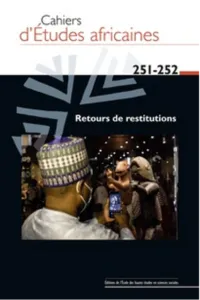
[ in French ] While the restitution of African cultural property polarizes debates, how can the voices of return be heard? How can we designate these things, objects, artifacts, goods or works returned or expected on the continent? How can we account for points of view, imaginations and frictions around their futures?
This ethnographic study aims to construct a thick description of how one migrant and diaspora community in a particular location – Somalis in Finland – preserve and discuss their cultural heritage.
On August 26, 2016, the Minister of Foreign Affairs and Cooperation of Benin, in a letter to his French counterpart, made an official request calling for the restitution of cultural goods brought back to mainland France by French colonial troops during the conquest of the kingdom of Danhomè. [ in French ]
[ in French ] The auction of an extremely rare African sculpted mask for 4.2 million euros, initially purchased for 150 euros by a second-hand dealer from a French couple, has been validated by the court of Alès (Gard).
The Digital Benin project provides a central place to see artifacts that are now scattered around the Global North. Its organizers hope it will be the first step toward repatriation.
In 1863, Emperor Tewodros II of Abyssinia took a British consul hostage; five years later, the British sent a punitive expedition. This military expedition shaped later campaigns in Sudan and West Africa in the1890s. What was new for Maqdala was the inclusion of a member of staff from the British Museum.
Princess royals Ncedisa Maqoma and Princess Mamtshawe Zukiswa Kona of the Xhosa nation saw in Dublin, for the first time, their ancestor Chief Maqoma’s sacred warrior’s stick, looted and brought to Ireland 150 years ago.
Germany and France will jointly spend €2.1m (£1.8m) to further research the provenance of African heritage objects in their national museums’ collections, which could prepare the ground for their eventual return.
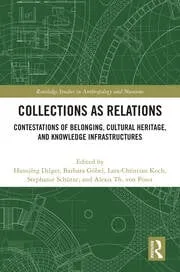
How do we trace the origin of collections? What new insights can be gleaned from these provenances? And what should become of such collections, within and beyond museum walls?
British Museum and V&A to lend Ghana looted gold and silver. Tristram Hunt, director of the V&A, said the items were the equivalent of “our crown jewels” but added that the three-year was “not restitution by the back door”.
Almost nine decades after it was stolen by Benito Mussolini’s fascist regime, the Italian government has officially returned Ethiopia’s first plane, named Tsehay in honour of the princess daughter of Emperor Haile Selassie.
Yinka Adegoke of Semafor interviews Oumy Diaw, contemporary art specialist and former communications director for the Museum of Black Civilizations in Dakar, Senegal.
Who should own Benin objects returned to Nigeria? And what about the Oba of Benin commenting, prior to 2023, that the Benin objects to be returned to Nigeria should be returned to him and not the federal government?
Rachel Ama Asaa Engmann of the Christiansborg Archaeoogical Heritage Project helps to understand how the agreement with one American and two British museums was reached.
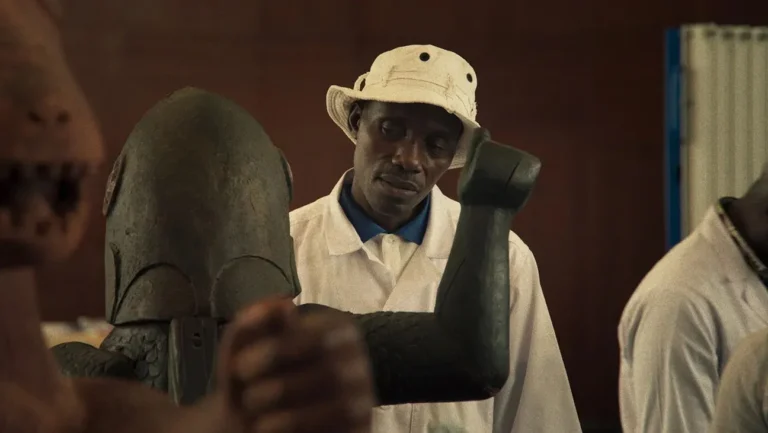
In Mati Diop’s film Dahomey, which premiered at the Berlin film festival, the director documents the 2021 journey of 26 treasures that the commander of French forces in Senegal looted from the royal palace of the kingdom of Dahomey, part of modern-day Benin, in 1890.
A commission of French and Algerian historians created to reconcile colonial difficulties has agreed proposals for the exchange of archives, remains and artefacts.
The documentary "The Empty Grave" traces the mission of two families in Tanzania that embark on an emotional journey to reclaim their ancestors’ human remains from German museums.
Two British museums, the British Museum (BM) and the Victoria and Albert Museum (V&A) have agreed to return to Asante/Ghana respectively 15 and 17 looted objects. It is, however, a loan.
Two great granddaughters of a Sakalava king, who was beheaded in 1897 by colonial troops, publicly addressed the French ambassador, asking him to speed up the repatriation of their ancestor’s skull.
After almost 70 years in the Africa Museum, the rare Kakungu mask is back in Congo. Despite the festive ceremony at the National Museum, the mask remains the property of Belgium, causing unrest among the Congolese people and the Suku community, where the mask originally came from.
A group of 11 sacred Ethiopian altar tablets, which the museum acknowledges were looted by British soldiers after the Battle of Maqdala in 1868, have never been on public display and are considered to be so sacred that even the institution’s own curators and trustees are forbidden from examining them.
The Lebang community in Cameroon has been the recipient of eight (8) significant cultural and spiritual heritages sold in auction and online in The Netherlands and Germany.
This publication compiles information on 39 institutions in museums and universities in German-speaking countries that have accessioned, altogether, almost 19,000 pieces of tangible cultural heritage produced in Namibian communities over a period of time of more than 160 years (pre-1860s to date).
32 Gold and silver items have been sent on long-term loan to Ghana by the Victoria & Albert Museum (V&A) and the British Museum (BM). They were stolen during 19th century conflicts.
Chief Charles Taku has made an impassioned call for the “urgent and unconditional restitution of the Bangwa Queen in Dapper Foundation in France, the Bangwa King in Metropolitan Museum in New York, USA and the cultural heritage artefacts which are in the National Ethnological Museum in Berlin and Municipal Museums in Germany, in the Netherlands and other parts of the world.”
Kwame Opoku writes: The lull in the restitution of African artefacts after the restitutions of 2021 and 2022has left a vacuum filled with activities that, although not directly anti-restitution, do not directly promote restitution.
Chief Charles Taku argues that the resistance towards the restitution of African Heritage artefacts and the payment of reparations for colonial crimes is premised on the supposed legality of the crimes under the General Act of the Berlin Conference (26 February 1885).
With tens of thousands of African artworks in French museums, curators face a huge task in trying to identify which of these were plundered during colonial rule in the 19th and 20th centuries and should be returned.
Felwine Sarr and Bénédicte Savoy discuss what African cultural objects are in French publicly owned collections, why so few have been repatriated and what measures should be taken for restitutions to their countries or communities of origin.
[ in Dutch ] The judge has ruled that the collection of the Africa Museum in Berg en Dal is owned by the fathers of the Congregation of the Holy Spirit. The National Museum of World Cultures (NMVW) must return the collection to them.
An international group of two hundred scientists and specialists in predatory art protests against the trade in human remains by the Amsterdam auction house De Zwaan. It is a skull of a person of the Fon people from Benin. The skull was sold last month for eight hundred euros.
This reader, edited by Sarah Van Beurden, Didier Gondola and Agnès Lacaille, is the first scholarly work has scrutinized the collections of the Royal Museum for Central Africa in Tervuren (Belgium) as a whole.
Sarah van Beurden: What is new is the wave of research on the origins of colonial collections, and several projects – both academic and artistic – reflect on the larger cultural loss the removal of these objects caused in their communities of origin.
The debates on the ownership of contested cultural objects bring forth questions regarding the representation of history. But might these debates also lead to the fabrication of history?
Semley Auctioneers – based in Dorset – have made 18 skulls available for auction and estimate each skull will be sold for between £200 and £300. The auction is scheduled to take place on 18 May 2024.
Ghanaians flocked to the Manhyia Palace Museum in Kumasi, the capital of Asante region, to welcome the 32 items home. "This is a day for Asante. A day for the Black African continent. The spirit we share is back," said Asante King Otumfuo Osei Tutu II.
There are obvious similarities between the episode in 1874 and 1896 (Asante Kingdom) and 1897 (Benin Kingdom). Both kingdoms have been asking for restitutions for decades. Barnaby Philips explores why is it taking Nigeria so long to put its returned treasures on display?
Many artefacts in UK collections were taken along with a war indemnity of 50,000 ounces of gold following the Third Anglo-Asante War, then auctioned off to collectors of major museums by the Crown jeweller in order to raise funds for injured soldiers.
The fact that the government and elected representatives are unable to reach a consensus on large restitutions raises questions about the future of a framework bill designed to facilitate such transfers, writes columnist Michel Guerrin.
Omo N’ Oba N’ Edo, Oba of Benin, has taken custody of two looted royal stools from the German government, symbolising a significant step in the right direction.
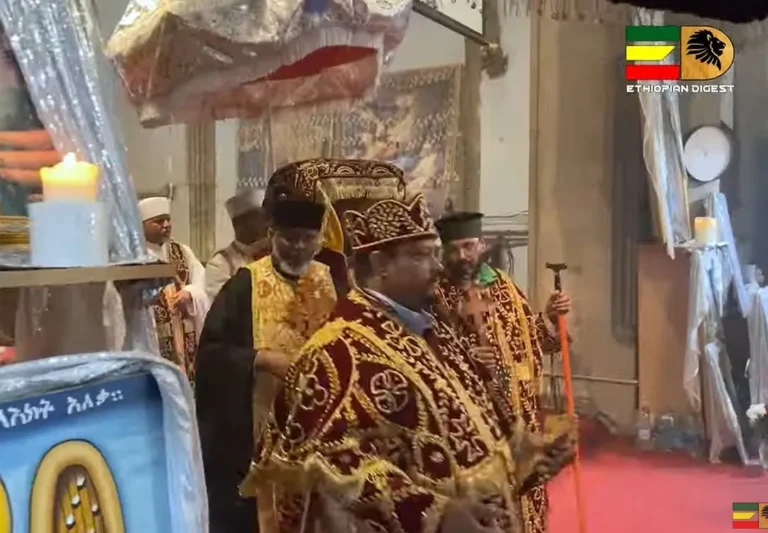
Lewis McNaught investigates why the British Museum, which already has the authority to return a collection of Tabots (sacred objects) to Ethiopia, is failing to comply or explain why it won't return the Tabots.
Kwame Opoku writes: President Macron of France had promised in 2017 to restitute Africa artefacts in French museums, and in 2021, twenty-six artefacts were returned to the Republic of Benin.
Film maker Ngawatilo Naiwiyoo and restitution proponent Silvie Njobati embark on a journey through history, exploring the complex, violent, and manipulative ways in which heritage items of African origin ended up in Western museums and private collections.
Kodzo Gavua has called for an intensive education on the plunder of African cultural heritage objects and systems and the need for their return. Such efforts would help safeguard the nation’s cultural legacy and contribute to tourism and scholarly research.
Beninese President Patrick Talon has an ambitious development plan with culture and heritage at its core. “It is at the end of the old rope that the new one is best woven,” he said recently, citing an old African proverb.
[ in Portuguese ] Portugal has been doing little to develop knowledge on the provenance of its collections that came from former colonies. This can be partly explained by the lack of human and financial resources in archives, museums and universities.
The Federal Government has vowed to pursue all necessary measures, including legal action in international courts, to recover cultural artefacts stolen from Nigeria.
The Department of Antiquities of the State of Libya and the Cleveland Museum of Art have announced an agreement in principle for the transfer of a Ptolemaic statue of a man to the State of Libya. It was lost in 1941, during the Second World War.
[ in French ] Algeria has made a request for the return of objects that belonged to Emir Abdelkader, a great resistance fighter in the conquest of Algeria in the 19th century, who was defeated in 1847.
Some French parties pressure their country’s authorities to prevent them from responding to the requests submitted by the Algerian-French mixed commission concerning the restitution of some “symbolic” property that France had looted from Algeria during the occupation period.
In the German Historical Institute London (GHIL) podcast interview, Kokou Azamede, Associate Professor at the Department of German Studies at the University of Lomé tells about restitution in his country and the role of communities.
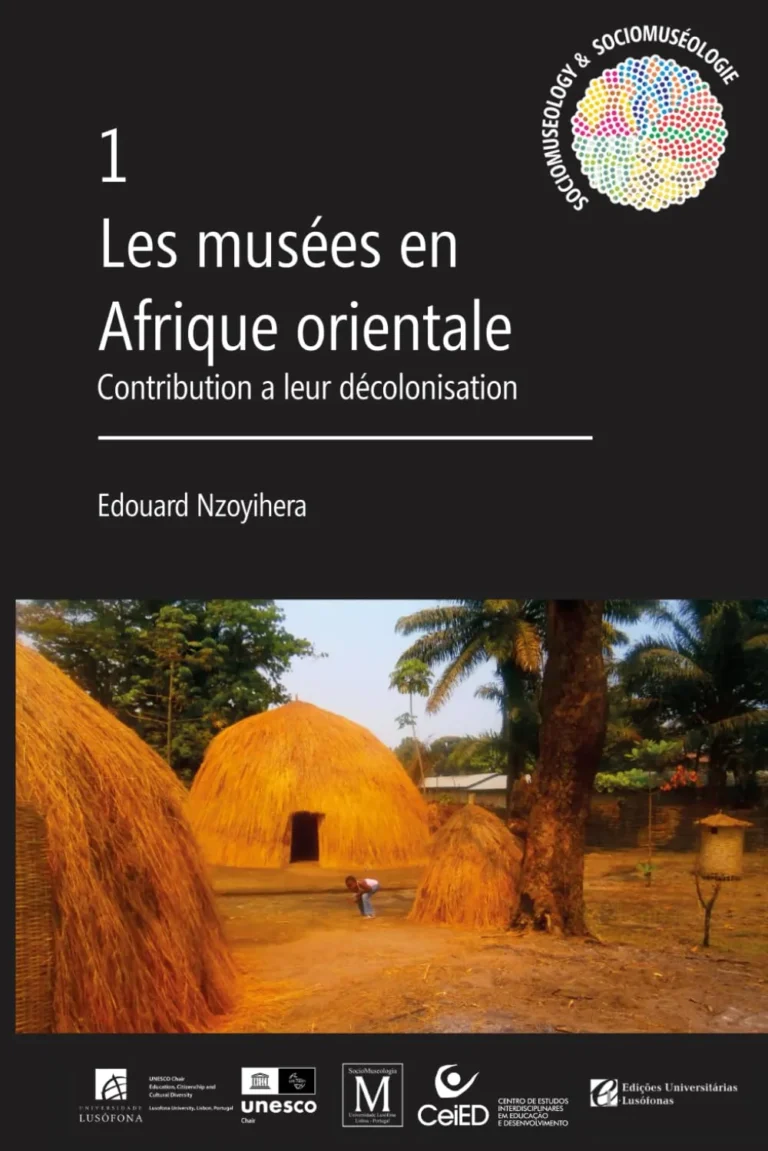
[ in French ] Museums in the modern sense of the term first appeared in Africa during the colonial era. After independence, the colonial museum became the national museum. It was only a change of name, but the model remained Western
Sela K. Adjei and Yann LeGall (eds.): Debates around restitution and decolonising museums continue to rage across the world. Artefacts, effigies and ancestral remains are finally being accurately contextualised and repatriated to their homelands.
In 1905, a colonial British officer killed Koitalel Arap Samoei, the supreme leader of the Nandi tribe. According to oral history, his severed head was taken to the UK. The Nandi have been searching for it ever since. The Nandi have been searching for it ever since.
In the colonialist moves to collect human remains, and the desire to demonstrate grandeur and strength, many soldiers relied on racist and blood-thirsty narratives to rationalize their cruel actions.
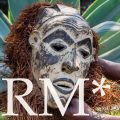
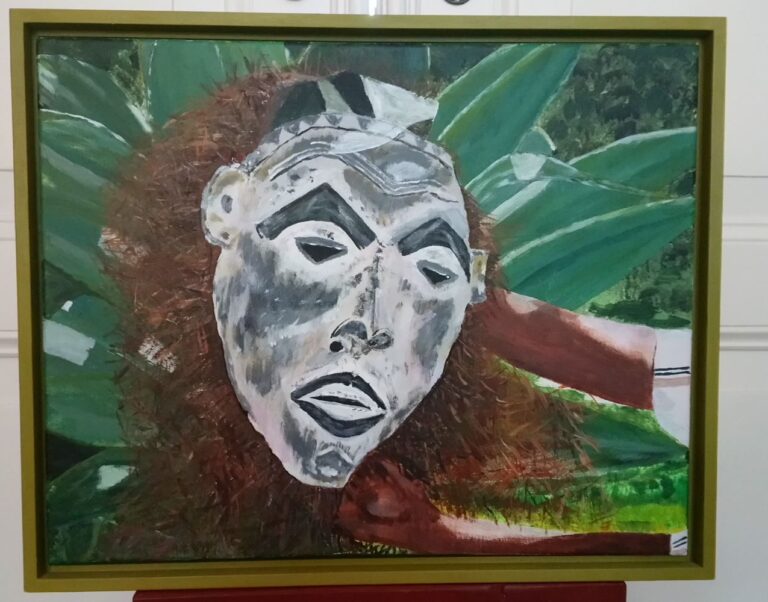
Long ago, I held this Congolese mask in my hands. The dealer claimed it to be very old; he was keen to sell it. But unlike other wooden pieces, which he offered for little money, he asked a big sum for this one. Perhaps, it was indeed old and valuable. Back then, the mask struck a chord with me. Nowadays, it still does.
Kwame Opoku wonders whether loans will be the future status of African objects in western museums. If so, western museums remain in control of what is not theirs.
In 'The Making of Museums in Nigeria - Kenneth C. Murray and Heritage Preservation in Colonial West Africa' Amanda H. Hellman, director of the Vanderbilt University Fine Arts Gallery, writes: In November 1927, Kenneth Crosthwaite Murray (1902-1972) left for Nigeria to develop the art program in the British colony.
Nigerian creators Shobo and Shof, known for New Masters, are set to debut their latest project, Bronze Faces, a gripping art heist drama that brings real-world issues to the comic stage in 2025.
In a lengthy contribution, Kwame Opoku wonders how long the Ovaherero must wait for justice and reparation for the German genocide? He extensively quotes a press release of the Ovaherero Traditional Authority-Ouhonapare uo Mananeno uo Vaherero. Part of it is about repatriation.
Your auction is soaked in blood—give back Ras Desta Damtew’s medal: An open letter to La Galerie Numismatique in Lausanne. The medal was stolen by a Fascist army invader, its proper recipient unlawfully executed, and now your event practically celebrates the theft and murder.
It is seven years since President Emmanuel Macron of France announced his revolutionary plan to return African heritage to the continent. But following his declaration in Burkina Faso in November 2017 that “African heritage can’t just be in European private collections and museums”, the restitution journey has been arduous.
Egypt has launched an international petition to repatriate the 3,400-year-old bust of Queen Nefertiti from Berlin, marking the latest effort in its long-standing campaign to reclaim its stolen artefacts.
Rachel Mariembe discusses the collection of the Musée des Rois Bamoun (MRB, Museum of the Bamoun Kings), located in Foumban in Cameroon’s West Region, as a framework for studying issues related to the concepts of museum, cultural heritage, conservation, and the restitution of cultural property looted during the colonial period.
In November 2022, the Horniman Museum in London brought back six Benin objects to the Oba of Benin. Horniman’s Nick Merriman was rather enthusiastic. Independent researcher Mike Wells takes a hard look at Merriman’s historical and factual claims regarding the Horniman’s ‘research and consultation process’ and the museum’s arguments supporting return of the bronzes.
The Ayôkwé djidji or talking drum, confiscated in 1916 by the French army from the Ebrié community, will be exposed in its home country, but France has yet to pass legislation allowing for it to be formally restituted.
Asantehene, Otumfuo Osei Tutu II, is set to receive 28 gold ornaments and regalia from South Africa, marking another restitution of Asante cultural heritage looted during the 19th century, including linguist staff, swords, palace security locks, rings, necklaces, and proverbial gold weights depicting crocodiles and gold scandals. These items reflect the governance structures and chieftaincy traditions of the Asante Court.
From this contribution by BBC correspondent Adaobi Tricia Nwaubani: Kenneth C Murray, a British colonial art teacher, was a key figure in Nigeria’s museum history. Murray was invited to Nigeria at the request of Aina Onabolu, a European-trained Yoruba fine artist who convinced the colonial government to bring qualified art teachers from the UK to Nigerian secondary schools and teacher training institutions.
For decades, families in Tanzania have been demanding the return of their ancestors’ human remains from Germany. These ancestors, executed leaders of resistance efforts against German colonial rule, were exhumed from their graves and taken to Germany. Cece Mlay discusses co-producing a new documentary on how their descendants are seeking justice and closure today.
The Pitt Rivers Museum in Oxford U.K. holds 188 Maasai items from Kenya and Tanzania. The seven-year Living Cultures project brought a new approach to decolonisation and repatriation through creating equitable partnerships with Indigenous peoples and facilitated visits to the museum by Maasai representatives.
ÌMỌ̀ DÁRA’s mission is to connect art collectors with the world’s leading dealers and scholars, based on a foundation of knowledge. It publishes an annual overview in which the voice of the collector is central. The 2024 overview has an interesting chapter on restitution.
Claim of the Restitution Study Group: The Supreme Court has denied certiorari in the case Deadria Farmer-Paellmann v. Smithsonian Institution, allowing the return of 29 Benin Bronzes to Nigeria to proceed without further legal challenge.
2024 marks the 140th anniversary of the start of the historic Berlin West Africa Conference of 1884/85. Germany is working hard to come to terms with its colonial history, including restitution.
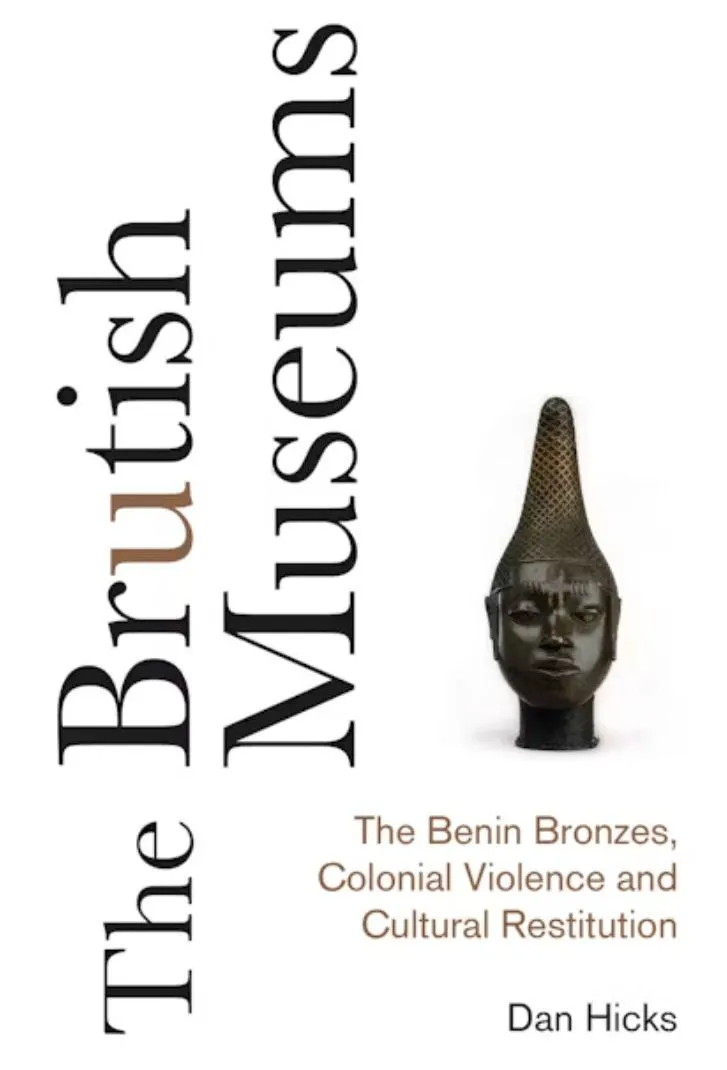
Germany was a significant – and often brutal – colonial power in Africa. But this colonial history is not told as often as that of other imperialist nations. A new book called The Long Shadow of German Colonialism: Amnesia, Denialism and Revisionism aims to bring the past into the light. It explores not just the history of German colonialism, but also how its legacy has played out in German society, politics and the media.
Exactly 130 years ago, the World Exhibition took place in Antwerp. For that occasion, 144 Congolese were exhibited at the KMSKA. Seven Congolese died. The AfricaMuseum, which has a similar colonial history in Tervuren, organizes an online MuseumTalk about the memory and commemoration of this tragedy. The speakers are a researcher, an activist and an artist.
It has become a tradition, Kwame Opoku’s annual retrospect. For him, the most spectacular event of the year for restitution was the royal lecture of the Asantehene, Nana Osei Tutu II (19 July 2024) at the British Museum London.
In June 2024, 39 artifacts were formally handed back to the government of Uganda by Britain's University of Cambridge. While the return is technically a three-year loan between museums, it is extendable, and could see them remain in their country of origin.
Katharina Küng from canton Zurich had a headdress that she had received from her mother hanging on her wall for a long time. “We thought it was the padding of an old suit of armour,” Küng says. It wasn’t until a trip to Namibia that she realised – in the Swakopmund Genocide Museum – that it was a traditional Herero headdress.
The prize-winning documentary film Dahomey continues to evoke reactions. In ARTnews, Alex Greenberger writes: If the 2016 statement by Andre Frasier that prisons and art institutions are “two sides of the same coin of inequality” seemed provocative eight years ago, it appears only mildly controversial now, at a time when museums are commonly seen as appendages of racist, colonialist, and deeply unfair systems.
The return of artefacts to their countries of origin is not just an act of repatriation, but an opportunity for healing and reconnecting with cultural roots, said Tuuda Haitula, the museum development officer at the Museums Association of Namibia.
The National Museum of Finland is preparing to return a kataklé, a ceremonial royal stool which was received into the museum´s collections in 1939, to the Republic of Benin.
A section of educationists and experts from various African countries are urging European nations that colonised them to return their historical archives.
Algeria has made a request for the return of objects that belonged to Emir Abdelkader, a great resistance fighter in the conquest of Algeria in the 19th century, who was defeated in 1847.
Julia Binter talks about knowledge justice in relation to Namibian cultural assets and investigates cooperative research on cultural assets from colonial contexts in museums.
The Department of Antiquities of the State of Libya and the Cleveland Museum of Art have announced an agreement in principle for the transfer of a Ptolemaic statue of a man to the State of Libya.