In March 2025, a group of international experts gathered in the Museu Municipal Santos Rocha in Figueira da Foz to discuss the four years research project on the provenance of colonial collections in this municipal museum, TRANSMAT. Some of the outcomes could be seen in the exhibition Facing colonial legacies in the Museum. Captions tell visitors how some objects were looted. It wasn’t an easy road, and the exhibition was even met with opposition from the mayor of this coastal town.
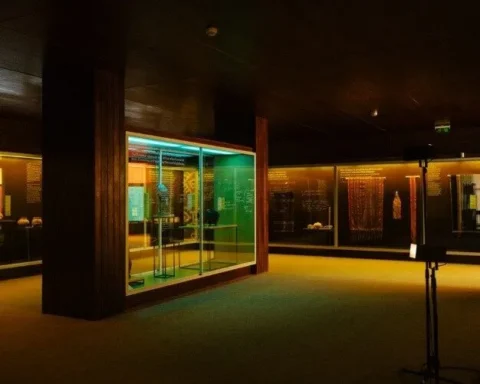
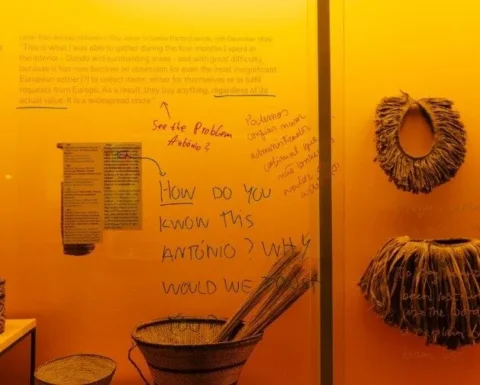
Exhibition Facing colonial legacies in the Museum © José Albergaria e Gustavo Brod
Earlier, the Museu Nacional de História Natural e da Ciência (MUNHAC, University of Lisbon) started a cooperation with Guinea-Bissau, Mozambique and São Tomé e Príncipe to support museums and other institutions preserve and create in situ biodiversity collections.
MUNHAC is also known for its work with Diasporic and African communities in Portugal, as well as museums from the countries of origin.
The University of Coimbra made itself heard with the report Patrimónios Sensíveis na Universidade de Coimbra. It is the outcome of a university-wide working group on decolonisation, including dealing with sensitive collections.
© Museu Nacional de Etnologia
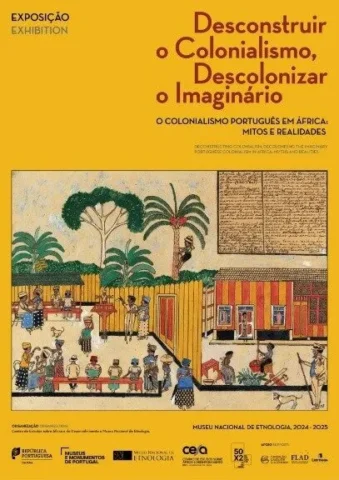
And the Museu Nacional de Etnologia in Lisbon opened the exhibition Deconstructing Colonialism, Decolonising the Imaginary, which critically looks at Portugal’s colonial past.
This is a sample of the many things happening in Portugal, particularly in the last five years. Only a small part of which make it into the national press, let alone the international media.
Still, there is a lot of work to be done.
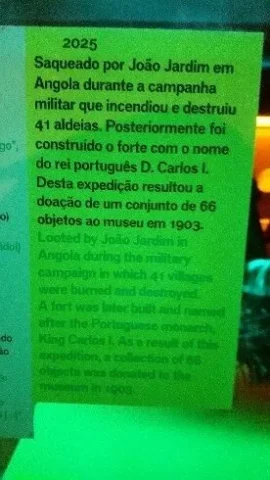
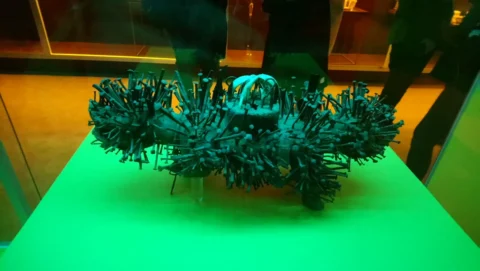
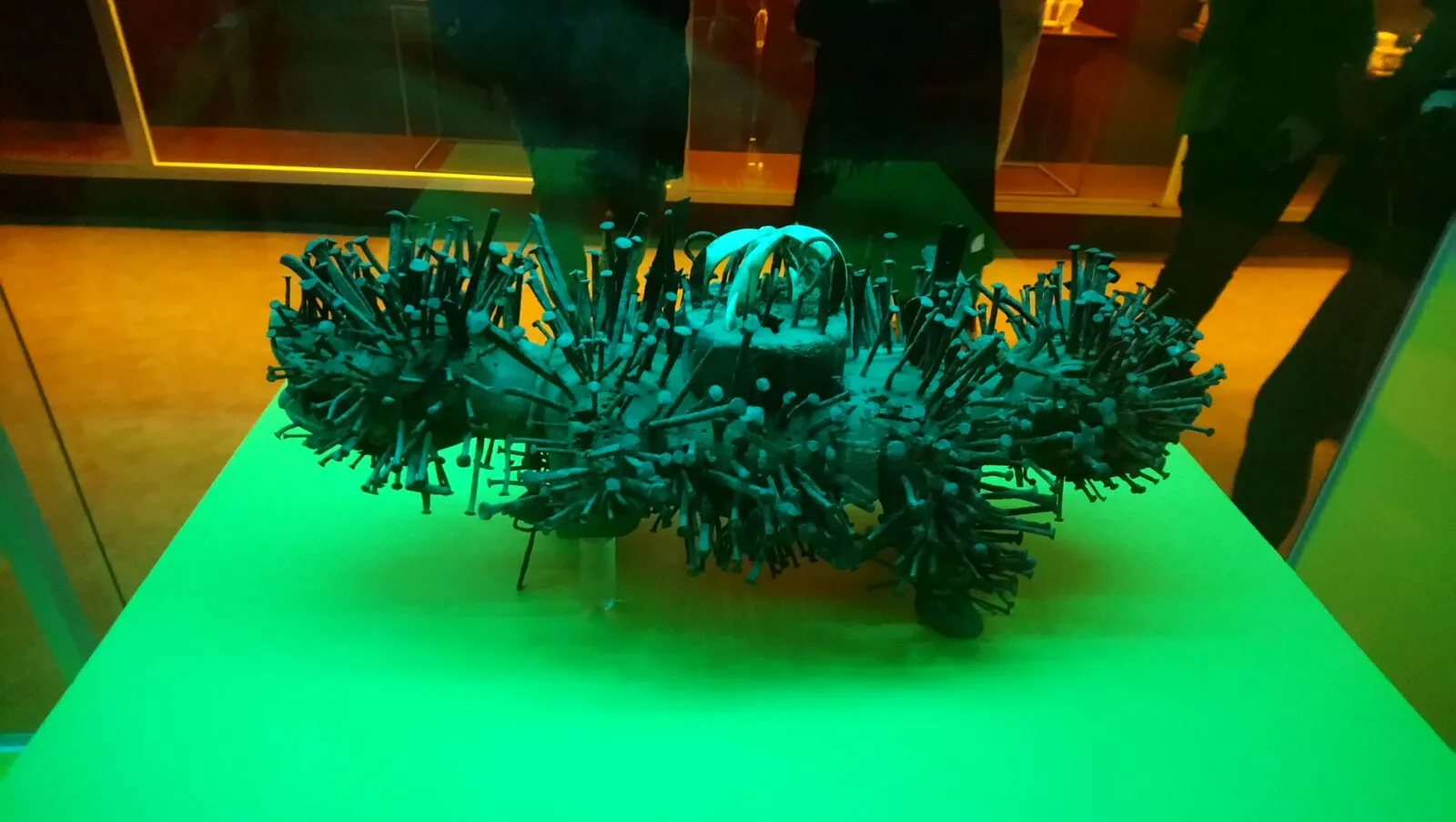
Power figure (+ caption), looted in 1903, exhibition Facing colonial legacies in the Museum
© Jos van Beurden
The nature of Portugal’s colonial empire
Portugal was Europe’s oldest and longest colonial power. It captured its first possession in 1415, Ceuta, and later added areas in different continents: Brazil, Guinea Bissau, Angola, Mozambique, Cape Verde, São Tomé e Príncipe, India (Goa, Daman and Diu), Sri Lanka and East Timor. Portugal handed over its last colony in 1999: Macau to the People’s Republic of China.
Portugal’s colonial expansion differed in some respects from that of other European colonial powers, especially the Dutch and the British that often ousted the Portuguese from their territories.
While the Dutch, the British and most other European colonial powers were mainly driven by commercial motives (and justified this with a sauce of a civilising mission), the Portuguese (and Spanish) were also driven by the papal assignment to spread the Roman-catholic religion.
Ceylon / Sri Lanka, which was successively colonised by the Portuguese, the Dutch and the British, shows that, the Portuguese military mainly destroyed Buddhist temples and statues without taking too many religious objects, the Dutch confiscated mostly ceremonial objects, while the British appropriated both religious and ceremonial objects. Already in 1980, Sri Lanka claimed objects from the Netherlands and the UK, but never from Portugal. The Dutch returned some in 2023. So far, there have been no returns from the UK, despite Sri Lanka’s wishes.
Colonial appropriations and unexpected finds
European military and administrative personnel, missionaries, businessmen, scientists and adventurers confiscated or destroyed sacred objects, ancestral remains, and other items. Initially, they did so incidentally and, later, more systematically and in larger quantities.
While museums in, for example, Germany, Great Britain, France, Belgium and the Netherlands have done their provenance research and made part of their colonial collections digitally accessible, this process is yet to start in Portugal, apart from many natural history collections.
Yet, the Portuguese also collected, certainly after 1884/5 when the Berlin Conference enabled museums from all over Europe to collect in Africa. Between 1883 and 1974, the Portuguese state financed more than 100 scientific expeditions resulting in millions of artefacts and specimens, most to its African colonies but also to East Timor and colonial possessions in India. These are well-documented, but much research is yet to be done and the collections and archives are yet to be fully made available online.
For knowing more about colonial collections, one often depends on incidental finds, such as those listed below:
- A podcast created by the private TV-channel SIC disclosed that the Sociedade de Geografia de Lisboa (founded in 1875) has, next to one Benin object on display, another 76 in its storerooms. These were a donation from a German collector in 1899 and are likely linked to the 1897 British raid on the Benin Kingdom. So far, they have escaped the attention of Benin watchers in Europe and Nigeria.
- The Museu Nacional de Etnologia (MNE, founded in 1965) in Lisbon holds many collections from Africa, the Amazon and Indonesia. As historian Márcia Chuva has argued (see Vol. 1, 2020) the museum’s founding director, Jorge Dias, and his work cannot be dissociated from Portugal’s colonial agenda at the time when liberation wars were being fought in the country’s former African colonies.
- Victor Bandeira, an art dealer was one of the MNE’s key collectors. As Ana Temudo’s research shows, his travels and collection methods ‘may be seen as very questionable exploits’.
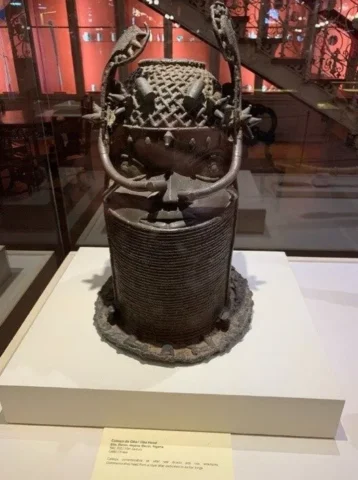
Benin bronze at display in the Sociedade de Geografia de Lisboa
© Sofia Lovegrove Pereira
The number of official claims from former colonies remains very limited. An exception is Angola’s 2018 statement about the return of dolls and other items in the MNE. The topic has also been addressed in, for instance, Cape Verde and Mozambique.
Many collections are not digitised, nor included in a national database. In the Público newspaper of 2 April 2022, French art historian Bénédicte Savoy rightly wondered: ‘How can Angola or Mozambique make requests for restitution if they don’t know what is in Portuguese museums? How can Mozambique or Angola contribute to the study of these objects, if they’ve never seen them?’
Behind closed doors
In 2020, Joacine Katar Moreira (Guinea-Bissau-born Portuguese MP) submitted a decolonisation proposal in parliament, which was rejected by a majority of votes. Nonetheless, her proposal has indirectly started being implemented through the following initiatives:
In 2021, ICOM Portugal asked museums about “non-European collections” in their holdings. Only a limited number responded, many indicating not having such collections, as well as being fearful of the word “restitution”. The results were published in December 2021.
In 2023, the then Minister for Culture Pedro Adão de Silva initiated (behind closed doors) a working group of museum directors to discuss the topic brought up by Katar Moreira. Yet governmental shifts and changing museum directors meant that no concrete steps have yet been taken.
Hopeful developments
In 2025, the Catholic University of Portugal, the 50th Anniversary of April 25th Commemorative Commission and RTP (the Portuguese public service broadcaster) published the results of a survey among citizens in Portugal, Angola and Cape Verde about their perceptions of decolonization. The majority in all three agreed with the statement: ‘Portugal should return works of art, crafts and other goods taken from the territories that were its colonies’.
There has been an increase in research and student theses. There have been documentaries, plays, films, training of secondary school teachers, public debates. Also museum exhibitions in Lisboa, Lamego, Guimarães, Lagos and Évora.
Despite the lack of a national policy or database, evidence we found offers enough hope for the start of a process that will contribute to a reckoning with Portuguese colonial history and to the restitution of the knowledge about and of historical objects and ancestral remains to their rightful owners.
The authors thank Marta Lourenço, director of the MUHNAC for her comments.