For Dickie Zebregs of Zebregs & Röell Fine Art and Antique in Amsterdam and Maastricht colonial collections are a primary concern. He is both a dealer and aware of the restitution debate.
From the moment I started investigating the ongoing illicit trade in art and antiquities and dubiously acquired colonial collections in the art trade, I reached out to dealers, knowing that they have insights that academics or museum professionals rarely come up with.
Some traders listened pityingly to my views. Others tried to win me over to their views on free trade in art works. Still others expressed disgust or refused to speak to me. Mostly, they blamed me for not having a view of reality. Differences over what was ethical in dealing with items from the global south was always maintained.
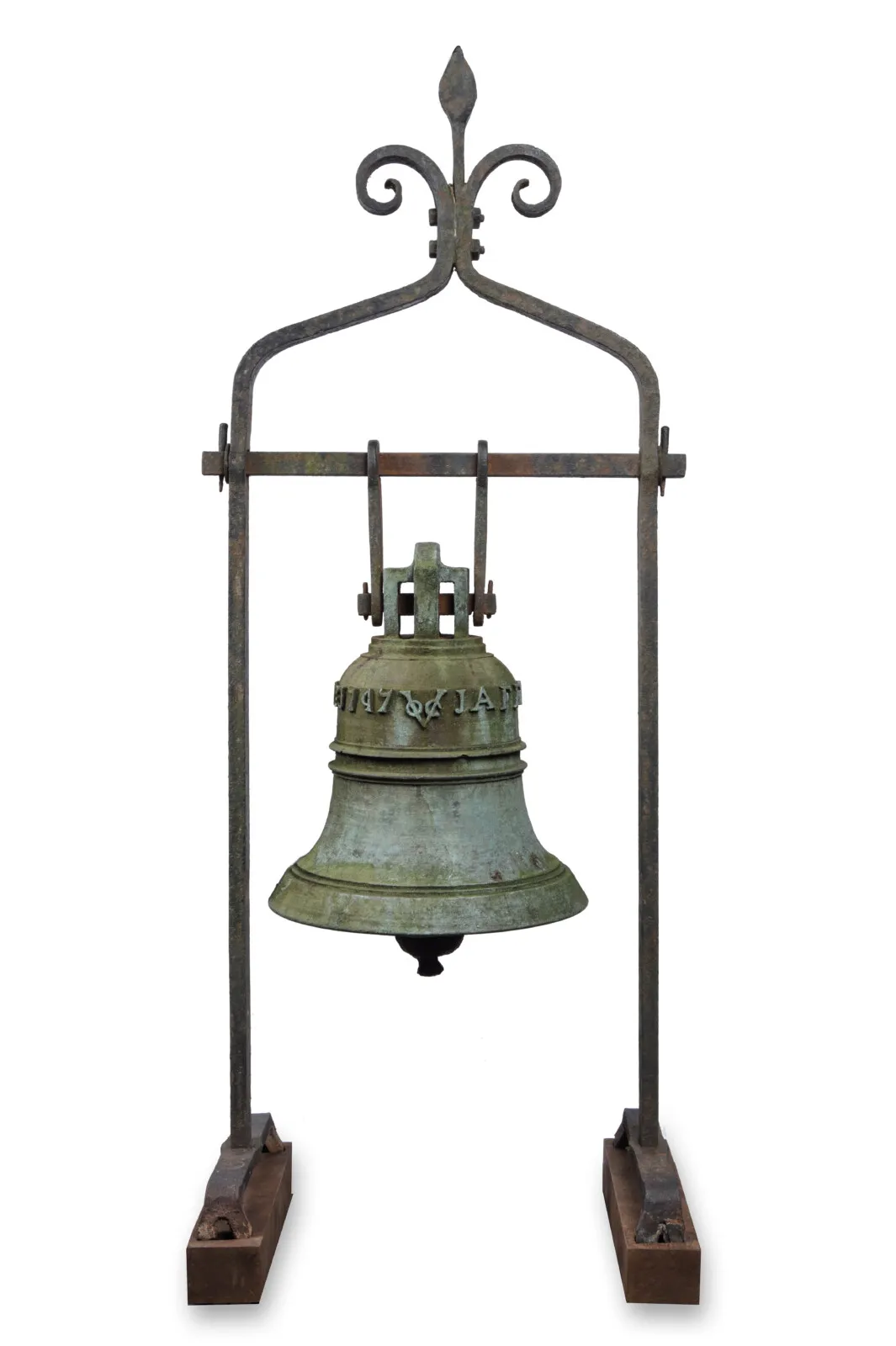
A bronze bell from a colonial fort
I don’t remember who of us took the initiative, but I do remember our first conversation. It was about an object, a bell, from Sri Lanka. The Netherlands once dominated the island, took Ceylon over from Portugal around 1600 and had to cede it to Great Britain in the late eighteenth century.
The ‘bronze bell of the VOC fortress in Jaffna (Jaffnapatnam) was cast in the Netherlands or in Sri Lanka, circa 1747’. It hung in the fort to call people to their work or sound the alarm. Asking price 120.000 EURO. Dickie Zebregs, at that time 29 years old, had acquired the bell from an auction in the United Kingdom.
The provenance description mentioned: ‘Stenton House on the river Tay, near Dunkeld, Perthshire. Stenton estate belonged to the Scottish Stewart family. The original part of the house dated to the 17th century with extensions in the 18th and 19th centuries. Possibly taken by Captain James Stewart (1794-1843) who died in Colombo or one of his descendants.’
More extensive provenance research
Zebregs: ‘As a dealer, I am in a quandary. If a buyer comes here and pays full price for the bell, that is fine, but if someone from Sri Lanka buys it for Jaffna, they get a discount, and then I will bring it myself.’ The provenance report accompanying the bell was more comprehensive than what I was used to seeing.
In my conversations with his colleagues, most of them repeatedly emphasise: ‘If something is looted art, it may be returned immediately.’ But this did not reassure me, as I wondered what they did nót tell me. Occasionally, a gallery owner tips the scales with a comment about hidden short-cuts, be it without explaining these.
Money
But Zebregs also faced a dilemma: he had to receive at least the purchase price plus a certain commission for himself. In our conversation, I emphasized the need for former colonies to recover artefacts and other objects that disappeared during colonial times. At the time, Sri Lanka suffers a severe economic crisis and will have no money for such a purchase.
So far, no one has been found willing to provide the necessary rather big amount and the bell still is in Amsterdam.
Zebregs keeps hoping. ‘As a millennial, I feel called to educate people about contemporary and institutional racism and thus also about (colonial) looted art.’
Sources
https://zebregsroell.com/product/voc-fortress-bell-jaffna-for-sale