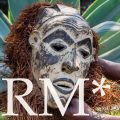
An hour into the galleries of the Africa Museum in Tervuren, you come to Tonga, a startling piece by Nada Tshibwabwa, a Congolese artist and musician.
It’s made from recycled mobile phone waste and is roughly the size of a ceremonial mask designed to fit a human head. Tshibwabwa was an artist in residence at the museum in 2022 and his work is now part of the permanent collection. ‘Tonga’ translates from Lingala as ‘build’: he finds his materials by walking the streets of Kinshasa, the capital of the Democratic Republic of Congo, or picking through its waste dumps.
The east of the country is rich in gold and coltan, with a large informal mining sector, often managed by armed groups who run ore across the borders to Rwanda, Burundi and Uganda. Tshibwabwa’s masks and body costumes, assembled as ‘The Hidden Face of Coltan’, are a parody of early modern plate armour.
They seem to ask, between the lives of Congolese coltan miners and our smart devices, neither of them known for their longevity? It also makes the point that traditional masks and other artefacts in the museum’s collection were objects of cultural extractivism during the colonial era (and after) – precious assets that have slipped beyond the reach of the DRC.
Its earliest incarnation dates from the World’s Fair in Brussels in 1897, whose ‘African’ component was staged in the Palace of the Colonies.
The palace became the site of a permanent colonial display the following year. Leopold II of Belgium had been running the Congo Free State as a personal fiefdom for more than a decade, issuing franchises to European companies at terrible cost to the Congolese.
One release that Brussels may soon sign off to the DRC is its itemised collection of human remains from the Belgian Congo, more than four hundred body parts, held in various federal research institutes and museums in Belgium.
Yet even this is fraught. Not everyone in the DRC wants their abducted dead to be brought home.
In 2018 the universities of Geneva and Lubumbashi signed an agreement for the restitution of seven ‘pygmy’ skeletons that were dug up in Wamba, in the north-eastern DRC, in the 1950s. But descendants of these dead fear that a physical restitution would bring on metaphysical disaster.

