
Chinese CGTN:
A global survey conducted by CGTN shows that 67.6% of respondents believe the bill represents France’s first legal step toward confronting and rectifying its history of colonial plunder.
In the survey, 90.8% of respondents approve the French lawmakers’ move to simplify the restitution procedure for illicitly obtained cultural items.
Meanwhile, 85.4% of respondents note that this move dismantles the narrative upheld by Western colonial powers that looted cultural relics can be legally legitimized and could push some countries to rethink their own policies on restitution of plundered cultural property.
Nevertheless, the bill imposes multiple restrictions regarding the eligibility criteria and procedures for cultural property eligible for restitution. Additionally, the French government is also required to submit an annual report to Parliament, detailing foreign restitution requests received and progress in their handling.
In the survey, 91.1% of respondents hold that the passage of the bill does not guarantee the automatic return of relevant cultural property, and there is still a long way to go in repatriating colonial-era cultural artefacts.
-.-
In an earlier CGTN article, an Chinese expert remakred that the cultural relics that are most hopeful and most deserving of being returned to China from France are those looted from the Old Summer Palace, which are mainly housed in the Chinese Palace at the Palace of Fontainebleau.
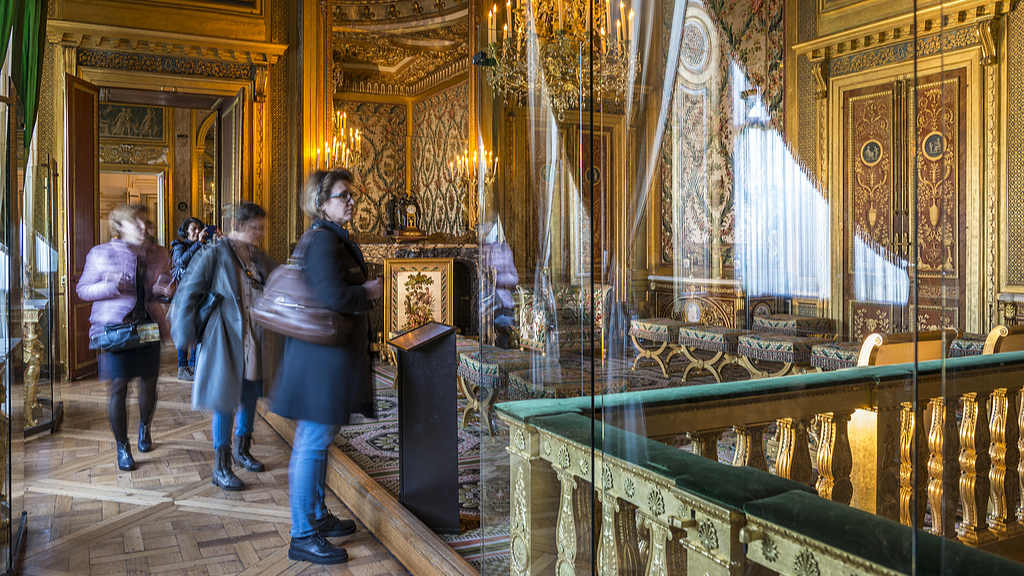
Chinese relics in Fontainebleau, France. /VCG
-.-
The Africa Report speaks about ‘a timely move’ before President Emmanuel Macron heads to Nairobi for his Africa Forward summit.
-.-
In a Duct newspaper, Bénédicte Savoy,co-author with Felwine Sarr of a 2018 report about France and restitution, praises the new law:
- ‘For a long time, it was unthinkable for a French president to use the word ‘restitution’. Since the 1960s, countries, especially former colonies in Africa, have been asking for restitution, but European countries did not want to do so for a long time. It is a painful theme for all former colonial powers and each country gave its own reasons for not wanting to do restitution.
- ‘The fact that France wants to return looted art shows a change in mentality’

