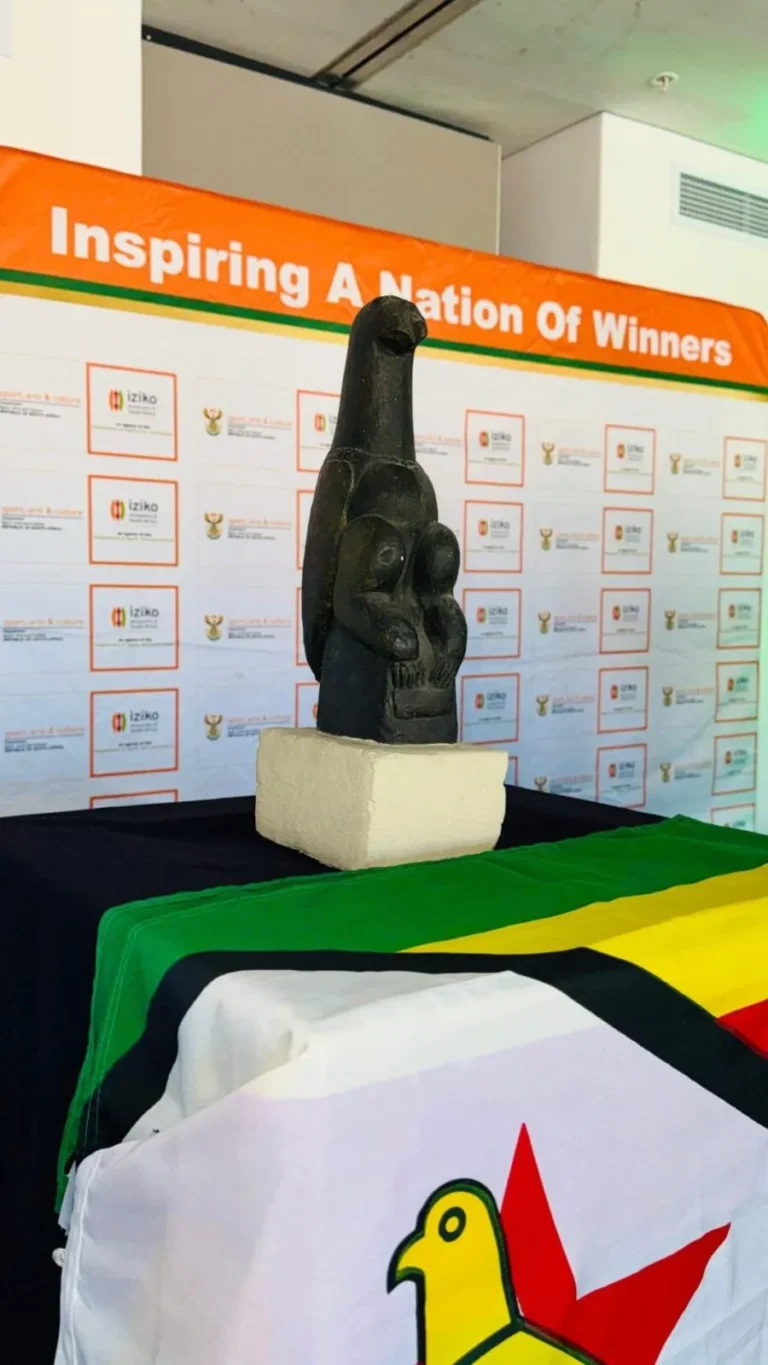
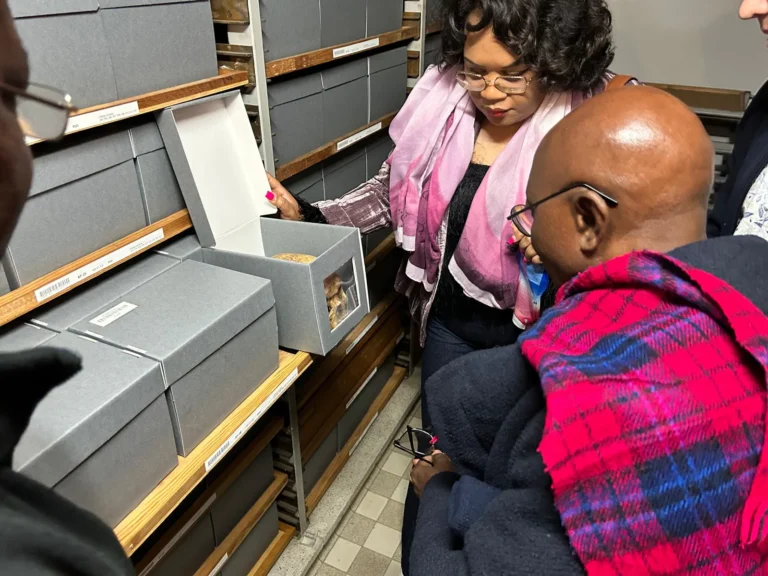
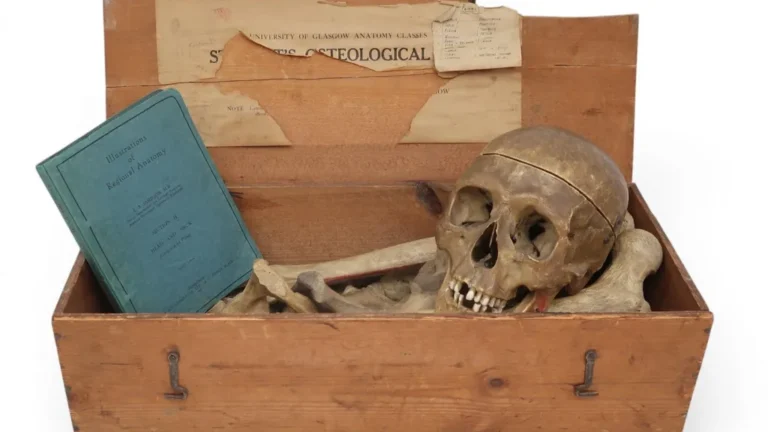
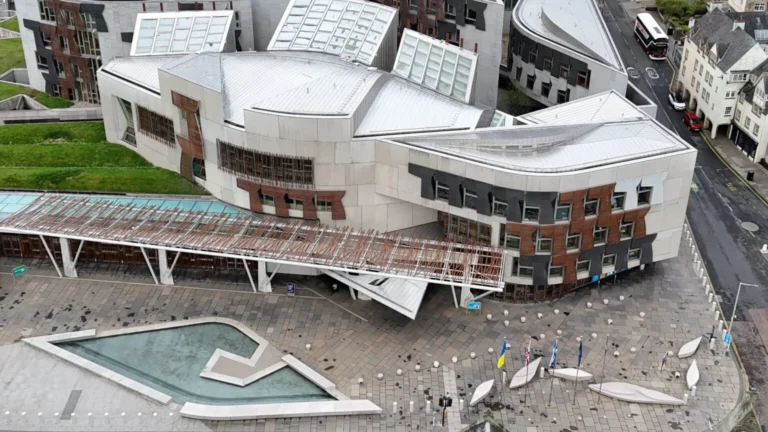
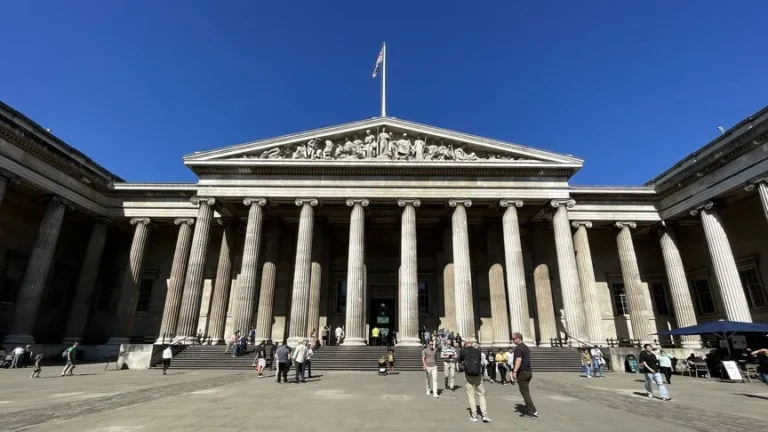
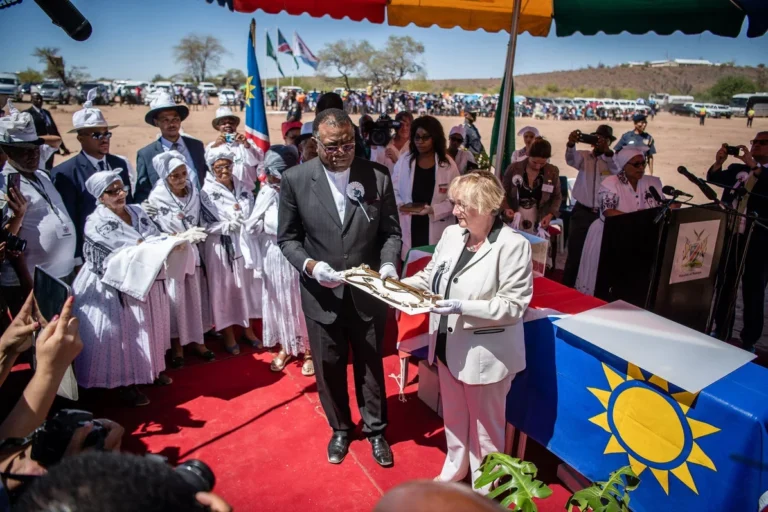
On 19 August 2026, South Africa hosts a historic repatriation send-off and handover ceremony at Iziko Museums in the Western Cape. The occasion honours the return of ancestral remains currently held at Iziko Museums, marking an important step in restoring dignity, identity, and belonging to communities whose ancestors were separated from their homeland for generations.
[in Dutch] Since 1902, the Rijksmuseum Amsterdam has had a diamond stolen from Indonesia. It has been formally requested back and that request will probably be granted. But who in Indonesia owns the diamond? The government, or the Sultan descendants, journalist Saskia Konniger wonders?
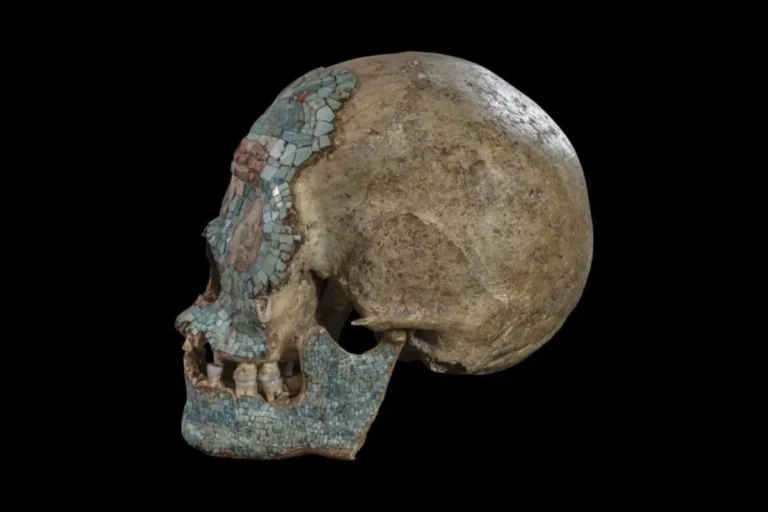
A rare pre-Hispanic human skull decorated with a turquoise mosaic is now under the protection of Mexico’s National Institute of Anthropology and History (INAH), a year after its repatriation from the Netherlands. INAH is in discussions with the Yucu Saa Community Museum in Villa de Tututepec, Oaxaca, which has expressed an interest in safeguarding and exhibiting the skull.
For decades, the descendants of the Senegalese Muslim mystic, scholar, and military commander Omar Saïdou Tall have been trying to retrieve the “treasure of Ségou” (looted in 1890) from the French state. The new French restitution law offers new hope.
The Djidji Ayokwe, a sacred "talking drum" which was looted by French colonial troops in 1916 and taken to France, arrived in its home village in Côte d'Ivoire on Friday, where local people were able to see it for the first time since it was repatriated in March.
Five years after the return of 26 objects from the royal treasures of Dahomey, Benin has submitted a new restitution request to Paris for 35 colonial works and archives. This action is based on a French framework law that came into effect in May, designed to facilitate such transfers.
Amir Al-Khafaji writes: Western museums stripped my homeland (IRAQ) of its ancient soul under the banner of "civility." Today, they hold my ancestors’ legacy behind paywalls.
[in French] French historian Yannick Le Marec retraces the cultural mechanism that prepared the way for the plundering of the colonies. "Knowing how an object arrived in a museum is not impoverishment." Interview by Erwan Le Bec.
After sitting for decades in a collection in Melbourne University , the remains of nine Yolŋu ancestors have been sung back onto their country in the remote Northern Territory. Elders had been pushing for the remains to be returned for years. For them the ceremony is a milestone.
For many years, the American museum community has been pursuing jars, created by enslaved potter David Drake (1800-1870). However, now the Museum of Fine Arts (MFA), Boston, has made a necessary and bold move: it has recognised the jars as stolen objects.
On 1 July 2026, Bolivia Archaeology National Museum (Munarq) reopened its doors with the permanent exhibition ‘Eternal Roots, Living Legacies,’ an exhibition that highlights the connection between pre-Hispanic customs and current traditions of the Andean country. It also has a section about repatriation.
Nepali content creator Nikki Thapa writes: Decades of looting turned living Deities into costly global commodities, but the era of quiet disappearance is giving way to one of recovery and return.
[in German] In a festive ceremony, the Governor of the Erongo Region, Nathalia /Goagoses, accepted the "Usakos Railway Workers' Collection" collection on behalf of the Republic of Namibia. A Swiss railway engineer and his wife collected them between 1903 and 1905 in a context of colonial violence.
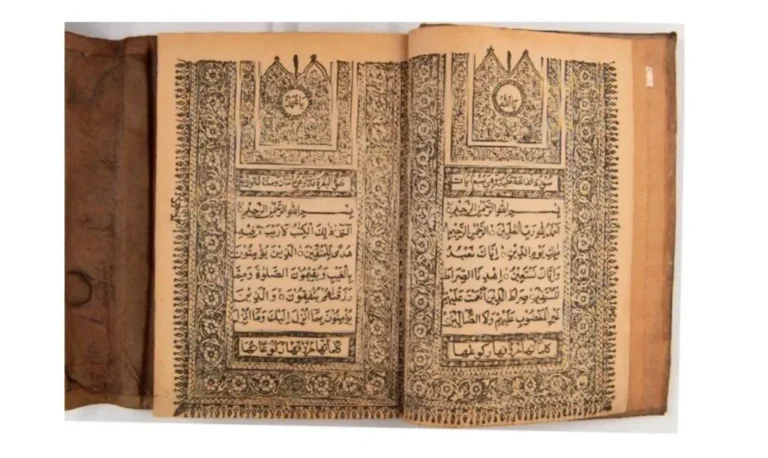
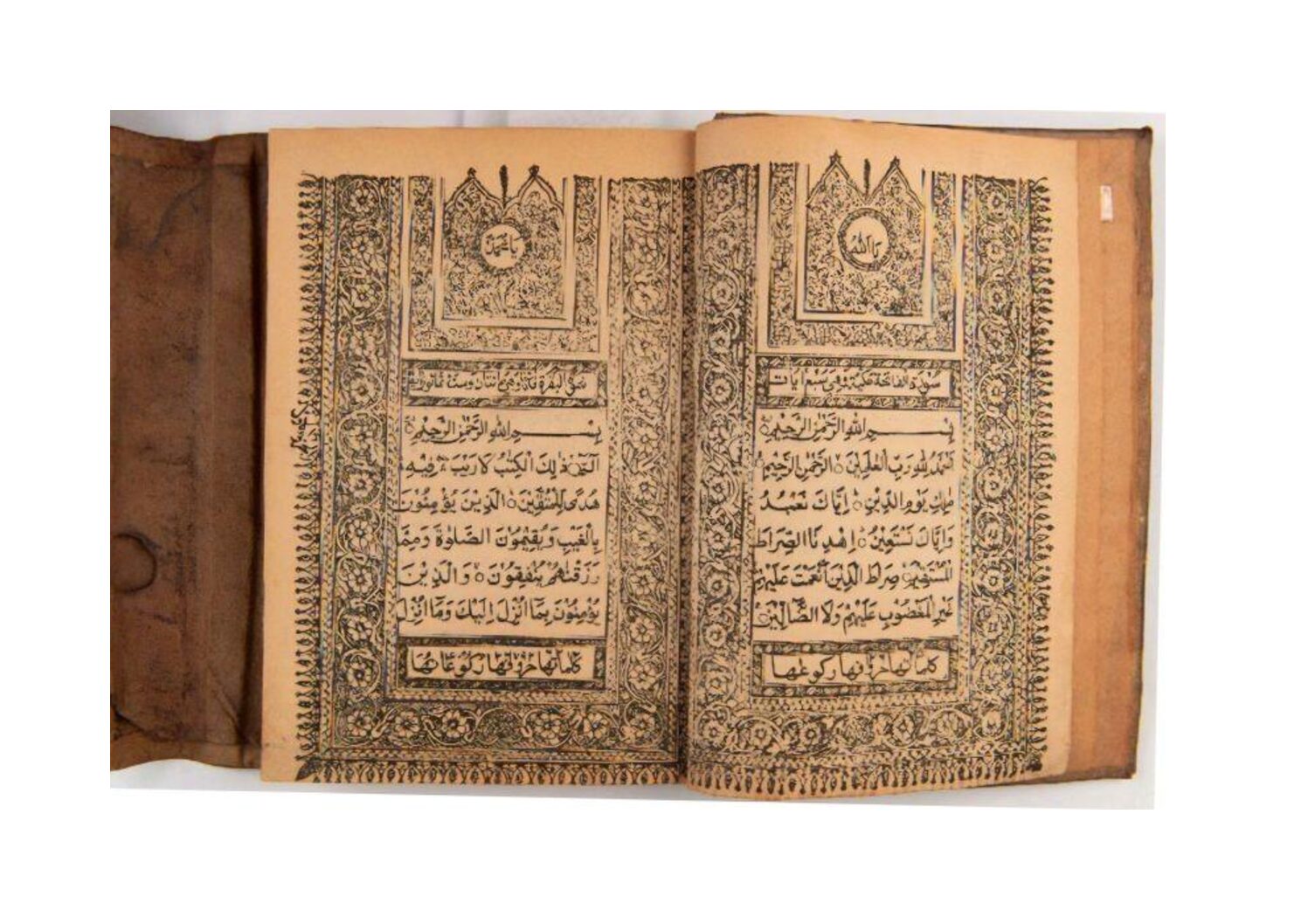
The most important is the Quran of Samory Touré, one of Guinea's leading figures of resistance against the French colonial conquest. It is Guinea's first restitution request since 1968.
Over 2,000 ancestral remains and sacred objects belonging to the Santa Ynez Band of Chumash Indians have gone home. Dating back thousands of years, they were long confined to wood trays and boxes at Yale and Harvard’s Peabody museums. Chumash representatives called this treatment of their ancestors “cruel and inhumane.”
During a ceremony and an ecumenical service in the University Church of Freiburg, Freiburg University prepared for the repatriation of ancestors of the Maka community from Cameroon. The human skulls are part of the Alexander-Ecker collection, anatomist from Freiburg in c. 1860.
The Australian Museum has returned remains of 17 Rapa Nui people to their rightful home of Easter Island. They were removed from sacred burial sites in 1882 by a German naval expedition, and sold to the Sydney-based museum, where they have remained for more than 140 years.
In this podcast, Jessica Coldrey asks Miriama Bono to share her insights on the interconnectedness of land, culture, and ocean in Polynesian perspectives. She discusses her work in museums, repatriation efforts, and the importance of storytelling in preserving heritage. So far, 20 objects came back, be it most of them on a six years loan.
Nigerian art curator Yahuza Rabiu Garba argues: We need to decolonize our understanding of heritage spaces. The Eurocentric model insists on the "four walls" idea, a quiet archive where artifacts are curated to be looked at, but never touched. But...
An exhibition at the Slovene Ethnographic Museum confronts the colonial imbalance of Tanzanian artefacts being more accessible to Europeans than Tanzanians, asking who truly holds the right to tell the nation’s history.
Moon Above Art Advisory argues: For decades, the auction room was considered the theatre of the art market. Today, some of the most important transactions are happening elsewhere: quietly, privately, and with far greater strategic control.
Yemen’s Antiquities Authority has identified 28 allegedly looted Yemeni artifacts in overseas collections, including eight pieces recently offered for sale at auction houses in London and 20 held by the British Museum.
[in French] Radio Télévision Suisse looked into the sale of human remains in the program 'Vraiment' de Cécile Tran-Tien. She finds skulls, skeletons and even fetuses on the open market and reveals the extent of the trade in human remains via Ricardo, Vinted, Instagram...
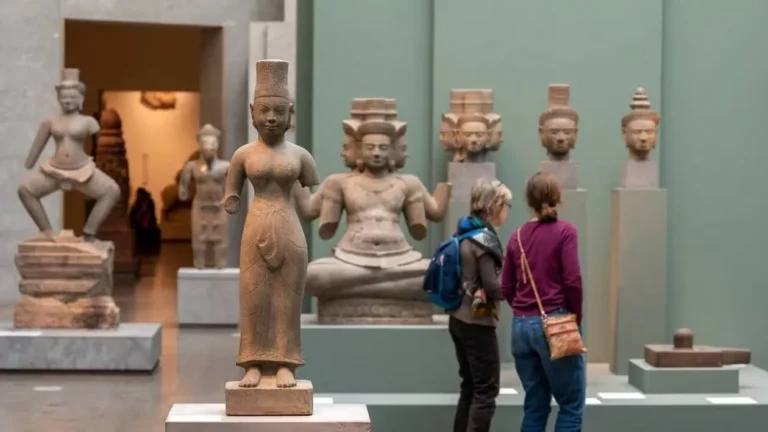
The conversation around restitution just got a major jolt of momentum. Musée Guimet of Asian Arts in Paris, where Chinese artifacts make up roughly a third of the collection, has set a groundbreaking precedent: if any of its Chinese relics are definitively proven to be looted, they will be sent back to their country of origin within 24 hours.
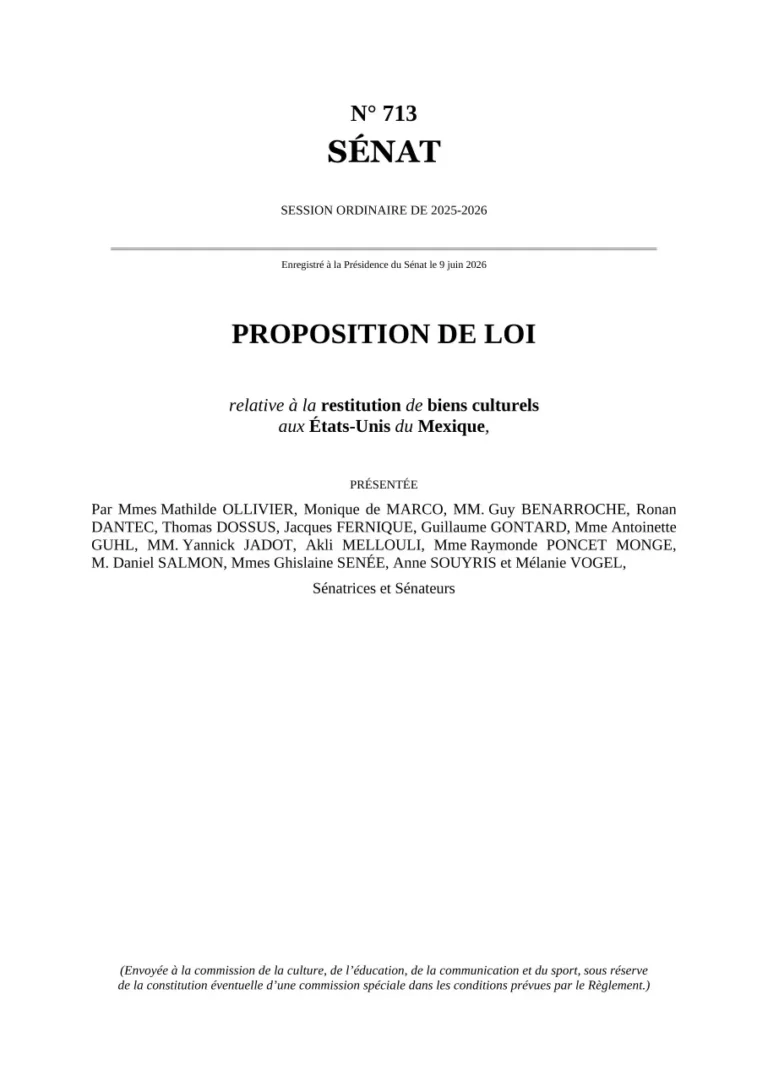
[in French] Two Mesoamerican manuscripts, the "Codex Borbonicus" kept at the National Assembly and the "Codex Azcatitlan" at the Bibliotheque Nationale de France (BNF), are the subject of a bill tabled in the Senate on June 9, 2026 by Mathilde Ollivier and several of her fellow senators, which would organise their restitution to the United Mexican States. Is this thanks to the new restitution law?
We, the signatories of this petition, demand that Dr. Mostafa Madbouly, the Prime Minister of Egypt, submits an official request to repatriate the Rosetta Stone and the other sixteen artefacts and objects that came out of Egypt by illegal means.
That the Netherlands will return 2,000 stolen objects to Ghana, is - according to the Dutch Ministry of Education, Culture and Science (OCW) - a premature conclusion. For claims of looted colelctions, the normal Dutch procedures will have to be followed. The catalogue with the objects is a first step. See RM* of 21 June 2026.
[in Dutch] In a letter, dated 19 June 2026, from the government of DR Congo, seen by political scientist Nadia Nsayi, DRC demands the return of all skulls and others for parental remains that are in Belgium since the colonial period.
Ghana is set to receive over 2,000 cultural artefacts from the Netherlands, while Germany has also identified items linked to the Kpando traditional area for return, according to Foreign Affairs Minister Samuel Okudzeto Ablakwa during the “Accra Next Steps” discussions on cultural restitution. The move forms part of ongoing international efforts on cultural restitution and Ghana’s push to recover artefacts taken during the colonial era.
In a major step toward cultural restitution, taken during a high-stakes African Union summit in Addis Ababa, a specialised international task force has been established to spearhead the return of looted and illicitly trafficked cultural artifacts back to the African continent.
A Glasgow auction house founded by TV presenter Anita Manning has been criticised for offering human remains for sale. Human bones, including a skull, were due to go under the hammer on Friday, but Great Western Auctions withdrew the item for sale after being contacted by BBC Scotland News.
The rejection by the city of Bordeaux of a private donation of 53 art objects allows for the direct repatriation of these works to their countries of origin, especially Gabon, which will receive 33 pieces from the collection. The other recipients are Nigeria, Niger, Ivory Coast, the Democratic Republic of Congo, Burkina Faso, and Togo.
[ In Dutch ] The French parliament has passed a law that makes it easier to return at least 150,000 pieces of art stolen during the colonization. "In France, people prefer not to talk about historically disturbing topics." an interview with art historian, Bénédicte Savoy
An independent commission has revealed that the Dutch Royal Family possesses one thousand objects from the former colonies. Although most were ‘donated’ at the time, a few dozens of objects are booty of war and were taken by colonial officials and soldiers during military confrontations.
The Windsor Shades estate in Virginia has been sold to the Pamunkey Indian Tribe, reconnecting one of Virginia’s most significant colonial and Revolutionary War landmarks with the people who originally inhabited and stewarded the land centuries before English settlement.
Salinan Tribal Councilmember Robert Piatti remembers when he realized that what was sitting beneath a university campus wasn’t just archival material—it could also be people. “I was a reporter at Cal State Long Beach,” he said. “In the humanities building, down in the basement, there were boxes and boxes of bodies. And it was awful, really awful.”
Earlier, the French government supported a bill allowing for the remains of people who were exhibited in colonial-era “human zoos” in Paris to be returned to their ancestral lands in French Guiana. Now senators have also declared their support for the law. It meets a long-standing demand of Indigenous communities in France’s overseas territories, acknowledging a dark chapter from the country’s past. The association Moliko Alet+Po has played a crucal role.
[in French] With the law on the restitution of cultural property adopted, CNRS researcher Catharine Titi questions, in Le Monde, the legal and archaeological issues related to this question through a reflection on the fragments of the Parthenon at the Louvre. France could draw inspiration from the examples of the Vatican, Italy and Germany.
During his visit to Kenya, French President Emmanuel Macron said the process of returning African artworks looted during the colonial era had become "unstoppable". But, despite a growing number of restitution requests, France has returned only a handful of artefacts to its colonies.
Samuel Bachmann (Bern Historical Museum) argues: If museums are to confront their – and Switzerland’s – coloniality, they require a new mandate: one that questions their interpretive authority and addresses fundamental questions about why, and for whom, cultural heritage is preserved, researched and communicated.
The Chola Plates , historical objects originating from India held by University Libraries Leiden (UBL) have been handed over to India at the occasion of India's PM Modi's visit to the Netherlands. The restitution of this heritage follows the advice of the Dutch (national) Colonial Collections Committee.
The Wellcome Collection in London has committed to returning around 2,000 sacred manuscripts to the Jain religious community as part of a “landmark” restitution framework agreement. As a result of the agrrement, the manucripts will stay in the UK.
The Kings Own Royal Regiment Museum Trust presented ancient relics of Emperor Tewodros II of Abyssinia at the University of Cumbria in Lancaster o the Ethiopian Heritage Authority (EHA).
Culture Minister Samira Tovela announced Mozambique’s official effort to reclaim around 800 colonial-era artworks stolen during colonization. The process, supported by UNESCO and EU nations, comes ahead of the country’s 50th independence anniversary in June. The cultural and symbolic value is estimated at over USD 100 million.
[in French] In October 2025, the Louvre lost several jewels among the Crown Jewels. FranceInfo found out more about how the security system was foiled and who sponsored the theft.
1. The text of the law [in French]. 2. Outcome of as poll among French population. 3. The law and Macron's Africa policy. 4. Bénédicte Savoy praises the new law.
Plunder stolen from Ireland and stored in museums of former colonial powers should be returned. But there is no list of what is held abroad in ‘post-colonial museums’. Culute Minister also said that restitution cannot be a one-way street.
Minister Patrick O’Donovan said there was a “compulsion” on former colonial powers to return “loot” taken from people against their will.
The Natural History Museum in London has formally returned seven ancestral remans to Japan as part of a ceremony this week. The museum hosted the Japan Government’s Minister for Ainu-related Policies and representatives from the Ainu Association of Hokkaido.
As Scotland prepares to go to the polls, Museums Journal has taken a look at the promises made by the nation’s main parties on culture, heritage and the arts. The Scottish Greens are the only party explicit about restitution and repoatriation matters.
New York City Mayor Zohran Mamdani has called for the return of the priceless Koh-i-Noor diamond from the UK. The 105-carat diamond is part of the Crown Jewels but its ownership has been disputed by India, who claims that it was stolen during British rule. Mamdani was born in Uganda but has Indian roots.
Brighton & Hove Museums will return 45 cultural belongings to Botswana following a 2022 repatriation claim by the Khama III Memorial Museum in Serowe. The belongings were acquired in the Gammangwato region of Botswana in the 1890s by Reverend William Charles Willoughby, a missionary in Old Palapye. He worked with Kgosi (Chief) Khama III as a translator and advisor.
[in German] The Stiftung Preussischer Kulturbesitz (SPK) in Berlin is to return hundreds of skulls to Cameroon, Togo, Ghana and Nigeria. The origin of the human remains has been researched for several years. "If at all possible, the human bones should be able to return to where they came from," said foundation president Marion Ackermann.
This is about Yemen. About how an American foundation oversaw the exploitation of Yemen’s archaeological inheritance in British-occupied South Yemen during the early 1950s. About Yemen's policy to recover belogings that were lost in the colonial days. And it answers the question why, when and by whom Yemen was colonised.
Myra Mentari Abubakar writes: When Dutch soldiers burned the home of Acehnese resistance leader Cut Nyak Dhien in 1896, they recorded the objects they took under her husband’s name. More than 130 years later, the Netherlands has returned one of those objects—but to Jakarta, not Aceh, and still under Teuku Umar’s name. The gendered absence built into colonial records-keeping continue to live on in the efforts to return colonial loot.
The Restitution Law, approved by the French parliament, evokes all sorts of reactions. RM* summarises them in a few posts. In this post, the Chinese Global Times writes that while countries around the world have been progressively engaging in the repatriation of cultural relics, Japan stands out as a negative example.
The Restitution Law, approved by the French parliament, evokes all sorts of reactions. Most are explaining the law and positive in tone. In a previous post, an opponent of the law had his say. In this post, Saeed Saeed, journalist in Abu Dhabi, points to practical consequences for countries such as Algeria, Jordan, and Egypt.
The Restitution Law, approved by the French parliament, evokes all sorts of reactions. Most are quite similar (and positive). Senegalese philosopher Souleymane Bachir Diagne has serious doubts about it.
Two looted West African musical instruments languishing at the Fowler Museum in Los Angeles are creating a restitution challenge, because they have human skulls attached to them.
The handover ceremony, directed by South African President Cyril Ramaphosa, took place at the Iziko South African Museum in Cape Town, marking a significant moment in the restoration of African heritage. The repatriation also underscores growing cooperation among African nations in addressing historical injustices linked to colonial-era dispossession.
The French parliament has unanimously adopted on 13 April a framework legislation for the deaccession of cultural items plundered from former colonies. Nine years after President Emmanuel Macron pledged repatriation of African heritage, the new law finally opens the way for the return of items illegitimately taken by force. The bill was initiated in 2023, but it has been delayed by political instability and changes of government as well as the sensitivity of the subject.
[in French, in English] The French government will support a bill on the return of Kali'na ancestral remains to French Guiana. They had been exhibited in a "human zoo" in Paris and kept in a museum in Paris since the end of the 19th century. A Kali'na Association had been asking for them since 2024.
Vast majority of Africa’s cultural legacy remains abroad, where institutions claim superior care, shared human heritage. Three African analysts comment. ‘Biggest issue is changing the historical narrative that excluded us.’
Institutions are grappling with the human remains in their collections that were used to justify debunked theories about race. To understand this better, Nina Siegal visits Museum Vrolik in Amsterdam and its exhibition “Imagine: The Future of Human Remains from Colonial Contexts,” which runs up to 27 June 2027.
As one of the biggest targets of wartime looting in centuries past, China is now positioning itself as a global pioneer in repatriating lost cultural artefacts. In two articles, Xinlu Liang looks a Chinese demand that Japan returns an ancient tablet, which could mark a ‘historical reckoning’, and how China is wielding law, diplomacy and a Global South coalition to rewrite the rules of restitution, filling a void left by a retreating US.
The chair, which will be launched on 22 June 2026, will address issues related to illicit trafficking, restitution and the management of collections originating from colonial contexts.
Museums in a country like Ghana have an impoortant function in preserving ervidence of the past and in shaping together the country's history. A self-critical look from Ghanaian professionals in their museum practice, especially that of the National Museum.
South Africa has reburied the remains of 63 Khoisan people, among southern Africa's oldest indigenous communities. The remains were part of museum collections in the Hunterian at the University of Glasgow in Scotland and at the Iziko South African Museum in Cape Town. The remains were laid to rest at a historic monument near Steinkopf, in the Northern Cape province, during a ceremony attended by President Cyril Ramaphosa.
Reporters from the Chinese newspaper Global Times visited Japan and found that looted Chinese cultural relics are being displayed and even promoted as militarist "trophies," including at a notorious shrine. History must not be distorted, and heritage must not be plundered. But to this day, Japan has not returned these looted relics. Instead, it has attempted to conceal and deny this history.
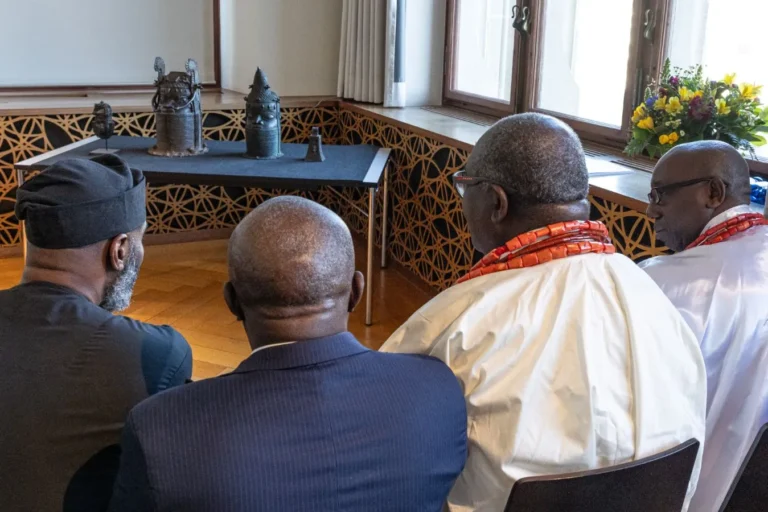
In March 2024, Nigeria’s National Commission for Museums and Monuments (NCMM) filed a formal restitution claim on behalf of the Nigerian government for 14 Benin artifacts held by the Ethnographic Museum at the University of Zurich (UZH). The University of Zurich has decided to honor this claim. "Signing the property agreement is not just a legal act, but the recognition of colonial injustices", Zürich's lord mayor, Corine Mauch, said.
The remains of an unknown Aboriginal man taken to London in 1900, have been returned to Country in Sydney. A reburial was held for ‘Uncle’, conducted by Indigenous elders at Berowra Creek.
The Royal Ethiopian Trust (RET) is celebrating the return of a historic treasure: the gold hairpin of Etege Tiruwork Wube, wife of Emperor Tewodros, once taken during the storming of Magdala in 1868.
The grandson of Ethiopian Emperor Haile Selassie I avoids confrontation and uses patience and strategy in oder to retrieve stolen objects from public and private parties in Great Britain. It is part of a wider demand for historical justice that continues to resonate across the African diaspora.
Descendants of Zimbabwe freedom fighters executed and beheaded in southern Africa by colonial British forces in the 1890s have called on the Natural History Museum in London and the University of Cambridge to help them find their ancestors’ looted skulls.
Exclusive Guardian study finds UK museums hold more than 260,000 items of remains, often in sacrilegious ways. MPs and archaeologists protest: It is a shameful legacy of colonialism.
The aution included 40 archaeological pieces and were auctioned during a live sale on 27 February 2026, at Maison Millon in Paris. The Culture Ministry started legal procedures and used diplomatic channels to seek a return. In the meantime the lots have been sold for 1,2 million euro.
[in French] Cécile Mendy, a student in Heritage Professions at the Gaston Berger University of Saint Louis in Senegal, discusses her research on endogenous conservation – the idea that conservation practices grounded in local knowledge can act as a form of cultural sovereignty.
The Ashmolean Musuem of the University of Oxfoird has returned a 16th-century bronze to the Government of India following research into the object’s provenance and liaison with Indian authorities.
Prof. I Nyoman Aryawibawa emphasized that lontar manuscripts are invaluable sources of traditional knowledge with significant historical, philological, and cultural value. This donation is considered a strategic step in strengthening the faculty’s academic functions, particularly in supporting research, teaching, and community service based on local cultural heritage.
‘Extraordinary’ golden lamb’s head pillaged in 1874 from what is now Ghana remains hidden in officers’ mess. The glistening golden ram’s head would seemingly be worthy of any museum, but it remains hidden within the regiment’s mess at Larkhill in Wiltshire.
Ganga Rajinee Dissanayaka discovered at a conference in Europe that Benin Bronzes, Egyptian antiquities and African collections were discussed. But Asia was unmentioned. And then when a colleague from Indonesia brought up the topic of Southeast Asian collections, the moderator nodded graciously and then moved on to another topic. Decolonisation, it appears, is an African story.
[in Dutch] In museum De Fundatie in Zwolle, Nigerian artists shine their light on an antique plaque of a mud fish. The fish was stolen from Benin City at the end of the 19th century, and it will return to that city next summer. 'The mudfish is symbolic of the flexibility of the Edo people.'
France has officially returned the sacred Djidji drum to Ivory Coast. It is among 148 cultural belongings claimed by the Africab country in 2018. The text of the special law is included.
Lewis McNaught writes: Britain’s Department for Culture, Media and Sport (DCMS) will review the exclusion it imposed on national collections that prevents them from returning cultural objects on moral grounds. The review provides an opportunity to reverse an unwelcome inconsistency in the UK Charities Act 2022.
President John Dramani Mahama has sent a clear message to the international community: the time for "ceremonial language" regarding Africa’s historical injustices is over.
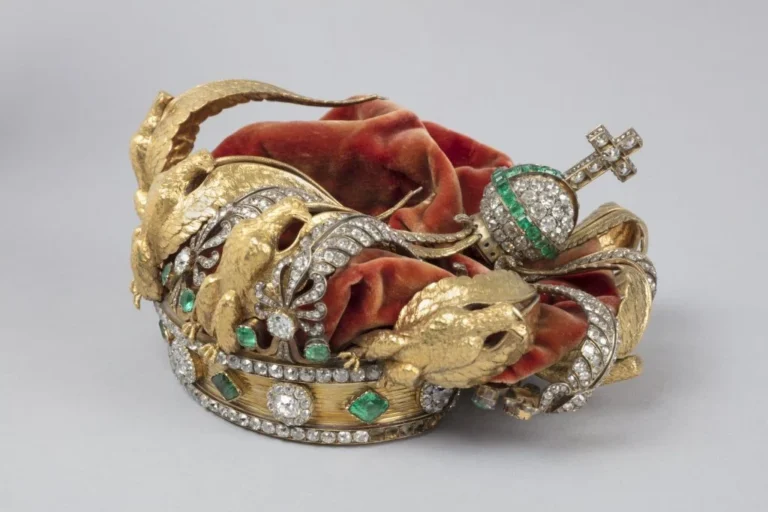
The Louvre will restore Empress Eugénie’s crown, which was damaged during the $102 million heist in October 2025. Experts found the diamond-and-emerald crown deformed, but most stones remain intact after violent theft.
During negotiations in the 1960s about a new relationship, DR Congo claimed the archives with information about its rich natural resources. Belgium was not prepared to do so. The documents, housed at the AfricaMuseum are now being sought by DR Congo and KoBold Metals, a Bill Gates-backed mining and artificial intelligence company that struck a deal last year with Kinshasa to digitise them.
[in Spanish] The exhibition "Hotel of the Plundered Artifact" at the National Museum of Anthropology in Madrid reinterprets the history of the colonizers in Africa through the collections, with care and new ways of listening.
Ed Gaskin writes: History is often taught as if serious art followed a single European arc—from classical Greek sculpture to Renaissance realism to modern museums—while Africa appears late, peripheral, or confined to masks and ritual objects. This framing is not only incomplete; it is false.
Vishakha N. Desai writes: The return of looted artworks shows India is no longer treating restitution as a zero-sum recovery, but as a negotiating tool that asserts ownership while deploying art as soft power.
Barnaby Phillips: The decision by the university’s Museum of Archaeology and Anthropology to return looted Nigerian treasures leaves larger institutions increasingly isolated. Which museum will be the next one? Uwa Igbafe: This case reflects a gradual transition from legal acknowledgement to the actual transfer of artefacts.
The Shanghai University’s Research Centre for Chinese Relics Overseas has completed evidence-based research proving that a precious cultural relic currently in Japan belongs to China, and has urged - with support of Japanese cultural groups - Japan to promptly return it.
Restitution of cultural property is gaining momentum across Africa, framed not as symbolic but as a fundamental right. Senior officials, ambassadors, scholars, and international representatives gathered in Addis Ababa to debate restitution as a pillar of justice and identity.
The Kingdom of the Netherlands has formally handed over an inventory of Ghanaian cultural artefacts held in Dutch collections, marking a major step toward the restitution of objects looted during the colonial era.
The French Senate on Wednesday adopted a draft legislation to facilitate the return of artworks and other prized artefacts looted during the country’s colonial era. This new procedure could help address requests already submitted by various countries, including Morocco, Mali, Algeria and Benin.
While Britain has shown little inclination to even seriously consider restitution of the Kohinoor or other cultural artefacts taken from India, several European countries have begun doing so, with the Netherlands emerging at the forefront. While doing so, all sorts of challenges pop up.
Ayọ̀ Akínwándé examines restitution, spiritual provenance, and the unresolved tensions between royal authority, state power, and museum-making in Benin City. The conflict between the MOWAA and the Benin Court goes back to the colonial days.
The British Museum’s attempt to frame its decision to ‘share’ a few colonial-era artefacts with the Chhatrapati Shivaji Maharaj Vastu Sangrahalaya (CSMVS) in Mumbai as a move to ‘decolonise’ its collection has been ridiculed by art historians as a ‘con’. There’s only one way to show contrition: return the stolen goods.
[in German] Parts of the collection of the closed, missionary Werl museum "Forum der Völker" in Germany are under suspicion. Three collections may have originated from colonial looting. The German Lost Art Foundation sees a need for further research.
According to Ruby Satele, a PhD candidate from Sāmoa at the University of Vienna, rematriation involves not only the return of ancestors, but also practices of care while they remain in storage. Her research combines strong theoretical thinking with practical action to challenge power imbalances and promote greater justice in museums and universities.
For decades, the demand for colonial reparations in Africa was treated by Western capitals as a rhetorical exercise — a radical plea from the fringes that could be safely ignored or pacified with vague “expressions of regret.” By the end of 2025, however, that era of Western comfort officially ended in Algiers.
To commemorate years of diplomatic relation—and sure, with an eye to continued trade—France and Mexico exchanged two ancient manuscripts: the Codex Azcatitlán, and the Codex Boturini.
[in English and Greek] Leading British legal experts have questioned the legality of the UK government’s decision to bar the country’s national museums from deciding independently on the repatriation of cultural objects.
[in English and German] One of the mortal remains of three people of Indigenous Australian descent in the University of Cologne’s Anatomy Center, which were planned to be returned on 4 December 2025. was discovered during the preparations for the return to have been replaced.
For more than fifty years, my father quietly assembled one of the most significant private collections of Nigerian and West African art ever held in a family home. Carvings. Bronzes. Masks. Ritual objects. Works that carried centuries of history, belief, and mastery.
As Africa enters 2026, its museums stand as vibrant guardians of the continent’s layered history, from ancient pharaonic legacies to the scars of colonialism and the triumphs of independence. Amid global conversations on cultural restitution, with artifacts slowly returning from European institutions, new and revitalised venues are reshaping how Africans and the world engage with the past.
An 18th-century Joseon Buddhist painting, the 'Ten Kings Painting,' which had been held by the Metropolitan Museum of Art (the Met) in the United States, has been returned to its home at Sinheungsa Temple in Sokcho, Gangwon Province.
More than 1,790 Aboriginal and Torres Strait Islander ancestral remains have been repatriated from 11 countries over the past 35 years. An unknown number remain abroad. Eight major museums can apply for up to $100,000 a year in federal funding to support the return of ancestors and cultural objects.
[ in French ] The AfricaMuseum in Tervuren, Belgium, changed from a ‘museum for colonial propaganda’ and a ‘museum of avoidance’ into one that ‘multiplies voices on colonial history and its persistence’, says historian Yasmina Zian.
This restitution of 107 objects is being recognized as exemplary due to its transparent process and the collaborative approach between the institutions involved. The artifacts, once held in private and public collections in Switzerland, have now been formally transferred to the National Museum of Abidjan.
A new gallery at the Manchester Museum displays thousands of African artefacts, aiming to spark discussion on colonial-era looting and restitution. The initiative seeks public input on the origins and returns of these items, amid growing calls for repatriation of looted cultural heritage.
Emeline Smith writes: Long-term loans to former colonies are not restitution. They do not acknowledge historical wrongdoing, nor do they restore agency to source communities. The loan program is a rebranding exercise that preserves colonial power structures while pretending to dismantle them.
Heba Abd el Gawad writes: There is a point at which professional detachment becomes impossible. As a member of a community of descent as well as a curator, when I enter the Horniman store, I am not simply surveying collections. I am standing in the presence of my own kin. I encounter my Egyptian ancestors in spreadsheets, acid-free boxes and collection management plans.
[ in Dutch ] After five years, research project Pressing Matter, which dealt with the restitution of colonial collection pieces, ends. De Volkskrant talks to initiator Wayne Modest about the project and its influence on the World Museum.
The All-Party Parliamentary Group for Afrikan Reparations (APPG-AR) is calling for a ban on the public display of human remains without consent.
The group also recommended the establishment of a framework for museums to transparently audit their collections of human remains across the country as part of a briefing at the House of Commons last week.
Naturalis Marcel Beukeboom: “We will take time to think of a new story to tell. That story will most likely include references to the evolution and early humans, and may also address colonialism and perhaps even the influence of Dubois. But without his collection, and with everything we have learned, this will be a different story.”
Bella d'Abrera writes: The decolonisation movement is making headway in Australia’s museums and libraries which are adopting dangerous politics which will ultimately call into question their very existence. In trying to erase the past, we erase ourselves. (It is an older article but worth offers an anti-restitution perspective)
The British Museum is sending 80 prized treasures abroad in a push to "decolonise". The artefacts will be sent to a prominent institution in India as part of a new "collaborative approach" with Britain's former colonies. It comprises treasures from ancient civilisations not typically found in Indian collections.
In April 2026, officials from the Japanese government and the Ainu Association of Hokkaido will travel to Britain to receive four of the five sets of remains, the government said Friday. The locations where the four sets were excavated are known.
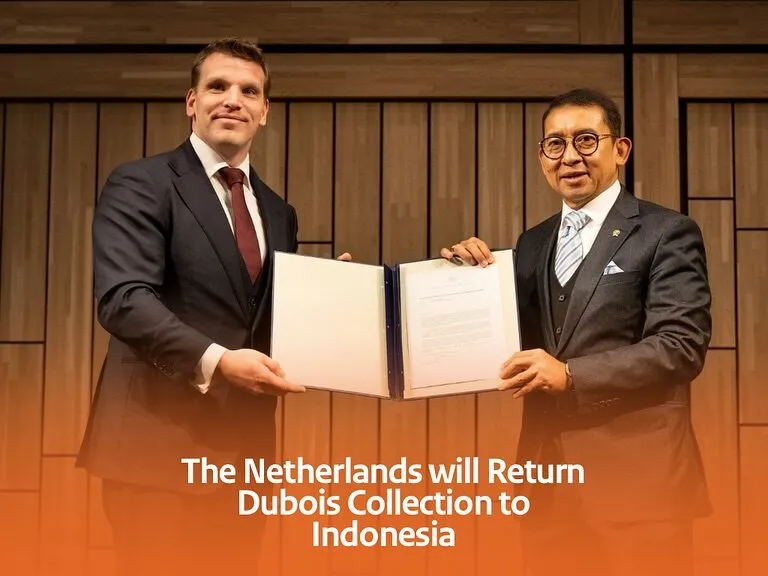
Four important objects from the Dubois collection were handed over to Indonesia on Wednesday 17 December. The handover ceremony took place at the National Museum of Indonesia in Jakarta, which will exhibit the objects.
[ in Dutch ] On 24 November 2025, a limited number of people was allowed to see the 260 skulls from DR Congo in the Royal Institute of Natural Sciences in Brussels. The diaspora had pressured for the visit Some quotations around this article behind a paywall.
Barnaby Philips discovers one more return of a Benin object from the Netherlands and further analyses what went wrong in Benin City: Two days before the aborted viewing of the Museum of West African Art (MOWAA), Oba Ewuare II visited his ally Monday Okpebholo, the governor of Edo State. ‘Please stop the opening of the MOWAA.’
Western museums are returning the Benin Bronzes to Nigeria, but a state-of-the-art museum to display them is still a long way off. Alex Marshall saw hundreds of Benin Bronzes while reporting this article in Benin City and Lagos, Nigeria.
Restitution activist Mwazulu Diyabanza explains why he is taking the law into his own hands. His actions are a calculated act of civil disobedience, executed for maximum political impact without engaging in violence or damaging property.
[ in German ] The Stiftung Preußischer Kulturbesitz will return spiritual objects from Kpando containing human remains to Akpini People in Ghana, and spiritual objects to Australia. Currently, they are in the Ethnological Museum in Berlin.
In an address delivered in Algiers, the Caribbean Community (Caricom), unveiled a comprehensive ten-point plan calling for concrete reparations for the crimes of colonialism. This intervention strongly underscored the necessity of a unified, coordinated effort between Africa and its diaspora to confront centuries-long injustices, restore historical rights, and secure meaningful mechanisms for recognition, compensation, and restitution.
Senegalese economist and thinker Felwine Sarr called for a deep reconsideration of the museum, its history, its functions, and the narratives it upholds as African artworks dispersed across Western museums gradually return to the continent. Africa should rethink museum models.
The Royal Ethiopian Trust announces the acquisition and planned repatriation of a 19th-century gold hairpin belonging to Empress Tiruwork, wife of Emperor Tewodros II of Ethiopia. It is one of thousands of artifacts seized by British troops following the battle of Magdala in 1868.
[ in Dutch ] Collaborative research between heritage institutions in Europe and heritage communities outside Europe offer a unique opportunity to democratise the production of knowledge about the past, the present ,and the future, writes Katrijn D'Hamers (p. 72 ff).
Africa has renewed its most assertive push yet for historical justice (including restitution), as ministers, jurists, and diplomats gathered in Algiers for a landmark conference on the criminalisation of colonialism.
The documentary Elephants & Squirrels by Swiss filmmaker Gregor Brändli chronicles a Sri Lankan artist’s discovery of looted artefacts in Basel and her mission to return them to Sri Lanka, exposing Switzerland’s uneasy reckoning with its colonial entanglements.
The agreement represents the first major case of art restitution involving works created by an enslaved person in the U.S. — a process traditionally associated with families seeking the return of art looted by the Nazis in World War II.
[ in Dutch ] Time is running out to return the hundreds of human remains collected by soldiers, missionaries and others in Congo, says historian and anthropologist Lies Busselen. The combination of archival and fieldwork in Belgium and Congo continuously encourages us to reflect on the colonial past.
[ in Spanish ] The work of the two expert committees created by Ernest Urtasun, Minister of Culture, to "overcome and challenge the Eurocentrism" of these two institutions, has concluded after six months with the delivery of two projects outlining concrete guidelines for renewing their museographic narratives.
The UK Government is to implement a change in law that will make it easier for museums in England and Wales to restitute objects from their collections on moral grounds. But national museums will be excluded from new rules.
Have a look at the way Vatican News reported about the return of 62 objects to Canada. No indigenous representatives or objects visible. Only Roman-catholic dignitaries. It is a fairly literal translation of the article.
Twelve historical artefacts have been formally returned to Ethiopia after being kept by a German family for more than 100 years. The artefacts were y collected in the 1920s by Germany's then-envoy to Ethiopia Franz Weiss and his wife Hedwig.
“The university regards these historical facts with the utmost gravity, reflects on them with sincere remorse, and hereby expresses our heartfelt apologies.” A process of repatriation has started.
Ghana's Asante king has welcomed the return of 130 gold and bronze artefacts from the UK and South Africa some of which were looted during colonial times and others bought on the open market. 'These artifacts belong where their meaning was born'.
The Vatican is working with the Canadian Catholic Church to return 62 Indigenous objects, says Gilbert Whiteduck . He is the education director and former chief of the Algonquin community Kitigan Zibi Anishinābeg, in western Quebec.
Yesterday, RM* published an item about the repatriation by museums in Great Britain of shrunken heads to Ecuador. Lewis McNaught explains that this is easier said than done. Given the particular cultural contexts of tsantsas (both making and taking), the need for further research and analysis have been agreed. According to him, no repatriation requests have been made to date and given the number of different groups involved, any future process is likely to be extremely complicated.
Julien Volper, acurator at the Royal Museum for Central Africa (Tervuren, Belgium), is writing here in a personal capacity: The Dutch restitution of Benin objects, earlier this year, was motivated by Dutch self-interest, both of the government and of the museum that has to let go a collection.
Elias Feroz interviews Dan Hicks: Monuments, museums, and cultural institutions were often created in the image of “militarist realism,” presenting colonialism and enslavement as eternal. Undoing this legacy is not erasing the past but combating a pernicious ideology.
The opening of the Grand Egyptian Museum comes with renewed calls for restitution: the famous Nefertiti bust, in Berlin since 1913, and the Stone of Rosetta, in London since 1801. Differing points of view.
Several UK museums considering the future of “tsantsas” – also known as shrunken heads – in their collections following a visit by representatives of Shuar people from Ecuador, from whom the items originated. The delegates engaged with 68 human and seven animal tsantsas during their visit, along with other Shuar cultural objects.
Oba Ewuare II today, during a courtesy visit to the Government house spoke explicitly on the proposed plan to build Benin Royal Museum which the past Governor of the state, Mr. Godwin Obaseki converted to EMOWAA and later MOWAA.
The theft of the Louvre’s crown jewels has increased calls for the museum to be more transparent about the colonial origins of the treasures it displays. Their routes to Paris run through the shadows of empire, an uncomfortable history that France has only begun to confront.
In an address at the 2025 Conference of the African Bar Association (AfBA) in Accra, Chief Charles A. Taku of the AfBA Reparations Committee, made an impassioned appeal for what he termed “The Accra Declaration” — a continental demand compelling Europe and the West to pay reparations for the centuries of slavery, colonialism, and cultural theft inflicted upon Africa and its peoples.
The cultural goods – a carved wooden stick, a divination basket, and a bovine astragalus amulet - were originally owned by the Nkuna royal family of Limpopo and used in ritual and spiritual ceremonies dating back to the 19th century. They were taken in 1899 by Swiss missionary Dr. Henri Junod. The royal family had begun negotiations in 2016.
[ in Dutch ] Last Saturday, the Grand Egyptian Museum (GEM) opened in Cairo. German President Frank-Walter Steinmeier was also in attendance. The world's largest archaeological museum displays more than 100,000 art treasures from Egyptian history, but one important piece is missing: the bust of Queen Nefertiti. It has graced the walls of Berlin for over a century.
There is growing debate around the ethics of displaying human remains. Against this background, the Museums Association (MA) has reviewed its Code of Ethics, and questions around storage and display of human remains are a key aspect.
Colonial powers have long used museums to collect, display and contain the suffering of subjugated peoples, transforming trauma into spectacle and erasure into curation. Armenia, like so many small nations whose history was stolen, remains entangled in this architecture of memory.
Over 4.250 respondents from Zimbabwe, Ghana, Ethiopia, South Africa, Morocco, Egypt, Nigeria and Mali participated in a survey, expressing that return of artefacts is an essential party of reparations to the continent.
At the G20 meeting, South African Minister for Sport, Arts and Culture, Gayton McKenzie, champions cultural restitution and digital equity at the G20 summit, advocating for a fairer future. Each G20 member state should have a restitution committee.
[ in German ] Berlin Postkolonial, Decolonize Berlin, and Flinn Works welcome the update of the “Joint Guidelines on Dealing with Cultural Property and Human Remains from Colonial Contexts.” Clearer procedures and the establishment of unconditional returns are steps in the right direction. At the same time, the guidelines fall far short of a human rights- and international law-based understanding of restitution and repatriation.
Former Tanzanian lawmaker and environmental activist Riziki Saidi Lulida argues: 'It was taken from Lindi, from our soil. They carried it piece by piece for more than a hundred kilometers, and some of our people died doing it. But no one in Lindi has ever benefited.'
The British Museum has hosted a lavish fundraiser at 2,000 pounds ($2,668) per ticket, dubbed the "Pink Ball," in the room housing the Parthenon Marbles, igniting fierce criticism and reviving long-standing debates over cultural ethics and colonial restitution. Greek Culture Minister Lina Mendoni condemned as 'provocative indifference'. Here follows a comment by Global Times reporter Chen Xi.
The stolen jewels are also products of a long history of colonial extraction. The sapphires, emeralds, diamonds, pearls, and other gemstones they contained were mined across Asia, Africa, and South America.
The decolonisation of museums worldwide is an unstoppable process. Spain aimed to join the wave of museological decolonisation. In the case of the Canary Islands, this practice presents a series of peculiarities related to their unique historical process.
The German state Baden-Württemberg acknowledges its historical responsibility and is committed to provenance research in order to identify and return colonial cultural goods that were acquired unlawfully. The start was in 2019, when Hendrik Witbooi's Bible and whip were returned to Namibia.
Cultural leaders of an indigenous Ecuadorian community have called for the repatriation of a collection of shrunken heads in the Pitt Rivers Museum in Oxford [GB].
The Hunterian at the University of Glasgow, through the implementing agencies, Iziko Museums of South Africa and the South African Heritage Resources Agency (SAHRA), and in partnership with the Northern Cape Reburial Task Team, have jointly announced the repatriation of ancestral human remains to South Africa.
When tourists tread the halls of Sri Lanka’s national museums or glance over the plaques at sites of historical significance, they are reading stories of the past. But whose? Sri Lankan ethnographer Ganga Rajinee Dissanayaka wonders who made that judgement of what is worth saving, worth memorialising, worth forgetting?
The Director of the Museum of Black Civilisations in Dakar Mohamed Abdallah Ly reflects on the urgent need to decolonize cultural institutions, the symbolism of absence, and the politics of restitution. He also discusses efforts to reconnect the museum with diaspora communities and reimagine its role in Africa’s cultural and intellectual future.
The public display of artefacts looted by British colonial forces at the new Museum of West African Art was supposed to be the crowning glory of a decades-long restitution effort. What went wrong?
Alliance Française Kampala has launched a month-long program, Ethics of Loaning: Strengthening the Discourse on Restitution in Uganda, aimed at involving communities in discussions on the return and ethical management of cultural heritage.
Seven years ago, two men found a bronze Ming Dynasty Buddha statue on a roadside in WA's Shark Bay region, Australia. Tests confirmed the Buddha had been buried for 150 years and is probably linked to the beginnings of WA's pearling industry, which was pioneered in part by Chinese people. The two men want it to be handed over to the Chinese government as a symbol of peace and diplomacy.
A royal shrine from the Joseon Dynasty (1392-1910), believed to have been removed from Korea nearly a century ago during Japan’s colonial rule, has returned home. Known as Gwanwoldang, the wooden structure was officially transferred to Korea through a bilateral cultural collaboration marking the 60th anniversary of normalized diplomatic ties between the two countries.
First Nations leaders talked about the need to develop a national repatriation strategy for artifacts, cultural items and ancestral remains at the Assembly of First Nations (AFN) annual general assembly in Winnipeg.
Centuries of plunder, forced labour, and extraction built the wealth of Europe while impoverishing the Global South. The debt owed is not symbolic; it is measurable, moral, and political. Reparations are not charity—they are justice long overdue. Restitution of colonial collections is part of this.
[ in Dutch ]'Dutch' fossils soon to be seen again in Indonesia: 'Young people here only know the Javaman from textbooks'
Indonesia will soon receive thousands of fossils that are still in museum Naturalis. It is a historic moment for his country, says Indonesian paleontologist Sofwan Noerwidi.
[ in Dutch ] Looted art is a hot issue in the art world. This therefore seems like a good time to return ten pleurists who are now in the Rijksmuseum to Belgium, writes parliamentary lobbyist Marcelo Mooren in this opinion piece.
[ in Dutch ] At the Indonesian Ministry of Culture, they can't count on their luck. The Netherlands returns an important archaeological find to Indonesia. It concerns the skullcap of Dubois, named after the Dutch finder Eugène Dubois. This proved in 1891 that other humanos had existed, which Dubois called the Javamen.
[ in Dutch ] The restitution process of the Dubois collection took an unusually long time. The responsible advisory committee and Naturalis point out the complexity of the case, experts make sharp accusations against the museum.
[ links are in Dutch or in English ] Today, Dutch Minister Moes (Education, Culture and Science) presented a letter to Indonesian Minister Fadli Zon (Culture) announcing this decision. The so-called Dubois collection is now managed by Naturalis Biodiversity Center in the city of Leiden.
Windsor Castle’s splendour hides a legacy of colonial loot, from Tipu Sultan’s swords to the Koh-i-Noor, raising debates on restitution and justice, Jan Muhammad Shaikh writes.
More and more colonial looted art is returned to the country of origin by European countries and museums, yet millions of precious sculptures, masks and bronzes still remain in the hands of the former colonizer. In the Netherlands alone, hundreds of thousands of artifacts are involved. Why? 'They claim that we can't take care of it ourselves.'
Nigeria should establish a bilateral negotiating group with Germany on reparations to pay for its crimes against humanity, comprising the indigenous peoples of Nigeria and other African nations. Not as charity, but as a binding act of justice and a guarantee that such atrocities will never be repeated.
Does the appointment of Bénédicte Savoy indicate a change in the French museum establishment on the issue of returning artifacts that were wrongly taken during the colonial period?
Tilda Gladwell likes to divert your attention from news of war and geopolitical instability for just a moment to an equally pressing issue: the decades-long debate concerning repatriation.
Two pou - ornate carvings - that have been in the South Australian Museum's collection for more than 130 years are now destined for New Zealand after a ceremony in Adelaide on Tuesday.
[ in Dutch ] The objects come from a private collection of the descendants of doctor and amateur archaeologist Dr. Hans Feriz. In her will, his daughter had stipulated that the objects collected by her father in the past would be returned to the countries of origin.
In 2013, the AfricaMuseum near Brussels closed its doors and embarked on a major redesign. The architectural changes must have felt less challenging than the long overdue re-evaluation of the holdings and their presentation. Jeremy Harding reports.
Palmanova paid USD$17,340 for the object. But when it was sent by Fedex to Melbourne, it was seized under the Protection of Movable Cultural Heritage Act. And now, the High Court found the artefact was subject to forfeiture, because it is protected.
[ in French and in English ] Claimed for decades by Antananarivo, these bones had been taken as trophies by French colonial troops after a deadly attack in 1897 in Ambiky, the former royal capital of Menabe. 'Their absence was an open wound on our island'.
The objects, comprising spears, spear throwers and a club, were collected in the late 19th and early 20th centuries and have been held in the museum’s collection for decades.
According to Darius Spierman, France has begun a significant process of confronting its colonial history. This includes the recent return of human remains to Madagascar and a draft restitution bill.
The Japanese civic group, Movement for the Repatriation of Chinese Cultural Properties, urges the Japanese government to return looted Chinese cultural relics, the Chinese Global Times reports. Japan conducted archaeological surveys in China during wartime and later transported their "findings" to Japan under the guise of "academic research."
Social media is helping drive trade in skulls, bones and skin products as UK legal void risks new era of ‘body snatching’. Paul Boateng (Labour Party), who will meet the culture secretary, Lisa Nandy, next month to appeal for a change in the law, has raised specific concerns about the trade in remains of ancestors from Indigenous communities.
Reclaiming stolen artefacts: Africa’s landmark museum at the heart of global discussion about restitution.
Senegal’s Museum of Black Civilisations is asserting Africa’s right to secure its cultural heritage and tell its own story.
American firm KoBold Metals' desire to scan the Congolese geological archives is causing embarrassment in Belgium, which holds a large collection inherited from the colonial era. A project for the digitisation of said archives for research purposes backed by EU funding is already underway.
Nearly five centuries after Spanish conquistador Hernán Cortés signed it and decades after someone swiped it from national archives, a priceless manuscript page has been returned by the FBI to Mexico.
Paul Dailey (Guardian Australian columnist) writes: Bodies and body parts have long been part of collections of imperial plunder over the years – but museums must understand that attitudes have moved on.
Officials from Canadian Heritage have confirmed the federal government has neither the means nor the ability to acquire any of the estimated 4,400 items in the Hudson Bay Company’s (HBC) collection of art and artifacts.
In March 2025, Open Restitution Africa co-hosted a two-day gathering with the University of the Western Cape at the Iyatsiba Lab in Cape Town, bringing together African restitution practitioners, researchers and activists to reflect on how lived experience is shaping policy across the continent.
The Indian government has secured the repatriation of ancient gem relics linked to the Buddha’s remains, two months after it halted their auction in Hong Kong. Indian prime minister, Narendra Modi, said the return of the Piprahwa gems after 127 years was “a joyous day for our cultural heritage”.
Leading academic, Gloria Bell, argues that the Vatican is not only stalling on Pope Francis’ promises of restoring the looted artifacts — but continues to falsely 'refer to everything in their collection as a ‘gift.’
[ in German ] Identity politics, right-wing agitation, financial constraints, restitution: museums and exhibition venues are now under pressure in many ways. A status report. Has the post-restitution era began?
Eight years after French president Emmanuel Macron pledged to return African heritage to the continent, his government has adopted a bill facilitating the deaccession of cultural items plundered from former colonies. The text will be submitted for a vote in the senate on 24 September.
[ in Portuguese ] A delegation from Nagaland in north-east India travels to the Pitt Rivers Museum in Oxford to negotiate the return of remains and artefacts taken during the colonial period.
France's parliament approves returning to Ivory Coast a "talking drum" that colonial troops took from the Ebrie tribe in 1916, in the latest boost to the repatriation of colonial spoils.
High-profile figures, including the former UK Prime Minister Liz Truss, have written a letter criticising what it claims is an “accelerating” campaign to return the Parthenon Marbles from the British Museum to Greece.
The remains of a woman, described as a “non-European skeleton,” were given a full funeral service by Highgate School, the fee-paying secondary in Highgate Village. No relatives could be found.
In a step toward preserving and rediscovering Sri Lanka’s colonial intellectual heritage, the government has greenlit a groundbreaking research project focusing on Dutch-era palm leaf manuscripts of Sri Lankan origin.
An institution is asking its visitors for their view: The Manchester Museum is running a public consultation about the future of Asru, a woman who lived in Thebes, southern Egypt
Hudson’s Bay Company, North America's oldest company, faces bankruptcy and wants to auction objects amassed from its founding in 1670, but it includes many important pieces of Canada’s First Nations and colonial heritage.
The human remains of a man from the indigenous Selk’nam community in Chile were handed over to a delegation from Tierra del Fuego at Lübeck Town Hall. The Selk’nam have now requested that their ancestor be buried in a Lübeck cemetery.
On March 14, the remains of eight Mirning ancestors were returned to their country and buried. The ancestors lived between the late 1800s and 1979, and their remains had most recently been stored at the West Australian Museum.
The Museum of Fine Arts, Boston (MFA), today returned two works of art from the Benin Kingdom to His Royal Majesty Omo N’Oba Ewuare II, Oba of Benin, in a ceremony at the Nigeria House in New York City.
The path to true restitution requires more than symbolic gestures, demanding that Britain repeal its obstructive laws, France accelerate its glacial restitution process, and all former colonial powers establish transparent frameworks for repatriation.
The international seminar Critical Studies on Provenance, History, and Cultural Heritage focused on the role of provenance research in cultural heritage and repatriation efforts. Organized with several Indonesian universities and professional associations, the event highlighted how tracing the origin of cultural artifacts is essential for repatriation claims—particularly in light of Dutch colonial history and recent returns of Indonesian objects.
Gov. Greg Gianforte last week finalized Montana’s two-year budget, which contains several new investments for Indian Country, including a historic increase in funding for tribal colleges and money devoted to repatriation efforts.
Indigenous artefacts will be returned to their ancestral home on Mornington Island in Queensland's Gulf of Carpentaria. More than 3,000 kilometres away in Victoria, Baw Baw Shire staff uncovered the 37 articles in storage.
Nigeria has received 119 Benin Bronzes from the Netherlands — the largest physical repatriation of looted artefacts since the 1897 British invasion of the Benin Kingdom. According to an expert, some of the pieces date back to between the 14th and 16th century.
Benin Digital mentions two objects in Portugal, one of which is in the Sociedade de Geografia de Lisboa. Sofia Lovegrove Pereira sends a podcast [ in Portuguese ], Reparacoes historicas - Preterito imperfeito (28 08 2023), which argues that the Sociedade has indeed one on display but another 76 in store.
South Africa is determined to repatriate the remains of its people taken abroad during the colonial era and those who died in exile as anti-apartheid activists, the culture minister Gayton McKenzie says. Including those of the Khoi-San, who are regarded as among the country's "first people".
The Albanese Labor Government has welcomed the return of 10 First Nations ancestors from three Japanese collecting institutions. A joint ceremony was held in Tokyo. This is the first ever return of ancestors from Japan.
Quoting the recently deceased Kenyan author Ngũgĩ wa Thiong'o on decolonisation of the mind, Kwame Opoku critically analyses a recent interview in The Times with Nicholas Cullinan, the new director of the British Museum.
A delegation of Naga elders and leaders, along with representatives from the Forum for Naga Reconciliation (FNR) and Recover, Restore, and Decolonise (RRaD), gathered at the Pitt Rivers Museum (PRM), University of Oxford, to initiate the repatriation of Naga ancestral human remains.
According to the Greek newspaper Kathimerini, the Greek Government and the British Museum have made substantial headway in discussions regarding the Parthenon Sculptures.
Southern Africa is spearheading a transformative shift in the restitution discourse. This shift means reframing restitution as an act of healing, justice, and empowerment for communities still grappling with the enduring scars of historical dispossession.
In a five pages long joint statement, eight archaeological organisations from across the UK said a “cross-sector consultative forum” should be established to enable a wide range of viewpoints to be heard on any proposed changes to human remains legislation and practice.
[ in Portuguese ] A 15-point action plan is the most tangible proposal put forward by the working group in a report on “sensitive heritage” at the University of Coimbra. Among the actions consists are “identifying and systematizing all the ‘sensitive heritage’ of UC”, the adoption of principles on dealing with them, legislation for restitution and the repatriation of a skull collection to Timor Leste.
Minister of Culture Fadli Zon announced significant progress in repatriating Indonesian cultural artifacts from the Netherlands after bilateral talks with the Dutch Colonial Collections Committee (CCC) in Jakarta.
Experts in Basel have found four plant collections belonging to the two naturalists Fritz and Paul Sarasin that were thought to be lost. Until now, scientists had assumed that these pocket herbaria were destroyed in Berlin during the Second World War.
Pope Francis promised to return artifacts to communities in Canada, but several years on, they remain in the Vatican’s museums and storage vaults. Recently, Canadian Prime Minister Mark Carney discussed the return in a meeting with Canadian Catholic Cardinals.
Remains taken by Japanese researchers from a tomb in Okinawa Prefecture in the early 20th century have been returned, sources said Thursday. + comment Nathan Sydenham
A first activity will be the hosting of a Memorial Service to honor 19 individuals whose crania were taken from New Orleans in the 1880s and sent to Leipzig, Germany.
Tamara Lanier, who sued the school in 2019 over daguerreotypes of her enslaved ancestors held in its museum, called the outcome “a turning point in American history.”
Adéwolé Faladé, PhD candidate in History at the Central European University (CEU) in Vienna, highlights and analyzes the traces left by the 26 repatriated artefacts by France to the Republic of Benin in 2021.
The Smithsonian's National Museum of Asian Art returned the remnants of the Zidanku Silk Manuscript, estimated to be more than 2,300 years old, from its collection and formally transferred them to China's National Cultural Heritage Administration.
In The Art Newspaper, Ben Luke wonders whether museums are ‘guilt tripping’ their visitors and concludes they aren’t doing enough.
Engaging with the difficult histories behind objects has deepened my experiences at cultural institutions — and the fact it is different for everyone is a good thing.
Half of the 11 returned objects to the Larrakia community in Northern Australia first arrived at the Fowler Museum in 1965 through a large donation from the Wellcome Trust.
In a historic handover event at the Fowler Museum in California, USA, a collection of 11 objects of deep cultural significance were unconditionally returned to the Larrakia Community of the Northern Territory in Australia.
In Benin, a 'kataklè' – a ceremonial stool, and the final piece of the royal treasure of Abomey – has been returned by Finland, 133 years after being looted by French troops and later transferred to the National Museum of Finland. It began with an investigation by a Radio France International (RFI) journalist.
The director of the British Museum, Nicholas Cullinan, has ruled out any move towards allowing restitution from its collections as he focuses instead on fostering global collaboration.
Why and how is filmmaking important to the search for justice and efforts to right historical wrongs? Because filmmaking, as an art, is partly responsible for didactic, historical portraiture.
British Culture Secretary Lisa Nandy: “In the arts and creative industries, Britain and India lead the world and I look forward to this agreement opening up fresh opportunities for collaboration, innovation and economic growth for our artists, cultural institutions and creative businesses." (Not a single word about restitution)
The Natural History Museum in London hosted a formal ceremony on 10 April 2025 with Traditional Custodians from Queensland communities to mark the return of 36 First Nations ancestors.
The Museum of Fine Arts (MFA) in Boston returned 27 Benin objects to Robert Lehman, from whom it had received them on loan. Kwame Opoku: The museum's attempt to keep up an ethical image is not convincing.
[ in French ] France Culture interviews historian Benjamin Storashares about some of the issues with the restitution of documents and objects that were looted during the 1950's war of independence of Algeria.
With the deaccession policies of Britain’s national museums so diametrically different from Britain’s larger number of regional and university collections, learning how museums unencumbered by national legislation are dealing successfully with the same legacies of inequality and trauma is revealing.
According to the Japanese government, the remains of three Ainu Indigenous people that were kept at the University of Edinburgh in Scotland will be returned.
Two centuries to the day after France imposed a crippling debt on Haiti in exchange for its independence, a UN forum has heard calls for the restitution of what has long been described as a “ransom” extorted under the threat of force from the Caribbean nation that still bears the scars of colonialism and slavery.
Pope Francis died on April 20 at 88, marking the end of an epoch for the Catholic Church and the beginning of its search for the next spiritual leader, who will also become proprietor of the Vatican’s library and vast art collection.
On May 6, just days before Buddhists around the world celebrate the holiday of Vesak, Sotheby’s Hong Kong will put relics of the Buddha — what Sotheby’s calls the “Piprahwa Gems of the Historical Buddha”— on the auction block.
The repatriation of African art is gaining momentum, but a number of highly important and symbolic pieces remain in the hands of the continent’s former colonisers.
In an unprecedented move for a United States arts institution, the Museum of Fine Arts, Boston, will return a promised gift of Benin Bronzes to collector Robert Owen Lehman and close the collection’s dedicated gallery on April 28.
The Mexican Ministries of Foreign Affairs and Culture, through the Legal Advisor’s Office and the National Institute of Anthropology and History (INAH), welcome the restitution of 915 cultural artifacts belonging to the nation's heritage.
France will repatriate the skulls of King Toera and two Sakalava warriors to Madagascar, marking the first return of human remains under a new French law passed in 2023.
The Leiden University Medical Centre (LUMC) has established a committee to investigate what part of the current collection has a connection to the former colonies or slavery past. Based on this investigation, the committee will issue a recommendation at a later date.
Resistance hero Ras Desta Damtew was executed by Italian fascists in 1937, after which some of his belongings are believed to have been stolen. Now his grandchildren and the Ethiopian government are fighting to bring them home.
Algeria submitted a list of items held by France since the colonial era in order to restore them as part of the joint memory committee to look into that historical period.
The African Union (AU) has said that the Year of Reparations 2025 is about economic liberation and ending Africa’s systemic wealth drain. Onyekachi Wambu writes: 'Restitution is a key part of the agenda. it has been explicitly mentioned in all the AU related reparations meeting I have attended.'
After more than 170 years at the Scottish University of Aberdeen, the remains of a young Aboriginal man who was killed on his Country have returned home.
US President Donald Trump has signed an executive order targeting the Smithsonian Institution, which operates more than 20 museums and research centres visited by millions yearly in Washington DC and New York City. It also affects the Smithsonian's restitution policy. J.D. Vance will lead the purge.
The British Museum has welcomed a new slate of trustees, including Dr. Tiffany Jenkins, an academic and author staunchly opposed to returning stolen antiquities like the Parthenon Marbles.
In recent years, Southeast Asian countries have had success in lobbying museums, governments and art collectors in the West to return cultural artefacts taken from their lands.
Julien Volper argues that the Netherlands practises double standards when it comes to restitution. On the one hand, the country returns 119 Benin objects to Nigeria. On the other, it was reluctant to return to Belgium parts of a 16th-century altarpiece by Pasquier Borman, stolen from a church of in Boussu (Belgium) in 1914, and it cut back its international assistance to the global south.
The display of human remains in museums has long been a contentious issue. Earlier in March, the All-Party Parliamentary Group for Afrikan Reparations (APPG-AR) published the report Laying the Ancestors to Rest. Returning African human remains is time- and money-consuming. With the ongoing budget cuts, it becomes harder to return them.
A ceremony took place in the Leiden World Museum around the restitution of the heritage of the Ysleta del Sur Pueblo tribe. It is the first time the Netherlands has returned objects to the United States. „The healing process can now begin.”
At present, the law that regulates the storage and use of human remains in the UK only requires consent for acquiring and holding body tissue from people under 100 years old. Fiona Twycross, a junior minister in the Department for Culture, Media and Sport, acknowledged that the guidance was dated and “the world has changed substantially” since then.
Until 25 May 2025, the Louvre Abu Dhabi unveils 'Kings and Queens of Africa: Forms and Figures of Power', an exhibition celebrating 350 works of African art and majesty, most of them on loan from Musée Du Quai Branly-Jacques Chirac. Is this a manner to postpone their restitution?
The Tasmanian Aboriginal Centre and The Hunterian at the University of Glasgow have announced the repatriation of a rare shell necklace from The Hunterian collection in Glasgow to its home in Tasmania.
The African Union (AU) has declared 2025 the “Year of Justice for Africans and People of African Descent Through Reparations” — a bold demand for accountability from former colonial powers. Reparations are not charity — they are a long-overdue debt.
British lawmakers, NGOs, and researchers urge the UK to address a 'legislative vacuum' permitting the display of African ancestral remains from the colonial era. T
Tristam Hunt, director V&A Museum, discusses the contradictory state of the restitution debate in Great Britain (GB): on the one hand, a quickening rhythm of returns from university and regional museums and on the other, continued confusion around deaccessioning contested objects from national collections such as the V&A and British Museum (BM).
Despite promises from Western institutions to return the artefacts, the process has been slow and piecemeal, raising questions about the sincerity of these efforts.
RM* saw reports from AP, Hyperallergic, DutchNews, Jerusalem Post, ArtDependence, Punch, Arise, Voice of Alexandria, Devdiscours, Pinnacle Gazette and AllAfrica.
The British Museum has come under fresh pressure to hand over its Benin Bronzes after the Netherlands returned more than 100 of the artefacts to Nigeria.