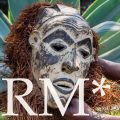
When art is evaluated on its own terms, Africa’s record is unmistakable.
Nok: Early Figurative Sculpture in Sub-Saharan Africa
One of the earliest known traditions of large-scale figurative sculpture in the world appears not in Europe, but in Nok, in present-day Nigeria, dating as early as 1000 BCE.
Nok terracotta figures demonstrate:
- sophisticated clay preparation and firing techniques
- stylized yet consistent anatomical conventions
- hollow construction to prevent cracking
- expressive abstraction rather than crude realism
Ife: Naturalism Without Renaissance Europe
Between the 12th and 15th centuries, artists in Ife produced copper-alloy and terracotta heads of extraordinary naturalism—so refined that early European scholars refused to believe Africans made them.
These works display:
- precise casting techniques
- subtle facial modeling
- proportional accuracy
- consistent stylistic standards
Benin: Art as State Infrastructure
The clearest example of African leadership in court art appears in the Kingdom of Benin.
Benin bronze and brass works were not individual expressions. They were state infrastructure. Produced through hereditary guilds under royal patronage, these works recorded diplomacy, ritual authority, succession, and historical memory.
Benin plaques and heads demonstrate:
- mastery of lost-wax casting
- consistent alloy control
- large-scale production over centuries
- narrative relief storytelling
Abstraction as Intelligence, Not Deficiency
One of Europe’s most consequential errors was mistaking abstraction for incapacity.
African art often prioritized symbolic clarity over surface realism. Features were exaggerated not because artists lacked skill, but because meaning mattered more than imitation. Power, lineage, and moral authority were encoded visually.
Art Beyond Objects: Performance, Memory, and Authority
African visual systems were rarely isolated objects. Sculpture was integrated with performance, oral history, ritual, and governance. Masks, figures, and regalia were activated through movement, sound, and social context.

