
Cinema today constitutes one of the fundamental actors in the debates on the translocation and repatriation of cultural property.
It assimilates and delivers both ideal material for creation and a reflection on the nature of heritage in relation to the most pressing current societal and international issues.
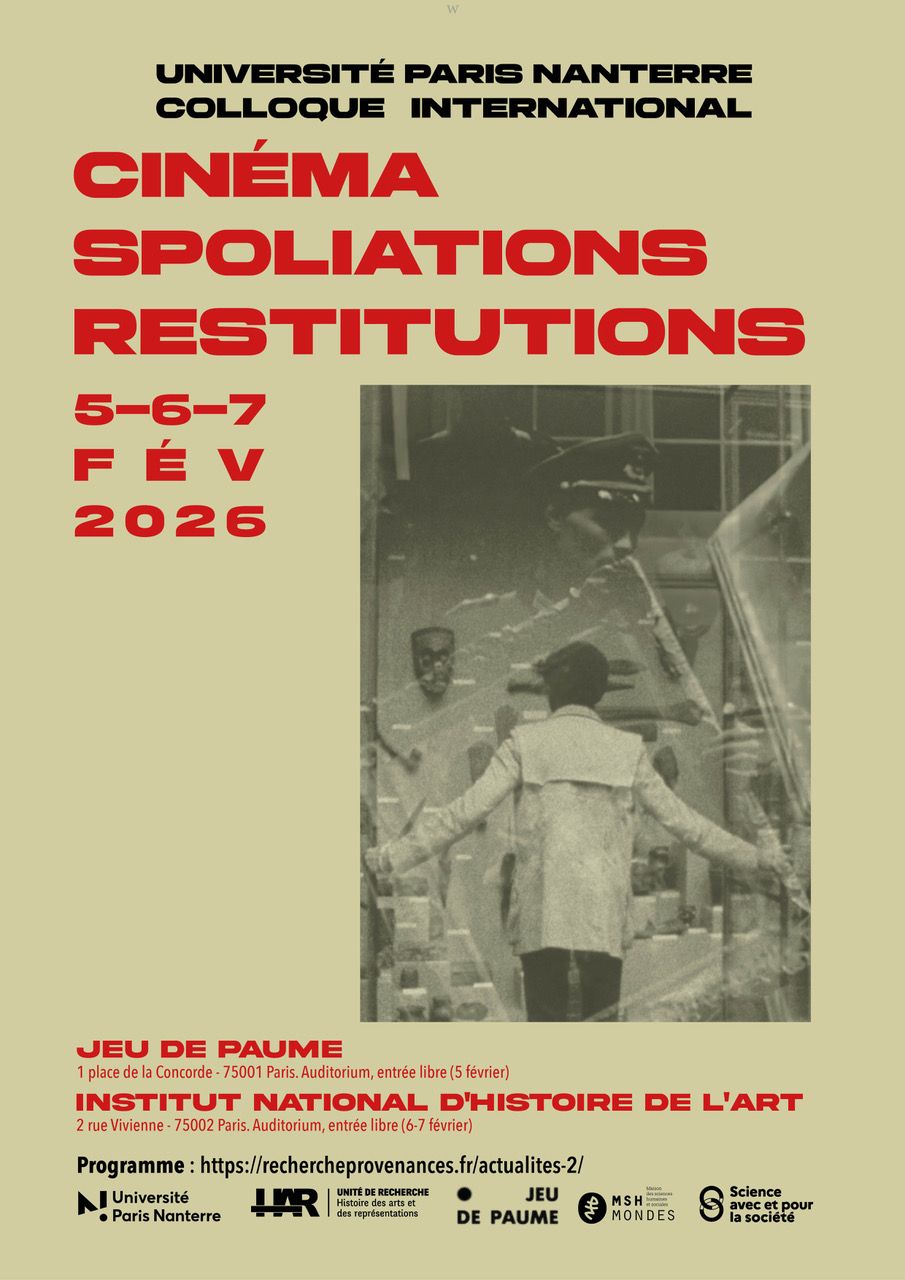
The first part of this conference explores the spoliation of cinematic heritage between 1933 and 1945, a largely overlooked phenomenon. The presentations reveal the complexity of these seizures: the spoliation of works, equipment, filmmakers, laboratories, and screening venues.
The discussions will shed light on the precise mechanisms of this methodically developed policy: its regional ramifications, the role of the institutions involved and key actors, as well as the works and filmmakers whose works were looted.
The second part focuses on the representation of the spoliation and looting of cultural property in cinema. The proliferation in recent years of fictional films, documentaries, and contemporary works devoted to forced cultural relocations has sketched a specific typology of films.
The presentations will uncover the sources, means, and objectives that these films set for themselves, examining how cinema is used as a tool for historical reconstruction, recontextualization, but also for critique and persuasion.

