The two latest issues of Museum International, ICOM’s academic journal, were dedicated to provenance research. To further discuss this topic and share best practices, ICOM is organising a webinar on 7 October 2026.
The consequences of colonisation in the Australian-Pacific region include the appropriation of human remains from Aboriginal, Torres Strait and Pacific Islanders. The confronting history of Ancestors kept within museums for over one hundred years is leading to more work with descendant communities to seek culturally safe ways for return.
Author Barnaby Phillips will discuss its enduring significance of the Asante treasures for Britain, Ghana and our museums. He will be joined by Ivor Agyeman-Duah, the Asantehene’s envoy and director of the Manhyia Palace Museum in Kumasi and Malcolm McLeod, formerly of the British Museum, who both played critical roles in the negotiations leading to the recent returns.
With speakers from Africa only. Returning an object is not the end of the story. What needs to be repaired? Who decides the terms of return? And how can restitution contribute to a broader movement for reparative justice?
On 16–17 September in Geneva, the Swiss Commission for UNESCO and the Federal Office of Culture (FOC) will gather States, cultural institutions, experts and Indigenous representatives. They will discuss how provenance research, Indigenous perspectives and concrete partnerships are contributing to this evolving field.
[in English and German] The 2 days event 'From Colonial War to Postcolonial Memory: Transformations of Colonial Military Violence since 1918' is organised by the Center for Military History and Social Sciences of the Bundeswehr (ZMSBw).
Just as the narrative of the "clean Wehrmacht" long covered up the violent warfare and the involvement of soldiers and officers in National Socialist crimes, the myth of a "clean protection force" existed in Germany for a long time. Speakers from Cameroon and Tanzania will discuss this.
[in French] The objective of this study day is to analyse the specificity of these women in the circulation and patrimonialisation of cultural property, particularly non-European during the pivotal period of the late nineteenth century and the first half of the twentieth century.
[in Spanish] What happens when decolonisation, beyond questioning the museum, begins to become a way of imagining and securing its future? Or, put differently, what happens when decolonising the museum is not only about transforming it, but about making it capable of projecting its own institutional future?
The conference will examine opportunities and risks of artificial intelligence and machine learning, as will ethical, legal and political issues. Selected case studies as well as projects from cultural heritage organisations and the research sector will shed light on ‘Dreams and Realities’ from a practical perspective.
The Pan African Heritage Museum is pleased to invite researchers, scholars, museum professionals, cultural practitioners, policymakers, artists, heritage experts, and students to submit abstracts for the upcoming Annual Conference. Theme: The Future of Africa’s Museums: Reclaiming Heritage, Pathways to Restitution and Renewal
Under the title Museums Beyond Limits: Imagining Repair Across Cultures, Ecologies and Knowledges, the conference proposes repair as a radical, plural, and ongoing practice grounded in relationality, care, and accountability.
[in Spanish] Invitation for the first meeting of the webinar series "Repatriation in Latin America: rights, sovereignties and concrete experiences" that Patricia Ayala and Lucas da Costa Maciel are organizing with the support of the International Repatriation Network.
The four-days conference 'Restitution Beyond Return: Reclaiming African Heritage in Today's Geopolitical and Technological Realities' brings together legal practitioners, policymakers, cultural institutions, artists, technologists, researchers and civil society to examine how restitution is evolving in response to changing geopolitical realities, international human rights law, and emerging technologies.
This closing symposium is to share and discuss results of projects on the birth and afterlife of racial science from 18th and 19th century racial pelvimetry science to present-day obstetric racism, recognising that the race science of past centuries haunts contemporary scientific practices, as language, ideas, and objects crafted for and by racial science still circulate in the present.
Pressured claims for reparation and the redistribution of authority in decision-making processes, some museums have recognised their entanglements with Indigenous cultures and the erasure produced by the appropriation of collections and the imposition of classificatory systems. How are these institutions transformed by Indigenous agency and curatorship? What are the potential uses assigned to museums by Indigenous curators, creators and artists in the present?
In November 2026, ICOM Documentation will gather in Belgium. The conference invites museum professionals, researchers, collection managers, archivists, digital specialists, registrars, curators, conservators and community partners to examine how documentation practices shape the ways collections are understood, accessed, interpreted and cared for.
The conference 'Museums as Monuments to the Colonial Troops?' brings together historians, artists, curators and artists to examine the artefactual history of colonial warfare in three former German colonies: Togo, Kamerun and German East-Africa.
Until its restitution in November 2025, Ama O Ghe Ehen, a 18th-century bronze plaque depicting a mudfish, was held in the colelction of the Museum de Fundatie in the Dutch city of Zwolle, since its acquisition in 1937. This symposium explores the process and implications of this return, and what restitution might mean in the context of this plaque.
MAC CONFERENCE 2026 invites to consider how Caribbean museums strengthen bonds across generations, landscapes, and nations. This conference examines how memory work, cultural stewardship, and community engagement can advance well‑being and sustainability in a rapidly changing world.
28 April: Black Muse and Digital Benin: Benin Heritage & New Forms of Narratives: Digital Access & Reconnection to the Living Heritage of Benin Kingdom
3 May: Digital Benin and Kokopelli Gallery: Digital Benin: Digital heritage at the intersection of culture, data and practice
In recent years human remains in museums have been the subject of increasingly critical attention, both within the museum sector itself and in public debate. This raises a large number of ethical, legal, and practical questions for European museums. 'Museum meets University' organises this meeting at the crossroads of academic museology and museum practice.
[in French] The UNESCO Chair on the Diversity of Cultural Expressions, in partnership with CELAT and IPAC, is organizing the second Midi de la culture of the year, which will include a discussion on the restitution and repatriation of cultural objects.
[ in Dutch, in French] That this issue has received increasing attention is partly due to two important issues, namely the question of the restitution of works of art looted by the Nazis to relatives of victims of the Holocaust and the question of the restitution of cultural heritage objects illegally acquired during colonization by Western countries. Three Wednesday afternoons.
In this Second Parliamentary Gathering on 13 April 2026, APPCITARJ will build on the landmark November 2025 gathering and draw on international experiences of truth and justice processes to inform and deepen the movement for a genuine commission of inquiry.
Please join the Denver Art Museum’s Native Arts and Provenance departments, along with special guests from the Nelson-Atkins Museum of Art and the Art Institute of Chicago, for a lively panel discussion on the vital role provenance research plays in museums.
This conference focuses on objectives, forms, logics, limits of and experiences with restitution, reparation, and redress as reactions to the damages and suffering from strong asymmetrical dependency relations, including violence, oppression, and economic exploitations.
[in Dutch] On the occasion of the International Day of Remembrance of the Victims of Slavery and the Transatlantic Slave Trade, the Faculty of Arts and Philosophy in Antwerp is organising an event on postcolonial history and culture: we will enter into a dialogue on African cultural heritage in Western institutions.
The University of West Indies Museum in partnership with the Centre for Reparation Research presents 'Exploring Restitution, Colonial Collection and the Caribbean' in an online discussion on March 20.
The signing of the Washington Declaration in 1998 marked the starting point for the establishment of new, systematic provenance research focusing on the period between 1933 and 1945. In recent years, provenance research has increasingly intersected with other contexts of injustice, including colonialism, Soviet Occupation Zone/GDR, and is subject to public demand. Conference in Vienna.
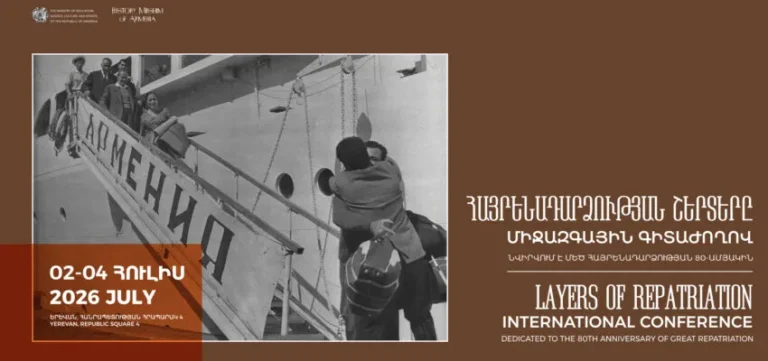
The History Museum of Armenia is organizing the “Layers of Repatriation” international conference, dedicated to the 80th anniversary of the great repatriation movement, which aims to rediscover museum collections related to the topic and discuss the different social, cultural, and historical layers of the phenomenon.
[in French] After the Porto-Novo symposiums in 2022 and Yaoundé in 2023, after several days of study in Paris, the Dakar symposium is the final stage (or almost) of 5 years of research, publications, meetings of the international program "Returns: geopolitics, economies and imaginaries of restitution".
In June 2026, Amsterdam School for Heritage, Memory and Material Culture organizes the conference “Unsettling heritage and memory futures: Decolonial trajectories between crisis and possibility”. One panel brings together scholars to reflect on the idea of “home” in relation to restitution. The panel is looking for contributors.
[in French] This conference focuses on the spoliation of cinema and the representation of spoliation and restitution in film, within the context of 1933-1945 as well as in colonial and post-colonial situations. Punctuated by film screenings, it brings together researchers in history, film history and art history, anthropology, political science, law, and provenance studies, working on diverse cultural areas.
The Swiss School of Latin American Studies, supported by the Centro Latinoamericano-Suizo HSG and the Swiss Society of Latin American Studies (SSLAS-SAGW), invites the community to the public workshop entitled "Contested Heritage of Latin America: Collectors, Markets, and Coloniality," taking place on February 26 and 27.
[in French] On 7 February 2026, an open forum at the AfricaMuseum in Tervuren follows on two public events that took place in December 2025 in Kinshasa where researchers, heritage institutions and partners from both countries engaged in discussions on various themes in connection with provenance research and restitution of cultural heritage.
[in French, in English] Since the 1990s, new forms of discourse and mobilization have emerged to question Belgium’s colonial past and postcolonial present. Journalists, researchers, archivists, community activists, artists, members of the African diaspora, former colonists and their descendants, national and political players, etc. have contributed to putting the issue of colonial legacy on the public agenda.
This conference will provide an opportunity to explore the transformative role museums can play in fostering empathy, decolonization, rematriation/repatriation, promoting human rights and cultivating a culture of peace.
The conference theme will reflect the project’s focus on equitable collaboration, community-engagement and revisiting the ways in which collections are acquired, interpreted and shared. This year we’re rethinking what a conference can be. Dates: 23-24 April 2026.
Call for Papers for the 12th Annual Conference of the Amsterdam School for Heritage, Memory and Material Culture. The conference 'Unsettling Heritage and Memory Futures: Decolonial Trajectories Between Crisis and Possibility', will take place on 17, 18 and 19 June, 2026.
The Indonesian phrase pasang surut — “the tide in and out” — evokes the continuous movement of people, objects, and ideas across the seas that once linked Europe and the Indonesian archipelago. These currents shaped the emergence of colonial collections but also suggest the possibility of renewed circulation: of knowledge, accountability, and dialogue.
December 15th, at 4 pm (Lagos time), the International Repatriation Network (IRN) will host an online session exploring what restitution and repatriation mean for diverse communities and stakeholders in Nigeria today.
Symposium on current debates around the spiritual artifacts collected under colonial or postcolonial conditions and housed in European ethnographic museums. It will be held Dec. 3 and 4 in Groningen with many wonderful scholars and MA and PhD students involved.
Join this event - organised by the Europeana Communicators Community - to hear museum professionals across Brazil and Europe explore issues of repatriation, decolonisation, and representation of Indigenous voices.
It is the final conference of Pressing Matter, in partnership with the Research Center for Material Culture (RCMC) and the Wereldmuseum. Min theme: Rethinking the Restitutionary Moment: What Next? On 27 and 28 November in Leiden. On 26 November, Achille Mbembe will speak in Amsterdam.
The International Seminar on the Return of Cultural Heritage under the auspices of the 2025 Brazil BRICS Presidency will take place on 10 and 11 November and is organized by the University of São Paulo [ USP ].
[ in French ] The Study and Research Centre for Administrative and Political Sciences (CERSA) organizes a conference entitled “Restitutions of cultural heritage: trends, challenges, perspectives” on November 14, 2025 in Paris.
This kick-off seminar, led by Pietro Sullo, discusses the legal status of colonial artefacts from Africa held in European museums, clarifying whether there is a duty to repatriate them. The research hypothesis is that European states have a legal duty to return colonial artefacts acquired without the consent of the communities of origin.
Join the Association on American Indian Affairs virtually for the 11th Annual Repatriation Conference! The summary agenda for the Conference is available at https://www.indian-affairs.org/11thannualagenda.html
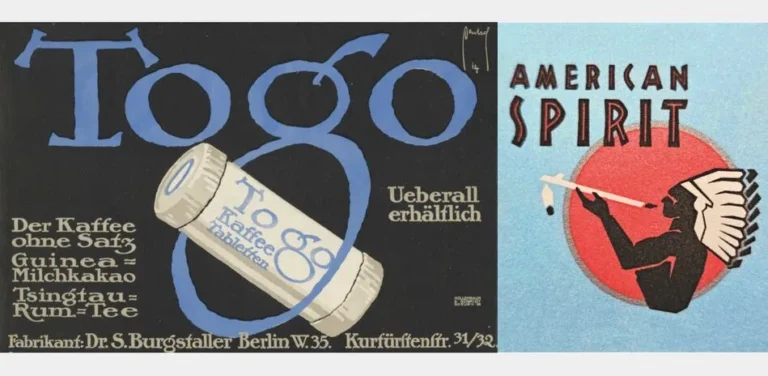
[ in English and in German ] Together with the Deutsches Historisches Museum, the Kunstbibliothek, Staatliche Museen zu Berlin is organising the international symposium “Tenacious Tropes: Colonial Narratives in Visual Advertising” on 21 and 22 November 2025 at Kulturforum Berlin.
In this Spark Session Made Naraya Sumaniaka presents his thesis work, which recentres community agency by examining how digital spaces enable participation and contestation using the newly established Colonial Collections Datahub and TikTok as case studies.
HERE is a seminar for new and experienced heritage professionals. The aim is to bring professionals together in order to stimulate knowledge exchange and innovation. HERE is on 10 November in Wereldmuseum Amsterdam.
Our third In Conversation considers restitution from an ethnographic perspective. Charlotte Joy will discuss the research for her upcoming book, drawing on interviews and her work with UNESCO, with Mirjam Shatanawi and Katarzyna Puzon. We invite you to join our conversation.
The Ethnographic Museum Zagreb presents the exhibition “Travellers” – Collection of Non-European Cultures, tracing the journeys of people and objects from colonial times to the present day.
This workshop marks the conclusion of the interdisciplinary provenance research project "Human Remains from Colonial Contexts: Provenance Research in the Anthropological Collections of the University of Göttingen and MARKK Hamburg".
The conference “Colonial Pasts and Contemporary Search for Justice: Interdisciplinary Perspectives on the Politics of Restitution and Redress for Colonial Violence” brings together experiences from different parts of the world, and perspectives in the field of transitional justice and (post-)colonial studies.
For several years, Bristol Museum and Art Gallery and the Australian Institute of Aboriginal and Torres Strait Islander Studies (AIATSIS) have been discussing returns of cultural heritage to Australia. This event will reflect on those discussions with community members and AIATSIS staff.
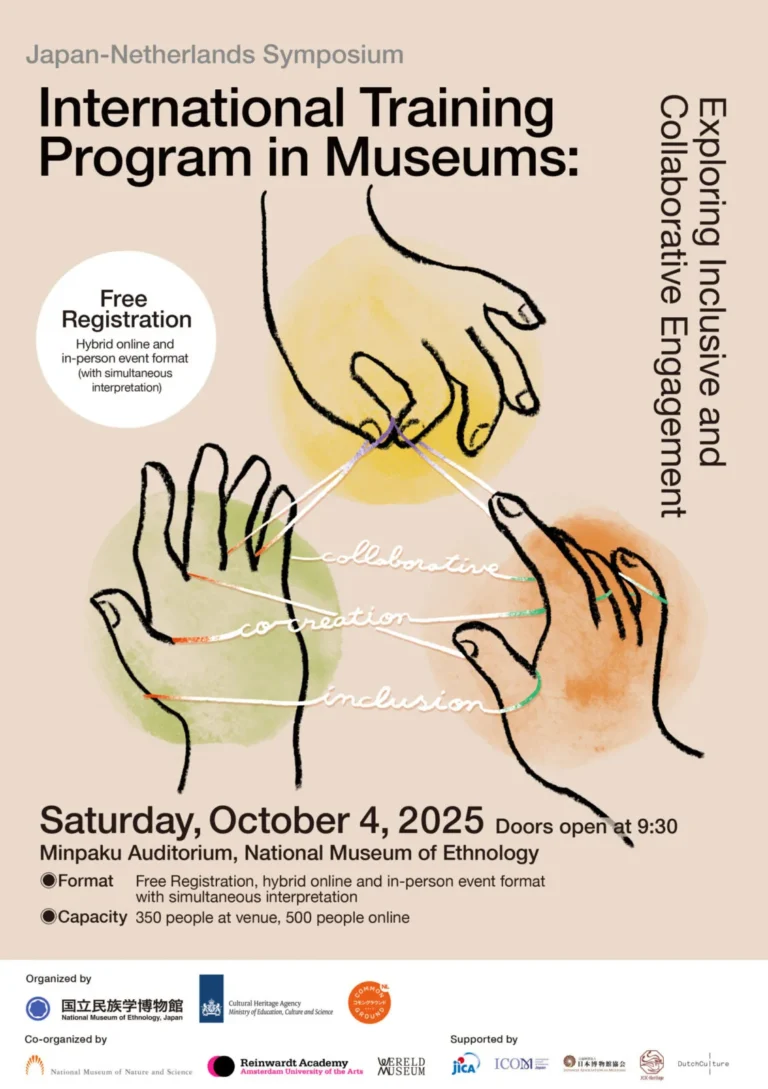
The Japan-Netherlands Symposium International Training Program in Museums: Exploring Inclusive and Collaborative Engagement focuses on international museum training programs conducted by the Netherlands and Japan, exploring new approaches to international museum collaboration that transcend the traditional hierarchy between “trainers” and “trainees.”
This year’s theme explores the material return, digital reunification, and recontextualization of Philippine artefacts, manuscripts, and sound heritage kept in institutions outside of the Philippines.
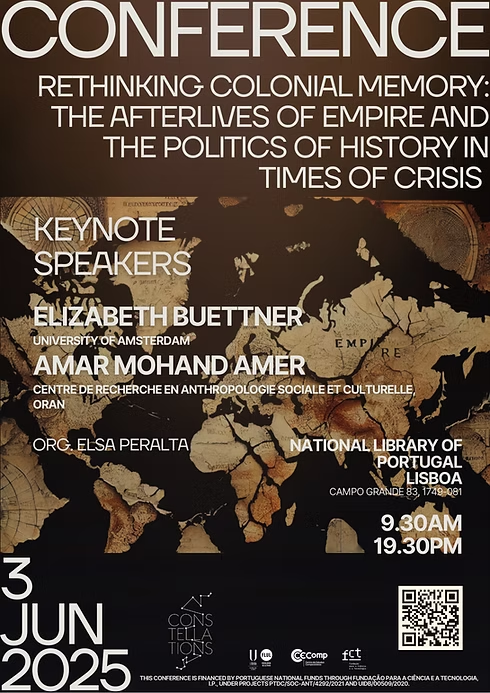
This conference explores how colonial histories continue to remain deeply embedded in the structures of today’s crises, shaping geopolitical conflicts, patterns of violence, systemic inequalities, and struggles for justice. It aims to critically engage with the intersections of colonial memory and historical narratives in relation to the pressing political and ethical dilemmas of our time.
80 Delegates from all over the world will gather at the Humboldt Forum and engage in dialogue about future collaboration and to contribute to the development of a Global Cultural Embassy (GCE).
Why should internationally active organisations concern themselves with decolonisation? How can transnational institutions meaningfully shape this process? What challenges, responsibilities and opportunities arise from this?
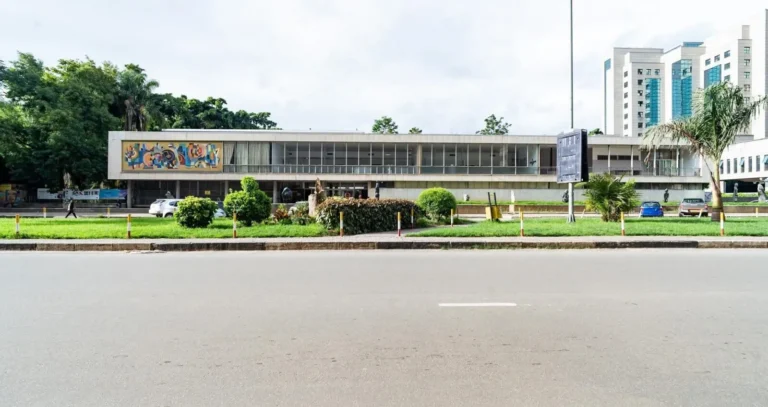
The International Conference on Cultural Heritage in Africa: A Dialogue on the Concept of Authenticity will take place in Nairobi, Kenya, from 6 to 9 May 2025.
International Conference. - Decolonising Cultural Heritage: State of the Art, Methodologies, and Practices”. University for Foreigners of Siena, Italy.
Restitution and repatriation are topics of much attention and debate in the world of museums, archives, and cultural heritage institutions. How do music, intangible heritage, and historical sound recordings from colonial contexts fit into these debates?
This conference will explore how accessing archives and museum collections can enable communities to recover their past and rekindle “alternative stories” as well as disrupt the discourses constructed by Western views.
[ simultaneous translation into German, French and English ] 'Hidden paths and emerging networks - Provenance research between memory and responsibility' is the title of the event on the occasion of the 7th International Research Day on the Provenance of Cultural Objects, the Franco-German Research Fund on the Provenance of Sub-Saharan African Objects invites leading scientists and experts working at the intersection of provenance research, restitution issues and museum practices.
Françoise Vergès asks if we would not imagine something else for the 21st century that can answer current challenges – climate disaster, neoliberalism, imperialism, financialisation, increasing poverty, new forms of looting and destruction of art – that would not be on the hegemonic model of the Western museum.
The Memory & Heritage Network of Utrecht University and the ERC project Ecologies of Violence: Crimes Against Nature in the Contemporary Cultural Imagination (Eco-Violence) are organizing a workshop on the representation of colonial and ecological violence in museums.
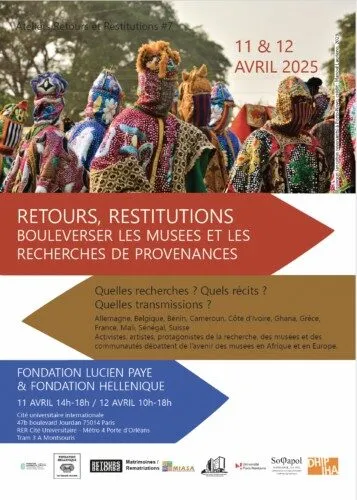
[ conference in French ] Germany, Benin, Cameroon, Ghana, Greece, France, Ivory Coast, Mali, Sénégal, Switzerland - Academics, activists, artists, experts from communities and museum actors debate the future of museums in Africa and in Europe.
[ in French ] Study day organised as part of the PRD-ARES project (ULB-UNILU-UCLouvain) ‘Towards the psychosocial reappropriation and resocialisation by the source-communities of Katanga of the remains of former soldiers to be repatriated and the cultural objects to be recovered’.
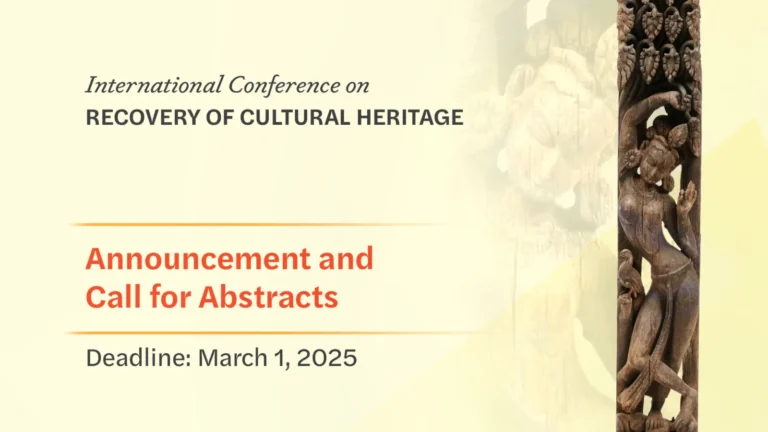
The Nepal Heritage Recovery Campaign is, in coordination with the Government of Nepal’s Department of Archaeology, organising the ‘International Conference on Recovery of Cultural Heritage’ in 16-18 June 2025.
The workshop “People, Objects and Ideas Circulation: Transnational Entanglements between Brazil and Germany”, held in the context of the 200th anniversary of German-speaking people’s immigration to Brazil, offered a fresh perspective to reflect upon the relations between Brazil and Germany.
The Symposium will draw together discussion of Holocaust-era looted art and cultural property, antiquities taken in the Colonial-era and subsequently, as well as Native American cultural and religious artifacts, ancestors, and repatriation.
How can academics and museum professionals research the provenance of a colonial museum collection? And can we trace possible ‘involuntary loss of possession’ or looted objects?
UNESCO, in collaboration with the AfricanUnion and the United Nations Economic Commission for Africa, is hosting a regional dialogue in Addis Ababa, Ethiopia on the new forms of cooperation and agreements in the field of the return and restitution of cultural property in Africa.
The 41st anniversary of the Mary L. Cornille (GRS ’87) Boston University Graduate Symposium in the History of Art & Architecture invites proposals for papers exploring themes of alterity through critically interrogating dominant historical narratives, canonical art prejudices and hegemonic power structures in visual and material culture, and in the field of art history. Deadline 01 February 2025.
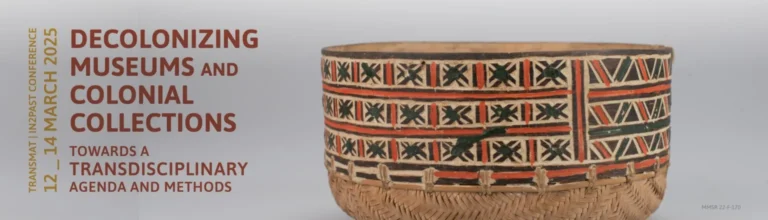
TRANSMAT | IN2PAST 2025 Conference set to take place in March 2025, in Figueira da Foz (Portugal), this international conference is a collaborative effort between colleagues from Institute of Contemporary History, NOVA University, and Évora University (Portugal), Queens College, City University of New York (USA), University of São Paulo (Brazil), and Pitt Rivers Museum, University of Oxford (UK), supported by TheMuseumsLab.
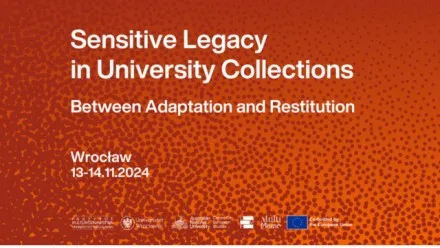
Conference Sensitive Legacy in University Collections: Adaptation and Restitution, organized by the ANU Centre for European Studies in collaboration with The Urban Memory Foundation and the University of Wroclaw, Poland.