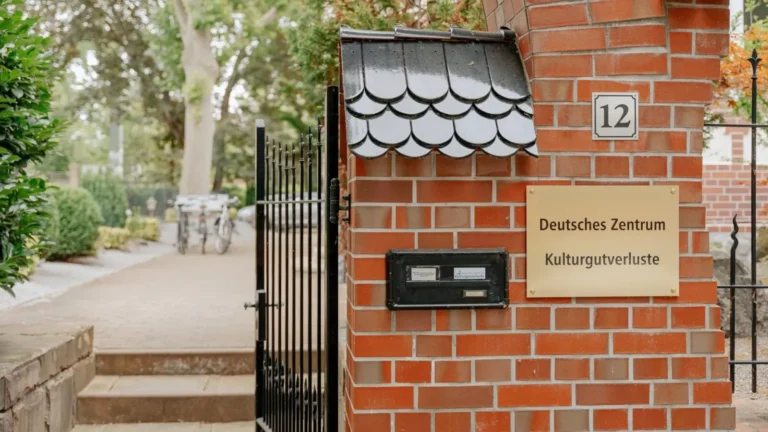
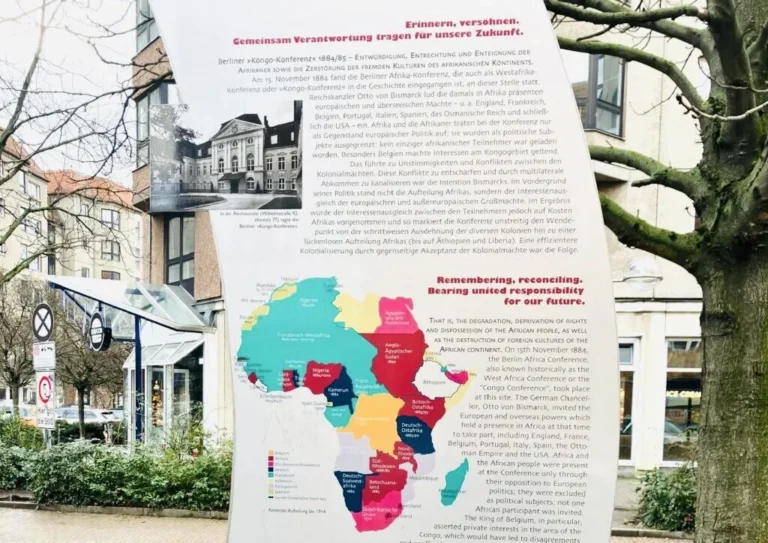
[in German] What is the goal of the restitution of cultural artifacts? How can restitution be turned into an expression of appreciation for cultural heritage? And what role do the actors play in the restitution process? 'Restitution requires long-term cooperation.'
One of the panels of the UK Reparations Conference 2026 is about 'WHAT WAS TAKEN: From Ancestral Remains to Institutional Repair'. The main question is: If Britain is reconsidering the possession and return of ancestral remains in colonial contexts?
Repatriation has been widely examined in international and settler-colonial contexts, but its operation within postcolonial nation-states presents a different configuration of heritage relationships that has received less attention.
In 'Loot and the Making of British India', James L. Hevia unveils the intricate and often contentious role of military looting and prize practices in shaping British imperial expansion on the Indian subcontinent. The British army developed a unique system that transformed plundered property into 'booty' and redefined it as prize money, distributed under royal prerogative.
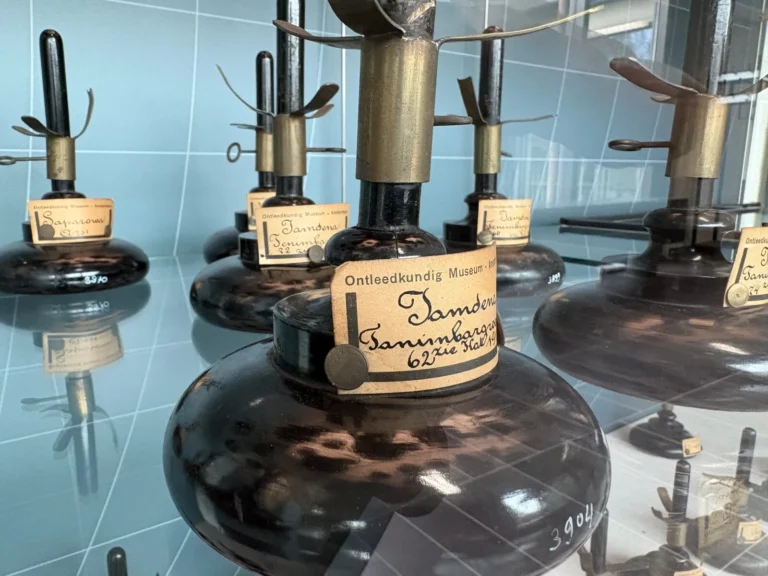
[in French] Lausanne's Archaeology and History Museum MCAH and the Naturéum are investigating their properties (objects and specimens) from what is now the Democratic Republic of Congo (DRC). Their aim is to better understand the history of these properties. Conducted with numerous partners in Switzerland and the DRC.
This article 'Provenance Research and the Ethics of Ownership: Case Studies from the Archaeological Collections of the Allard Pierson (University of Amsterdam)' presents two case studies from APM's ongoing research in order to highlight the importance of unlocking archives and collections, doing provenance research proactively rather than reactively, and exploring new terrain by discussing future ownership and stewardship of the collections with source countries on the basis of ethical rather than legal arguments.
Gunther Fehlinger-Jahn's 2028 campaign pledge puts one of the world's most significant pre-Columbian artifacts back in play and signals how repatriation politics are reshaping what institutions can keep and what collectors can trade.
Recommendations from the Colonial Collections Committee on objects from Islamic culture for which restitution has been requested by Indonesia. The provenance reports have been added as an appendix. [English version, Dutch version] + agreement on completion of repatriation Dubois collection.
The newly created Commission for Historically Problematic Cultural Heritage has adopted the procedural rules for dealing with individual cases of disputed items, either related to Nazi loot or colonial loot.
Nigeria rejects the prospect of borrowing the Benin Bronzes from the British Museum. 'Such a proposal as an insult to a nation seeking the return of artefacts looted by British forces in 1897.' Holloway said that restitution must involve 'transferring ownership, not merely temporarily returning objects'.
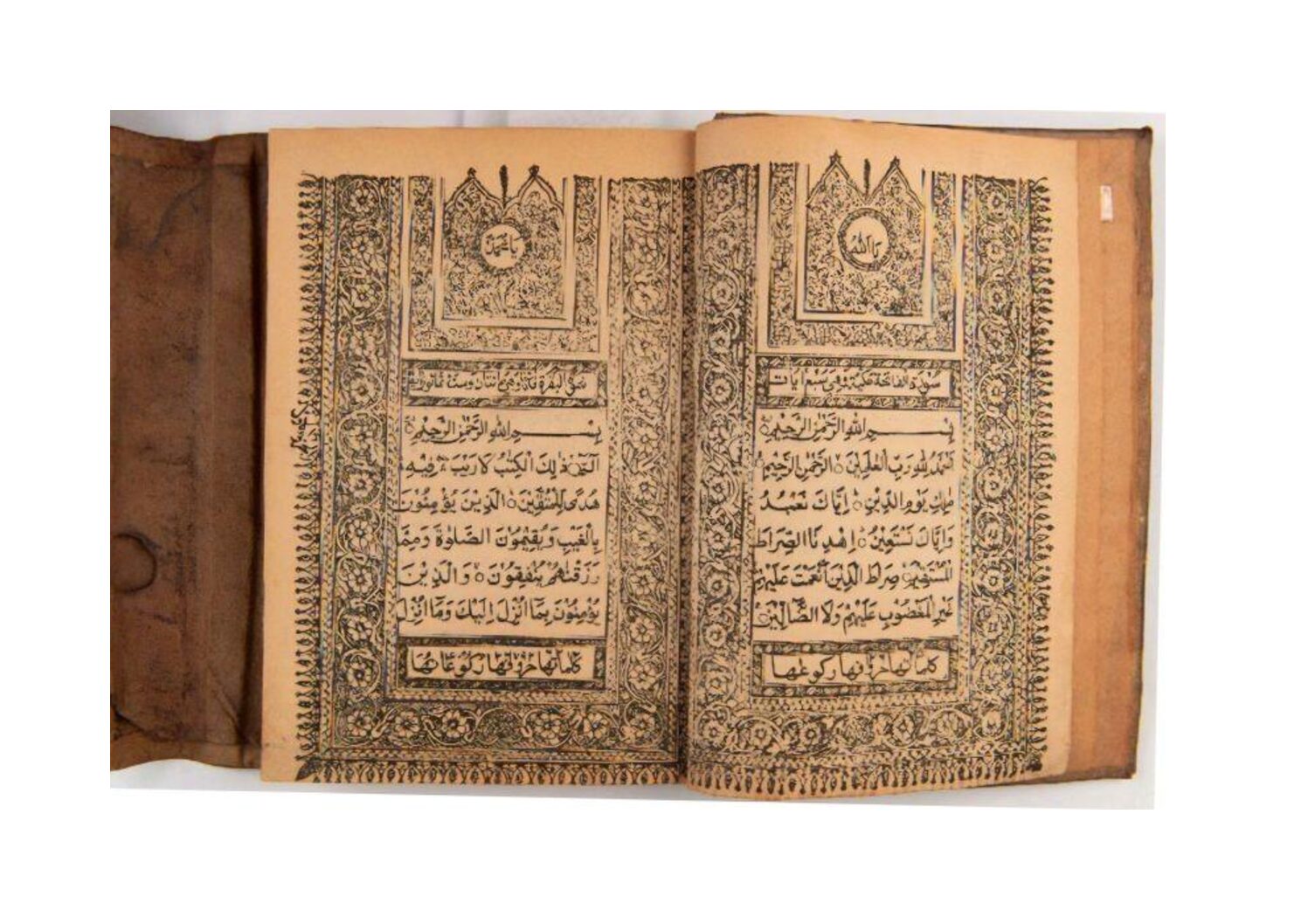
[In Dutch] The restitution, along with nineteen other objects, including a handwritten Koran, follows the advice of the Colonial Collections Committee. According to OCW Minister Rianne Letschert, the objects "should never have been in the Netherlands".
A rarely explained aspect of colonial loot is intellectual property is discussed in by Veronique Pouillard in 'Colonial Intellectual Property: The Case of the Congo'. For the colonized people, some realms of colonial intellectual property such as patents remained closed for a long time, and other domains opened possibilities for participation, such as copyrights.
Lise Jaillant, Matthew Kidd and Lingjia Zhao examine the ethical, legal, and technical stakes of providing access to colonial-era photographs at scale for researchers, archivists, curators, and wider online publics, including members of source communities, arguing for qualified access supported by human-in-the-loop AI. [open access]
As Ghana does not have a modern equipped museum to receive and display returned artifacts, it is going to build one. That said Foreign Minister Samuel Okudzeto Ablakwa at the 81ste UN General Assemblee.
[in English, in French] Call for Papers for the international symposium "Provenance Research: Perspectives on Archaeology, Collections and Circulation of Antiquities from the West Asia and North Africa Region" on 9–10 December 2027 at the INHA in Paris.
[in German, in French] Adama Ayikoué underlines Togo's intention to compile a comprehensive overview of the Togolese "objects" from colonial contexts in Germany and to discuss next steps in the restitution process with the German government.
This year’s conference highlights how the museum sector is finding inventive ways to work with communities through challenging times to create a positive future for all, and how they are helping to restore civic pride, create hope and encourage social change.
The Swiss National Fund [Schweizerischer Nationalfonds, SNF] has approved a major project grant to examine the history and legacies of the human remains collections over four years, in collaboration with national and international research partners. The list [in German] of 26 projects has been added.
The 2026 Collections Trust conference explores different perspectives on what it means to be accountable for collections, reflecting on both the day-to-day activities and the policy decisions that ensure a sufficient foundation of collections information, as well as the challenging questions we might ask ourselves about what it means to be accountable to the public. One panel is on provenance research.
Ghanaian President John Dramani Mahama has called for the establishment of a permanent international system under the United Nations to facilitate the return of African cultural properties taken during colonial conquest.
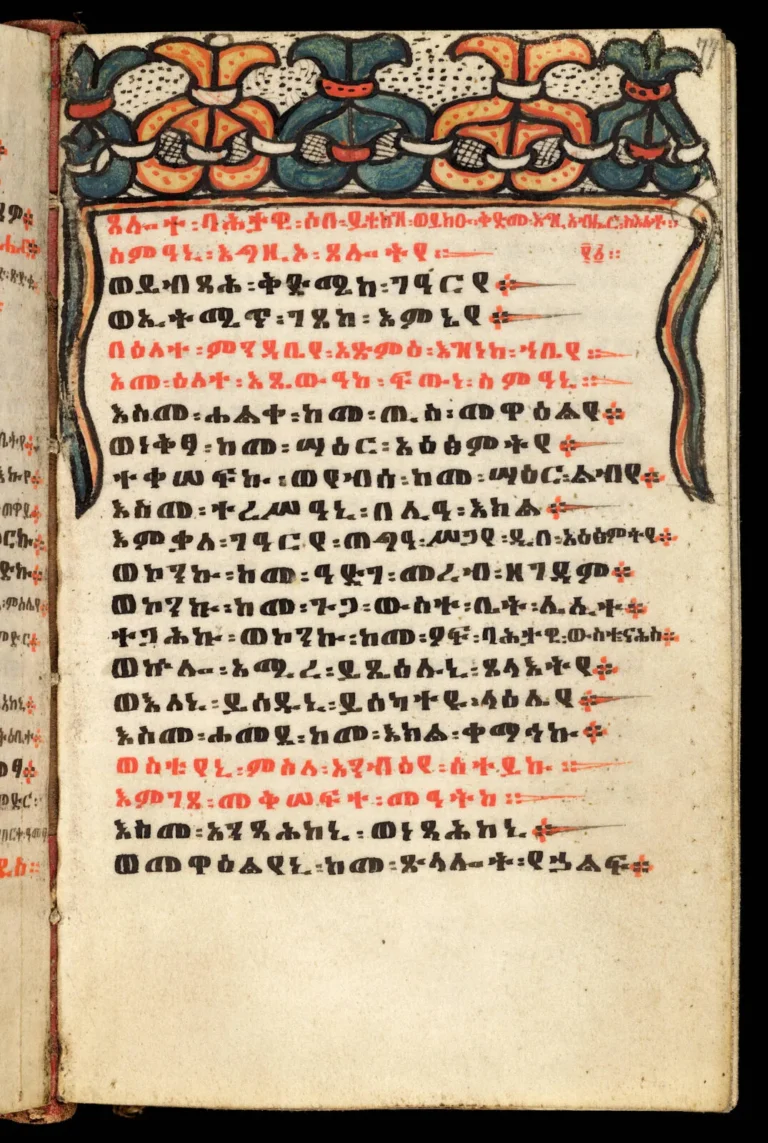
For more than a century and a half, Ethiopian manuscripts have travelled far from the churches, monasteries, and royal collections where they were created and preserved. Most crossed borders through looting and entered private collections, museums, and the international antiquarian market through chains of ownership that are now difficult to reconstruct. For Ethiopia’s scattered manuscript heritage, the journey home is gaining momentum—but remains far from complete. Is Ethiopia's effort indicative for a turning point in the restitution discourse?
Canton Basel City is returning the remains of three Indigenous people to Chile. Earlier, it had ancestral remains repatriated to Sri Lanka. For Switzerland, it is just the beginning: its museums hold at least 4,000 human remains from the colonial era.
Olugbile Holloway’s inclusion in TIME Magazine’s inaugural TIME100 Art list has drawn attention to his role in Nigeria’s efforts to secure the return of cultural artefacts taken from the country. Holloway was appointed Director-General of the National Commission for Museums and Monuments (NCMM) in March 2024.
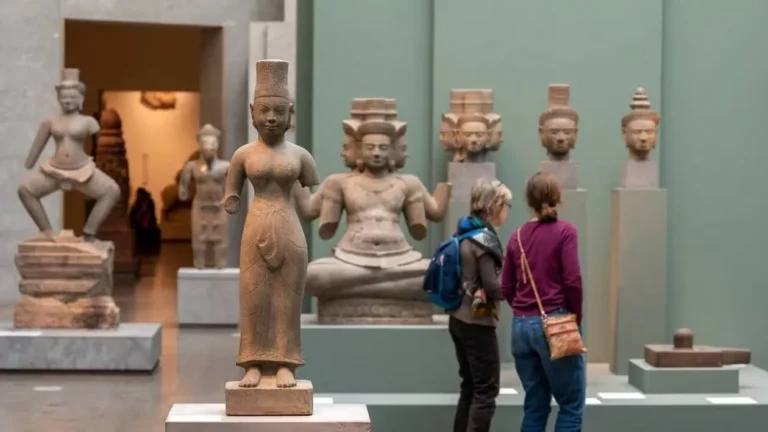
How have Khmer objects moved across Southeast Asia and beyond—and what happens when we try to reconstruct their histories? At the heart of the discussion are broader questions about the movement and stewardship of Khmer cultural heritage: what should be repatriated, under what circumstances, and how can institutions, countries, and source communities work together to shape its future?
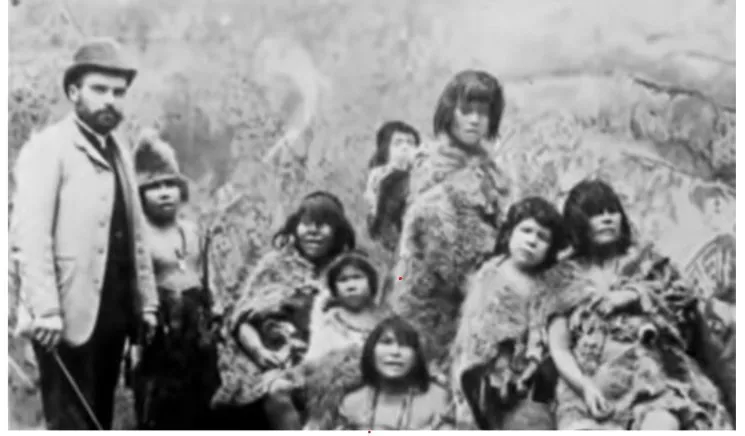
The Natural History Museum is returning two skeletons and a skull of Kawésqar ancestors to Chile. The Pueblo Kawésqar Foundation did come to receive them. But Marcelo Miranda wonders whether this Foundation was authorised to do so.
Chiefs of Ontario (COO) have launched an Open Letter to All Ontarians: Help Us Bring Our Ancestors Home, calling on people and institutions in Ontario and elsewhere to come forward if they are holding or have information about, First Nations Ancestors, sacred items, burial belongings, or other culturally significant items.
After six years of research and three years of repatriation work spanning three continents, we reached an extraordinary milestone: all documented human remains from our island identified through this work have returned home (with the exception of samples from the Golden Rock archaeological site on St. Eustatius [GR21] currently in the Netherlands). But reburial postponed.
For decades, thousands of sacred, imperial, and communal artifacts—pillaged through colonial expeditions, illicit excavations, or porous borders—vanished into opaque Western private vaults. Today, those same private collections emerge into the open, sitting across negotiating tables from sovereign states whose heritage was dispossessed.
After studying reactions on the video-game Relooted, Olli Hellmann and Tola Amusan of the University of Waikato, New Zealand, reveal how identity and attitudes to colonial history may help explain resistance to returning looted cultural artefacts. The slow return of cultural artefacts may involve more than legal disputes or questions of ownership.
The Center for Global and International Studies, the Kansas African Studies Center, the Spencer Museum of Art, and Museum Studies at the University of Kansas invite proposals for a two-day hybrid interdisciplinary conference on global restitution and reparative efforts in museums.
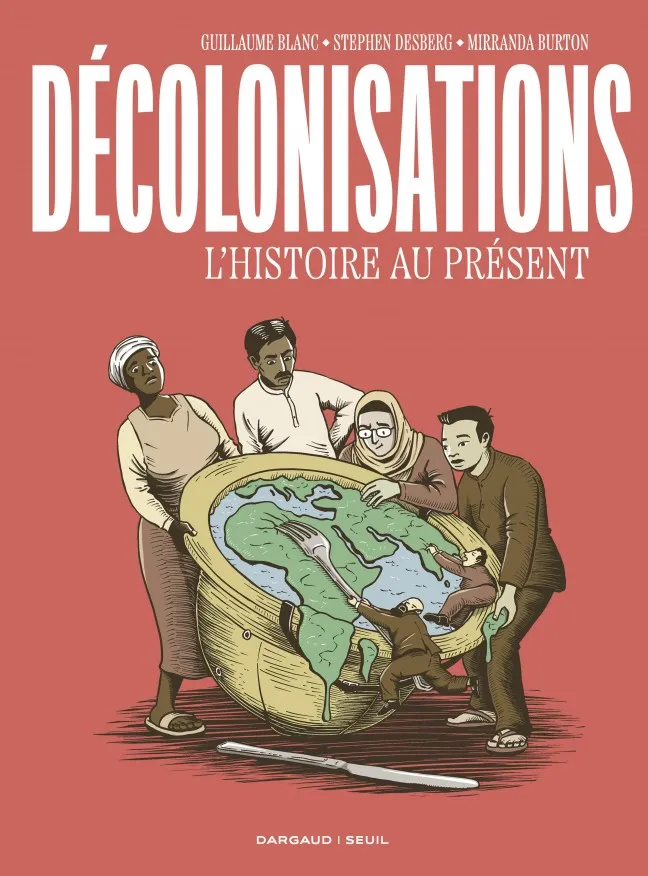
[in French] In this comic book, the makers tell through five colonized countries how the inhabitants of these countries experienced these colonizations and then decolonizations.
In 'When partnership becomes another name for inequality', Emnet Tadesse Woldegiorgis (Uni Johannesburg) argues: The language of international research is rich in the vocabulary of moral aspiration. But language can promise equality long before institutions are prepared to practise it. Beneath the rhetoric of partnership lies an architecture that is often far less symmetrical.
This international interdisciplinary conference 'Ancestors in Collections? Intersecting Perspectives on Scientific Challenges and Contemporary Responsibilities' will address the ethical, legal, scientific, cultural and political questions raised by human remains in museum, university, medical and heritage collections.
In a statement to parliament on 16 September, arts minister Ruth Mackenzie, writes: "Since we first issued the guidance over twenty years ago, the legal, ethical, and moral conversations regarding the treatment and care of human remains in museum collections have evolved significantly. While the 2005 guidance has served as a strong foundational framework, it is vital that our national standards reflect contemporary best practice, particularly surrounding the display and return of ancestral remains."
Some things are more than objects. They carry memory, identity and belonging. Across generations, African heritage has travelled far beyond the communities that created it. Today, the conversation is shifting from what was taken to what restitution, ownership and resolution should look like.
H.E. Ambassador Xie Feng at the ceremony for the repatriation of Chinese Cultural Property: Jointly bringing home cultural treasures, trafficked overseas more than 100 years ago, is a new chapter in the China-U.S. Relationship.
The conference strands will discuss Heritage Diplomacy, focussing on: • Museums, archives, and heritage institutions in international relations • Restitution, repatriation, and cultural diplomacy • Heritage diplomacy and international cultural cooperation in the postcolonial framework
The Ethiopian Heritage Authority has initiated high-level discussions to block the auction by INLIBRIS of a sacred, richly illustrated ancient manuscript once linked to Emperor Tewodros II. The artifact was scheduled to be auctioned from September 13 to 18, 2026, coinciding with exhibition events in Abu Dhabi. RM* reported earlier about this.
REGARTLESS reports: In three German museums, restitution decisions have been made for 31 objects from Nso, yet their return remains delayed. Communities continue to wait. The Cameroon government must take action to facilitate these returns.
Abreha Kiros reports: The return from the USA of 17 ancient spiritual parchment manuscripts to Ethiopia marks an important achievement in the recovery, preservation, and responsible stewardship of the country’s cultural heritage.
The two latest issues of Museum International, ICOM’s academic journal, were dedicated to provenance research. To further discuss this topic and share best practices, ICOM is organising a webinar on 7 October 2026.
[in German] In the book, Sylvia Kasprycki and Markus Lindner show ethnological items of the Hessisches Landesmuseum Darmstadt to shed light on the opportunities and challenges of provenance research. The selection of objects spans a period from the 18th to the 20th century and illustrates the necessity of different research approaches. Open access.
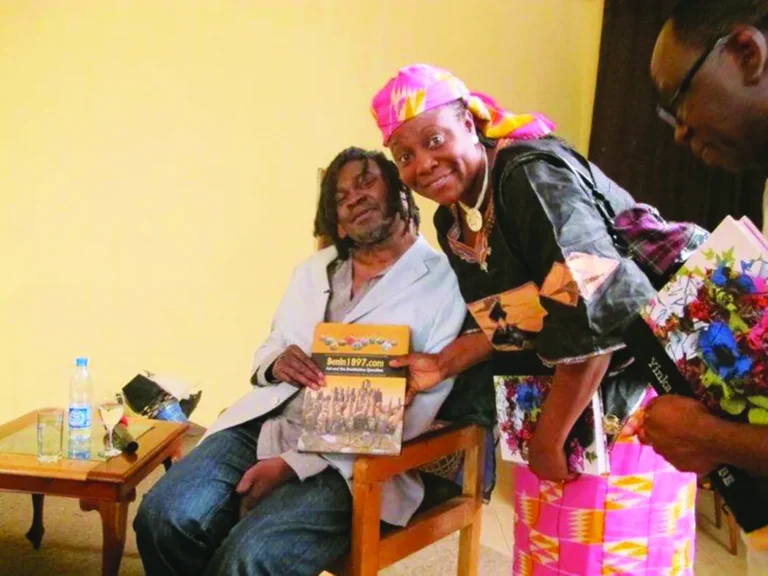
Kwame Opoku: The Republic of Benin has claimed another 35 cultural belongings from the five thousand or so held in French collections. With the new French restitution law accepted, hopes have been revived that Gou can be welcomed in Cotonou soon. How realistic is this?
Bénédicte Savoy noted: “You have a huge collection of African books looted by the French in the 19th century in the Bibliothèque Nationale. But they are not in a department for African manuscripts because they are written in Arabic. It is African language but in Arabic letters. So in France, if you would go to the Bibliothèque Nationale, they would say, ‘No, we have no manuscript Africain. We have manuscript Arabe.’”
Patrice Robertson: The repatriation conversation extends beyond financial compensation to cultural restitution, truth-telling, legal pathways, education, stronger relationships between Africa and its diaspora, and other forms of repair. The language matters. The conversation recognises that the injury did not happen only to African states. It happened to African people, including those whose descendants now live beyond the continent.
The consequences of colonisation in the Australian-Pacific region include the appropriation of human remains from Aboriginal, Torres Strait and Pacific Islanders. The confronting history of Ancestors kept within museums for over one hundred years is leading to more work with descendant communities to seek culturally safe ways for return.
Open Restitution Africa (ORA) designed the guide Building Restitution Frameworks to support practitioners in developing holistic and sustainable frameworks for restitution, the guide Rethinking Inventories for making external inventories that catalogue all objects from a country that are held abroad, and the guide Reclaiming Restitution - Centuring and contextualising the African narrative.
Over three hundred masks left Ceylon for Hamburg and arrived in Cologne as a single line in a dealer's ledger. Names, villages, carvers, ritual lineages: none of it travelled with them. At the Rautenstrauch-Joest-Museum (RJM), Cologne, they are studied now by scholars from three different disciplines.
A common narrative among European settlers was that the lands they occupied were empty and free to claim. This assumption severed Indigenous peoples from places to which they held deep cultural and spiritual ties. Documentary-maker Patrick Waterhouse and the Warlukurlangu art centre tell more.
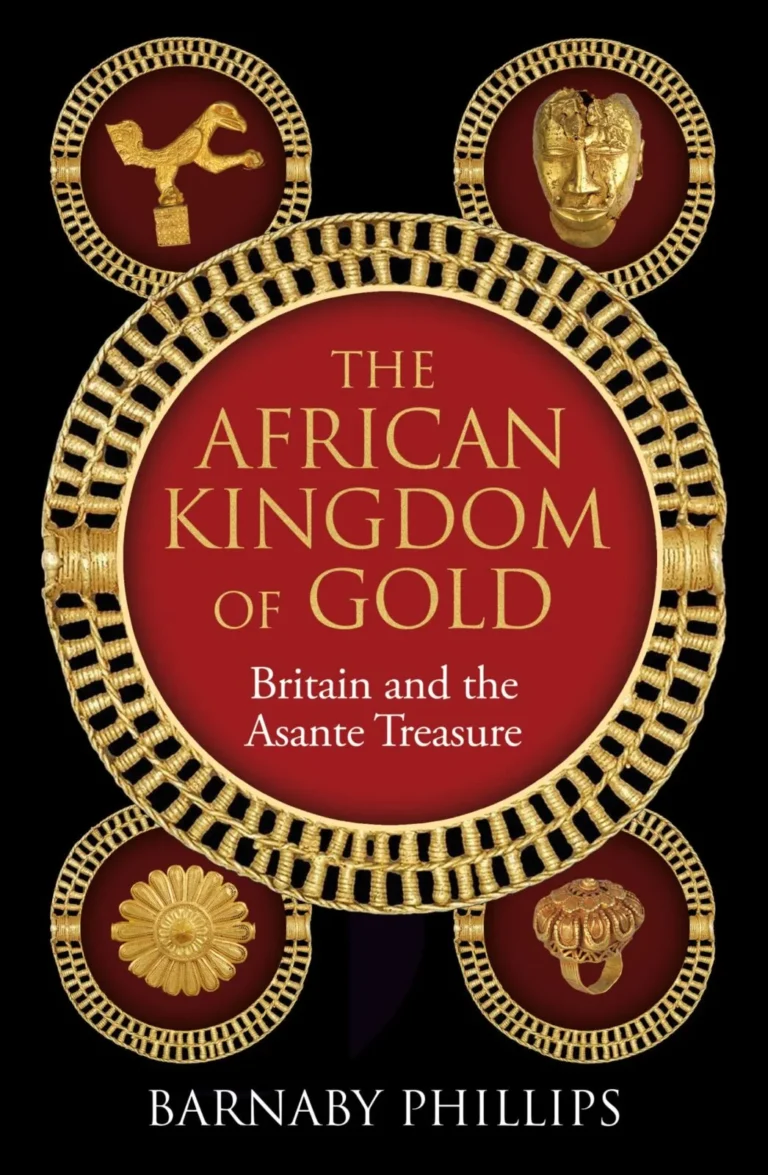
Author Barnaby Phillips will discuss its enduring significance of the Asante treasures for Britain, Ghana and our museums. He will be joined by Ivor Agyeman-Duah, the Asantehene’s envoy and director of the Manhyia Palace Museum in Kumasi and Malcolm McLeod, formerly of the British Museum, who both played critical roles in the negotiations leading to the recent returns.
Thirty-nine Naga ancestors will soon begin their journey home from Oxford to Nagaland. This is the culmination of a Naga-led process of dialogue, research and reconciliation that began in 2020, supported by the Forum for Naga Reconciliation, in collaboration with the Pitt Rivers Museum, a process the Naga partners describe as not an ending but as a step on the longer path towards healing.
The Association on American Indian Affairs is seeking proposals for panels, workshops, training and other sessions that will support the 12th Annual Repatriation Conference theme “Tending the Fire – Sustaining the Journey Home.” The Conference will be completely virtual and take place Thursdays and Fridays in the month of February 2027.
With speakers from Africa only. Returning an object is not the end of the story. What needs to be repaired? Who decides the terms of return? And how can restitution contribute to a broader movement for reparative justice?
On 16–17 September in Geneva, the Swiss Commission for UNESCO and the Federal Office of Culture (FOC) will gather States, cultural institutions, experts and Indigenous representatives. They will discuss how provenance research, Indigenous perspectives and concrete partnerships are contributing to this evolving field.
[in English and German] The 2 days event 'From Colonial War to Postcolonial Memory: Transformations of Colonial Military Violence since 1918' is organised by the Center for Military History and Social Sciences of the Bundeswehr (ZMSBw).
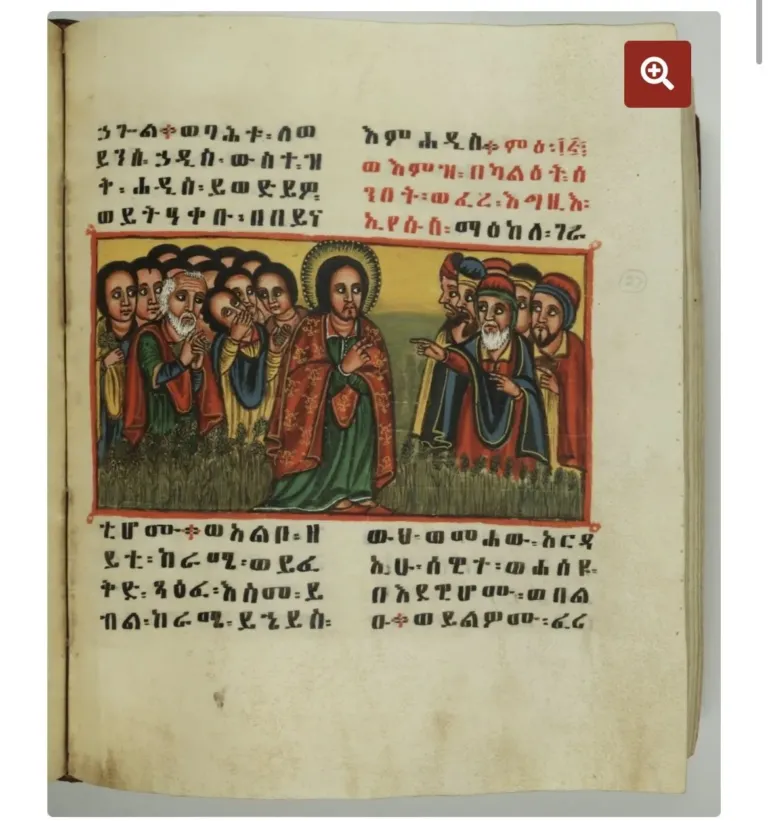
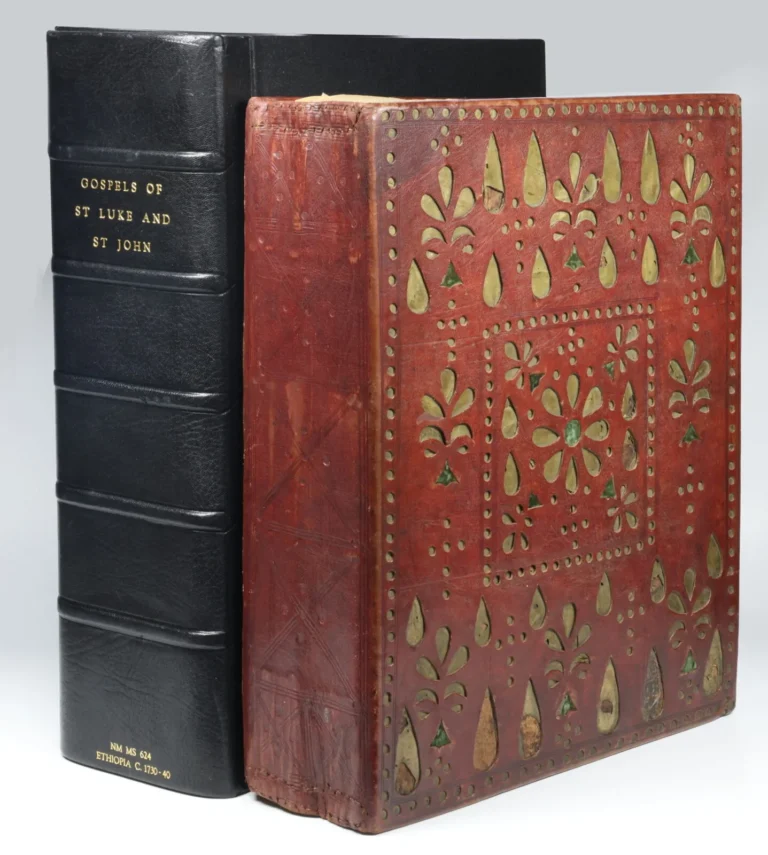
This large Ethiopian manuscript, written in Ge'ez on vellum circa 1730-1740, preserves the Luke and John half of a celebrated two-volume royal Gospel commission, forming the companion volume to the Gospels of Matthew and Mark now in the Bavarian State Library. Date 13 September 2026. Auction House INLIBRIS Gilhofer Nfg, Abu Dhabi. Asking price €250,000. On 6 September 2026, INLIBRIS sold already the 108 manuscripts comprising Zemen collection.
Just as the narrative of the "clean Wehrmacht" long covered up the violent warfare and the involvement of soldiers and officers in National Socialist crimes, the myth of a "clean protection force" existed in Germany for a long time. Speakers from Cameroon and Tanzania will discuss this.
The Toledo Museum of Art (TMA) announced partnership with the Ethiopian Heritage Authority (EHA). At the center of the partnership is the acquisition of a collection of approximately 380 Ethiopian artworks. The museum will immediately return two 15th century religious manuscripts. Further returns will be prepared.
In her (open access) thesis, Polly A Bence examines the Bristol Museum & Art Gallery’s Pacific collection as a local–global interface—a palimpsest of empire, anthropology, and emotion. With a focus on the Museum’s ethnographic collection from Australia and the Pacific Islands, stored in a city where the subjugation of other cultures was once central.
Yann LeGall has finished a list with evidence of 236 military operations led by German colonial troops between 1883 and 1912 in today's Tanzania, Rwanda, Burundi, Uganda and DRC (former German East-Africa). He has located 464 towns, villages and regions targeted by this colonial militarist violence and place them on a contemporary map.
The Sámi Museum Siida’s community-based project Ellos min árbi – Long Live Our Cultural Heritage explores how repatriated Sámi objects can best become part of living Sámi culture. It is time to indigenize repatriation.
[in French] The objective of this study day is to analyse the specificity of these women in the circulation and patrimonialisation of cultural property, particularly non-European during the pivotal period of the late nineteenth century and the first half of the twentieth century.
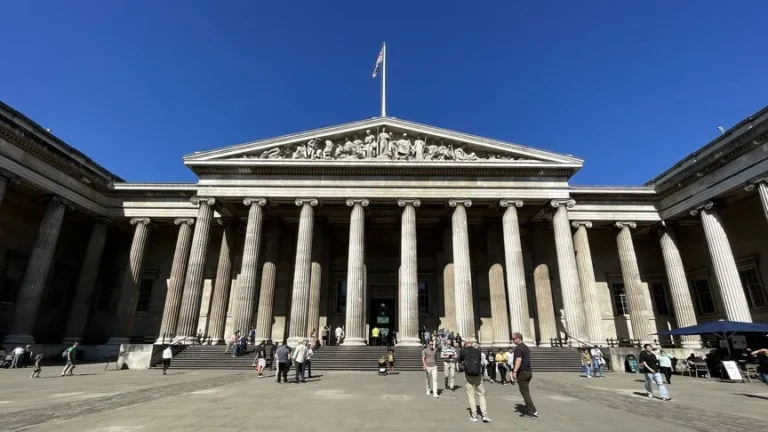
British Museum director Nicholas Cullinan pointed to the recent Bayeux Tapestry loan, agreed between Britain and France, as "a very compelling example of international partnership" that demonstrated the value of "reciprocal exchange." And: has PM Andy Burnham reversed his pro-restitution position?
[in Spanish] What happens when decolonisation, beyond questioning the museum, begins to become a way of imagining and securing its future? Or, put differently, what happens when decolonising the museum is not only about transforming it, but about making it capable of projecting its own institutional future?
[in German] "The German Lost Art Foundation DZK is not directly endangered, but a rightw-ing AfD cultural policy can sow doubts about its sense and purpose. In its paper, the party speaks of "so-called provenance research" and thus called into question an important achievement of the historical sciences.
The Museologies of Africa explores decolonial museum practice in Sub-Saharan Africa, asking how to decolonize knowledge production in Africa and to meaningfully collaborate with indigenous communities to reimagine museology.
Tamara Newton writes a short piece about the phrase "modern standards of consent". She includes a few historical examples of resistance and perspectives on why the burden of proof should sit with museums and institutions.
While most museum repatriations begin with an external request, a new international research project, led by thew University of Toronto's Faculty of Information Professor Cara Krmpotich, will examine how museums can instead take the initiative in returning cultural belongings and ancestral remains.
In 1899, French troops burned villages and looted cultural artifacts in the quest to include Niger in its West African colonial portfolio. Now, France has signaled willingness over possible restitution, but Niger is not interested.
The exhibition 'What Empire Took, What Empire Left: Museums, Borders and the Politics of Return in South Asia’ portrays the structures that enabled displacement, including colonial systems of knowledge and museum practices.
The Pan African Heritage Museum is pleased to invite researchers, scholars, museum professionals, cultural practitioners, policymakers, artists, heritage experts, and students to submit abstracts for the upcoming Annual Conference. Theme: The Future of Africa’s Museums: Reclaiming Heritage, Pathways to Restitution and Renewal
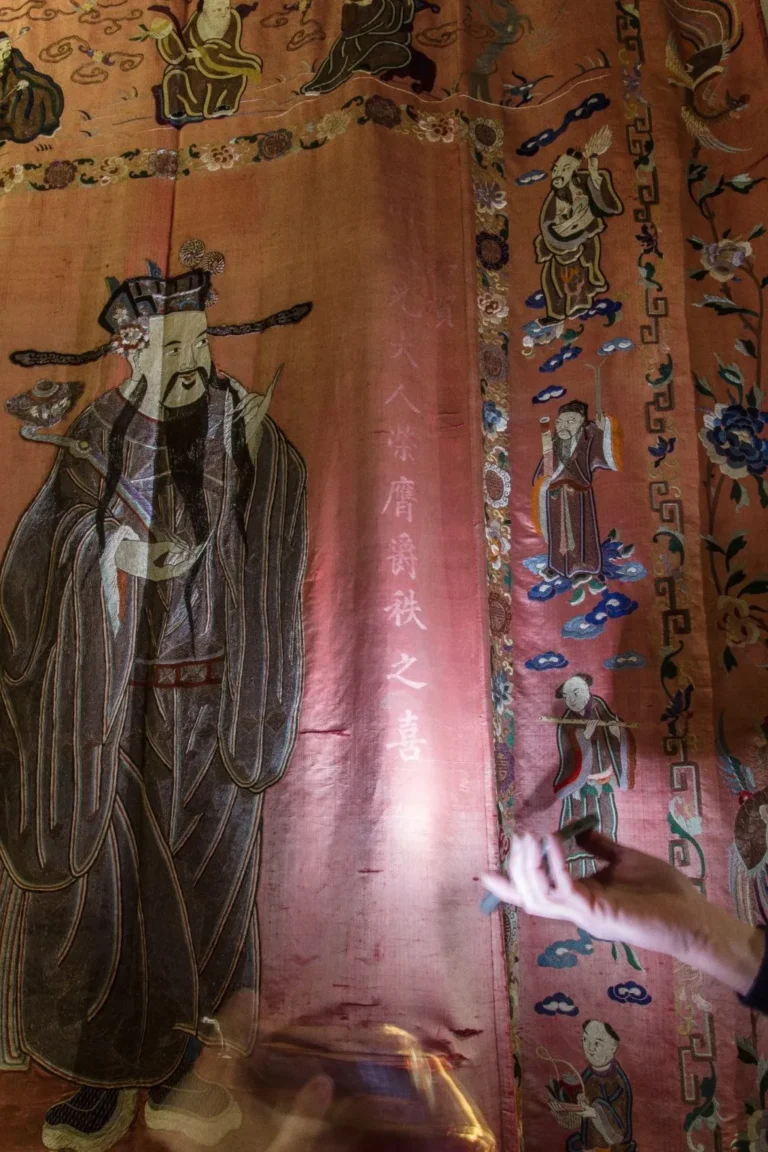
The provenance of a Chinese honorary tapestry – which disappeared from China in 1901 and became part of the collection of Mission Museum Steyl under circumstances that are not entirely clear – has been investigated. The SVD missionaries played a role in fuelling the Boxer Rebellion.
A group of students at University College London’s (UCL) Institute of Archaeology critically examined the Petrie Palestinian Collection (PPC) to explore colonial legacies embedded in Western institutions. This reflection foregrounds Palestinian experiences with the collection.
Rachel Gatehouse and Jin Gao examine UK heritage institutions’ repatriation practices through a new database of repatriated items from 2010 to 2022. The dataset records 491 items across 29 case studies, returned to 7 countries, with most material consisting of human remains from London-based national museums, particularly the Natural History Museum. The list, created by Tamara Newton, is publicly accessible.
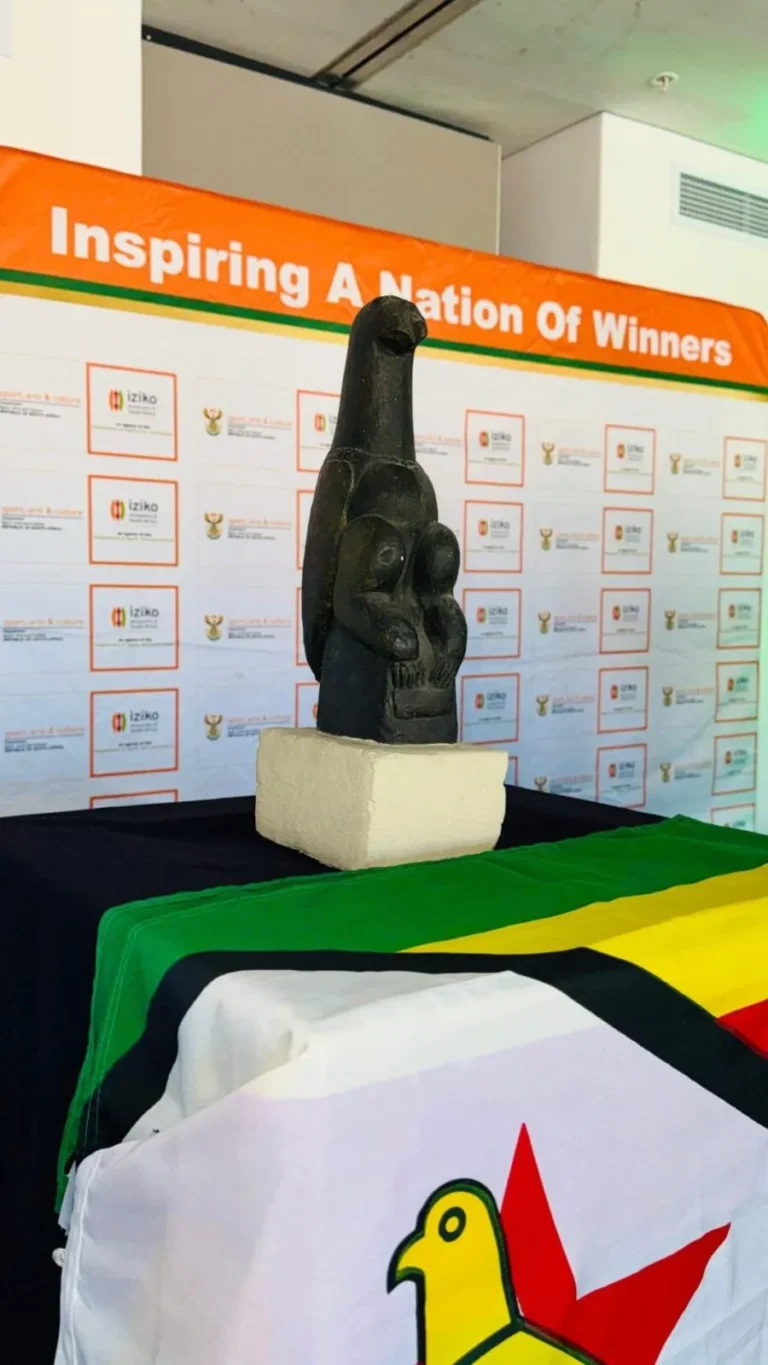
On 19 August 2026, South Africa hosts a historic repatriation send-off and handover ceremony at Iziko Museums in the Western Cape. The occasion honours the return of ancestral remains currently held at Iziko Museums, marking an important step in restoring dignity, identity, and belonging to communities whose ancestors were separated from their homeland for generations.
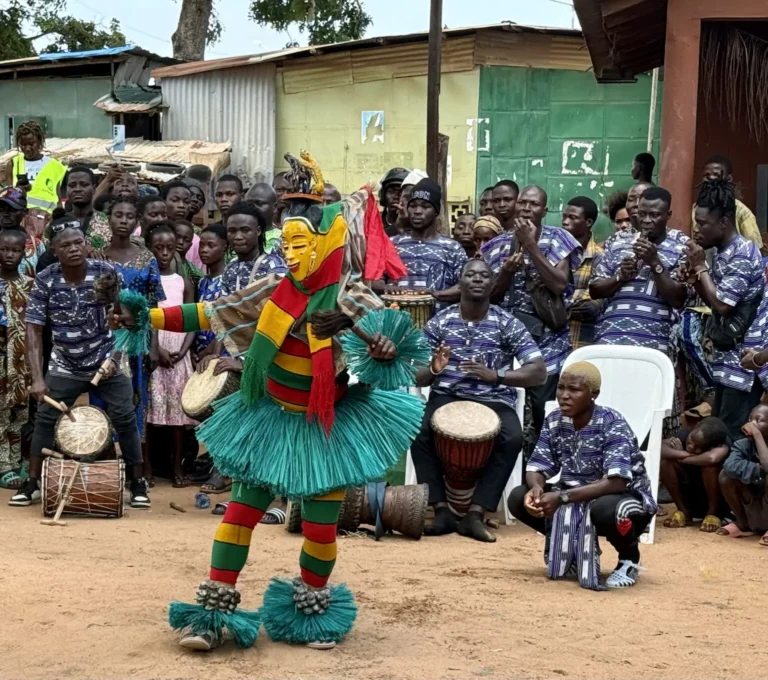
As Benin invests in museums, welcomes the return of looted royal treasures and stages the Festival of Masks, it is advancing a new vision of heritage in which ritual, scholarship and cultural policy converge, challenging conventional understandings of what museums preserve and how history is told.
Whilst repatriation alone does not equal a decolonised museum, elements of the repatriation process provide learnings that can be applied to anti-colonial museum practice more broadly. Amy Shakespeare puts forward a new practical framework for anti-colonial museum practice and museology – The Radicals.
Under the title Museums Beyond Limits: Imagining Repair Across Cultures, Ecologies and Knowledges, the conference proposes repair as a radical, plural, and ongoing practice grounded in relationality, care, and accountability.
[in Dutch] Since 1902, the Rijksmuseum Amsterdam has had a diamond stolen from Indonesia. It has been formally requested back and that request will probably be granted. But who in Indonesia owns the diamond? The government, or the Sultan descendants, journalist Saskia Konniger wonders?
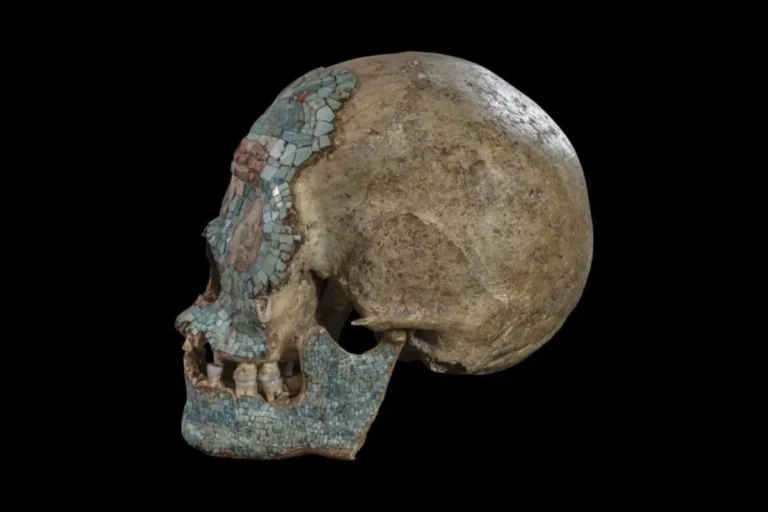
A rare pre-Hispanic human skull decorated with a turquoise mosaic is now under the protection of Mexico’s National Institute of Anthropology and History (INAH), a year after its repatriation from the Netherlands. INAH is in discussions with the Yucu Saa Community Museum in Villa de Tututepec, Oaxaca, which has expressed an interest in safeguarding and exhibiting the skull.
For decades, the descendants of the Senegalese Muslim mystic, scholar, and military commander Omar Saïdou Tall have been trying to retrieve the “treasure of Ségou” (looted in 1890) from the French state. The new French restitution law offers new hope.
Suzette Bell-Roberts writes: As Benin invests in museums, welcomes the return of looted royal treasures and stages the Festival of Masks, it is advancing a new vision of heritage in which ritual, scholarship and cultural policy converge, challenging conventional understandings of what museums preserve and how history is told.
Five years after the return of 26 objects from the royal treasures of Dahomey, Benin has submitted a new restitution request to Paris for 35 colonial works and archives. This action is based on a French framework law that came into effect in May, designed to facilitate such transfers. Benin's approach resonates what more ECOWAS states are after.
[in Spanish] Invitation for the first meeting of the webinar series "Repatriation in Latin America: rights, sovereignties and concrete experiences" that Patricia Ayala and Lucas da Costa Maciel are organizing with the support of the International Repatriation Network.
The Rautenstrauch-Joest-Museum (RJM) in Cologne transforms into a place of encounter and exchange about questions such as: What does return mean when there is no way back? What kinds of relationships can emerge from exile, displacement, and loss? What happens when connections are destroyed—and how can new forms of belonging and togetherness take shape?
[in German] Thomas Fues argues that the handover of six Maka ancestors in Freiburg University has not brought the breakthrough for the German-Cameroonian reappraisal of the colonial heritage that many had hoped for.
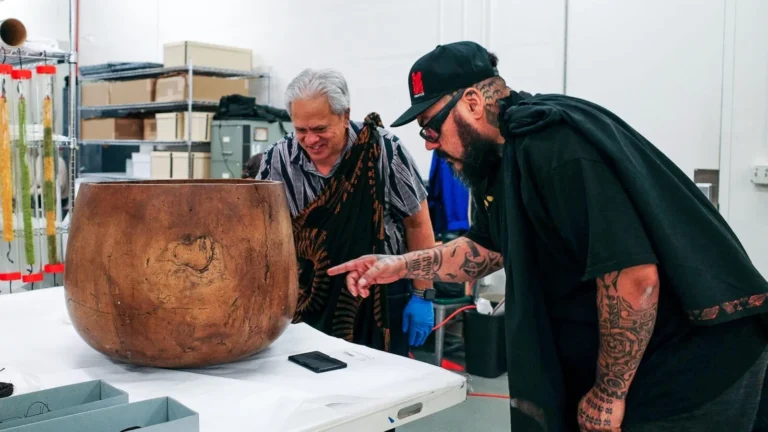
For Native Hawai‘ian advocate Edward Halealoha Ayau, caring for the dead has been a lifelong duty. It has also been a matter of steadily increasing legal traction.
Indigenous knowledge systems (IKS) contemplate the world through an interconnected lens, reflecting the integrated way life is lived and the symbiotic relationship between humans and their immediate tangible and intangible environment. Open Restitution Africa sees how the invocation of an IKS lens shifts the means and desired ends of restitutionary work around African cultural belongings and human ancestors.
Amir Al-Khafaji writes: Western museums stripped my homeland (IRAQ) of its ancient soul under the banner of "civility." Today, they hold my ancestors’ legacy behind paywalls.
“We deeply regret what was done at the University of Freiburg in the guise of science. Unfortunately, we cannot undo the injustice and suffering committed by researchers in the past. But we will do everything we can to help heal the wounds and return the ancestors to their homeland.”
The four-days conference 'Restitution Beyond Return: Reclaiming African Heritage in Today's Geopolitical and Technological Realities' brings together legal practitioners, policymakers, cultural institutions, artists, technologists, researchers and civil society to examine how restitution is evolving in response to changing geopolitical realities, international human rights law, and emerging technologies.
This closing symposium is to share and discuss results of projects on the birth and afterlife of racial science from 18th and 19th century racial pelvimetry science to present-day obstetric racism, recognising that the race science of past centuries haunts contemporary scientific practices, as language, ideas, and objects crafted for and by racial science still circulate in the present.
Four authors argue that the rise of social media has amplified international trafficking of mummified humans and animals. However, these preserved remains pose health and biosecurity risks due to the toxicity of embalming methods and/or suboptimal storage that can promote microbial growth. This article investigates these risks by analysing 128 online posts from Meta platforms, e-commerce sites, web-stores, and auction houses.
Contemporary discourses concerning cultural property have focused on that which is easily defined as ‘cultural’: artworks and antiquities, sacred artifacts, perhaps ancestral human remains or ethnological collections. Natural history museums remain largely unaffected by many of the legal and political issues of ownership, stewardship, conservation, and justice which have begun to concern museum staff, civil society, and governments in the Global North and Global South alike. This theme for the 2027 volume of the International Journal of Cultural Property puts a spotlight on natural history specimens and collections.
[in French] Donatien Dibwe dia Mwembu (Uni Lumbumbashi, DRC) explores the question of the restitution of cultural objects looted from communities in his country. With two case studies he establishes a dialogue between written and oral sources.
The practice of provenance research has exploded beyond museum staff and investigative journalists to become a nearly mainstream area of academic study across the developed world. But the general public still knows very little about what the word actually means. Art historian Melissa Metzgar shows steps towards making provenance more accessible and decolonising collecting practices.
Edna Arisbet Roque García's PhD project analyses restitution governance and the role of imperial museums in the foreign policy of states, with Germany as the main case study. The project demonstrates to what extent the restitution governance involves dialogue of interests, negotiation between states, and even the management of political repercussions. This is compared with the situation in Austria and in Switzerland.
In 'Towards Decolonising Dutch Museums: Provenance research, participatory methodologies, and Indigenous tattooists', Talisha Schilder critically reflects about museums, after doing provenance research with Sylvester (Iban), Talisha (Dutch-Indo), Pai (Bidayuh), and Yanto (Punan) at the depot of the University Museum Groningen. Her conclusion: the inclusion of Indigenous tattooists in provenance research is an important step towards decolonising museums.
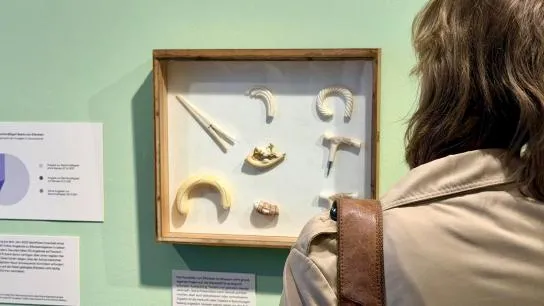
[in German] The merchant Theodor Francke (1830-1896) ran an ivory bleaching plant in the 19th century. Imported ivory from colonial trade networks was bleached here and processed into piano keyboards, for example. Francke GmbH was also involved in the trade in looted art such as the Benin bronzes. An exhibition at Museum Tempelhof in Berlin has the story...
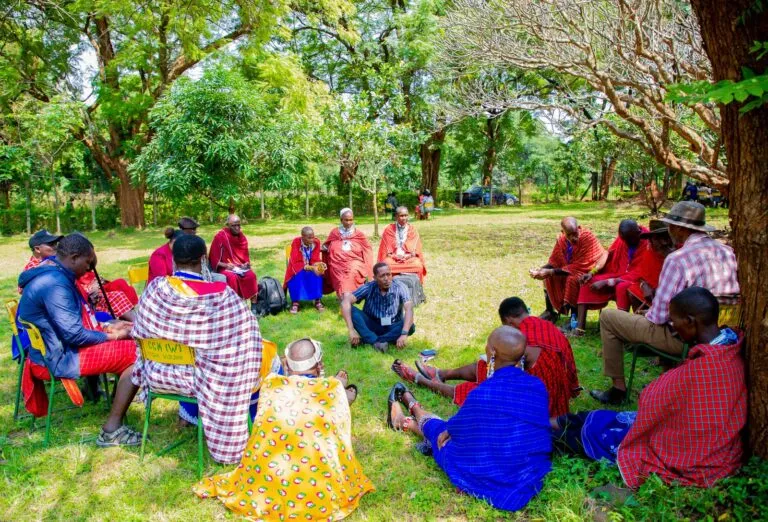
In the Marejesho Research and Information Centre in Moshi, Tanzania, 150 representatives of different communities in the Kilimanjaro and Arusha regions focused on the Marejesho initiative's history (from mobile exhibition to provenance research project), current research goals, restitution and repatriation efforts, and findings about cultural belongings and ancestral remains in German museums. With some remarkable conclusions.
Ireland has never had a formal mechanism for determining restitution or repatriation claims. However, this may change with the recent publication of a report from the Advisory Committee on the Restitution and Repatriation of Cultural Heritage. Ronan Bergin thinks it is a 'refreshing advice:
Nepali content creator Nikki Thapa writes: Decades of looting turned living Deities into costly global commodities, but the era of quiet disappearance is giving way to one of recovery and return.
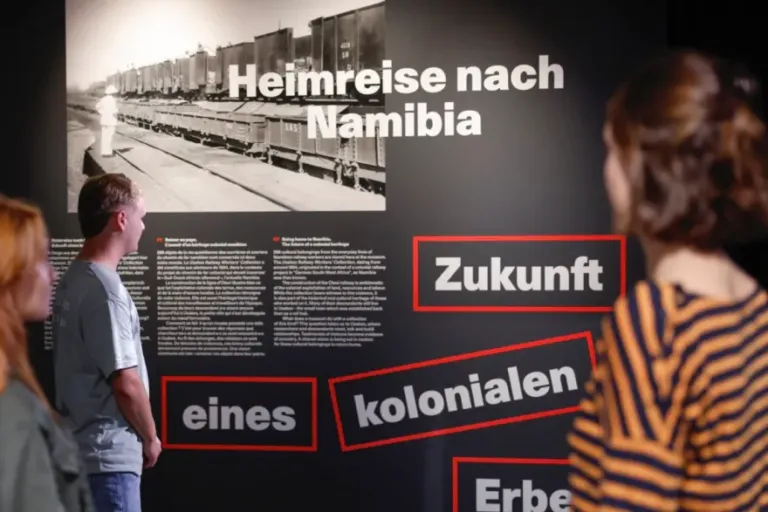
[in German] In a festive ceremony, the Governor of the Erongo Region, Nathalia /Goagoses, accepted the "Usakos Railway Workers' Collection" collection on behalf of the Republic of Namibia. A Swiss railway engineer and his wife collected them between 1903 and 1905 in a context of colonial violence. The farewell exhibition 'Destination: Usakos' will run to July 4, 2027.
Drawing on his broad research, Chipangura explores how ethnographic museums holding African collections are confronting the enduring consequences of colonialism. His presentation moves beyond familiar debates on restitution and repatriation, asking a more fundamental question: What are museums for, and whom do they serve?
[in French] Vicky Victoire Muke (Kinshasa Uni) shares a new preliminary study devoted to the colouring materials of the costumes and heritage fabrics of the Democratic Republic of Congo, based on the inventory records of the Musée du quai Branly - Jacques Chirac. His questions: How did you dye a kuba loincloth a century ago? Where does the deep red of mbuti adornments come from? And why is mangbetu black called "earth pigment"?
[in French] The metaphor of “objects as ambassadors” - used to refer to Kanak objects originating in New Caledonia and currently kept outside the territory, and sometimes returned there temporarily for exhibitions, arises in a context of institutional decolonisation and the aspiration for full Kanak sovereignty, with New Caledonia remaining a sui generis French overseas collectivity.
Emiline Smith argues that the 3,000-year-old Iranian gold discs, which American actress Zendaya showed at a London photocall for Christopher Nolan’s forthcoming adaptation of The Odyssey, are emblematic of a market that has spent decades quietly dismantling ancient objects for parts.
Reilly Clark argues that, if the return of African cultural objects ends with the literal return of physical objects, it does little to address legacies of colonial theft, value extraction, and epistemicide but can reinscribe the power of Western interpretive frameworks and reproduce Western patterns of state power by returning objects to Western-style institutions within postcolonial nation-states...
How are colonial violence, looted cultural assets and partnership projects related? This exhibition sheds light on the eventful history between the Cameroonian city of Tibati and Bremen. The focus is on current questions: What is the status of the projects? What is the significance of the restitution of colonial objects and how can a common future be shaped?
The most important is the Quran of Samory Touré, one of Guinea's leading figures of resistance against the French colonial conquest. It is Guinea's first restitution request since 1968.
Adrian Plau of the Wellington Trust that recently returned Jain manuscripts to the Jain community in GB, argues: Restitution is not a remedy for the past alone – it’s about the future we can create together.
In her article 'From Cultural Hub to Crime Scene: British Museum Refuses Repatriation of Thefted Colonial Loot', Sierra Kinsey-Lawton argues that the British Museum is currently facing intensified pressure over the scale of its unprovenanced non‑European collection, following an internal review that found that more than 40% of those objects lack sufficient documentation to establish legal ownership.
[in French] Vicky Victoire Muke (Kinshasa Uni) writes: This is a first effort to the heritage costumes of the Democratic Republic of Congo (DRC) as they appear in the online collections of the Royal Museum for Central Africa (RMCA – AfricaMuseum, Belgium). It is intended as a situational resource, intended for anyone wishing to familiarise themselves with the diversity of costumes, loincloths and adornments preserved in these collections.
During a ceremony and an ecumenical service in the University Church of Freiburg, Freiburg University prepared for the repatriation of ancestors of the Maka community from Cameroon. The human skulls are part of the Alexander-Ecker collection, anatomist from Freiburg in c. 1860.
How did the colonial matrix of power continue to shape the modern world? The question is central to the exhibition Postcolonial?, presented by the House of European History in Brussels from 17 April 2026 to 14 March 2027. This book combines contributions from the people behind the exhibition.
Okechukwu Uwaezuoke argues: The homecoming of Yinka Shonibare’s work from the 2024 Venice Biennale “Monument to the Restitution of the Mind and Soul” to Benin City seemed to complete one historical circle while quietly opening another debate.
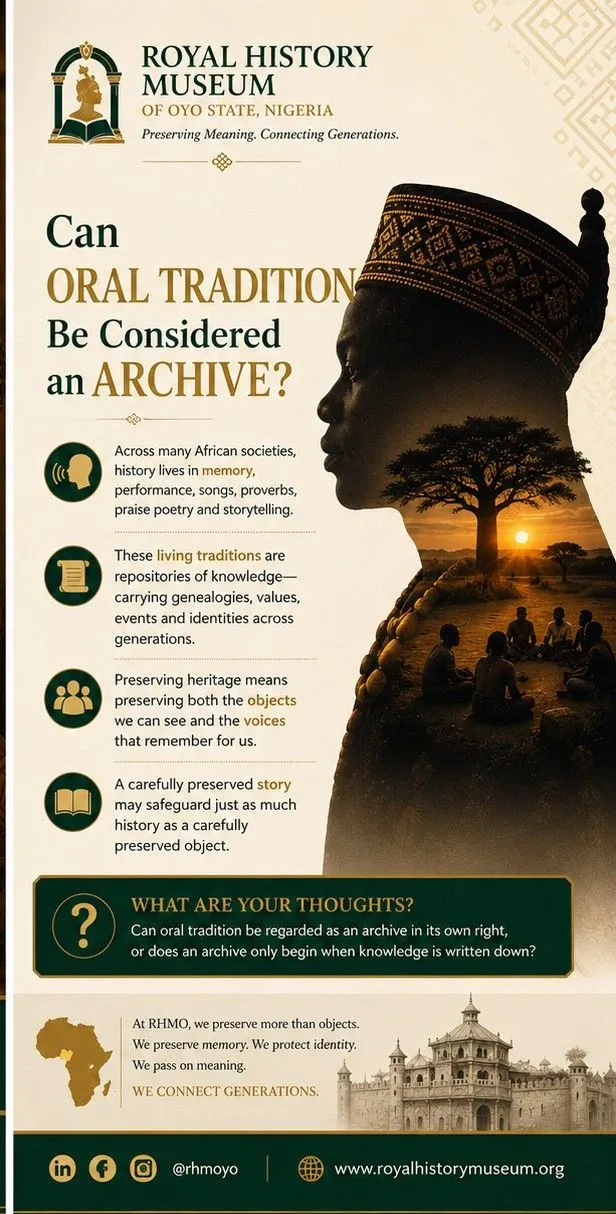
Joan-Mary Ogiogwa writes: When we hear the word archive, most of us imagine shelves lined with documents, manuscripts, maps, photographs, and official records. But what if some of a people's oldest and most enduring archives have never been written down?
NAGPRA specialist Rachael Carnes warns: Museums and AI Consultants build AI interfaces that let visitors "ask the collection" questions directly. Objects that answer. Catalogues that talk back. But listen closely to whose voice.
In this podcast, Jessica Coldrey asks Miriama Bono to share her insights on the interconnectedness of land, culture, and ocean in Polynesian perspectives. She discusses her work in museums, repatriation efforts, and the importance of storytelling in preserving heritage. So far, 20 objects came back, be it most of them on a six years loan.
Legal expert Ayale Do Vale Vales argues: While Indigenous peoples have long mobilised against appropriation, sometimes succeeding in claims to have their appropriated heritage returned to them, discussions on restitution have largely focused on tangible heritage. By contrast, the restitution of intangible cultural heritage (ICH), despite its importance and vulnerability to misappropriation, remains underexplored.
[in French] French authors Alexandre Decroix and Asena Poyrazer write: Despite an increasingly important presence in the public debate, the term "restitution" is misunderstood. In contrast to the "new relationship with Africa" promoted by Emmanuel Macron, the issue of the restitution of African cultural property betrays a colonialism that is still very much alive. France retains tight control.
Nigerian art curator Yahuza Rabiu Garba argues: We need to decolonize our understanding of heritage spaces. The Eurocentric model insists on the "four walls" idea, a quiet archive where artifacts are curated to be looked at, but never touched. But...
An exhibition at the Slovene Ethnographic Museum confronts the colonial imbalance of Tanzanian artefacts being more accessible to Europeans than Tanzanians, asking who truly holds the right to tell the nation’s history.
Zimbabwean archaeologist Mutyandaedza Bright argues: The global movement to repatriate African cultural heritage has gained unprecedented momentum. While much attention has been given to whether objects should be returned, far less attention has been paid to an equally important question: Are local communities prepared to receive them? Yes, they are, but strengthening institutional capacity is essential.
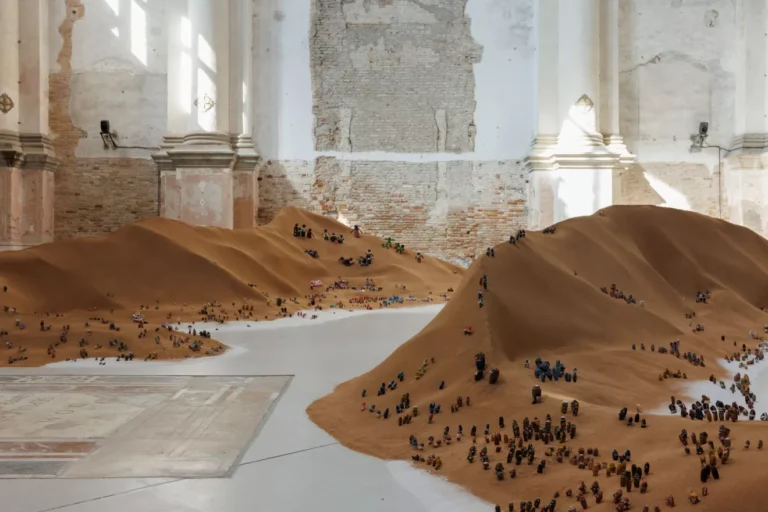
Running from 28 March through 11 October 2026 at Ocean Space, the Venice Art Biennale exhibition “Tide of Returns” by Khadija von Zinnenburg Carroll raises questions about such issues as ownership and ways of acquisition.
The Marejesho Research and Information Centre is building on the long-standing efforts of the communities in Kilimanjaro and Arusha to examine German colonial history and its consequences, and specifically to search for and reclaim the ancestral remains of the leaders who were hanged on March 2, 1900 in Old Moshi on the orders of German colonial officers.
Senior Ethiopian researcher Tadesse Simie Metekia argues: To implement the landmark UN slavery resolution, reparations should be defined as a framework for truth, responsibility, repair, reconciliation and global justice.
[in French] Radio Télévision Suisse looked into the sale of human remains in the program 'Vraiment' de Cécile Tran-Tien. She finds skulls, skeletons and even fetuses on the open market and reveals the extent of the trade in human remains via Ricardo, Vinted, Instagram...
On 25 June 2026, the 41st Ordinary General Assembly voted to adopt the revised ICOM Code of Ethics for Museums. The vote marks the culmination of a multi-year participatory process. It also touches carefully) restitution issues.
The conversation around restitution just got a major jolt of momentum. Musée Guimet of Asian Arts in Paris, where Chinese artifacts make up roughly a third of the collection, has set a groundbreaking precedent: if any of its Chinese relics are definitively proven to be looted, they will be sent back to their country of origin within 24 hours.
Ganga Rajinee Dissanayaka writes: When I conduct my work as a provenance researcher, reconstructing how some piece of Kandyan art from Sri Lanka came to be in a museum in Amsterdam or Berlin, I am engaging precisely these traditional archival documents, and I am repeatedly realise that they were created for the purposes of ruling us, not remembering us.
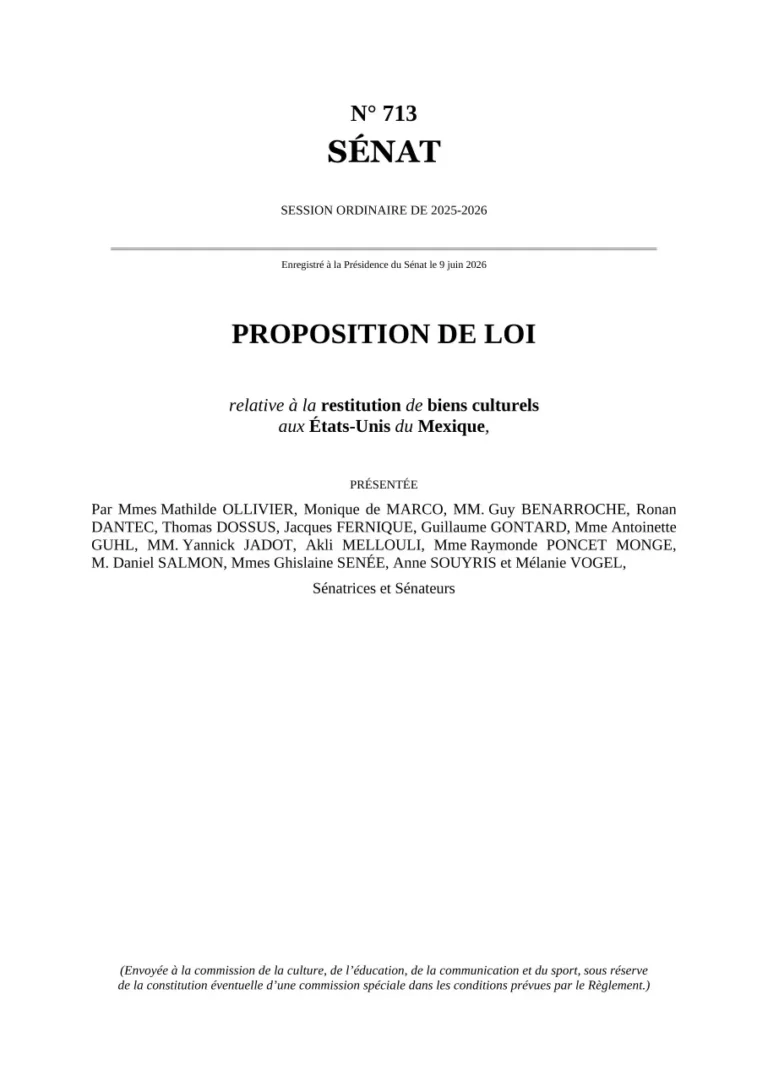
[in French] Two Mesoamerican manuscripts, the "Codex Borbonicus" kept at the National Assembly and the "Codex Azcatitlan" at the Bibliotheque Nationale de France (BNF), are the subject of a bill tabled in the Senate on June 9, 2026 by Mathilde Ollivier and several of her fellow senators, which would organise their restitution to the United Mexican States. Is this thanks to the new restitution law?
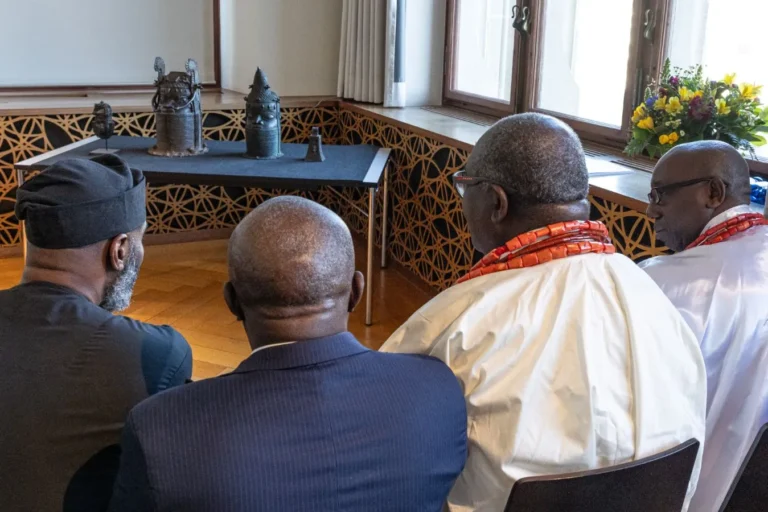
On 29 June 2026, at the National Museum in Lagos, three Swiss museums formally returned 18 Benin Bronzes to Nigeria, alongside a bronze bracelet and four archaeological monoliths seized during criminal investigations. Lawyer Kai Loon Loh analyses what makes the Swiss approach distinctive, and why it matters for cultural heritage law and practice.
This article describes the sensitive historical and cultural contexts of the collection and gives a special place to the significance and relevance of these artefacts for the Mapuche today, and their integration into cultural and social processes in relation to historical events and provenances.
The Museum für Naturkunde Berlin, the Botanischer Garten and the Botanisches Museum, together with the Ethnologisches Museum and the Zentralarchiv der Staatliche Museen zu Berlin (SPK),and the Archives Nationales du Togo and the University of Ghana are jointly investigating the contexts of acquisition of collections from the German colony of Togo, and neighbouring Ghana.
Hansjörg Dilger writes: Ethnographic collections can be understood as affective forces: relational entities that connect people, institutions, histories, and more-than-human worlds, while shaping contemporary debates about care, collaboration, and restitution. (open access)
This issue of Museum International (309-310) is the second of two volumes addressing the challenges faced by museums today in establishing the provenance of their collections. Many objects, collections and ancestral remains found in museums today lack a clear or full provenance: conditions that reflect the historical conditions under which they were assembled.
That the Netherlands will return 2,000 stolen objects to Ghana, is - according to the Dutch Ministry of Education, Culture and Science (OCW) - a premature conclusion. For claims of looted colelctions, the normal Dutch procedures will have to be followed. The catalogue with the objects is a first step. See RM* of 21 June 2026.
'Law no 2026-351 of 9th May 2026 on restitution of cultural property which has been illicitly acquired' is a step forward and shows, at the same time, that many in France are not ready to accept their colonial past and continue to deny their brutal history in Africa.
Ghana is set to receive over 2,000 cultural artefacts from the Netherlands, while Germany has also identified items linked to the Kpando traditional area for return, according to Foreign Affairs Minister Samuel Okudzeto Ablakwa during the “Accra Next Steps” discussions on cultural restitution. The move forms part of ongoing international efforts on cultural restitution and Ghana’s push to recover artefacts taken during the colonial era.
Dutch museum collections contain ethnographic objects originating from Suriname, many of which were acquired in a colonial context. This search guide provides information on the most common ways in which these objects ended up in collections in the Netherlands and other countries in the Global North. [In English and Dutch]
Chana Algarvio's paper reshapes and redefines our understanding of books, challenging modern beliefs influenced by Western bias so that the field of Egyptology can unhesitatingly incorporate the topic of books and bibliography explicitly into scholarship.
In November 2026, ICOM Documentation will gather in Belgium. The conference invites museum professionals, researchers, collection managers, archivists, digital specialists, registrars, curators, conservators and community partners to examine how documentation practices shape the ways collections are understood, accessed, interpreted and cared for.
Daisy Sanderson concludes: Social media is helping drive the sale of skulls, bones and modified human remains, Legal loopholes leave much of the UK market beyond regulation. The on-going sale is a continuation of the trade in the colonial times.
In a major step toward cultural restitution, taken during a high-stakes African Union summit in Addis Ababa, a specialised international task force has been established to spearhead the return of looted and illicitly trafficked cultural artifacts back to the African continent.
Natural history specimens from former colonial territories reflect both the scientific curiosity and the power imbalances and violence of the era. Often acquired alongside human remains or cultural objects, they raise questions about the responsibilities of natural history museums. This volume explores these questions as they concern the collections of the Museum für Naturkunde Berlin.
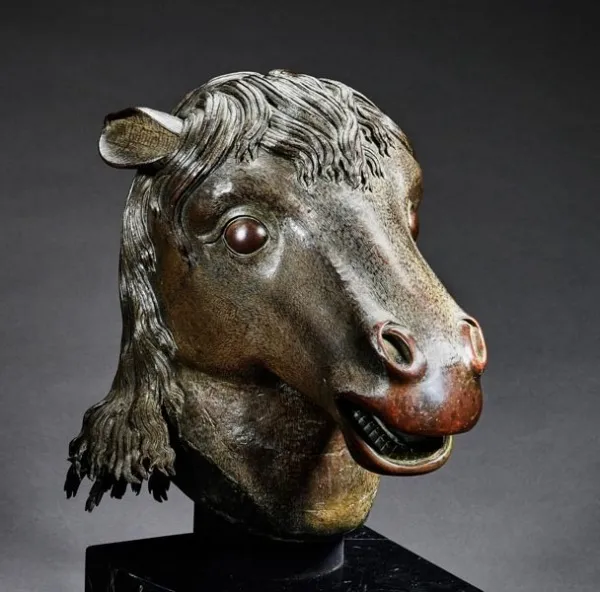
These two bronze zodiac heads once formed part of the clepsydra (water clock) that adorned the entrance to the Western style Yuanmingyuan or Old Summer Palace gardens in Beijing. After the sacking of the Summer Palace by Anglo-French forces in 1860, the zodiac heads were stolen and dispersed among private collections.
This symposium interrogates processes of return in Latin America not as inherently reparative gestures, but as practices that can be ambivalent—capable both of reproducing colonial logics and of resistance and re-articulation of indigenous peoples and traditional communities. In particular, we aim to examine how different regimes of value —state, scientific, Indigenous and traditional— come into friction, and to what extent contemporary heritage frameworks operate as mechanisms that depoliticise struggles over the control of ancestors. Symposium 23-27 November 2026.
[in Dutch] Based on a November 2024 advise of the Council for Culture, the Dutch Minister for Culture has adopted a new policy on dealing with archives, which are the property of the Dutch State, but are considered shared heritage with their regions of origin. Two restitution requests have been submitted already.
Livia Solaro investigates how a museum—especially one with a problematic past, such as an ethnographic institution—can critically confront its colonial heritage while keeping the public informed and actively involved in the process.
In this moderator-led discussion, we examine the mechanics of memory, looking at how history is recorded and retrieved. With Kwame Boafo, scholar and artist from Accra, Ghana, and Peter Jegede, Nigerian archaeologist and museum curator.
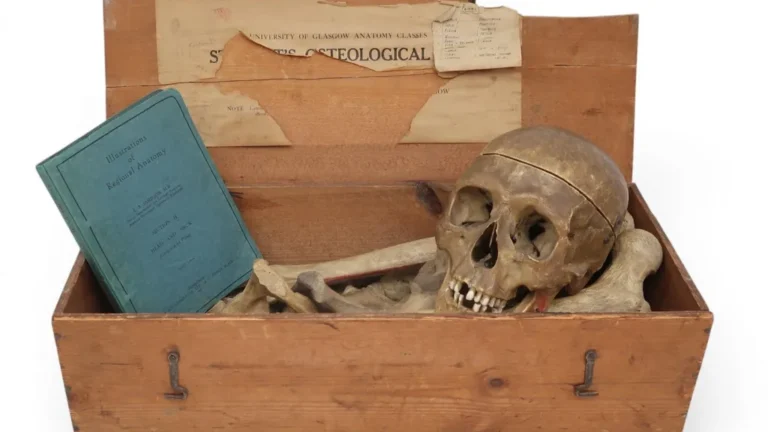
A Glasgow auction house founded by TV presenter Anita Manning has been criticised for offering human remains for sale. Human bones, including a skull, were due to go under the hammer on Friday, but Great Western Auctions withdrew the item for sale after being contacted by BBC Scotland News.
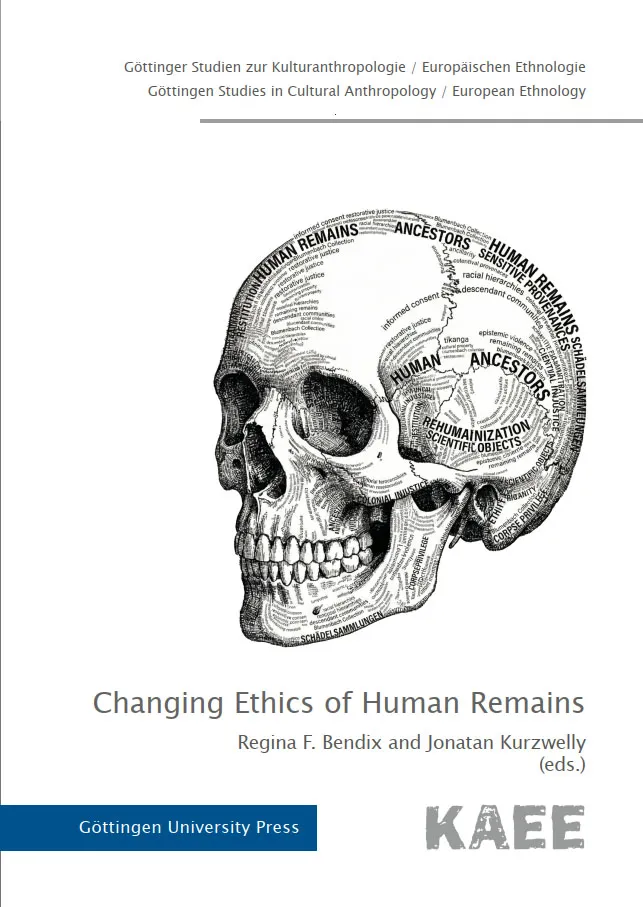
This book, edited by Regina F. Bendix and Jonatan Kurzwelly explores the complex and contentious transition from this legacy to the contemporary imperative of rehumanisation and restorative dignity. It recognises that restitution offers a necessary, yet only partial, redress to the profound disruptions of the past.
ThomasFues writes about a recent report by the Culturebene portal in Cameroon that the government there is getting serious about the repatriation of human remains and cultural belongings from Germany. It is reported that Culture Minister Bidoung Mkpatt has granted the Maka community permission to recover the remains of their ancestors that were looted in 1905.
The rejection by the city of Bordeaux of a private donation of 53 art objects allows for the direct repatriation of these works to their countries of origin, especially Gabon, which will receive 33 pieces from the collection. The other recipients are Nigeria, Niger, Ivory Coast, the Democratic Republic of Congo, Burkina Faso, and Togo.
[ In Dutch ] The French parliament has passed a law that makes it easier to return at least 150,000 pieces of art stolen during the colonization. "In France, people prefer not to talk about historically disturbing topics." an interview with art historian, Bénédicte Savoy
How do museum-exhibitions enable visitors to critically engage with the complex histories of colonial collections and reflect on their potential (re)distribution? The Wereldmuseum Amsterdam’s Unfinished Pasts: Return, Keep, or...? brings this question into curatorial focus. Pao-Yi Yang assesses how its interpretive design both deepens and complicates the viewing experience.
An independent commission has revealed that the Dutch Royal Family possesses one thousand objects from the former colonies. Although most were ‘donated’ at the time, a few dozens of objects are booty of war and were taken by colonial officials and soldiers during military confrontations.
Sierrea Kinsey-Lawton argues: Museums and art houses have never acknowledged that the living descendants of enslaved Africans are, themselves, looted cultural heritage. Solutions for stolen people are not analogous to solutions for stolen bronzes. You cannot deaccession a person.
Kate Fitz Gibbon writes: The restitution of Asante-linked instruments from Los Angeles to Ghana exposes the limits of standard repatriation narratives, particularly when provenance is uncertain and human remains are involved. Rather than resolving historical injustice, the case highlights competing claims, ethical ambiguities, and the need for negotiated, context-specific outcomes.
Earlier, the French government supported a bill allowing for the remains of people who were exhibited in colonial-era “human zoos” in Paris to be returned to their ancestral lands in French Guiana. Now senators have also declared their support for the law. It meets a long-standing demand of Indigenous communities in France’s overseas territories, acknowledging a dark chapter from the country’s past. The association Moliko Alet+Po has played a crucal role.
Open Restitution Africa (ORA) describes restitution as a pan-African process of remembrance, research, and the digital sharing of knowledge – an interview with Chao Tayiana Maina and Karen Ijumba. 'The bulk of the work in the restitution lies on the African side: the work of reintegration, the negotiation, and supporting people in dealing with the return of the artifacts.'
Ganga Rajinee Dissanayaka explores how heritage, power, and narrative relate to each other, and how the subtle, insidious dependencies shape who tells the story of a culture in 2026 and who becomes little more than a footnote at the back of a museum. In Sri Lanka, Vedda cultures, coastal Muslim traders, Tamil ritual practices, and Catholic-Sinhalese syncretism could be studied ethnographically, none qualified as heritage.
During his visit to Kenya, French President Emmanuel Macron said the process of returning African artworks looted during the colonial era had become "unstoppable". But, despite a growing number of restitution requests, France has returned only a handful of artefacts to its colonies.
Samuel Bachmann (Bern Historical Museum) argues: If museums are to confront their – and Switzerland’s – coloniality, they require a new mandate: one that questions their interpretive authority and addresses fundamental questions about why, and for whom, cultural heritage is preserved, researched and communicated.
The 'Oceania and Indonesia' holdings in Altenburg (approx. 350 objects) and the entire ethnographic collection (approx. 250 objects) in Meerane will be examined. The initial check follows a research project on the Africa collection in Altenburg and the recommendation by ethnologist Ms Dolz from the State Ethnographic Collections of Saxony for Meerane.
The Chola Plates , historical objects originating from India held by University Libraries Leiden (UBL) have been handed over to India at the occasion of India's PM Modi's visit to the Netherlands. The restitution of this heritage follows the advice of the Dutch (national) Colonial Collections Committee.
The Wellcome Collection in London has committed to returning around 2,000 sacred manuscripts to the Jain religious community as part of a “landmark” restitution framework agreement. As a result of the agrrement, the manucripts will stay in the UK.
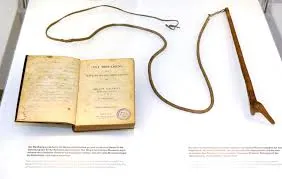
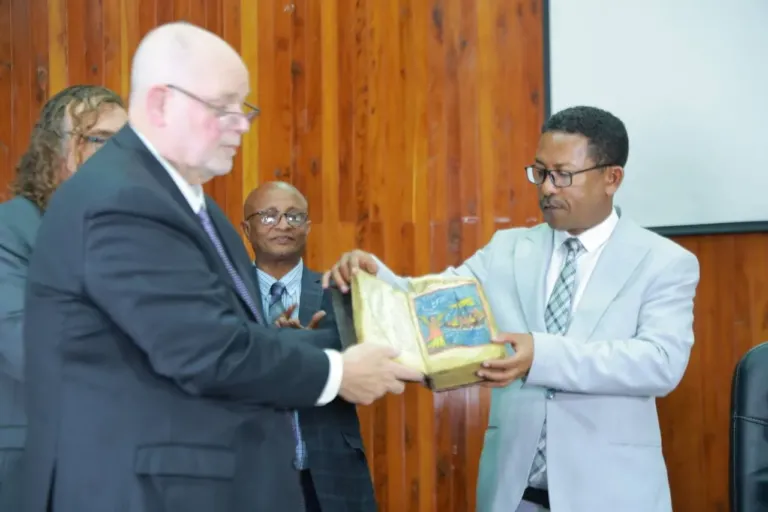
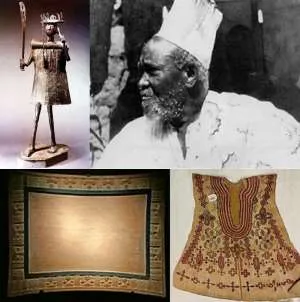
The Kings Own Royal Regiment Museum Trust presented ancient relics of Emperor Tewodros II of Abyssinia at the University of Cumbria in Lancaster o the Ethiopian Heritage Authority (EHA).
Culture Minister Samira Tovela announced Mozambique’s official effort to reclaim around 800 colonial-era artworks stolen during colonization. The process, supported by UNESCO and EU nations, comes ahead of the country’s 50th independence anniversary in June. The cultural and symbolic value is estimated at over USD 100 million.
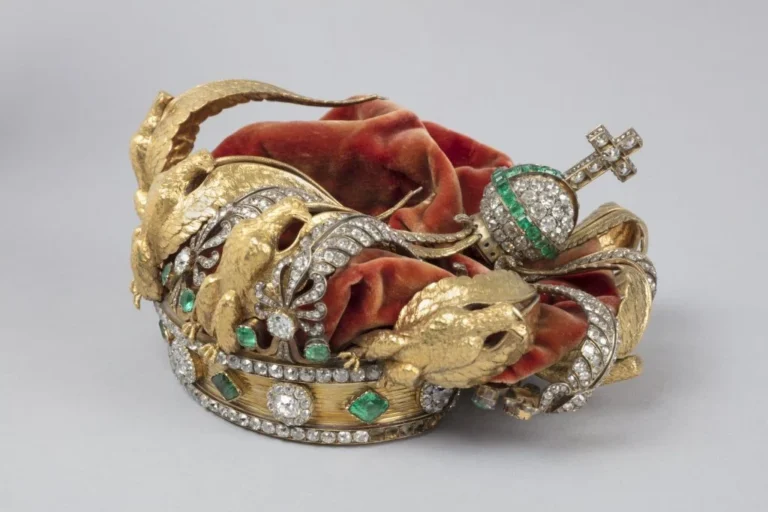
[in French] In October 2025, the Louvre lost several jewels among the Crown Jewels. FranceInfo found out more about how the security system was foiled and who sponsored the theft.
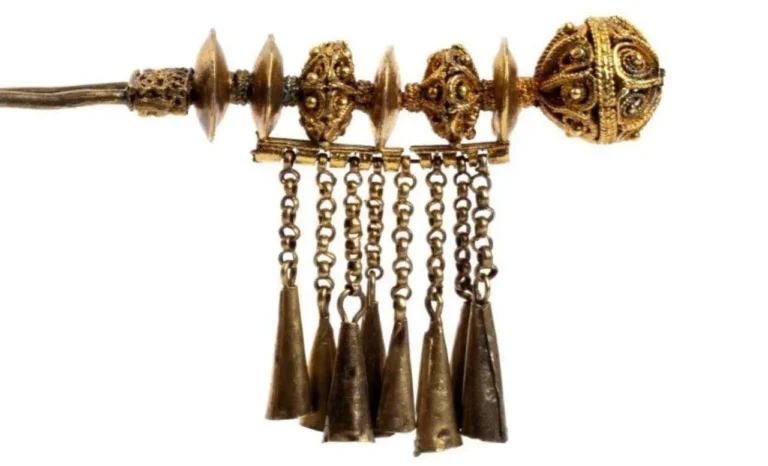
Mahlet Mehdi writes: The return of Empress Tiruwork Wube’s hairpin to Ethiopia underscores how much remains unresolved. Most artifacts taken from Magdala remain abroad. Legal frameworks offer limited recourse. Private markets remain opaque. And restitution continues to depend on chance discovery, rapid response, and negotiated compromise. The hairpin is less an endpoint than a case study.
Emotional Provenance refers to the emotional, spiritual, ritual, and affective histories embedded within artefacts through their creation, use, displacement, performance, and institutional representation.
Yrine Matchinda examines in her disseration *Presence and Absence of Cameroonian Religious Objects in Colonial Collections of German Museums (1884–1919): Cultural and Religious Implications for Communities in Cameroon* how the musealisation of sacred/religious objects affects cultural identity, collective memory, and intergenerational transmission within communities of origin.
Plunder stolen from Ireland and stored in museums of former colonial powers should be returned. But there is no list of what is held abroad in ‘post-colonial museums’. Culute Minister also said that restitution cannot be a one-way street.
Minister Patrick O’Donovan said there was a “compulsion” on former colonial powers to return “loot” taken from people against their will.
According to Parisian lawyer, Celia Chauffray, the new French restitution law does not change the rules of evidence that continue to weigh on requesting states, does not ratify any additional international conventions, and does not affect the due diligence obligations of dealers and collectors.
The conference 'Museums as Monuments to the Colonial Troops?' brings together historians, artists, curators and artists to examine the artefactual history of colonial warfare in three former German colonies: Togo, Kamerun and German East-Africa.
Until its restitution in November 2025, Ama O Ghe Ehen, a 18th-century bronze plaque depicting a mudfish, was held in the colelction of the Museum de Fundatie in the Dutch city of Zwolle, since its acquisition in 1937. This symposium explores the process and implications of this return, and what restitution might mean in the context of this plaque.
Ahmed Mohammad examines Germany's new Coordination Council for Returns of Cultural Property and Human Remains from Colonial Contexts — weighing what it genuinely achieves against the structural challenges that remain. The council's limitation is that it remains unclarified whether it will issue binding rulings or operate in an advisory capacity. The question of human remains is where this limitation is sharpest.
New York City Mayor Zohran Mamdani has called for the return of the priceless Koh-i-Noor diamond from the UK. The 105-carat diamond is part of the Crown Jewels but its ownership has been disputed by India, who claims that it was stolen during British rule. Mamdani was born in Uganda but has Indian roots.
[in German] The Stiftung Preussischer Kulturbesitz (SPK) in Berlin is to return hundreds of skulls to Cameroon, Togo, Ghana and Nigeria. The origin of the human remains has been researched for several years. "If at all possible, the human bones should be able to return to where they came from," said foundation president Marion Ackermann.
This is about Yemen. About how an American foundation oversaw the exploitation of Yemen’s archaeological inheritance in British-occupied South Yemen during the early 1950s. About Yemen's policy to recover belogings that were lost in the colonial days. And it answers the question why, when and by whom Yemen was colonised.
The landscape of cultural property restitution has undergone a fundamental transformation over the past three decades. What was once a world governed by gentlemanly agreements between dealers, collectors, and museum curators has become a forensic battleground where digitized trafficking archives, scientific testing, and aggressive legal enforcement determine the fate of objects. This document provides a comprehensive analysis of the current state.
The Restitution Law, approved by the French parliament, evokes all sorts of reactions. RM* summarises them in a few posts. In this post, the Chinese Global Times writes that while countries around the world have been progressively engaging in the repatriation of cultural relics, Japan stands out as a negative example.
The Restitution Law, approved by the French parliament, evokes all sorts of reactions. Most are explaining the law and positive in tone. In a previous post, an opponent of the law had his say. In this post, Saeed Saeed, journalist in Abu Dhabi, points to practical consequences for countries such as Algeria, Jordan, and Egypt.
The Restitution Law, approved by the French parliament, evokes all sorts of reactions. Most are quite similar (and positive). Senegalese philosopher Souleymane Bachir Diagne has serious doubts about it.
Paul Stewens writes: Brazil and Germany have concluded an agreement to deepen their cooperation. The Joint Declaration covers a broad range of topics, with at the end the biggest dinosaur repatriation news in years: the decision to return the fossil of Irritator challengeri to Brazil.
28 April: Black Muse and Digital Benin: Benin Heritage & New Forms of Narratives: Digital Access & Reconnection to the Living Heritage of Benin Kingdom
3 May: Digital Benin and Kokopelli Gallery: Digital Benin: Digital heritage at the intersection of culture, data and practice
The fact that cultural possessions, which were brought from China at the beginning of the twentieth century, are spread throughout Europe and the US is proven by the Skušek Collection in the Ethnographic Museum of Ljublijana. Ivan Skušek had served in the Austro-Hungarian navy and was in a Chinese prison from 1917-1920, had several dozens of boxes filled Chinese art objects. The circumstances under which he had acquired such a mass of Chinese art are not yet completely clear.
Paul P. Stewens wonders: The restitution of cultural property has become a hot topic. Museums grapple with restitution claims and colonial legacies. Did I say museums? I meant to say: cultural museums that house artworks, antiquities, or ethnological collections. Natural history museums, on the other hand, have barely been touched by the general turn to restitution. Why is that?
In recent years human remains in museums have been the subject of increasingly critical attention, both within the museum sector itself and in public debate. This raises a large number of ethical, legal, and practical questions for European museums. 'Museum meets University' organises this meeting at the crossroads of academic museology and museum practice.
Two looted West African musical instruments languishing at the Fowler Museum in Los Angeles are creating a restitution challenge, because they have human skulls attached to them.
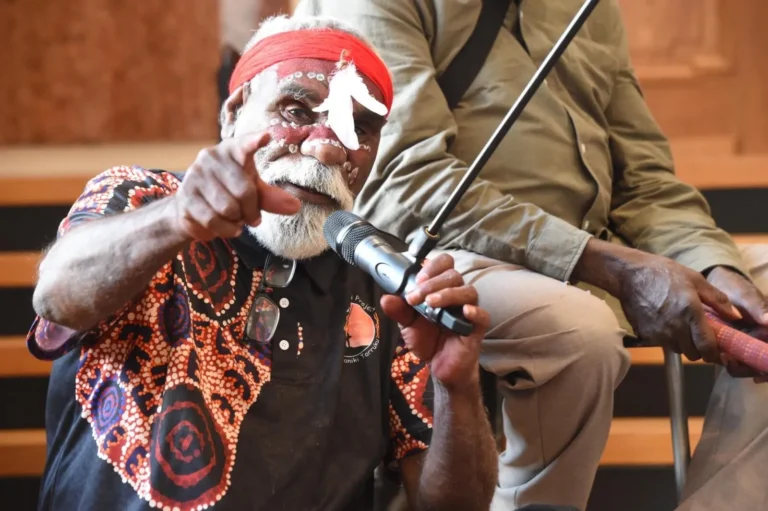
Since 2019, a number of sacred objects and ancestral remains have been repatriated to the Warlpiri people of Yuendumu community north-west of Alice Springs in the middle of Australia. For them repatriation is about healing the community, but in particular healing the young men and women of their community, writes Jamie Hampton*. In this Blog, he shares his story about the Yuendumu community and how repatriation has helped them heal from past injustices, providing pathways for the next generations of Warlpiri to ensure they live a life grounded in culture in a changing world.
Anthropologist Nancy Munn studied the Warlpiri people from 1956 to 1958. Now, with the repatriation of her collection to Australia, a younger generation is reunited with its ancestral heritage.
Books, oral histories, artefacts, images, textiles, posters, manuscripts, architectural documentation, and cultural records across Africa, the diaspora, and the Global South. It contains 70 locally indexed records · 300,000+ archive horizon · static-hosted discovery architecture, etc.
While Germany appears keen to expedite the conclusion of the negotiations with Namibia concerning the genocide committed against the Ovaherero and Nama communities between 1904 and 1908, the Namibian position reflects that the matter remains unresolved. Namibia continues to advocate for a comprehensive reparative framework grounded in five key elements: restitution, compensation, rehabilitation, guarantees of non-repetition, and satisfaction. Sarah Negumbo, the Director of Namibia Library and Archives Service, provides further insight into the historical, legal, and ethical dimensions underpinning these demands.
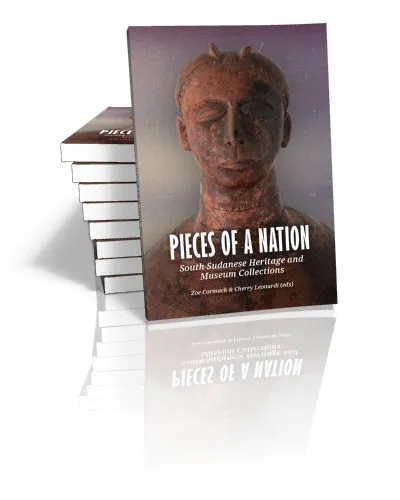
Although published in 2021, RM* distributes this open access book, as South Sudan is a much forgotten area. According to editors Zoe Cormack and Cherry Leonardi, the long-term effects of colonialism and conflict have largely precluded any concerted attempts to preserve material culture within the country; museums remained in Khartoum, the capital of the formally united Sudan. Furthermore, tens of thousands of objects had been removed from what is now South Sudan during the nineteenth and twentieth centuries to museum and private collections around the world...
The Mambesak Group was active in Jayapura from 1978 to 1984. After the murder of Arnold Ap in 1984, the group, mostly students from various regions in Papua, disbanded. This film tries to articulate the traces of the ideas of Arnold Ap, leader of the Mambesak Group, as mediators between their generation and the traces of their ancestors and Papuan culture. With firm statements about coloniality and restitution.
The handover ceremony, directed by South African President Cyril Ramaphosa, took place at the Iziko South African Museum in Cape Town, marking a significant moment in the restoration of African heritage. The repatriation also underscores growing cooperation among African nations in addressing historical injustices linked to colonial-era dispossession.
The French parliament has unanimously adopted on 13 April a framework legislation for the deaccession of cultural items plundered from former colonies. Nine years after President Emmanuel Macron pledged repatriation of African heritage, the new law finally opens the way for the return of items illegitimately taken by force. The bill was initiated in 2023, but it has been delayed by political instability and changes of government as well as the sensitivity of the subject.
The Expertise Center for Restitution (ECR) of the NIOD Institute for War, Holocaust and Genocide Studies and Resistance Museum Amsterdam present Robbery Art Ontrafeld, a lecture series that focuses on the less exposed aspects of loot art and restitution.
Historians associated with the NIOD present recent research and surprising insights and enter into dialogue with the public, led by moderator Yuki Kho.
Lia Iannarilli and Malaika Bunzigiye conclude: The story of looted art from the Democratic Republic of the Congo is inseparable from broader struggles of political sovereignty. By holding on to these items, European powers are holding on to the narrative of their colonial rule. In a world shaped by imperial legacies, the decolonial project must be both material and symbolic. To repatriate art is to repatriate power.
Vast majority of Africa’s cultural legacy remains abroad, where institutions claim superior care, shared human heritage. Three African analysts comment. ‘Biggest issue is changing the historical narrative that excluded us.’
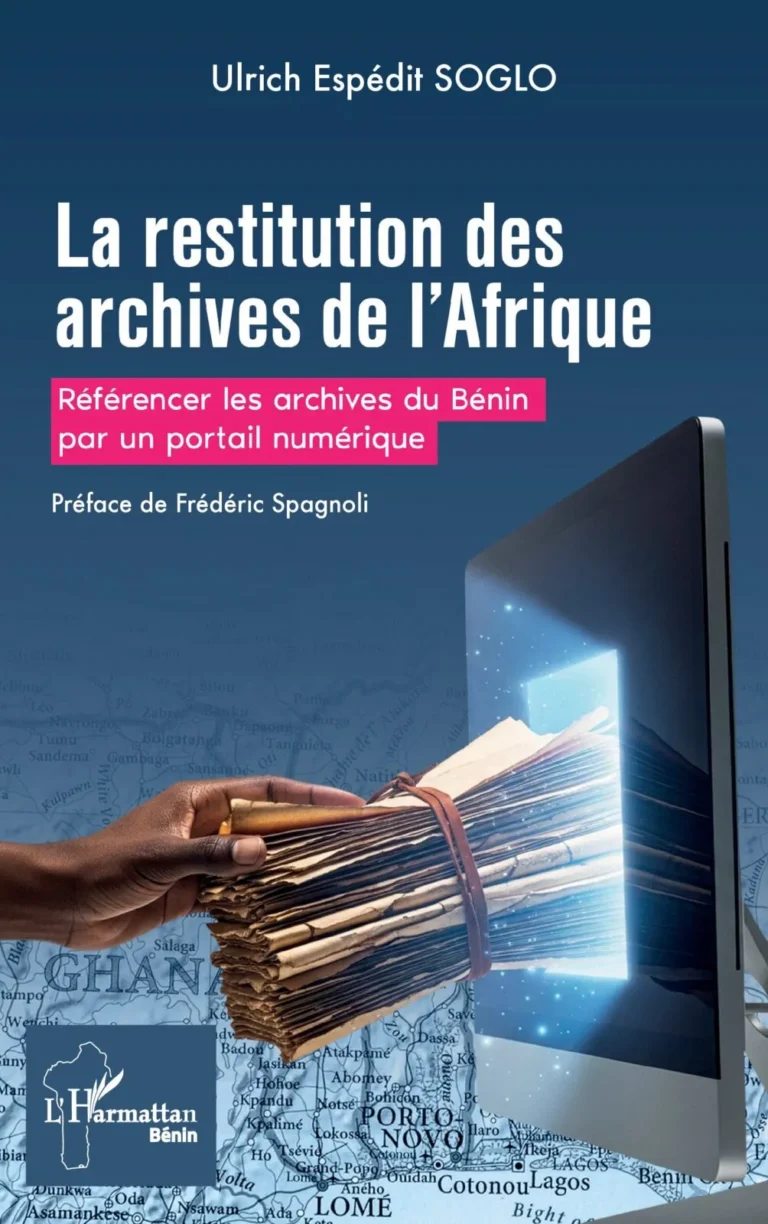
[in French] Recently, the restitution of cultural belonging has been stirring up the web. We talk about treasures, but there is no treasure without archives. However, colonial archives, true treasures of history, are often forgotten in discussions about restitution. This book offers a suggestion...
The V&A’s collections include around 90 objects from Ethiopia. The majority of these are in some way associated with a British military expedition to Ethiopia from 1867 – 68 against Emperor Tewodros. The museum also holds a selection of Ethiopian paintings from the 1940s. Restitution is out of the question. A provenance report.
[ in Dutch, in French] That this issue has received increasing attention is partly due to two important issues, namely the question of the restitution of works of art looted by the Nazis to relatives of victims of the Holocaust and the question of the restitution of cultural heritage objects illegally acquired during colonization by Western countries. Three Wednesday afternoons.
In this Second Parliamentary Gathering on 13 April 2026, APPCITARJ will build on the landmark November 2025 gathering and draw on international experiences of truth and justice processes to inform and deepen the movement for a genuine commission of inquiry.
Institutions are grappling with the human remains in their collections that were used to justify debunked theories about race. To understand this better, Nina Siegal visits Museum Vrolik in Amsterdam and its exhibition “Imagine: The Future of Human Remains from Colonial Contexts,” which runs up to 27 June 2027.
Laura Petersen argues that authors and artists have also taken up a responsibility for restitution. Deploying the literal translation ‘making-good-again’, this book focuses on the ‘making’ of law, literature and visual art to argue that restitution is a practice which is found in different genres, sites and temporalities.
[in English, in German] For the reconstruction of more than 90 % of human history, there are no other sources than archaeological ones. The ethical questions that arise in connection with the excavation, investigation, and exhibition of this central source group have been the subject of intensive study in English speaking countries for decades. Remains of colonial regions are part of this. How are these questions dealt with in Saxony Anhalt and other German speaking places?
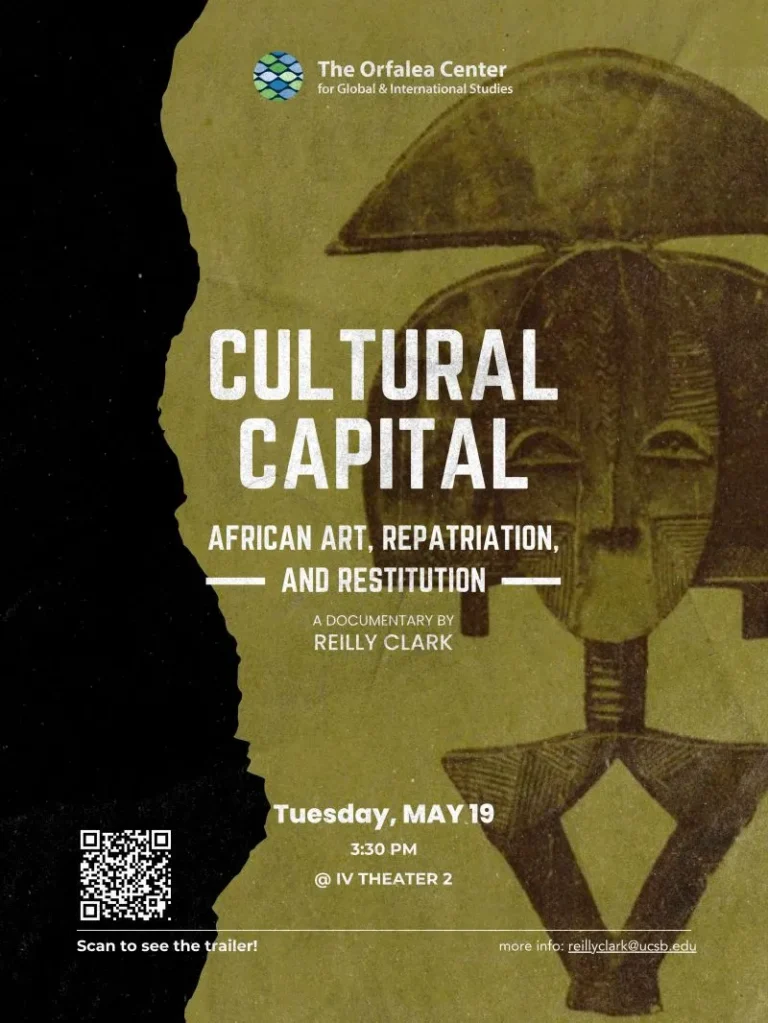
'Cultural Capital: African Art, Repatriation, and Restitution', a critical documentary by Reilly Clark on art from Africa in western museums, will be released on 19 May 2026.
Please join the Denver Art Museum’s Native Arts and Provenance departments, along with special guests from the Nelson-Atkins Museum of Art and the Art Institute of Chicago, for a lively panel discussion on the vital role provenance research plays in museums.
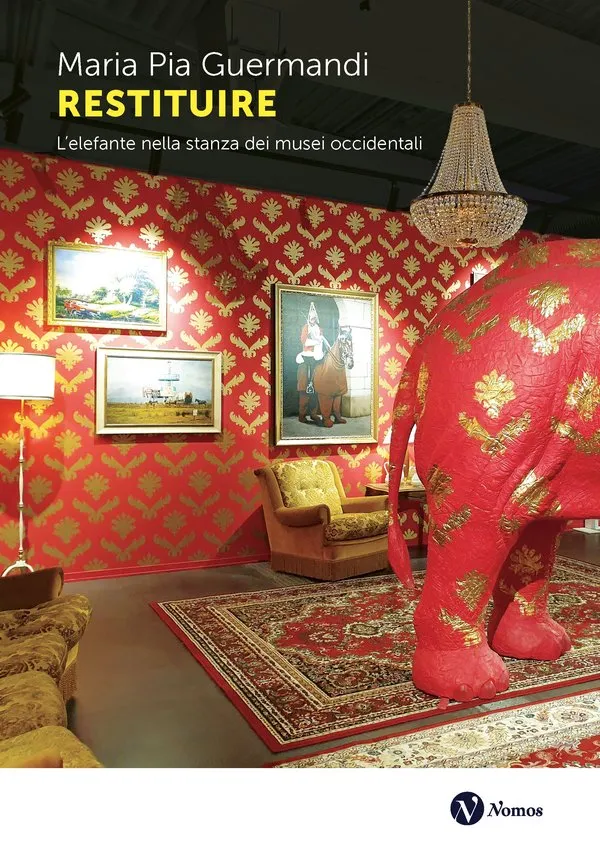
[Italian] In “Restituire”, Maria ia Guermandi reconstructs, with historical precision and critical clarity, the complex path that has brought the issue of restitution from the halls of the UN to museum policies, from the claims of African countries to the struggles of indigenous communities in so-called settlement colonies.
The lechwe skin cloaks are a rare remnant of Batwa people's traditional intellectual, cultural and social worlds. They were recently rediscovered in a museum collection in Stockholm, Sweden. These belongings were slated for digital repatriation, along with +/- 100 other belongings, through a collaborative project between the Women's History Museum of Zambia, and the National Museums of World Culture, Sweden.
As one of the biggest targets of wartime looting in centuries past, China is now positioning itself as a global pioneer in repatriating lost cultural artefacts. In two articles, Xinlu Liang looks a Chinese demand that Japan returns an ancient tablet, which could mark a ‘historical reckoning’, and how China is wielding law, diplomacy and a Global South coalition to rewrite the rules of restitution, filling a void left by a retreating US.
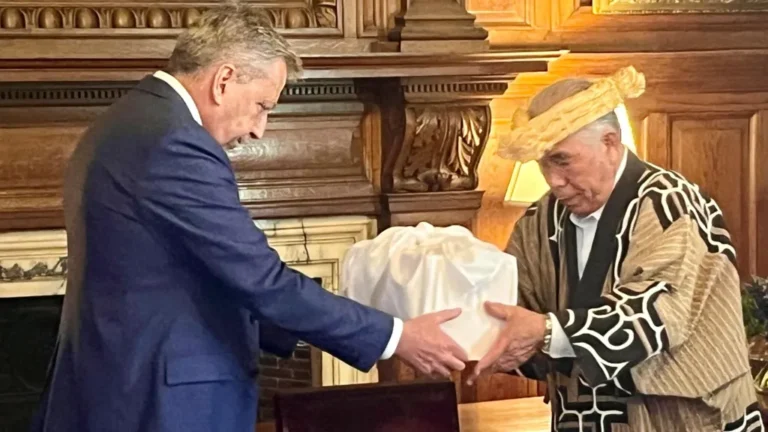
Late in 2025 , it was announced that five sets of Ainu ancestors' remains were to be repatriated to Japan from the Natural History Museum in London. This follows repatriations in 2017 (Germany), 2023 (Australia) and 2025 (Scotland). Inside Japan, the University of Tokyo has apologised to the Ainu community for collecting ancestral remains without their consent. The Japanese government, working with the Ainu Association of Hokkaido, supports the repatriations. How can this increase be explained?
[in German, partially in English] In Germany, the federal, state and local governments decided to establish the "Coordination Council for Returns of Cultural Property and Human Remains from Colonial Contexts". The secretariat will be located at the Federal Foreign Office.
The Africa Institute, Global Studies University, in collaboration with the Open Society Foundations, announces its annual fellowship program themed, “Restitution and Reparation: Africa and the Post-Colonial Condition.” The program will convene scholars or practitioners interested in restitution and repatriation issues related to African art and artifacts.
Marking the beginning of the 2026 Ocean Space exhibition season, TBA21–Academy presents Tide of Returns, an exhibition based on the artistic research of the Repatriates Collective, initiated by artist Khadija von Zinnenburg Carroll and formed of artists from Australia’s Pacific North, South, and West Africa, Europe, and Latin America.
The chair, which will be launched on 22 June 2026, will address issues related to illicit trafficking, restitution and the management of collections originating from colonial contexts.
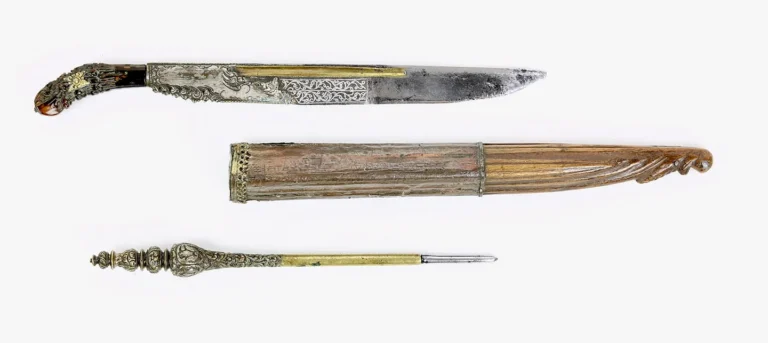
Mirjam Shatanawi gives an overview of Islamic collections in the Netherlands, focusing on their presence in museums, libraries, and archives. It provides a critical overview of how these collections have been shaped, preserved, and interpreted, with particular attention to the enduring influence of colonial perspectives on Indonesian Islamic traditions. Examples will be given of objects from Java, Sumatra and South Sulawesi.
The Center for Art Collection Ethics (ACE) at the University of Denver (DU) announces a hybrid training program: Provenance Research Today: Issues, Resources, and Networks. The program is geared toward graduate students and emerging museum and art market professionals.
An important moment! Congolese and Belgian experts presented their recommendations for the future of institutional provenance research at an open forum: ‘The current framework is insufficient.’
On 25 February 2026, the Togolese cabinet approved a draft law to establish a restitution committee. The committee will seek to repatriate tangible and intangible cultural heritage, as well as human remains and archives from colonial contexts. The bill refers to over 8,000 „objects“ currently held in foreign museums. They predominantly come from northern Togo.
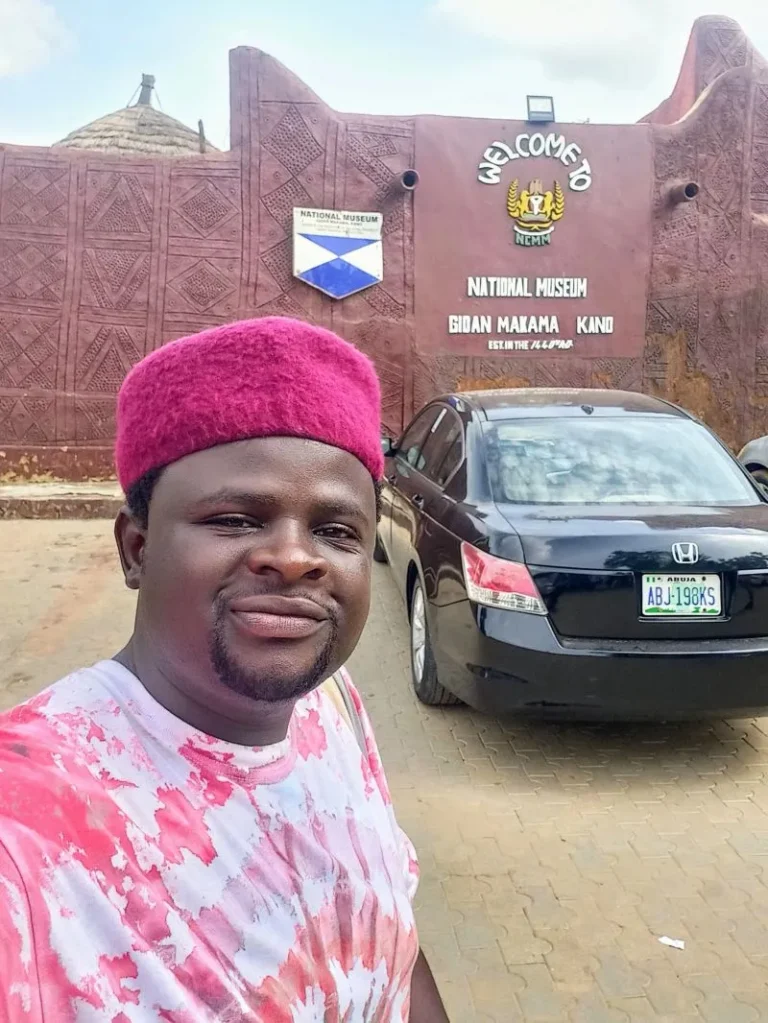
Museums in a country like Ghana have an impoortant function in preserving ervidence of the past and in shaping together the country's history. A self-critical look from Ghanaian professionals in their museum practice, especially that of the National Museum.
South Africa has reburied the remains of 63 Khoisan people, among southern Africa's oldest indigenous communities. The remains were part of museum collections in the Hunterian at the University of Glasgow in Scotland and at the Iziko South African Museum in Cape Town. The remains were laid to rest at a historic monument near Steinkopf, in the Northern Cape province, during a ceremony attended by President Cyril Ramaphosa.
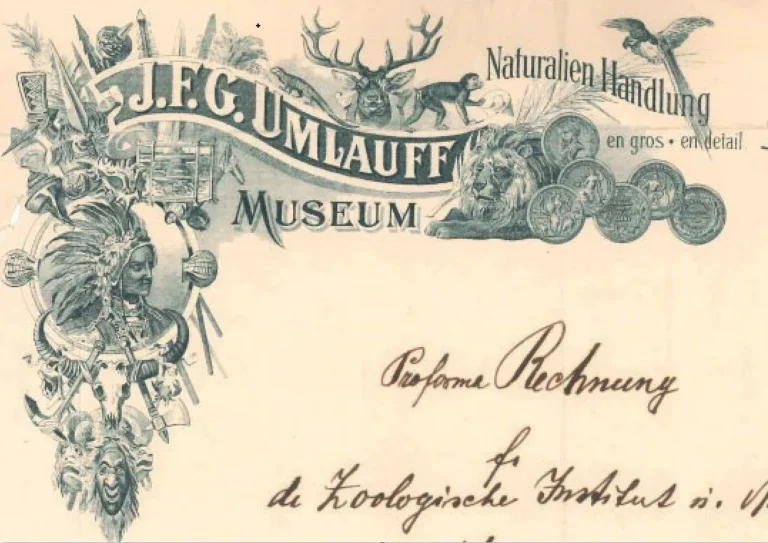
In addition to private and institutional collectors, natural history traders have historically been important sources of specimens and information for natural history museums in the past. However, the history and significance of the natural history traders is still little known and researched. One such naturalia trader with worldwide trading partners was the long-established Hamburg company of the J. F. G. Umlauff family.
Reporters from the Chinese newspaper Global Times visited Japan and found that looted Chinese cultural relics are being displayed and even promoted as militarist "trophies," including at a notorious shrine. History must not be distorted, and heritage must not be plundered. But to this day, Japan has not returned these looted relics. Instead, it has attempted to conceal and deny this history.
How can we trace and reconstruct the provenance of objects, collections and ancestral remains that were amassed in the past, and are now placed in museums as mundane and lifeless objects frozen in a timeless past without adequate information and context? The renewed interest in provenance research can be understood as part of the broader agenda to decolonise these museums.
In March 2024, Nigeria’s National Commission for Museums and Monuments (NCMM) filed a formal restitution claim on behalf of the Nigerian government for 14 Benin artifacts held by the Ethnographic Museum at the University of Zurich (UZH). The University of Zurich has decided to honor this claim. "Signing the property agreement is not just a legal act, but the recognition of colonial injustices", Zürich's lord mayor, Corine Mauch, said.
Kedleston (north-west of Derby) houses an impressive collection of paintings, sculptures and furnishings, some collected by the then Viceroy of India, George Nathaniel Curzon during his travels. The exhibition sheds light on previously untold stories. Encounters, a new film by British-Tibetan artist, Nyima Murry, brings to life the artefacts.
Alioune Samb writes: As part of my research, I developed and tested a system called SYDOCOM. Not to “add voices”. But to create conditions where different forms of knowledge can exist without being reduced to a single authorised version.
The PAESE project (Provenance Research in Collections from Colonial Contexts in Lower Saxony) ran from 2018-2022. As part of the next phase, PAESE 3.0, we are updating and expanding this database. They do so recognising that the data concern the people, communities, and descendants from the regions where these *objects* come from.
Coloniality is ever-present. Even decades after the period of formal colonisation has ended it has persisted through structural forms of privilege and bias. Beyond their more obvious manifestations such as the racial stratification of labour and the proliferation of inequality and racism, there is the coloniality of knowledge, which is hard to discern and much more insidious to overcome.
The preservation and exhibition of human remains in museums is a painful open wound for many descendant communities. Any museum that stewards such human remains, like Museum Vrolik (the anatomical museum of Amsterdam University), must respond to its racist and colonial inheritance. The result can be seen in this exhibition. The exhibition is based on the results of years of research, including origin, ways of acquisition and suppliers.
The remains of an unknown Aboriginal man taken to London in 1900, have been returned to Country in Sydney. A reburial was held for ‘Uncle’, conducted by Indigenous elders at Berowra Creek.
The Royal Ethiopian Trust (RET) is celebrating the return of a historic treasure: the gold hairpin of Etege Tiruwork Wube, wife of Emperor Tewodros, once taken during the storming of Magdala in 1868.
In new episode of podcast "Decolonial Memories", Flaubert Djateng, coordinator of the civil society organisation Zenu Network in Cameroon, talks about remembrance work on the German colonial era in his country.
[in Dutch] On the occasion of the International Day of Remembrance of the Victims of Slavery and the Transatlantic Slave Trade, the Faculty of Arts and Philosophy in Antwerp is organising an event on postcolonial history and culture: we will enter into a dialogue on African cultural heritage in Western institutions.
[in French] Congolese and Belgian experts presented their recommendations for the future of institution-based research at an open forum: "The current framework is insufficient". The provenance search is relevant, but it must neither condition nor delay the restitution. Today, Belgium and the DRC must move forward with concrete actions.
The University of West Indies Museum in partnership with the Centre for Reparation Research presents 'Exploring Restitution, Colonial Collection and the Caribbean' in an online discussion on March 20.
This DARCA decision aid is designed to support trustees of cultural institutions in coming to a decision about whether they might be under a moral obligation to return a cultural artefact in their possession.
The grandson of Ethiopian Emperor Haile Selassie I avoids confrontation and uses patience and strategy in oder to retrieve stolen objects from public and private parties in Great Britain. It is part of a wider demand for historical justice that continues to resonate across the African diaspora.
Descendants of Zimbabwe freedom fighters executed and beheaded in southern Africa by colonial British forces in the 1890s have called on the Natural History Museum in London and the University of Cambridge to help them find their ancestors’ looted skulls.
Exclusive Guardian study finds UK museums hold more than 260,000 items of remains, often in sacrilegious ways. MPs and archaeologists protest: It is a shameful legacy of colonialism.
The aution included 40 archaeological pieces and were auctioned during a live sale on 27 February 2026, at Maison Millon in Paris. The Culture Ministry started legal procedures and used diplomatic channels to seek a return. In the meantime the lots have been sold for 1,2 million euro.
Reilly Clark writes: Despite the return of Benin belongings, the relations between Africa and the West have remained fundamentally unchanged. African cultural objects were taken from the continent as part of the dual projects of Western imperialism and resource extraction.
[in French] Cécile Mendy, a student in Heritage Professions at the Gaston Berger University of Saint Louis in Senegal, discusses her research on endogenous conservation – the idea that conservation practices grounded in local knowledge can act as a form of cultural sovereignty.
[in French] The PROCHE project, implemented by the Royal Museum for Central Africa, is part of the 2022 Belgian law on the restitution of colonial collections. It aims to retrace the conditions of acquisition of the museum's so-called "ethnographic" and musicological objects, in close collaboration with Congolese institutions and cultural actors.
The Ashmolean Musuem of the University of Oxfoird has returned a 16th-century bronze to the Government of India following research into the object’s provenance and liaison with Indian authorities.
Bradley J. Gordon, Melina Antoniadis & Sokunthyda Long write: Cambodia is among the countries most profoundly affected by the large-scale looting of cultural heritage, particularly from the 1960s to the 1990s—before, during, and after civil war and genocide—as well as during the French colonial era, which saw the large-scale removal of artifacts.
Reilly Clark writes: Two Benin plaques were among the ones looted by the British from the palace of the oba in Benin. Later, they were given to the British Museum and later still, to the Nigerian National Museum in Lagos. The plaques were removed without permission from the Nigerian National Museum between 1950 and 1991.
This article by Elias Aguigah, Yann LeGall and Jeanne-Ange Wagne (TU Berlin) is part of The Restitution of Knowledge project. It documents the history of ‘plunder’ of former African colonies and addresses its legacy in ethnological collections, with a focus on loot from so-called 'punitive expeditions', this time in the Grassi Museum für Völkerkunde in Leipzig (+ an addition about Togo loot in Stuttgart).
[in French] This issue of Relations Internationales, edited by Anne Sophie Gijs, Matthieu Gillabert and Serge Jaumain offers a range of interesting articles about restiution issues, museums, diaspora groups and communitie sof origin, mostly in Switzerland and Belgium and in African countries as Cameroon and DR Congo.
[in French] Yasmina Zian, Aline Bosuma, Alexandre Chevalier and Laurent Licata make critical remarks about Belgium's decolonisation of museums effort. Belgium keeps control over decisions and there is a lack of a balanced dialogue with the DRC.
Prof. I Nyoman Aryawibawa emphasized that lontar manuscripts are invaluable sources of traditional knowledge with significant historical, philological, and cultural value. This donation is considered a strategic step in strengthening the faculty’s academic functions, particularly in supporting research, teaching, and community service based on local cultural heritage.
The Tangué is a ship’s beak carved from wood and placed on the bow of the ship of the royal Bele-Bele family. This mystical and sacred belonging symbolises power, particularly the ultimate authority of the King over the water tribes of the Douala kingdom, and is an integral part of socio-cultural and spiritual practices. n 1884, it was stolen by German military. Currently, it is in the Museum Fünf Kontinente in Munich.
[in English, in Portuguese] Pedro de Niemeyer Cesarino and Lucas da Costa Maciel raise important questions: What if so-called objects in museums are not just that? What if they refuse such constraints?
Ahmad Mohammed: Digital collections have become core infrastructure for heritage work. But as collections move online and become more searchable, recombinable, and transferable, “good stewardship” is no longer only a technical matter of storage and backups.
‘Extraordinary’ golden lamb’s head pillaged in 1874 from what is now Ghana remains hidden in officers’ mess. The glistening golden ram’s head would seemingly be worthy of any museum, but it remains hidden within the regiment’s mess at Larkhill in Wiltshire.
Ganga Rajinee Dissanayaka discovered at a conference in Europe that Benin Bronzes, Egyptian antiquities and African collections were discussed. But Asia was unmentioned. And then when a colleague from Indonesia brought up the topic of Southeast Asian collections, the moderator nodded graciously and then moved on to another topic. Decolonisation, it appears, is an African story.
[in English and in German] The Prussian Cultural Heritage Foundation (SPK) transfers custody of three ancestors to the Molelia family of Tanzania. They now have sole control over the remains. Howe ver, immediate repatriation to Kibosho is not possible because it requires the approval of the Tanzanian government, which has not yet responded to the SPK’s offer to return the remains.
[in Dutch] In museum De Fundatie in Zwolle, Nigerian artists shine their light on an antique plaque of a mud fish. The fish was stolen from Benin City at the end of the 19th century, and it will return to that city next summer. 'The mudfish is symbolic of the flexibility of the Edo people.'
France has officially returned the sacred Djidji drum to Ivory Coast. It is among 148 cultural belongings claimed by the Africab country in 2018. The text of the special law is included.
Jennifer Howes writes: Amaravati Stupa was the first Buddhist site in India to be systematically excavated by the British. Its first colonial excavation in 1816–17 led to 51 sculptures being removed from the site by amateur antiquarians. Some of these were sent to museums, but most of them were transported to the market town of Machilipatnam, where they were used to construct an eccentric marketplace monument.
Lewis McNaught writes: Britain’s Department for Culture, Media and Sport (DCMS) will review the exclusion it imposed on national collections that prevents them from returning cultural objects on moral grounds. The review provides an opportunity to reverse an unwelcome inconsistency in the UK Charities Act 2022.
Thomas Laely writes: The debate on the repatriation of (in)tangible cultural heritage and belongings has developed a broad dynamic in recent years. This sudden activism raises questions. What is its background, what are the goals behind it, and how are they to be achieved? Is it primarily about African or rather European interests?
Repatriation is urgent and important work and should be recognised as one of the UK museum sector’s top priorities. It is widely acknowledged that a lack of funding and capacity are two of the main reasons that more museums in the UK do not engage with repatriation, writes Amy Shakespeare.
President John Dramani Mahama has sent a clear message to the international community: the time for "ceremonial language" regarding Africa’s historical injustices is over.
[in French] After the Porto-Novo symposiums in 2022 and Yaoundé in 2023, after several days of study in Paris, the Dakar symposium is the final stage (or almost) of 5 years of research, publications, meetings of the international program "Returns: geopolitics, economies and imaginaries of restitution".
[in French] The 60-page guide is meant for directors and scientific officers of museums in France, and public collections under the jurisdiction of the Ministry of Culture. The guide focusses on Nazi-looted art works, human remains, colonial collections and the ongoing illicit trade in art and antiquities.
The Louvre will restore Empress Eugénie’s crown, which was damaged during the $102 million heist in October 2025. Experts found the diamond-and-emerald crown deformed, but most stones remain intact after violent theft.
The restitution project, undertaken in Namibia from 2019 – 2024, was centred around 23 cultural belongings, which were selected from a collection of +/-1400 cultural belongings in the Ethnological Museum of Berlin, on the basis of their rarity, ability to travel well (fragility, arsenic poisoning etc), cultural, historical and aesthetic significance, as well as their connection to the history of Namibian fashion.
Tracing the course of Britain’s wars with the Asante alongside the course of its plundered relics, Barnaby Phillips weaves a thrilling and poignant tale of imperial ambition and African resistance. Travelling from the Gold Coast to the museum galleries, officers’ mess rooms and aristocratic homes of Britain, The African Kingdom of Gold confronts us with urgent questions about the legacy of Empire and, in particular, how our museums should respond.
During negotiations in the 1960s about a new relationship, DR Congo claimed the archives with information about its rich natural resources. Belgium was not prepared to do so. The documents, housed at the AfricaMuseum are now being sought by DR Congo and KoBold Metals, a Bill Gates-backed mining and artificial intelligence company that struck a deal last year with Kinshasa to digitise them.
Around 1900, the Isanzu chief and seven of his bodyguards were arrested and hanged and/or beheaded, and their bodies were not returned to Isanzul and given for burial. Currently, they are in the University of Göttingen. Since the emptying of graves, there have been significant periods of drought and famine in the area. The Isanzu people believe that these environmental calamities are as a result of their human ancestors being dishonoured.
Restitution debates – the question of whether a cultural object should be returned from a museum or other collection to a person or community – often begin with a deceptively simple question: who owns an object?
Barnaby Phillips: The decision by the university’s Museum of Archaeology and Anthropology to return looted Nigerian treasures leaves larger institutions increasingly isolated. Which museum will be the next one? Uwa Igbafe: This case reflects a gradual transition from legal acknowledgement to the actual transfer of artefacts.
In June 2026, Amsterdam School for Heritage, Memory and Material Culture organizes the conference “Unsettling heritage and memory futures: Decolonial trajectories between crisis and possibility”. One panel brings together scholars to reflect on the idea of “home” in relation to restitution. The panel is looking for contributors.
In the column, Alexander Hermann takes a look at the principle of INALIENABILITY that applies in many countries, barring the removal of cultural objects from #museum collections, including for purposes such as #restitution.
DARCA, or the Decision Aid for the Restitution of Cultural Artefacts (DARCA), is a user-friendly tool designed to assist museums and others in understanding the moral issues relating to restitution, developed by practical ethicists at the Oxford Uehiro Institute and supported by the philosophical literature in this field.
In the last hundred years, France has restituted only twenty-nine looted artefacts to Africa (26 to Benin, 1 to Senegal, 1 to Côte d’Ivoire, 1 to the Malagasy Republic). At this rate, how long will it take France to return the other 96 971 looted African artefacts in France? Kwame Opoku points to an African scholar and his troubling support who actively enables the Louvre/Musée du Quai Branly to retain, among others, the statue of Gou, the Vodun divinity from Benin, in Paris.
[in English, in Mozambiquan Portuguese] The five texts in this richly illustrated issue nr. 9 of Troubles dans les Collections trace how new local contexts in Mozambique and global debates have resonated in the country since the restitution debate gained heightened visibility. Civil society actors play a crucial role in raising the restitution issue.
Much of the scholarly attention for decolonisation and restitution in English has centred on developments in the Anglophone world. A special Issue - Portuguese Studies Review will bring together new studies on parallel and emerging developments within the Lusophone (Portuguese-speaking) world.
The Taonga Files, a new investigative podcast exploring the journeys of Aotearoa’s taonga now held in museums around the world — and the complex systems, histories, and relationships that shape their return.
[in French] This conference focuses on the spoliation of cinema and the representation of spoliation and restitution in film, within the context of 1933-1945 as well as in colonial and post-colonial situations. Punctuated by film screenings, it brings together researchers in history, film history and art history, anthropology, political science, law, and provenance studies, working on diverse cultural areas.
The Swiss School of Latin American Studies, supported by the Centro Latinoamericano-Suizo HSG and the Swiss Society of Latin American Studies (SSLAS-SAGW), invites the community to the public workshop entitled "Contested Heritage of Latin America: Collectors, Markets, and Coloniality," taking place on February 26 and 27.
Restitution of cultural property is gaining momentum across Africa, framed not as symbolic but as a fundamental right. Senior officials, ambassadors, scholars, and international representatives gathered in Addis Ababa to debate restitution as a pillar of justice and identity.
To Sell or Not to Sell: The British Association for Biological Anthropology and Osteoarchaeology’s Position on the Trade and Sales of Human Remains in the UK pleads for improved legislation if the UK is to end this industry.
The Kingdom of the Netherlands has formally handed over an inventory of Ghanaian cultural artefacts held in Dutch collections, marking a major step toward the restitution of objects looted during the colonial era.
The French Senate on Wednesday adopted a draft legislation to facilitate the return of artworks and other prized artefacts looted during the country’s colonial era. This new procedure could help address requests already submitted by various countries, including Morocco, Mali, Algeria and Benin.