The Dutch government returns objects exclusively to national governments. In the Indonesian case, what happens after an object is returned by the Netherlands is decided to authorities in Jakarta.
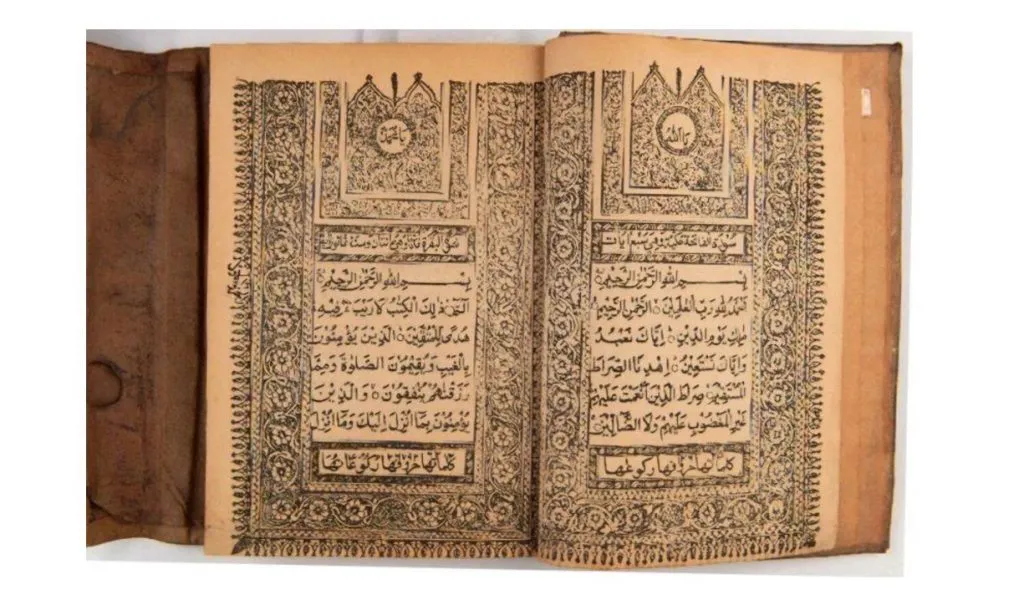
Teuku Umar’s Qur’an – Courtesy Werewldmuseum Rotterdam
Mirjam Shatanawi, who conducted the provenance research on Teuku Umar’s Quran confirmed recently that, no restituted object has yet made a second journey from Jakarta to its place of origin; everything stays in the capital.
Returning colonial loot is necessary and long overdue. But this Qur’an (inventory number WM-74931) exposes a gap in how restitution is done. The restitution process painstakingly traces who took the object and where it went over the past 130 years. But it has overlooked the social and legal order that existed before it was taken, including gender relations.
By leaving it unexamined, the process validated the colonial act of naming even while having physically returned the book. The result is a Qur’an taken from a woman’s home in Aceh being returned to Jakarta under her husband’s name.
The Qur’an along with the other two objects will go to the Museum Nasional Indonesia in Jakarta, 2,700 kilometres from Lampisang, a village where Dutch soldiers seized the Qur’an from a burning home in May 1896. It will not go to Rumah Cut Nyak Dhien, the replica of the house from which it was taken, which stands in the province of Aceh today as a local museum.
Poor archival setting
Myra Mentari Abubakarut further comments:
The restitution still rests on a colonial record. The Qur’an is identified through a note written by a Dutch officer, Ferdinand Kenninck. The Acehnese domestic setting in which the object was kept does not appear in the archive. The restitution follows the colonial name, relies on colonial documentation, and places the object in a national museum far from where it was taken.
The act of taking has been addressed. The act of naming has not.