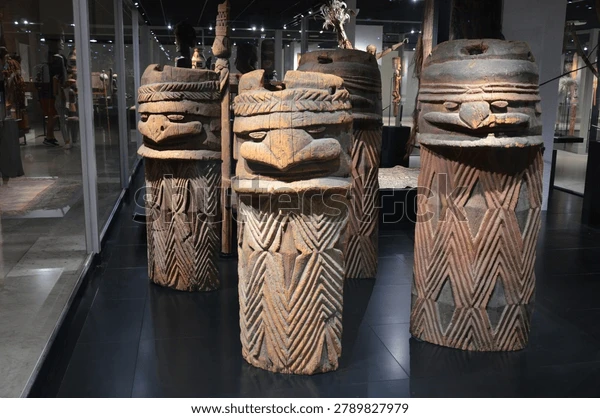
The Anima Mundi, formerly the Ethnological Museum, is home to around 80,000 objects from across the globe, many of which were “gifted” to the Catholic church in Rome by Indigenous peoples at a time when its missionaries were powerful, and sometimes dubious, figures in their far-flung communities.
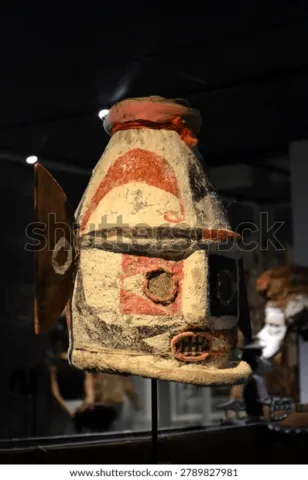
The collection covers pieces from Australia, the Americas, Africa and Asia, including the oldest item in the entire Vatican Museums, a two million-year-old stone chopping tool from South Africa, one of the oldest-known deliberately made objects. There are carved grave posts from Madagascar, a reliquary from Polynesia, and an Aztec carving of Quetzalcoatl, the multi-faceted serpent deity.
The origins of this collection lie in an event mounted in 1925, when Pope Pius XI asked Catholic missionaries around the world to send cultural and sacred belongings from the communities they “served” to Rome, for an exhibition that would celebrate the Catholic church’s reach across the planet. It went on for a year, was attended by around a million people, and when it finished many of the objects remained in Rome. The following year, in November 1926, they became the core of a new Vatican Ethnological Museum, then housed at the Lateran Palace. In 1973 it moved across Rome to the Vatican Museums, where it remains to this day…
Gloria Bell, an art historian at McGill University in Montreal, and author of Eternal Sovereigns: Indigenous Artists, Activists, and Travelers Reframing Rome, calls the Anima Mundi “an unsettling colonial collection”, and says she has seen evidence that missionaries “looted graves in Canada” to gather exhibits for the 1925 exhibition.