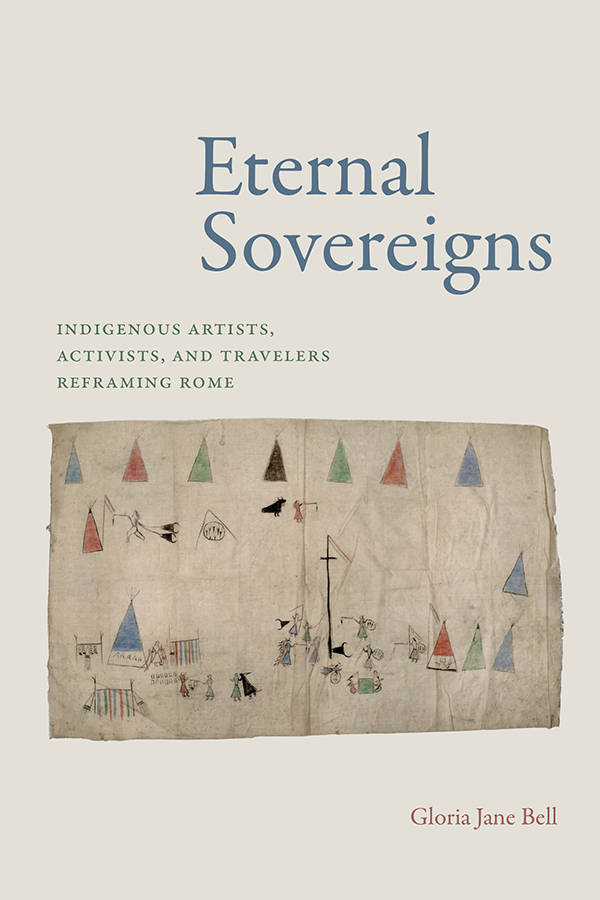
In 1925, Pius XI staged the Vatican Missionary Exposition in Rome’s Vatican City. Offering a narrative of the Catholic Church’s beneficence to a global congregation, the exposition displayed thousands of cultural belongings stolen from Indigenous communities, which were seen by one million pilgrims.
Gloria Jane Bell’s Eternal Sovereigns offers critical revision to that story. Bell reveals the tenacity, mobility, and reception of Indigenous artists, travelers, and activists in 1920s Rome.
Animating these conjunctures, the book foregrounds competing claims to sovereignty from Indigenous and papal perspectives.
Bridging multiple disciplines including art history, material studies, and archival studies, Eternal Sovereigns suggests a “new, entangled, and unsettling” way to read relationships between Indigeneity, Rome, and the Vatican (8).
Throughout the book, the personal writings illuminate Bell’s research process. Descriptions of a dismissive conservator suggesting that “Indigenous people need to get over genocide” and a surreptitious visit to the Vatican Fototeca underscore the need for Eternal Sovereigns’ correctives within cultural institutions holding Indigenous materials.
This thoroughly researched text raises absorbing questions for scholars invested in the possibilities of transatlantic Indigenous art history.