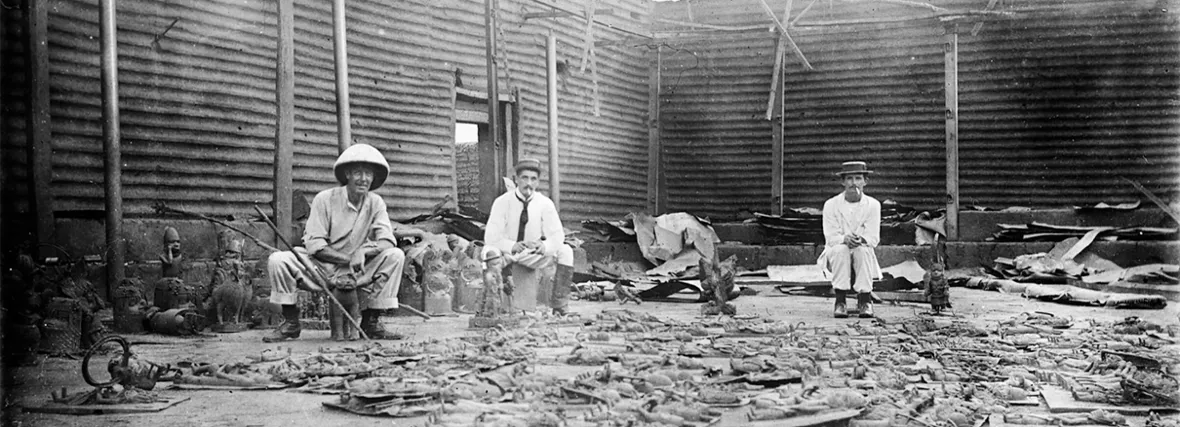
Her advice: develop a registration system, issue art with a ‘passport’ and set up a European coordination authority.
Campfens’ recommendations can be found in a report that she recently presented to the European Parliament.
One problem, says Campfens, is that although there are quite some rules these are fragmented. ‘International and national laws, but they often are not in line. So the legal framework is highly fragmented and does not join up.
At the international level there are also many organisations dealing with the issue of cultural heritage protection − but that is rather haphazard at the EU level.’
Another problem is the traceability of cultural objects. ‘It was a huge eye-opener for me as a legal expert to see that artefacts often cannot be properly identified and their trade is mostly not registered.
So you can become the owner of looted art without knowledge of the previous history of these objects. That is completely different from second-hand cars, for instance, or other valuable protected objects.
Certification or registration systems have long been in place for these, so consumers can distinguish ‘right’ from ‘wrong’.