On 1 July 2026, Bolivia Archaeology National Museum (Munarq) reopened its doors with the permanent exhibition ‘Eternal Roots, Living Legacies,’ an exhibition that highlights the connection between pre-Hispanic customs and current traditions of the Andean country. It also has a section about repatriation.
Nepali content creator Nikki Thapa writes: Decades of looting turned living Deities into costly global commodities, but the era of quiet disappearance is giving way to one of recovery and return.
Drawing on his broad research, Chipangura explores how ethnographic museums holding African collections are confronting the enduring consequences of colonialism. His presentation moves beyond familiar debates on restitution and repatriation, asking a more fundamental question: What are museums for, and whom do they serve?
[in French] The metaphor of “objects as ambassadors” - used to refer to Kanak objects originating in New Caledonia and currently kept outside the territory, and sometimes returned there temporarily for exhibitions, arises in a context of institutional decolonisation and the aspiration for full Kanak sovereignty, with New Caledonia remaining a sui generis French overseas collectivity.
Reilly Clark argues that, if the return of African cultural objects ends with the literal return of physical objects, it does little to address legacies of colonial theft, value extraction, and epistemicide but can reinscribe the power of Western interpretive frameworks and reproduce Western patterns of state power by returning objects to Western-style institutions within postcolonial nation-states...
How did the colonial matrix of power continue to shape the modern world? The question is central to the exhibition Postcolonial?, presented by the House of European History in Brussels from 17 April 2026 to 14 March 2027. This book combines contributions from the people behind the exhibition.
NAGPRA specialist Rachael Carnes warns: Museums and AI Consultants build AI interfaces that let visitors "ask the collection" questions directly. Objects that answer. Catalogues that talk back. But listen closely to whose voice.
Legal expert Ayale Do Vale Vales argues: While Indigenous peoples have long mobilised against appropriation, sometimes succeeding in claims to have their appropriated heritage returned to them, discussions on restitution have largely focused on tangible heritage. By contrast, the restitution of intangible cultural heritage (ICH), despite its importance and vulnerability to misappropriation, remains underexplored.
[in French] French authors Alexandre Decroix and Asena Poyrazer write: Despite an increasingly important presence in the public debate, the term "restitution" is misunderstood. In contrast to the "new relationship with Africa" promoted by Emmanuel Macron, the issue of the restitution of African cultural property betrays a colonialism that is still very much alive. France retains tight control.
Nigerian art curator Yahuza Rabiu Garba argues: We need to decolonize our understanding of heritage spaces. The Eurocentric model insists on the "four walls" idea, a quiet archive where artifacts are curated to be looked at, but never touched. But...
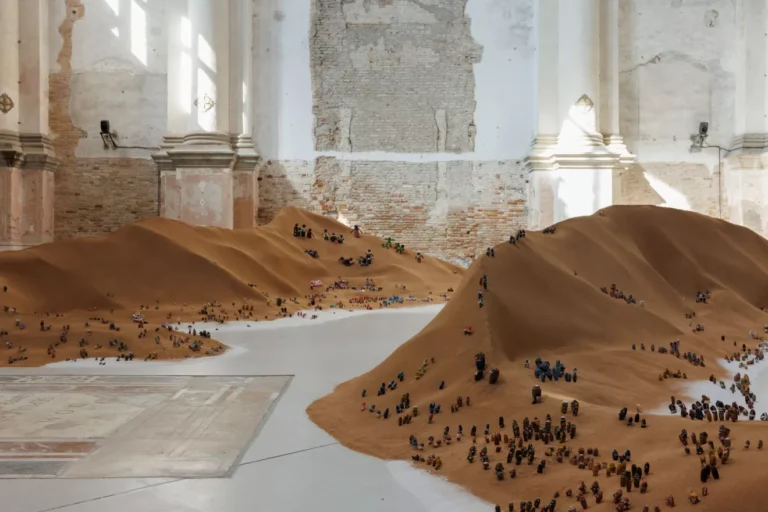
Running from 28 March through 11 October 2026 at Ocean Space, the Venice Art Biennale exhibition “Tide of Returns” by Khadija von Zinnenburg Carroll raises questions about such issues as ownership and ways of acquisition.
Senior Ethiopian researcher Tadesse Simie Metekia argues: To implement the landmark UN slavery resolution, reparations should be defined as a framework for truth, responsibility, repair, reconciliation and global justice.
On 25 June 2026, the 41st Ordinary General Assembly voted to adopt the revised ICOM Code of Ethics for Museums. The vote marks the culmination of a multi-year participatory process. It also touches carefully) restitution issues.
Pressured claims for reparation and the redistribution of authority in decision-making processes, some museums have recognised their entanglements with Indigenous cultures and the erasure produced by the appropriation of collections and the imposition of classificatory systems. How are these institutions transformed by Indigenous agency and curatorship? What are the potential uses assigned to museums by Indigenous curators, creators and artists in the present?
This issue of Museum International (309-310) is the second of two volumes addressing the challenges faced by museums today in establishing the provenance of their collections. Many objects, collections and ancestral remains found in museums today lack a clear or full provenance: conditions that reflect the historical conditions under which they were assembled.
Dutch museum collections contain ethnographic objects originating from Suriname, many of which were acquired in a colonial context. This search guide provides information on the most common ways in which these objects ended up in collections in the Netherlands and other countries in the Global North. [In English and Dutch]
Chana Algarvio's paper reshapes and redefines our understanding of books, challenging modern beliefs influenced by Western bias so that the field of Egyptology can unhesitatingly incorporate the topic of books and bibliography explicitly into scholarship.
In November 2026, ICOM Documentation will gather in Belgium. The conference invites museum professionals, researchers, collection managers, archivists, digital specialists, registrars, curators, conservators and community partners to examine how documentation practices shape the ways collections are understood, accessed, interpreted and cared for.
In a major step toward cultural restitution, taken during a high-stakes African Union summit in Addis Ababa, a specialised international task force has been established to spearhead the return of looted and illicitly trafficked cultural artifacts back to the African continent.
This symposium interrogates processes of return in Latin America not as inherently reparative gestures, but as practices that can be ambivalent—capable both of reproducing colonial logics and of resistance and re-articulation of indigenous peoples and traditional communities. In particular, we aim to examine how different regimes of value —state, scientific, Indigenous and traditional— come into friction, and to what extent contemporary heritage frameworks operate as mechanisms that depoliticise struggles over the control of ancestors. Symposium 23-27 November 2026.
In this moderator-led discussion, we examine the mechanics of memory, looking at how history is recorded and retrieved. With Kwame Boafo, scholar and artist from Accra, Ghana, and Peter Jegede, Nigerian archaeologist and museum curator.
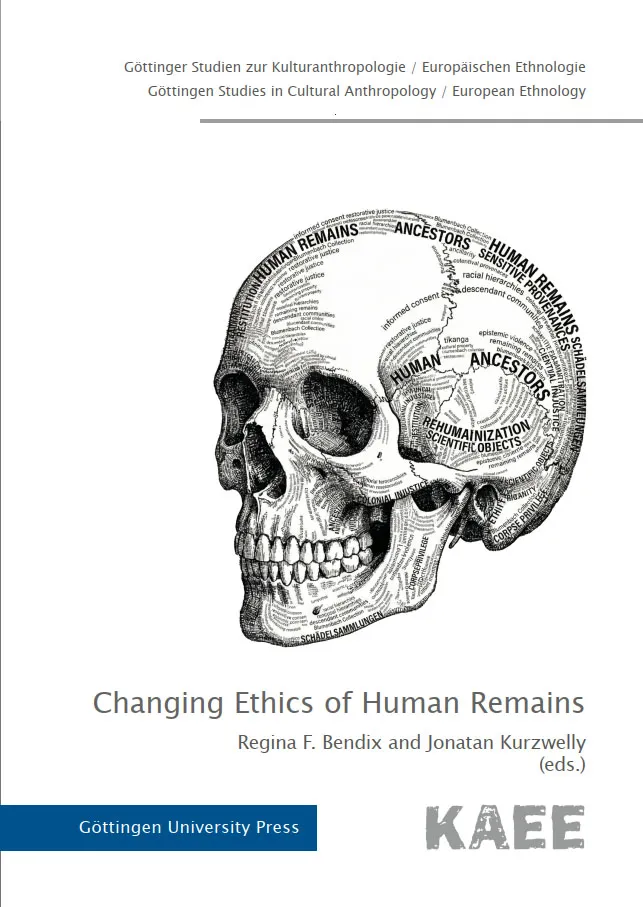
This book, edited by Regina F. Bendix and Jonatan Kurzwelly explores the complex and contentious transition from this legacy to the contemporary imperative of rehumanisation and restorative dignity. It recognises that restitution offers a necessary, yet only partial, redress to the profound disruptions of the past.
Andreas Giorgallis argues that prevailing approaches often frame decolonisation as a series of discrete corrective interventions, rather than as a challenge to the structural foundations through which heritage is constituted and governed. Unless the enduring colonial architectures embedded in these frameworks are addressed, decolonisation risks remaining symbolic rather than transformative.
Sierrea Kinsey-Lawton argues: Museums and art houses have never acknowledged that the living descendants of enslaved Africans are, themselves, looted cultural heritage. Solutions for stolen people are not analogous to solutions for stolen bronzes. You cannot deaccession a person.
Kate Fitz Gibbon notes that Chinese cultural claims to the return of artifacts looted during the attack on the Summer Palace in 1860, the Boxer Rebellion of 1900, and the Japanese invasion in the first half of the 20th century support the country's anti-Taiwanese and nationalist propaganda. But she also wants China to become more self-critical, not to exaggerate about the number of lost relics and to also tackle the abuses in its own country.
Open Restitution Africa (ORA) describes restitution as a pan-African process of remembrance, research, and the digital sharing of knowledge – an interview with Chao Tayiana Maina and Karen Ijumba. 'The bulk of the work in the restitution lies on the African side: the work of reintegration, the negotiation, and supporting people in dealing with the return of the artifacts.'
Ganga Rajinee Dissanayaka explores how heritage, power, and narrative relate to each other, and how the subtle, insidious dependencies shape who tells the story of a culture in 2026 and who becomes little more than a footnote at the back of a museum. In Sri Lanka, Vedda cultures, coastal Muslim traders, Tamil ritual practices, and Catholic-Sinhalese syncretism could be studied ethnographically, none qualified as heritage.
Culture Minister Samira Tovela announced Mozambique’s official effort to reclaim around 800 colonial-era artworks stolen during colonization. The process, supported by UNESCO and EU nations, comes ahead of the country’s 50th independence anniversary in June. The cultural and symbolic value is estimated at over USD 100 million.
Emotional Provenance refers to the emotional, spiritual, ritual, and affective histories embedded within artefacts through their creation, use, displacement, performance, and institutional representation.
Plunder stolen from Ireland and stored in museums of former colonial powers should be returned. But there is no list of what is held abroad in ‘post-colonial museums’. Culute Minister also said that restitution cannot be a one-way street.
Minister Patrick O’Donovan said there was a “compulsion” on former colonial powers to return “loot” taken from people against their will.
This is about Yemen. About how an American foundation oversaw the exploitation of Yemen’s archaeological inheritance in British-occupied South Yemen during the early 1950s. About Yemen's policy to recover belogings that were lost in the colonial days. And it answers the question why, when and by whom Yemen was colonised.
The landscape of cultural property restitution has undergone a fundamental transformation over the past three decades. What was once a world governed by gentlemanly agreements between dealers, collectors, and museum curators has become a forensic battleground where digitized trafficking archives, scientific testing, and aggressive legal enforcement determine the fate of objects. This document provides a comprehensive analysis of the current state.
28 April: Black Muse and Digital Benin: Benin Heritage & New Forms of Narratives: Digital Access & Reconnection to the Living Heritage of Benin Kingdom
3 May: Digital Benin and Kokopelli Gallery: Digital Benin: Digital heritage at the intersection of culture, data and practice
Paul P. Stewens wonders: The restitution of cultural property has become a hot topic. Museums grapple with restitution claims and colonial legacies. Did I say museums? I meant to say: cultural museums that house artworks, antiquities, or ethnological collections. Natural history museums, on the other hand, have barely been touched by the general turn to restitution. Why is that?
In recent years human remains in museums have been the subject of increasingly critical attention, both within the museum sector itself and in public debate. This raises a large number of ethical, legal, and practical questions for European museums. 'Museum meets University' organises this meeting at the crossroads of academic museology and museum practice.
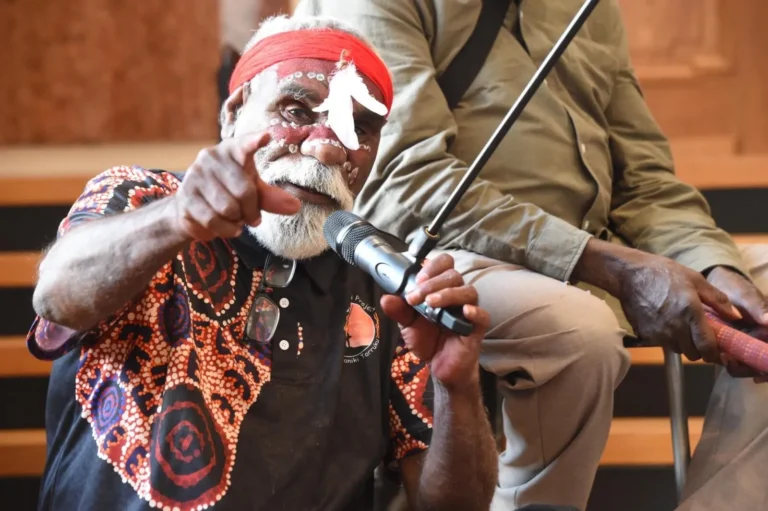
Since 2019, a number of sacred objects and ancestral remains have been repatriated to the Warlpiri people of Yuendumu community north-west of Alice Springs in the middle of Australia. For them repatriation is about healing the community, but in particular healing the young men and women of their community, writes Jamie Hampton*. In this Blog, he shares his story about the Yuendumu community and how repatriation has helped them heal from past injustices, providing pathways for the next generations of Warlpiri to ensure they live a life grounded in culture in a changing world.
Books, oral histories, artefacts, images, textiles, posters, manuscripts, architectural documentation, and cultural records across Africa, the diaspora, and the Global South. It contains 70 locally indexed records · 300,000+ archive horizon · static-hosted discovery architecture, etc.
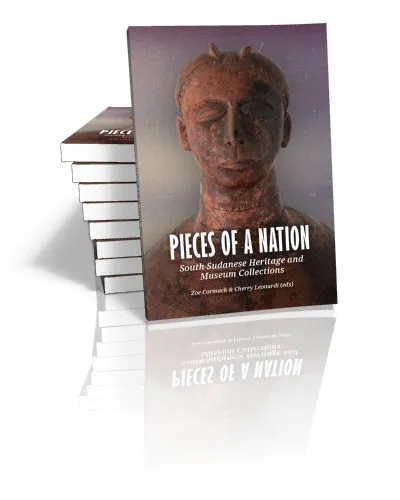
Although published in 2021, RM* distributes this open access book, as South Sudan is a much forgotten area. According to editors Zoe Cormack and Cherry Leonardi, the long-term effects of colonialism and conflict have largely precluded any concerted attempts to preserve material culture within the country; museums remained in Khartoum, the capital of the formally united Sudan. Furthermore, tens of thousands of objects had been removed from what is now South Sudan during the nineteenth and twentieth centuries to museum and private collections around the world...
The Mambesak Group was active in Jayapura from 1978 to 1984. After the murder of Arnold Ap in 1984, the group, mostly students from various regions in Papua, disbanded. This film tries to articulate the traces of the ideas of Arnold Ap, leader of the Mambesak Group, as mediators between their generation and the traces of their ancestors and Papuan culture. With firm statements about coloniality and restitution.
Over 1,000,000 known African artefacts unwillingly held outside the continent. Of these, less than 1,000 have been returned... The Open Restitution Project is an Africa-led project seeking to open up access to information on the restitution of African material culture and human ancestors, to empower all stakeholders involved to make knowledge-based decisions.
Lia Iannarilli and Malaika Bunzigiye conclude: The story of looted art from the Democratic Republic of the Congo is inseparable from broader struggles of political sovereignty. By holding on to these items, European powers are holding on to the narrative of their colonial rule. In a world shaped by imperial legacies, the decolonial project must be both material and symbolic. To repatriate art is to repatriate power.
Vast majority of Africa’s cultural legacy remains abroad, where institutions claim superior care, shared human heritage. Three African analysts comment. ‘Biggest issue is changing the historical narrative that excluded us.’
[in French] The UNESCO Chair on the Diversity of Cultural Expressions, in partnership with CELAT and IPAC, is organizing the second Midi de la culture of the year, which will include a discussion on the restitution and repatriation of cultural objects.
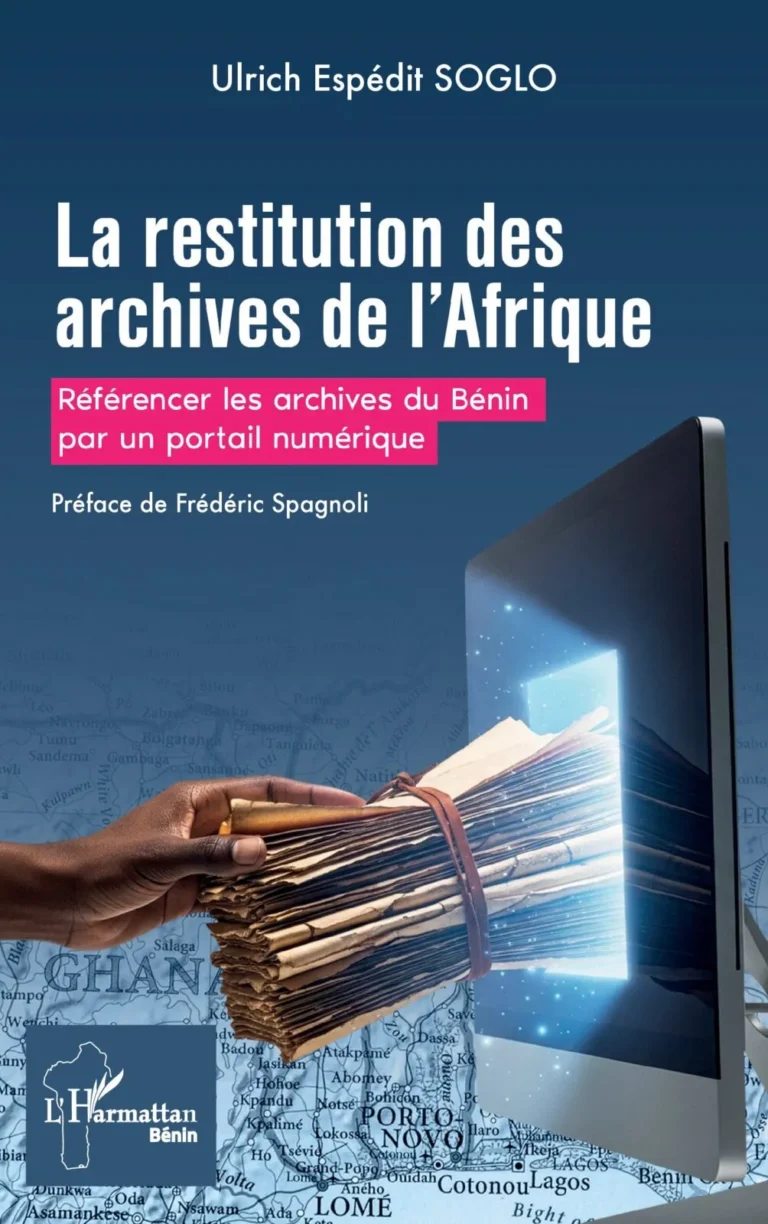
[in French] Recently, the restitution of cultural belonging has been stirring up the web. We talk about treasures, but there is no treasure without archives. However, colonial archives, true treasures of history, are often forgotten in discussions about restitution. This book offers a suggestion...
[English version, French version] In 2025, the tribal art market returned to its cruising speed. With a turnover of €42.7 million, it followed the trajectory of previous years: more selective, more demanding, yet also more cautious.
[ in Dutch, in French] That this issue has received increasing attention is partly due to two important issues, namely the question of the restitution of works of art looted by the Nazis to relatives of victims of the Holocaust and the question of the restitution of cultural heritage objects illegally acquired during colonization by Western countries. Three Wednesday afternoons.
Institutions are grappling with the human remains in their collections that were used to justify debunked theories about race. To understand this better, Nina Siegal visits Museum Vrolik in Amsterdam and its exhibition “Imagine: The Future of Human Remains from Colonial Contexts,” which runs up to 27 June 2027.
Please join the Denver Art Museum’s Native Arts and Provenance departments, along with special guests from the Nelson-Atkins Museum of Art and the Art Institute of Chicago, for a lively panel discussion on the vital role provenance research plays in museums.
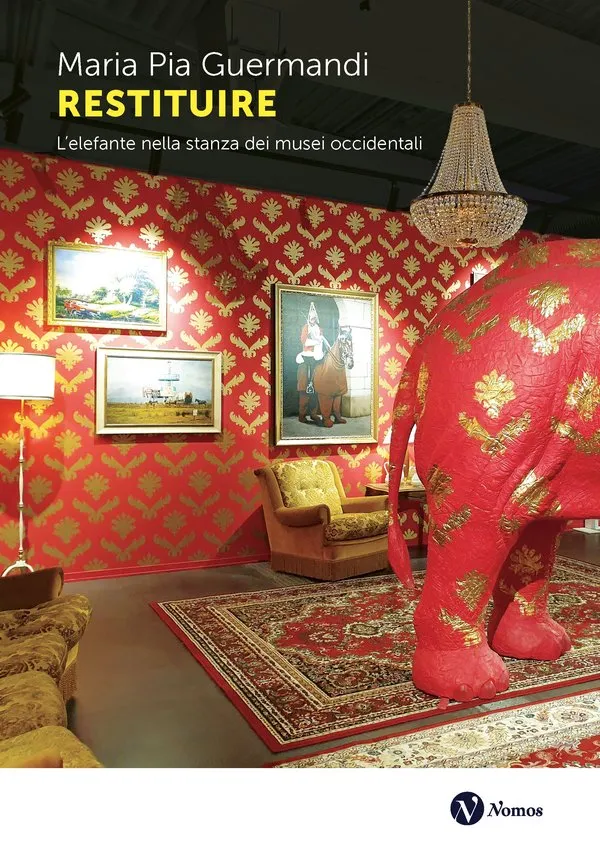
[Italian] In “Restituire”, Maria ia Guermandi reconstructs, with historical precision and critical clarity, the complex path that has brought the issue of restitution from the halls of the UN to museum policies, from the claims of African countries to the struggles of indigenous communities in so-called settlement colonies.
As one of the biggest targets of wartime looting in centuries past, China is now positioning itself as a global pioneer in repatriating lost cultural artefacts. In two articles, Xinlu Liang looks a Chinese demand that Japan returns an ancient tablet, which could mark a ‘historical reckoning’, and how China is wielding law, diplomacy and a Global South coalition to rewrite the rules of restitution, filling a void left by a retreating US.
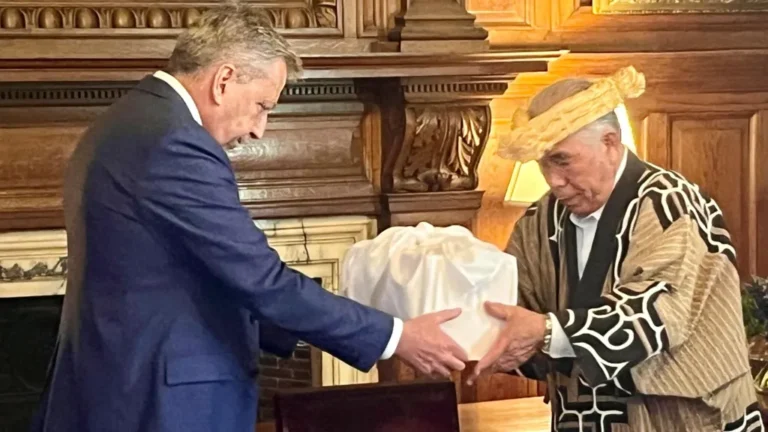
Late in 2025 , it was announced that five sets of Ainu ancestors' remains were to be repatriated to Japan from the Natural History Museum in London. This follows repatriations in 2017 (Germany), 2023 (Australia) and 2025 (Scotland). Inside Japan, the University of Tokyo has apologised to the Ainu community for collecting ancestral remains without their consent. The Japanese government, working with the Ainu Association of Hokkaido, supports the repatriations. How can this increase be explained?
The Africa Institute, Global Studies University, in collaboration with the Open Society Foundations, announces its annual fellowship program themed, “Restitution and Reparation: Africa and the Post-Colonial Condition.” The program will convene scholars or practitioners interested in restitution and repatriation issues related to African art and artifacts.
The Center for Art Collection Ethics (ACE) at the University of Denver (DU) announces a hybrid training program: Provenance Research Today: Issues, Resources, and Networks. The program is geared toward graduate students and emerging museum and art market professionals.
Museums in a country like Ghana have an impoortant function in preserving ervidence of the past and in shaping together the country's history. A self-critical look from Ghanaian professionals in their museum practice, especially that of the National Museum.
How can we trace and reconstruct the provenance of objects, collections and ancestral remains that were amassed in the past, and are now placed in museums as mundane and lifeless objects frozen in a timeless past without adequate information and context? The renewed interest in provenance research can be understood as part of the broader agenda to decolonise these museums.
Alioune Samb writes: As part of my research, I developed and tested a system called SYDOCOM. Not to “add voices”. But to create conditions where different forms of knowledge can exist without being reduced to a single authorised version.
[in Dutch] On the occasion of the International Day of Remembrance of the Victims of Slavery and the Transatlantic Slave Trade, the Faculty of Arts and Philosophy in Antwerp is organising an event on postcolonial history and culture: we will enter into a dialogue on African cultural heritage in Western institutions.
The University of West Indies Museum in partnership with the Centre for Reparation Research presents 'Exploring Restitution, Colonial Collection and the Caribbean' in an online discussion on March 20.
The signing of the Washington Declaration in 1998 marked the starting point for the establishment of new, systematic provenance research focusing on the period between 1933 and 1945. In recent years, provenance research has increasingly intersected with other contexts of injustice, including colonialism, Soviet Occupation Zone/GDR, and is subject to public demand. Conference in Vienna.
Reilly Clark writes: Despite the return of Benin belongings, the relations between Africa and the West have remained fundamentally unchanged. African cultural objects were taken from the continent as part of the dual projects of Western imperialism and resource extraction.
[in French] Cécile Mendy, a student in Heritage Professions at the Gaston Berger University of Saint Louis in Senegal, discusses her research on endogenous conservation – the idea that conservation practices grounded in local knowledge can act as a form of cultural sovereignty.
Bradley J. Gordon, Melina Antoniadis & Sokunthyda Long write: Cambodia is among the countries most profoundly affected by the large-scale looting of cultural heritage, particularly from the 1960s to the 1990s—before, during, and after civil war and genocide—as well as during the French colonial era, which saw the large-scale removal of artifacts.
[in English, in Portuguese] Pedro de Niemeyer Cesarino and Lucas da Costa Maciel raise important questions: What if so-called objects in museums are not just that? What if they refuse such constraints?
Ahmad Mohammed: Digital collections have become core infrastructure for heritage work. But as collections move online and become more searchable, recombinable, and transferable, “good stewardship” is no longer only a technical matter of storage and backups.
Ganga Rajinee Dissanayaka discovered at a conference in Europe that Benin Bronzes, Egyptian antiquities and African collections were discussed. But Asia was unmentioned. And then when a colleague from Indonesia brought up the topic of Southeast Asian collections, the moderator nodded graciously and then moved on to another topic. Decolonisation, it appears, is an African story.
President John Dramani Mahama has sent a clear message to the international community: the time for "ceremonial language" regarding Africa’s historical injustices is over.
[in French] After the Porto-Novo symposiums in 2022 and Yaoundé in 2023, after several days of study in Paris, the Dakar symposium is the final stage (or almost) of 5 years of research, publications, meetings of the international program "Returns: geopolitics, economies and imaginaries of restitution".
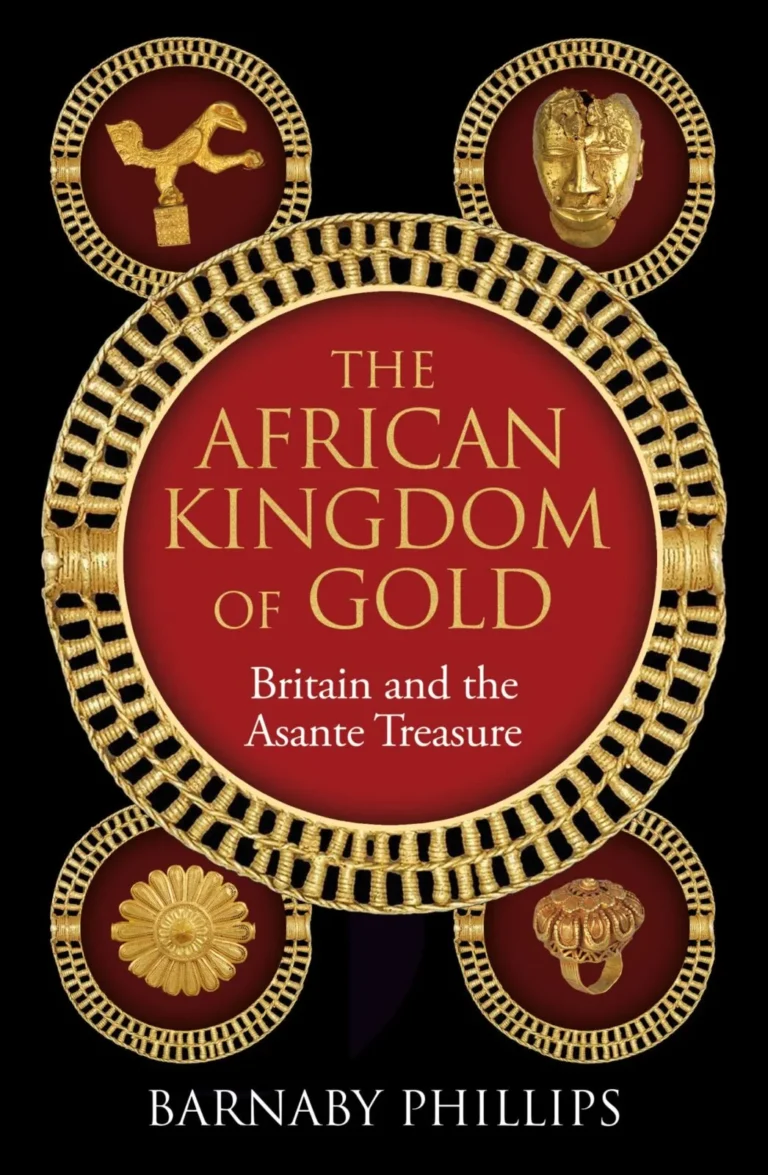
Tracing the course of Britain’s wars with the Asante alongside the course of its plundered relics, Barnaby Phillips weaves a thrilling and poignant tale of imperial ambition and African resistance. Travelling from the Gold Coast to the museum galleries, officers’ mess rooms and aristocratic homes of Britain, The African Kingdom of Gold confronts us with urgent questions about the legacy of Empire and, in particular, how our museums should respond.
In June 2026, Amsterdam School for Heritage, Memory and Material Culture organizes the conference “Unsettling heritage and memory futures: Decolonial trajectories between crisis and possibility”. One panel brings together scholars to reflect on the idea of “home” in relation to restitution. The panel is looking for contributors.
[in English, in Mozambiquan Portuguese] The five texts in this richly illustrated issue nr. 9 of Troubles dans les Collections trace how new local contexts in Mozambique and global debates have resonated in the country since the restitution debate gained heightened visibility. Civil society actors play a crucial role in raising the restitution issue.
[in French] Issue 2025/8 of L’essor des contre-muséologies is about several types of museums. Confronting the dominant model of the museum—born of the French Revolution and rooted in bourgeois values—reformist museologists strive to democratize it, while popular or community-based initiatives attest to its rejection.
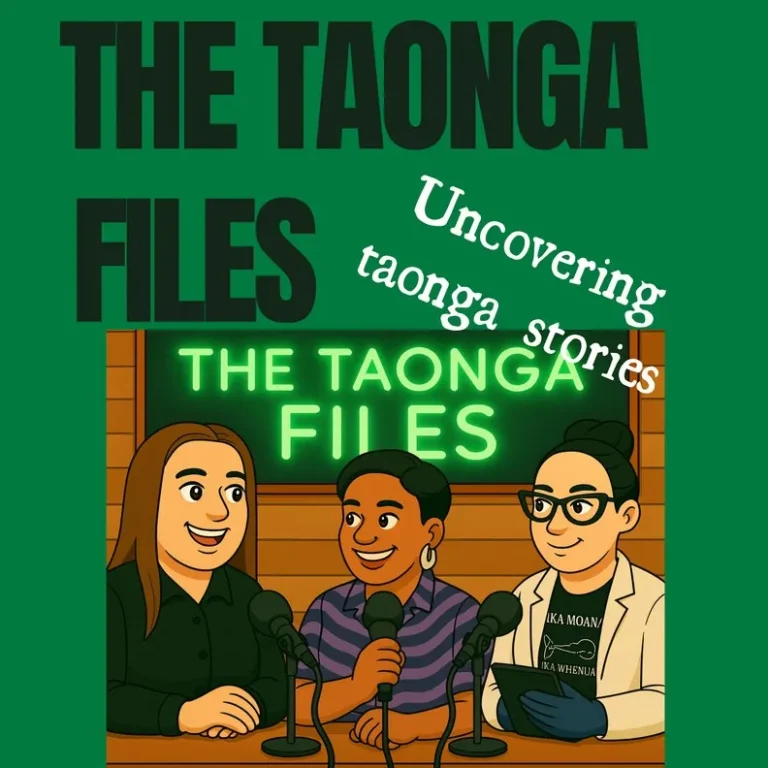
The Taonga Files, a new investigative podcast exploring the journeys of Aotearoa’s taonga now held in museums around the world — and the complex systems, histories, and relationships that shape their return.
Restitution of cultural property is gaining momentum across Africa, framed not as symbolic but as a fundamental right. Senior officials, ambassadors, scholars, and international representatives gathered in Addis Ababa to debate restitution as a pillar of justice and identity.
To Sell or Not to Sell: The British Association for Biological Anthropology and Osteoarchaeology’s Position on the Trade and Sales of Human Remains in the UK pleads for improved legislation if the UK is to end this industry.
Grounded primarily in historical investigation into post-colonial memory, Edith Isoken Erhokpaidamwen examines how colonial conquest and Western ideological domination produced enduring psychological and cultural consequences without idealizing pre-colonial societies.
Centuries of colonisation and exploitation have substantially determined the fact that museums in the West own collections of art that originated from their former colonies. Anaïs Mattez historicises the development of restitution from museums. She sheds light on the mutual influence of post-colonial studies, art crime, and international law.
While Britain has shown little inclination to even seriously consider restitution of the Kohinoor or other cultural artefacts taken from India, several European countries have begun doing so, with the Netherlands emerging at the forefront. While doing so, all sorts of challenges pop up.
Ayọ̀ Akínwándé examines restitution, spiritual provenance, and the unresolved tensions between royal authority, state power, and museum-making in Benin City. The conflict between the MOWAA and the Benin Court goes back to the colonial days.
Colonial officials, collectors, and anthropologists dismembered African buildings and dispersed their parts to museums in Europe and the United States. Most of these artifacts were cataloged as ornamental art objects, which erased their intended functions, and the removal of these objects often had catastrophic consequences for the original structures.
The protection of cultural heritage is increasingly shifting towards favouring the return of cultural property to its people of origin. Evidence of this shift can be found in a more intentional distinction between cultural property rights on the one hand, and traditional rights in rem on the other; the strengthening of international cooperation; as well as the reconstruction of traditional doctrines.
The purpose of this article by Mirosław M Sadowski is to take a closer look at such instances of return of cultural heritage, by particularly focusing on the relationship between the matters of return and the questions of identity and collective memory in this respect. With case studies from Brazil and Angola.
Early in 2025, Patty Gerstenblith published 'Cultural Objects and Reparative Justice. A Legal and Historical Analysis'. She proposes an innovative paradigm for determining reparations, including restitution of cultural objects appropriated during the nineteenth century. This is a review of her book by Annaïs Mattez with both positive and critical points.
For decades, the demand for colonial reparations in Africa was treated by Western capitals as a rhetorical exercise — a radical plea from the fringes that could be safely ignored or pacified with vague “expressions of regret.” By the end of 2025, however, that era of Western comfort officially ended in Algiers.
What can art and artists bring to researching the origins and biographies of objects? How do they shed new light on – or even unsettle – existing approaches to such questions? 'What is not said or shown – absences and gaps – needs attention and can itself open up new avenues of investigation.' [ open access ]
For several years, the Wereldmuseum in the Netherlands has actively engaged in provenance research, focusing on the unequal power dynamics that shaped the collection of objects amidst European colonialism. Daantje van de Linde and Karolien Nédée investigate this approach. 'The broader discipline is still in its infant years, and its goals and research methods are continuously developing.'
For an issue about 'Measuring Cultural Heritage: Indicators for Cultural Heritage Law and Policy Development', the e-journal Santander Art, Culture & Law Review welcomes contributions from legal scholars, policymakers, cultural heritage practitioners, and interdisciplinary researchers. Submissions should offer original research, comparative analysis, or innovative methodologies that contribute to the understanding, assessment, and governance of cultural heritage.
[ in Spanish ] In 'Arte secuestrado' or Abducted art, Catharine Titi (CNRS, France) and Katia Fach Gómez (Uni Zaragoza) recount the stories of six iconic collections, from the Parthenon Marbles to Moctezuma's headdress, the Benin Bronzes, and the Bust of Nefertiti, to shed light on how they ended up in the museums where they now reside, and to open the debate about their repatriation.
In recent years, there has been growing recognition that these collections carry painful legacies. In all these engagements, two words are often used: repatriation and restitution.
At first glance they may seem to mean the same thing, and both involve the return of something. But as South African scholars, working in the fields of history, museum studies and human biology, Victoria Ribbon and Ciraj Rassool argue that the difference between these terms is not just semantic. The choice of word reflects deeper politics of justice, recognition and repair.
To exhibit taonga is not simply to interpret the past. It is to enter a living relationship with an ancestral presence. Museums do not own taonga. At best, they are temporary caregivers, and increasingly, digital co-stewards.
This paper investigates the political and cultural grounds in disseminating manuscripts’ digital copies and ask what kinds of shifting assumptions about the nature of textuality and manuscripts are indicated by digital returns. This is especially relevant given that some manuscripts in traditional Java, those designated as pusaka, are not merely media transmitting textual information. Rather, their materiality contains a power of its own.
Through the case of the Palembang Sultanate in Sumatra, Alan Darmawan investigates the extant manuscripts originating from the palace library. Some moved into the hands of private owners in Palembang, while others were dispersed into colonial collections in Europe and Southeast Asia.
Call for Papers for the 12th Annual Conference of the Amsterdam School for Heritage, Memory and Material Culture. The conference 'Unsettling Heritage and Memory Futures: Decolonial Trajectories Between Crisis and Possibility', will take place on 17, 18 and 19 June, 2026.
Barnaby Philips discovers one more return of a Benin object from the Netherlands and further analyses what went wrong in Benin City: Two days before the aborted viewing of the Museum of West African Art (MOWAA), Oba Ewuare II visited his ally Monday Okpebholo, the governor of Edo State. ‘Please stop the opening of the MOWAA.’
Leah Niederhausen and Nicole L. Immler joined forces with Markus Kooper (Hoachanas Community Library & Archives) and Talita Uinuses (Captain Hendrik Witbooi Auta !Nanseb Foundation) and listened to, archive, and amplify Nama knowledge (Namibia) on and experiences with restitution, reparation, and historical (in)justice.
Western museums are returning the Benin Bronzes to Nigeria, but a state-of-the-art museum to display them is still a long way off. Alex Marshall saw hundreds of Benin Bronzes while reporting this article in Benin City and Lagos, Nigeria.
This paper explores the challenges of repatriating poorly documented Aboriginal secret-sacred objects—known as tywerrenge—to central Australia. 'No story, but we still want to see them come back. Then people can know them.'
Restitution activist Mwazulu Diyabanza explains why he is taking the law into his own hands. His actions are a calculated act of civil disobedience, executed for maximum political impact without engaging in violence or damaging property.
December 15th, at 4 pm (Lagos time), the International Repatriation Network (IRN) will host an online session exploring what restitution and repatriation mean for diverse communities and stakeholders in Nigeria today.
In an address delivered in Algiers, the Caribbean Community (Caricom), unveiled a comprehensive ten-point plan calling for concrete reparations for the crimes of colonialism. This intervention strongly underscored the necessity of a unified, coordinated effort between Africa and its diaspora to confront centuries-long injustices, restore historical rights, and secure meaningful mechanisms for recognition, compensation, and restitution.
Senegalese economist and thinker Felwine Sarr called for a deep reconsideration of the museum, its history, its functions, and the narratives it upholds as African artworks dispersed across Western museums gradually return to the continent. Africa should rethink museum models.
Open Restitution Africa has published a case study that is centred around 119 cultural belongings from the historic Benin Kingdom. This collection includes intricately cast bronzes, carved ivories and terracotta. They serve dually as both historical artefact and active carriers of spiritual and cultural knowledge, many of which remain relevant in Benin cultural and religious life today.
'Investigating Online Heritage Crime - New Directions, New Technologies, Emerging Markets' offers an introduction to a crucial new field of interest to all heritage researchers.
Through diverse voices, this (open access) Abécédaire rethinks the history of art and museums as an experimental space, transcending disciplinary and geographical boundaries. It offers a fresh, nuanced perspective on contemporary issues in the study of the past while paving new pathways for the future.
[ in Dutch ] Collaborative research between heritage institutions in Europe and heritage communities outside Europe offer a unique opportunity to democratise the production of knowledge about the past, the present ,and the future, writes Katrijn D'Hamers (p. 72 ff).
Africa has renewed its most assertive push yet for historical justice (including restitution), as ministers, jurists, and diplomats gathered in Algiers for a landmark conference on the criminalisation of colonialism.
A £1.1million Arts and Humanities Research Council (AHRC) standard grant has been awarded to an international team of scholars, archivists and filmmakers for a project on African film heritage restitution.
The Art of Status: Looted Treasures and the Global Politics of Restitution examines the relationship between looted art and international status, by focusing on the debates about acquisition and restitution of the Parthenon Marbles, Benin Bronzes, and a never before written about collection of Nazi-looted art housed in the National Museum of Serbia.
There’s a shift in museums of the global north. They have begun to decolonise. Finally! But the weird thing is the ones who are leading this shift are the descendants of those who stole, murdered, oppressed. Is this one of our blind spots? It is high time to sit in our discomfort, for serious self-examination, and for a shifting of power dynamics.
University collections are more than any others, linked to the definition and transmission of knowledge. The Musée L, UCLouvain's university museum, is launching a new open-access online scientific journal dedicated to university collections and museums: UniMusea – Research and Practices on University Collections.
On November 9th, 2025, as 250 Nigerian and international guests – donors, diplomats, and the heads of national cultural agencies – gathered in Benin City at the new Museum of West African Art’s opening event, protesters in red baseball caps broke into the museum, forcing its closure. Cultural Property News analyses what happen, and why.
Symposium on current debates around the spiritual artifacts collected under colonial or postcolonial conditions and housed in European ethnographic museums. It will be held Dec. 3 and 4 in Groningen with many wonderful scholars and MA and PhD students involved.
Phillip Ihenacho, director and chairman of the Museum of West African Art (MOWAA), has watched the restitution debate unfold with both pride and concern. Pride, because it signals a long-overdue recognition of West Africa’s cultural heritage; concern, because too often the conversation is shaped by Western priorities rather than African ones.
Join this event - organised by the Europeana Communicators Community - to hear museum professionals across Brazil and Europe explore issues of repatriation, decolonisation, and representation of Indigenous voices.
Elias Feroz interviews Dan Hicks: Monuments, museums, and cultural institutions were often created in the image of “militarist realism,” presenting colonialism and enslavement as eternal. Undoing this legacy is not erasing the past but combating a pernicious ideology.
From the crowns of Ethiopian emperors held abroad to the mummified remains of African ancestors still stored in Western institutions, the theft of Africa’s sacred heritage represents a deeper violence. Those which we speak of, are not mere museum exhibits; they are vessels of ancestral power and collective memory. Their continued displacement denies Africa’s children the right to know and connect with their lineage.
Kwame Opoku looks back at the year 2025. Two fragments, one about the Western dedain for looted objects and human remains. The other about a publication of Open Restitution Africa. But first, a positive event.
Oba Ewuare II today, during a courtesy visit to the Government house spoke explicitly on the proposed plan to build Benin Royal Museum which the past Governor of the state, Mr. Godwin Obaseki converted to EMOWAA and later MOWAA.
It is the final conference of Pressing Matter, in partnership with the Research Center for Material Culture (RCMC) and the Wereldmuseum. Min theme: Rethinking the Restitutionary Moment: What Next? On 27 and 28 November in Leiden. On 26 November, Achille Mbembe will speak in Amsterdam.
In an address at the 2025 Conference of the African Bar Association (AfBA) in Accra, Chief Charles A. Taku of the AfBA Reparations Committee, made an impassioned appeal for what he termed “The Accra Declaration” — a continental demand compelling Europe and the West to pay reparations for the centuries of slavery, colonialism, and cultural theft inflicted upon Africa and its peoples.
The International Seminar on the Return of Cultural Heritage under the auspices of the 2025 Brazil BRICS Presidency will take place on 10 and 11 November and is organized by the University of São Paulo [ USP ].
Dan Hicks argues that the allegation that his book The Brutish Museums is “part of a trend away from pro-British perspectives” is contextualised and refuted. On the contrary, this reply argues, openness and transparency about the colonial past and present is a key element of the reclamation and
reimagining of Britishness that is unfolding in the 2020s – this unfinished period that the book calls “the decade of returns”.
Nikolaus Perneczky examines three archival films produced in the 1960s and 1970s, locating them within struggles over the historical memory of colonialism and political contestations of the post-independence era. These works were some of the earliest African-directed films to employ found (still and moving) images.
Colonial powers have long used museums to collect, display and contain the suffering of subjugated peoples, transforming trauma into spectacle and erasure into curation. Armenia, like so many small nations whose history was stolen, remains entangled in this architecture of memory.
Over 4.250 respondents from Zimbabwe, Ghana, Ethiopia, South Africa, Morocco, Egypt, Nigeria and Mali participated in a survey, expressing that return of artefacts is an essential party of reparations to the continent.
At the G20 meeting, South African Minister for Sport, Arts and Culture, Gayton McKenzie, champions cultural restitution and digital equity at the G20 summit, advocating for a fairer future. Each G20 member state should have a restitution committee.
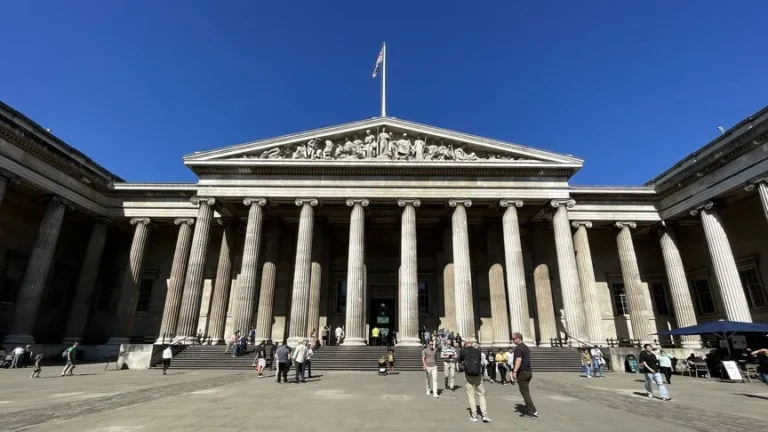
The British Museum has hosted a lavish fundraiser at 2,000 pounds ($2,668) per ticket, dubbed the "Pink Ball," in the room housing the Parthenon Marbles, igniting fierce criticism and reviving long-standing debates over cultural ethics and colonial restitution. Greek Culture Minister Lina Mendoni condemned as 'provocative indifference'. Here follows a comment by Global Times reporter Chen Xi.
This kick-off seminar, led by Pietro Sullo, discusses the legal status of colonial artefacts from Africa held in European museums, clarifying whether there is a duty to repatriate them. The research hypothesis is that European states have a legal duty to return colonial artefacts acquired without the consent of the communities of origin.
Join the Association on American Indian Affairs virtually for the 11th Annual Repatriation Conference! The summary agenda for the Conference is available at https://www.indian-affairs.org/11thannualagenda.html
When tourists tread the halls of Sri Lanka’s national museums or glance over the plaques at sites of historical significance, they are reading stories of the past. But whose? Sri Lankan ethnographer Ganga Rajinee Dissanayaka wonders who made that judgement of what is worth saving, worth memorialising, worth forgetting?
The Director of the Museum of Black Civilisations in Dakar Mohamed Abdallah Ly reflects on the urgent need to decolonize cultural institutions, the symbolism of absence, and the politics of restitution. He also discusses efforts to reconnect the museum with diaspora communities and reimagine its role in Africa’s cultural and intellectual future.
The public display of artefacts looted by British colonial forces at the new Museum of West African Art was supposed to be the crowning glory of a decades-long restitution effort. What went wrong?
Doing research in Swiss museums, artist Deneth Piumakshi Veda Arachchige comes across a collection of ancestral remains and artifacts from an indigenous Sri Lankan community. The award-winning documentary can be seen at film festivals in Leipzig and Amsterdam.
Alliance Française Kampala has launched a month-long program, Ethics of Loaning: Strengthening the Discourse on Restitution in Uganda, aimed at involving communities in discussions on the return and ethical management of cultural heritage.
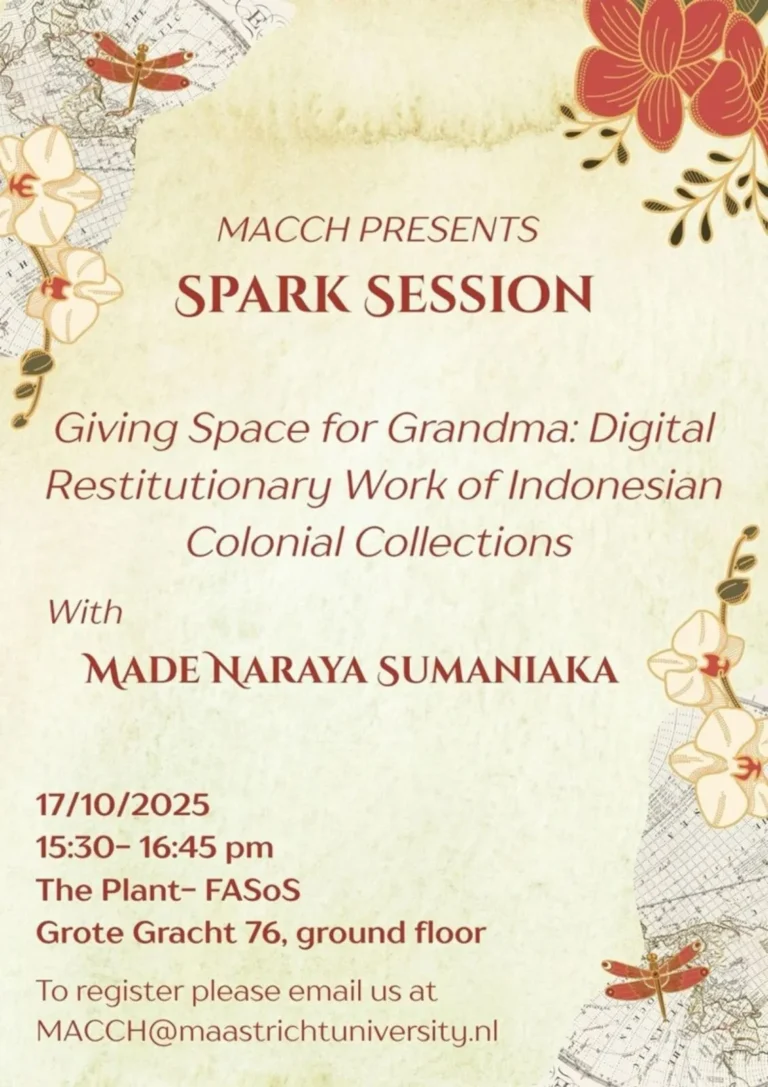
In this Spark Session Made Naraya Sumaniaka presents his thesis work, which recentres community agency by examining how digital spaces enable participation and contestation using the newly established Colonial Collections Datahub and TikTok as case studies.
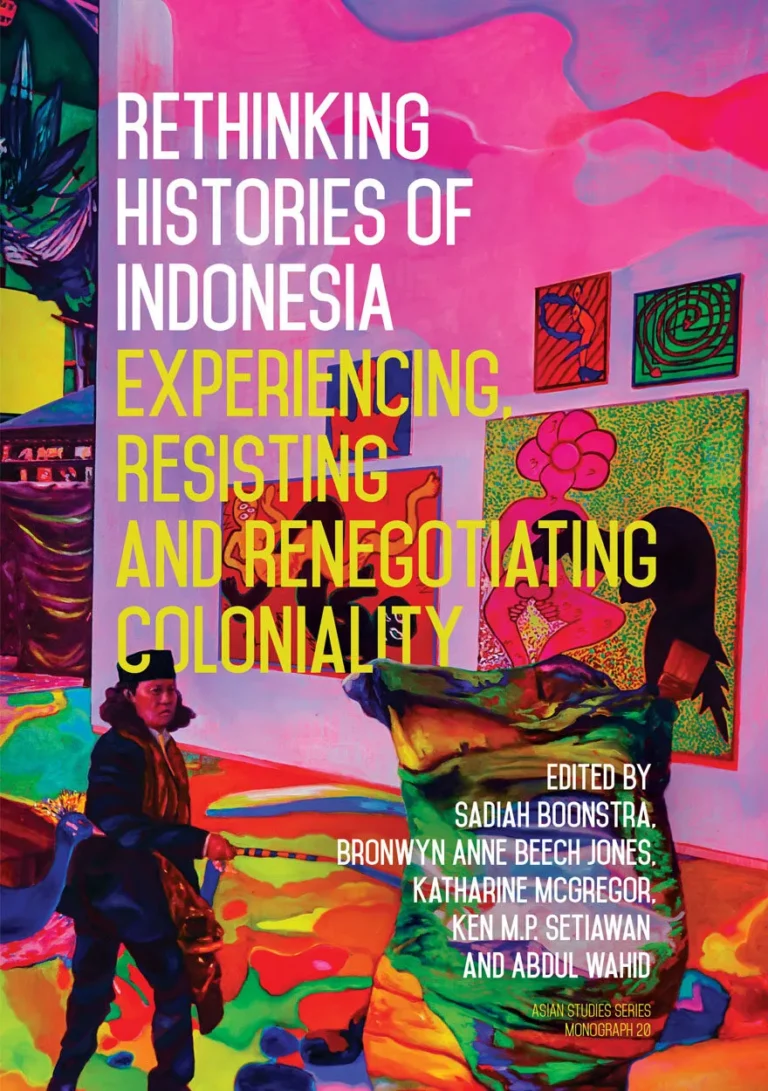
In 'Rethinking Histories of Indonesia - Experiencing, Resisting and Renegotiating Coloniality', editors Sadiah Boonstra and others provide a critical evaluation of histories of Indonesia from the formal period of colonisation to the present day. The volume approaches Indonesian history through the lens of coloniality, or the structures of power and control that underpin colonisation and which persist into the present.
Centuries of plunder, forced labour, and extraction built the wealth of Europe while impoverishing the Global South. The debt owed is not symbolic; it is measurable, moral, and political. Reparations are not charity—they are justice long overdue. Restitution of colonial collections is part of this.
Our third In Conversation considers restitution from an ethnographic perspective. Charlotte Joy will discuss the research for her upcoming book, drawing on interviews and her work with UNESCO, with Mirjam Shatanawi and Katarzyna Puzon. We invite you to join our conversation.
Kulasumb Kalinoe (East Sepik area, Papua New Guinea; currrently James Cook University, Australia) focuses on the collection and removal of cultural material from Papua New Guinea (PNG) during the colonial era. She discusses views among the Papua New Guinean diaspora in Australia on museums and PNG collections, and argues that cultural heritage issues must be addressed before the work of decolonisation can begin.
Ahmad Mohammed writes: Sacred objects, ancestral remains, and ritual artifacts remain estranged from the communities that created and cherished them. This condition is what many scholars and practitioners now identify as cultural heritage alienation: the systematic displacement of heritage from its social, spiritual, and cultural lifeworlds into the frameworks of Western curatorial authority. But community control is crucial.
Muhammad Nishat Hussain writes: The 100th anniversary of the first formal excavation at Harappa (Punjab, NE Pakistan) is more than a commemoration of a century-old dig. It is an opportunity to reimagine how Pakistan studies and safeguards its past. Since the 1970s the country has tried to regain lost treasures. In vain.
Nigeria should establish a bilateral negotiating group with Germany on reparations to pay for its crimes against humanity, comprising the indigenous peoples of Nigeria and other African nations. Not as charity, but as a binding act of justice and a guarantee that such atrocities will never be repeated.
Tilda Gladwell likes to divert your attention from news of war and geopolitical instability for just a moment to an equally pressing issue: the decades-long debate concerning repatriation.
This workshop marks the conclusion of the interdisciplinary provenance research project "Human Remains from Colonial Contexts: Provenance Research in the Anthropological Collections of the University of Göttingen and MARKK Hamburg".
[ in English, French and Spanish ] From a continental European perspective, islands have long been considered as separated and isolated spaces, disconnected from one another and from the rest of their environment. This special issue of the ICOFOM Study Series rethinks such a perspective on islands by bringing together papers from around the world that draw on alternative views, notably from the Pacific and Caribbean regions concerning oceanic islands.
The conference “Colonial Pasts and Contemporary Search for Justice: Interdisciplinary Perspectives on the Politics of Restitution and Redress for Colonial Violence” brings together experiences from different parts of the world, and perspectives in the field of transitional justice and (post-)colonial studies.
Social media is helping drive trade in skulls, bones and skin products as UK legal void risks new era of ‘body snatching’. Paul Boateng (Labour Party), who will meet the culture secretary, Lisa Nandy, next month to appeal for a change in the law, has raised specific concerns about the trade in remains of ancestors from Indigenous communities.
Thupten Kelsang quotes Clare Harris: 'The bulk of Tibet’s portable cultural heritage has been retained everywhere other than Tibet, and is now most readily at the disposal of everyone other than Tibetans.' About a 'doubly colonial' Tibet.
Reclaiming stolen artefacts: Africa’s landmark museum at the heart of global discussion about restitution.
Senegal’s Museum of Black Civilisations is asserting Africa’s right to secure its cultural heritage and tell its own story.
American firm KoBold Metals' desire to scan the Congolese geological archives is causing embarrassment in Belgium, which holds a large collection inherited from the colonial era. A project for the digitisation of said archives for research purposes backed by EU funding is already underway.
This open access book (only after 10 - 14 days) offers a unique perspective on the return of cultural objects by considering the aftermath of the handover processes.
This paper is the outcome of joint reflections by the two authors, based in Europe and in Africa. Since the diverse practices of restitution have attracted more attention than certain concepts related to it, this paper addresses this imbalance by focusing on conceptual issues.
The article 'Journey of No Return: The Impact of Looted Heritage on Nigeria’s Cultural Legacy' explores the profound impact of looted heritage on Nigeria’s cultural legacy, highlighting the historical, cultural, and economic implications of the plundered artifacts.
This call for contributions to Terroirs, African Journal of Social Sciences and Philosophy, aims to give greater consideration to African perspectives by analyzing citizen mobilizations, artistic initiatives, state strategies, and community practices that shape the return of heritage.
It’s no easy matter resolving the current ethical debate over the retention and exhibition of human remains. But one public collection is asking visitors to cast their vote.
The African Renaissance made restitution central to reclaiming cultural sovereignty. But the reality is that implementation is still shaped by donor-led systems that often bypass African agency and African audiences.
The Latin America and the Caribbean chapter of the Association of Critical Heritage Studies (LAC-ACHS), together with Centro de Patrimonio Cultural and Núcleo Milenio Nupats of Universidad Católica de Chile and the Department of Arts and Culture Studies of Erasmus University Rotterdam, warmly invites abstracts for its inaugural conference “Encounters. Collaborative Approaches to Heritage in Latin America and the Caribbean”.
In March 2025, Open Restitution Africa co-hosted a two-day gathering with the University of the Western Cape at the Iyatsiba Lab in Cape Town, bringing together African restitution practitioners, researchers and activists to reflect on how lived experience is shaping policy across the continent.
[ in French ] Are you an academic researcher, a person from the museum, private or public, political-diplomatic, community and government sectors, or from the sphere of regional and international cooperation?
Ahmad Mohammed writes: While digital repatriation offers an alternative or complementary pathway to physical restitution, its success hinges not only on ethical intent or technological innovation but on the socio-technical infrastructure available to source communities.
Andreas Giorgallis provides an overview of how race manifests itself when it comes to cultural heritage, with reference to the restitution of colonial cultural objects, statues related to slavery and colonialism, intangible cultural heritage but also its protection during armed conflict.
The international seminar Critical Studies on Provenance, History, and Cultural Heritage focused on the role of provenance research in cultural heritage and repatriation efforts. Organized with several Indonesian universities and professional associations, the event highlighted how tracing the origin of cultural artifacts is essential for repatriation claims—particularly in light of Dutch colonial history and recent returns of Indonesian objects.
In “Relooted” players find themselves in a major museum, busting through walls, arms full of ill-begotten African artifacts to be returned to their rightful homes. The game features a crew of Robin Hood-esque thieves staging elaborate heists to take back stolen artifacts from Western museums, and repatriating them to the peoples from whom they were taken.
This year’s theme explores the material return, digital reunification, and recontextualization of Philippine artefacts, manuscripts, and sound heritage kept in institutions outside of the Philippines.
Catharine Titi examines the history of a series of objects in the museum's possession that are currently being claimed by their countries of origin and reviews the institution's inadequate response to the repatriation debate.
'Mobile Heritage' explores how diverse digital technologies have allowed for new types of mobilities and introduced a novel set of practices, interventions, and politics for heritage collections, archives, exhibitions, entertainment, conservation, management, commerce, education, restitution, activism, and regulation. With a case-study about digitalised ancient manuscripts from Ethiopia in the British Library.
Proceedings from the seminar Museums, Decolonisation, and Restitution: A Global Conversation, held at Shanghai University on March 20–21, 2023. With 60 experts from 21 countries.
Since 2018, the Association on American Indian Affairs has monitored 1,159 auction houses worldwide and provided auction alerts regarding the sale of sensitive cultural heritage. The Association’s work to monitor domestic and international auctions help fill this gap by identifying and reporting items that may warrant repatriation. The alerts have been shown to stop improper sales and support the return of important items.
South Africa is determined to repatriate the remains of its people taken abroad during the colonial era and those who died in exile as anti-apartheid activists, the culture minister Gayton McKenzie says. Including those of the Khoi-San, who are regarded as among the country's "first people".
Southern Africa is spearheading a transformative shift in the restitution discourse. This shift means reframing restitution as an act of healing, justice, and empowerment for communities still grappling with the enduring scars of historical dispossession.
Dominic Senayah presents an in-depth exploration of reparations using Ghana as a case study. He highlights the multivalent dimensions of reparations and has a set of recommendations.
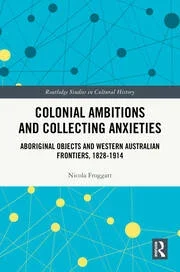
In her book 'Colonial Ambitions and Collecting Anxieties: Aboriginal Objects and Western Australian Frontiers, 1828–1914' Nicola Froggatt assesses how non-Aboriginal collectors understood Aboriginal objects, and what this reveals about colonial relationships, anxieties and ambitions.
Why should internationally active organisations concern themselves with decolonisation? How can transnational institutions meaningfully shape this process? What challenges, responsibilities and opportunities arise from this?
Understanding the Restorative museum practices begins with a departure from static preservation models. It involves recognizing that cultural institutions operate within complex social and ecological systems, bearing responsibility for their historical impacts and future roles.
This interdisciplinary encyclopedia brings together scholars from different disciplines across the humanities and social sciences to provide the state of the art and most comprehensive overview of theoretical and methodological approaches to the study of cultural heritage and conflict.
Two centuries to the day after France imposed a crippling debt on Haiti in exchange for its independence, a UN forum has heard calls for the restitution of what has long been described as a “ransom” extorted under the threat of force from the Caribbean nation that still bears the scars of colonialism and slavery.
Dan Hicks' 'Every Monument Will Fall - A Story of Remembering and Forgetting' reappraises how we think about culture, and how to find hope, remembrance and reconciliation in the fragments of an unfinished violent past.
Ahmad Mohammed writes: Immersive technologies and digital repatriation are reshaping heritage practice—opening up new possibilities for connection, access, and repair. But are we asking the right questions?
Heritage interpretation—the process through which meaning is assigned to the material and immaterial traces of the past—is never a neutral act. It inherently involves questions of power, identity, and authority, writes Ahmad Mohammed.
At Galeria Avenida da Índia in Lisbon, Uriel Orlow’s exhibition Memória Colateral unfolds like a sensory mapping of historical violence and of how memory is inscribed – or erased – within Western structures.
A central assumption in the political process of restitution of looted properties and cultural objects is that their return helps societies to redeem histories of injustice and dispossession. In this article, we ask which objects address whose histories, and how processes of restitution are influenced by the presence and absence of objects and collections.
This essay by Ahmad Mohammed critically interrogates how decolonisation discourse is being used—sometimes productively to drive real change, but other times performatively as a mere buzzword—within the heritage sector.
This conference will explore how accessing archives and museum collections can enable communities to recover their past and rekindle “alternative stories” as well as disrupt the discourses constructed by Western views.
The African Union (AU) has said that the Year of Reparations 2025 is about economic liberation and ending Africa’s systemic wealth drain. Onyekachi Wambu writes: 'Restitution is a key part of the agenda. it has been explicitly mentioned in all the AU related reparations meeting I have attended.'
[ simultaneous translation into German, French and English ] 'Hidden paths and emerging networks - Provenance research between memory and responsibility' is the title of the event on the occasion of the 7th International Research Day on the Provenance of Cultural Objects, the Franco-German Research Fund on the Provenance of Sub-Saharan African Objects invites leading scientists and experts working at the intersection of provenance research, restitution issues and museum practices.
European governments negotiate restitutions only with the governments of countries of origin. The collections they negotiate usually are state-owned and contain valuable, not rarely iconic objects. The path followed by governments of former colonies is quite similar. It is the path of what Laurajane Smith called the authorized heritage discourse (AHD), where only a limited part of a country’s heritage dominates in national narratives and public policies. This approach has serious limitations.
Geraldine Kendall Adams delves into the moral and ethical arguments that surround the highly sensitive issue of human remains held in British museum collections.
In recent years, Southeast Asian countries have had success in lobbying museums, governments and art collectors in the West to return cultural artefacts taken from their lands.
The Memory & Heritage Network of Utrecht University and the ERC project Ecologies of Violence: Crimes Against Nature in the Contemporary Cultural Imagination (Eco-Violence) are organizing a workshop on the representation of colonial and ecological violence in museums.
Since the later part of the twentieth century, ethnographic museums have come under increasing scrutiny, and many have reflected on and changed their presentation as they questioned collections so often made by colonial officials and explorers.
Modernity has emphasized the need to disconnect from emotions for the sake of objectivity; the mind as the vehicle for sense-making. However, onto-epistemologies from the Global South discuss the relevance of a holistic integration of the body, mind, heart, and life-force (spirit) for a better understanding.
The African Union (AU) has declared 2025 the “Year of Justice for Africans and People of African Descent Through Reparations” — a bold demand for accountability from former colonial powers. Reparations are not charity — they are a long-overdue debt.
This paper demonstrates that communities and victims of colonial crimes who suffered gross violations of international human rights and serious violations of international humanitarian law are entitled to reparations and the restitution of their stolen or looted African cultural heritage.
In the last three decades, museums and museological practices that are fundamentally based on Western knowledge systems have been strongly questioned by a collective that includes Indigenous Peoples, political activists, representatives of civil society and scholars.
New World Objects of Knowledge: A Cabinet of Curiosities delves into the hidden histories of forty of the New World’s most iconic artifacts, from the Inca mummy to Darwin’s hummingbirds.
This essay proceeds from the observation that the “Egypt” portrayed in museums and school education misrepresents the lived realities of modern Egyptians, their experiences, and their expectations concerning Egypt’s past and present.
Open Restitution Africa is undertaking a large-scale research project to map past and current restitution undertakings for belongings (material heritage) and human ancestors from the African continent. Deadline 14 March 2025.
The latest issue of the "International Journal of Heritage Studies" (Volume 31, Issue 3, 2025) is out! This issues features a series of articles on "virtual repatriation", "the symbolic violence of heritage consultancy", "the heritage value of emptiness", etc.
Despite promises from Western institutions to return the artefacts, the process has been slow and piecemeal, raising questions about the sincerity of these efforts.
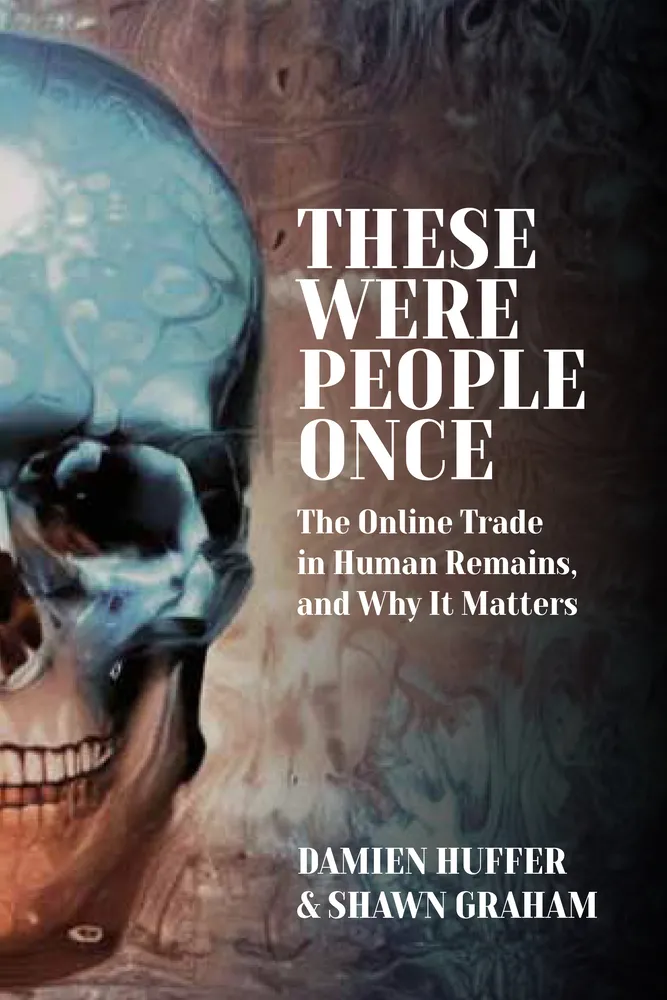
On social media and in auction houses, there is a lively trade in ancestral remains from colonial areas. Skulls, skeletons and other body parts regularly change hands. While this may be an acceptable practice for those involved, it is painful for many descendants of these dead.
[ open access ] This Special Issue of UMAC Journal has a Guidance for restitution and return of items from university collections and interesting contributions about ancestral remains in these collections.
Live-report of the meanings and significance of provenance research in the current legal debate on the return and restitution of cultural objects, organised by the Cultural Heritage and the Arts Interest Group and the Interest Group on International Law of Culture of the European Society of International Law.
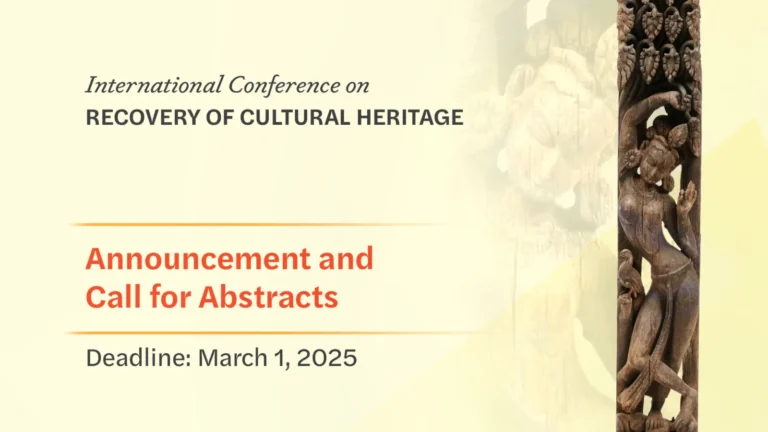
The Nepal Heritage Recovery Campaign is, in coordination with the Government of Nepal’s Department of Archaeology, organising the ‘International Conference on Recovery of Cultural Heritage’ in 16-18 June 2025.
The collection of the Musée des Rois Bamoun (MRB, Museum of the Bamoun Kings), located in Foumban in Cameroon’s West Region, testifies to the richness and diversity of the Bamoun Kingdom’s art, culture, and history.
Even if many museums are eager to return objects now that they are "done" with them, at a time when preservation and storage costs are skyrocketing, it does not always mean that this is the right time for the other side.
The centuries-old African artifacts housed in European institutions and that are worth billions of dollars should be returned to the rightful owners, Global Black Centre (GBC) Vice President and the prominent historian Robin Walker said.
This annotated bibliography presents mostly Indigenous authors and thinkers who have identified this disconnect between Euro-centric and Indigenous ways of seeing and understanding the world for decades, if not centuries.
A foundational handbook for critical heritage research about Africa and its diaspora. Part III African Objects and the Global Museum-Scape is relevant for RM*.
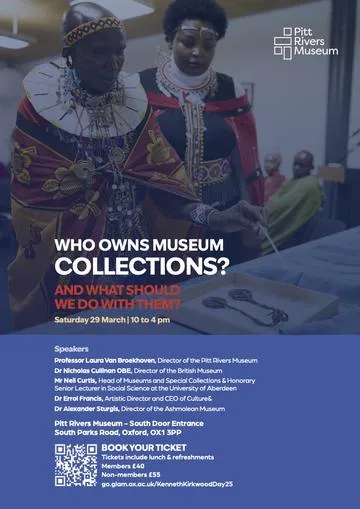
The 2025 Kenneth Kirkwood Day will explore the theme of repatriations, looking at how different museums are approaching this, the language used and if, how and why returns should be made.
[ in French, Italian subtitles ] This year it is seventy years ago that Alain Resnais, Chris Marker, and Ghislain Cloquet released their documentary Les statues meurent aussi about historical African art and the effects colonialism has had on how it is perceived.
The State-centric discourse that surrounds Indonesia’s cultural heritage protection and repatriation policies impede locally-led activism related to cultural heritage.
The Return of Cultural Heritage to Latin America takes a new approach to the question of returns and restitutions. It is the first publication to look at the domestic politics of claiming countries in order to understand who supports the claims and why.
Lawyer Alexander Herman: To make progress in returning countries’ heritage taken by previous generations, museums must take a pragmatic, ethical stance.
Discussions, held in March 2023 by experts, scholars, and professionals from around the world who delve into the complex questions surrounding decolonization and restitution in the museum sector.
Sometimes, descendants of Europeans no longer want to keep the objects, manuscripts or ancestral remains, which they inherited. The items have lost their significance. They take up too much space. The descendants want to make some money out of it. Or they feel these items belong more in their country of origin. Descendants use different ways to get rid of them.
RedressHub builds an innovative online platform that leverages advanced data technologies, interactive visualization tools, and participatory design to map and connect efforts addressing colonial harms and their ongoing legacies. Among these restitution.
According to the National Cultural Heritage Administration, more than 1,800 sets of cultural relics have been returned to China over the past decade.
RM* found two links; sometimes it is hard to open them.
From a historical point of view, the practice of the restitution of cultural artefacts among States emerged at the beginning of the 19th century, during the Congress of Vienna in 1815. Unfortunately, these rules were not universal. They were only applicable among contracting States, stopping at the borders of Europe, the ‘civilised world’, and did not apply to territories which were or were to be colonised.
Denunciations of the ‘evils’ of colonialism occur over and over again, as does an intermittent readiness to listen to them. But the wounds that have been inflicted cannot be healed, not least because the colonial systems in all their forms have upset the deep structures of the social, economic and political organization of the societies they have targeted.
UNESCO, in collaboration with the AfricanUnion and the United Nations Economic Commission for Africa, is hosting a regional dialogue in Addis Ababa, Ethiopia on the new forms of cooperation and agreements in the field of the return and restitution of cultural property in Africa.
This Guide to Initiating Requests for the Return of Cultural Property to its Countries of Origin is part of the ECOWAS Action Plan 2019-2023 on the Return of Cultural Property to its Countries of Origin.
The age of many of museums, particularly those in the UK, means that they have artefacts dating back to colonial times. This article lists arguments pro and con restitution. Here the con's are presented.
The museum is an institution embedded in European modernity. It was invented when a perception of ‘the Other’, or colonised populations, was being disseminated. The International Council of Museums ICOM has had a longstanding involvement in this process.
Once, The Art Newspaper called the historical relationships of the art trade with museums a ‘foggy world’. That was in 2016. I dare say the relationship of trade with museums still is very foggy. How does this relationship look like?
During the European expansion constant fighting and violence and the taking of spoils of war went hand-in-hand. Palaces, shrines, homesteads and entire villages were plundered and destroyed. In the restitution debate, the focus is mostly on state-collections resulting from these confrontations. There is ample evidence, however, that many more parties were involved. This blogpost has soem of the evidence.
Why is research into colonial collections in the private sector - I mean art dealers, auction houses and private collectors - so tough? The main reasons is that most of them have built a wall around themselves, and there is rarely a hole in this wall through which an outside observer can look inside their closed bulwark.
Tim Maxwell: Repatriating artefacts found underwater could help former colonial powers meet moral obligations to countries they had historically exploited for their transatlantic slave trade.
This paper examines the complex relationship between African art and colonial encounter while interrogating the commodification and restitution of African artifacts which has become a topical issue.
Material Culture in Transit: Theory and Practice constellates curators and scholars actively working with material culture within academic and museal institutions through theory and practice.
Many European countries deal with their colonial history and their collections of ethnographic material. As much as human remains seem like the essence of the need to do reparations to indigenous cultures, they are but a small part of the responsibility to understand our entangled histories
In the Review of African Political Economy, Aguigah argues that current debates around restitution of looted art from Africa mostly ignore politico-economic aspects of neocolonialism, reflecting the trend in academia as well as the wider public to separate cultural from economic issues.
This is how the difficulties of the colonial past should be negotiated. First, begin with the object and not the politics. Museums cannot absolve the crimes of colonialism and they should not be mobilised to assist contemporary geopolitical objectives.
Many African countries are becoming more proactive in their quest for the repatriation of their cultural heritage. They increasingly participate in international conventions and adopt more effective policies in these areas.
Egypt has announced plans to convene an international meeting for countries affected by the smuggling of antiquities during the age of imperialism. The move comes in the wake of the revelation that over 2,000 artifacts were stolen from the British Museum, which has raised concerns about the credibility of several Western museums.
Cultural assets such as the large corpus of Benin bronzes housed in museums are part of the cultural world heritage of mankind. It is time to give up the exclusive concept of private property– or a single nation’s property – for these cultural assets in favor of a concept of multiple stakeholders. “Shared heritage,” in other words. The same patterns anchored in the socioeconomic structure of European societies unfold their power again and again: It is not the victims, the slaves, who receive compensation, but the dispossessed slave owners, then as now.
The Mauritshuis gallery in the Netherlands and the Humboldt Forum in Berlin have joined forces in an exhibition that addresses the looting of art that has sustained European collections for centuries
In this captivating episode, Syvlie Njobati and Ngwatilo Mawiyoo embark on a journey through history, exploring the complex, violent, and manipulative ways in which heritage items of African origin ended up in Western museums and private collections.
Aurora Hamm argues that restituted objects are instruments of soft power through public and cultural diplomacy. The (former) coloniser states utilise them, with geopolitical considerations in mind, as a means of ‘restarting’ their bilateral relationships and thus obtaining a certain form the restitution
African leaders and diaspora have gathered for a 4-days meeting in Accra, Ghana, to discuss reparations for the slave trade and also for the restitution of lost treasures.
[ in French ] President Tshisekedi of DR Congo, currently chair of the African Union, has made restitution priority. It is interesting to read what the Director General of the Kinshasa Academy of Fine Arts, Henri Kalama Akulez, has to say about it.
Many believe new applications—from AI and NFTs to 3D scanning—are game changing in returning objects to source communities. Lawyers say they can make the process harder.
European powers often dismissed or devalued the cultural expressions of colonised peoples, labelling them as ‘crafts,’ ‘artifacts,’ or ‘ethnographic objects’ rather than art and reinforcing the idea that European art holds a superior place in global culture.
What his piece makes also interesting is what Nelly Kalu writes about her childhood: When I was a child, my father would tell me stories of the deities in our village and their significance to our lives, even in our names
Anaïs Mattez (University of Hongkong) argues that provenance research has been key in the downfall of the internationalist ideology about cultural property.
What practical steps can we take to resolve cross-border claims to looted art and prevent illicit trafficking in cultural goods? That's what the European Parliament asked Leiden legal scholar Evelien Campfens.
The Digital Benin project provides a central place to see artifacts that are now scattered around the Global North. Its organizers hope it will be the first step toward repatriation.
Yinka Adegoke of Semafor interviews Oumy Diaw, contemporary art specialist and former communications director for the Museum of Black Civilizations in Dakar, Senegal.
Who should own Benin objects returned to Nigeria? And what about the Oba of Benin commenting, prior to 2023, that the Benin objects to be returned to Nigeria should be returned to him and not the federal government?
This e-report of the international conference 'Museum Forward International Best Practice Forum on Museums & Heritage' in Jakarta gives a clear insight into Indonesia's cultural policy.
Once, The Art Newspaper called the historical relationships of the art trade with museums a ‘foggy world’. That was in 2016. I dare say the relationship of trade with museums still is very foggy. How does this relationship look like?
The 2024 report covers the previous year and concludes that the tribal art market has plummeted in 2023, with a global auction turnover of €37.55 million, marking a 37.5% decline, compared with the year 2022.
In a lengthy and worthwhile essay in ARTnews about the progress in the restitution discourse, both steps forward and steps back in the former colonizers’ countries and the former colonies are discussed.
Kwame Opoku writes: The lull in the restitution of African artefacts after the restitutions of 2021 and 2022has left a vacuum filled with activities that, although not directly anti-restitution, do not directly promote restitution.
Peru’s Ministry of Culture triumphantly reclaimed 202 cultural artifacts, spanning various eras and civilizations, from Germany, Spain, the USA, Canada, and Belgium, showcasing successful international collaboration against illicit trafficking.
Returns of Cultural Artefacts and Human Remains in a (Post)colonial Context. Mapping Claims between the Mid-19th Century and the 1970s, renders visible protests against the dispossession of cultural property and demands for its return in both colonial and post-colonial times: a starting point.
Resist, Reclaim, Retrieve - The Long History of the Struggle for the Restitution of Cultural Heritage and Ancestral Remains Taken under Colonial Conditions, brings together authors from countries in the Global South and North. They shed light on the long history of restitution claims from colonised countries, with a focus on the pre-1970 period.
The looting of Cambodia’s sacred temples, in the dead of night or under the cover of the fog of war by unscrupulous thieves, took place over many decades up until the 2000s. Now, a host of museums are investigating their own collections.
Film maker Ngawatilo Naiwiyoo and restitution proponent Silvie Njobati embark on a journey through history, exploring the complex, violent, and manipulative ways in which heritage items of African origin ended up in Western museums and private collections.
Kodzo Gavua has called for an intensive education on the plunder of African cultural heritage objects and systems and the need for their return. Such efforts would help safeguard the nation’s cultural legacy and contribute to tourism and scholarly research.
Christa Roodt, specialist in international private law and and provenance and restitution issues at the University of Glasgow, adopts a novel approach to the social question of restitution and repatriation of sacred cultural property and heritage acquired unethically during the colonial era. Her approach premises on better integration of law, ethics, history, anthropology, and provenance research.
[ in French ] Museums in the modern sense of the term first appeared in Africa during the colonial era. After independence, the colonial museum became the national museum. It was only a change of name, but the model remained Western
"A History of Excuses" dives into the often absurd justifications given to delay or deny the return of African cultural heritage, using satire and humour. .
Sela K. Adjei and Yann LeGall (eds.): Debates around restitution and decolonising museums continue to rage across the world. Artefacts, effigies and ancestral remains are finally being accurately contextualised and repatriated to their homelands.
China has launched a recommendation for the protection and return of cultural objects removed from colonial contexts or acquired by other unjustifiable or unethical means: the Qingdao Recommendations for the Protection and Return of Cultural Objects Removed from Colonial Contexts or Acquired by Other Unjustifiable or Unethical Means (Qingdao Recommendations)
(In English, French and Spanish) This issue of ICOFOM Study Series is the result of an international seminar at the University of Marburg in Germany in June 2024, where a wide range of speakers from the global south and north met.
Over the centuries, a multitude of items – including a cannon of the King of Kandy, power-objects from DR Congo, Benin bronzes, Javanese temple statues, Maori heads and strategic documents – has ended up in museums and private collections in Belgium and the Netherlands by improper means.
In 'The Empty Showcase Syndrome - Tough Questions about Cultural Heritage from Colonial Regions', author Jos van Beurden explores three questions that slow down the restitution process.
Historian Justin M. Jacobs challenges the widely accepted belief that many of Western museums’ treasures were acquired by imperialist plunder and theft. His account re-examines the allegedly immoral provenance of Western collections, advocating for a nuanced understanding of how artefacts reached Western shores.
(In English, Italian and French) The central issue examined in this impressive collection of essays is how to respond to the desire of African-origin communities to reclaim what was taken from them.
This special issue of Museum & Society (open access), Mobilizing Museum Minerals: Critical Approaches to Mineralogical Collections, showcases burgeoning critical approaches to the collection, interpretation, and display of mineralogical specimens in museums while expanding understandings of their transformative potential in an era of rising ecological injustice.
People buy and sell human remains online. Most of this trade these days is over social media. In a study of this 'bone trade', how it works, and why it matters, the authors review and use a variety of methods drawn from the digital humanities to analyze the sheer volume of social media posts in search of answers to questions regarding this online bone trade.
Nigerian creators Shobo and Shof, known for New Masters, are set to debut their latest project, Bronze Faces, a gripping art heist drama that brings real-world issues to the comic stage in 2025.
Justin M. Jacobs examined the allegedly immoral provenance of Western museum collections and challenges the widely accepted belief that many of Western museums’ treasures were acquired by imperialist plunder and theft.
Although there is no lack of information on individual repatriated works, the larger picture of where they came from and how, who is returning them and why can be lost in the anecdotes. This is where the Museum of Looted Antiquities (Mola) comes in—a new digital platform that traces not only the histories of specific repatriated objects but also compiles metadata in order to better understand smuggling networks and the museum industry’s intensifying repatriation efforts.
Anmol Irfan, a Muslim-Pakistani journalist, writes: Governments delay the process; museums often answer to wealthy donors. Complexities arise that require each case to be handled individually. But the first step of acknowledging the generational hurt and trauma caused by the removal of these culturally important and sacred artifacts has opened doors to broader solutions on a global scale.
It has become a tradition, Kwame Opoku’s annual retrospect. For him, the most spectacular event of the year for restitution was the royal lecture of the Asantehene, Nana Osei Tutu II (19 July 2024) at the British Museum London.