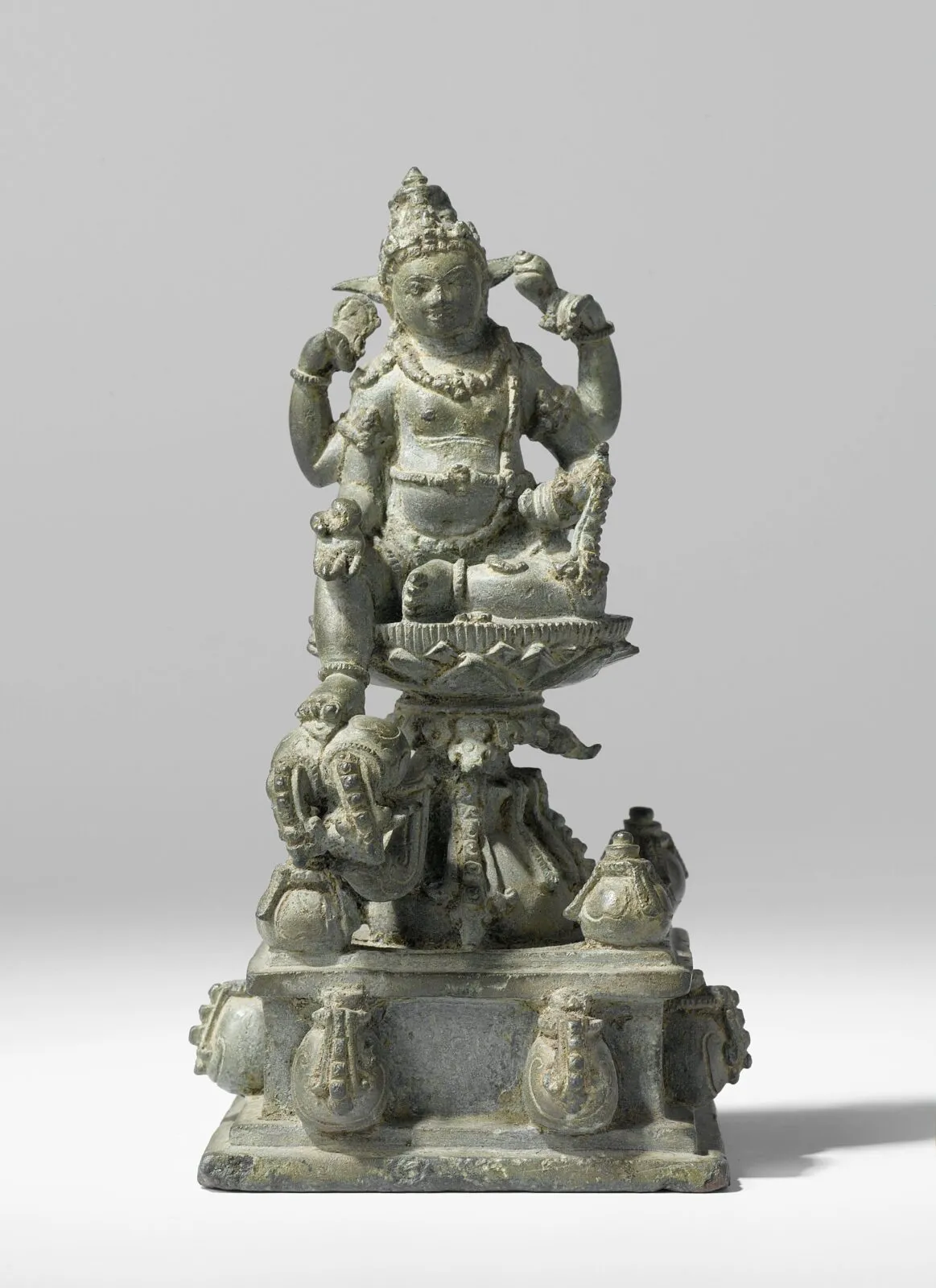
The Kuvera statuette is a bronze sculpture from Central Java (850-930). While Hindus revere this deity of prosperity and wealth as Kuvera, Buddhists know him by the name Jambhala. The sculpture is on display in the Asian Pavilion of the Rijksmuseum, Amsterdam (RMA). It is owned by the Royal Society of Friends of Asian Art (KVVAK) (AK-MAK-311).
The RMA and the KVVAK describe the provenance of the Kuvera nowadays as follows:
- ‘…; collection C.M.A. Groenevelt; (Note RMA)…; from Carlebach, New York, $1,700, to the Society of Friends of Asian Art, 1958 (Note RMA); on loan from them to the museum since 1972.’
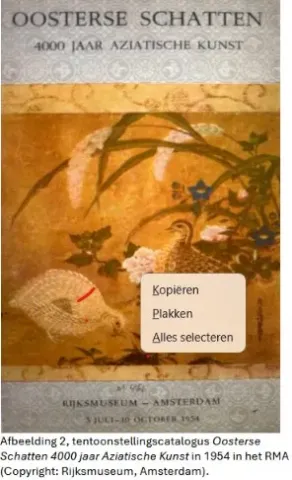
The name Groenevelt also appears in connection with this Kuvera in two exhibition catalogues from the RMA (1954, 1988), both of which state:
- ‘On loan from C.M.A. Groenevelt, Royal Tropical Institute, Amsterdam’
and
- ‘Ex coll.: C.M.A. Groeneveldt,’
respectively. As we will see later in this blog, in the case of the KVVAK, this provenance was obfuscated first, following the acquisition of the Kuvera.
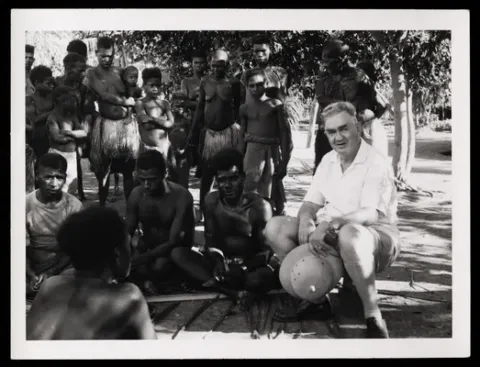
Carel Groenevelt – Collection Wereldmuseum
The Groeneveld collection and the export license
Carel Groenevelt (1899-1973) is best known for his expeditions to Dutch New Guinea. Less well known is that he lived in Indonesia from the early 1930s until 1950. There he assembled vast collections of Indonesian art for Georg Tillmann (1882 -1941) and J.G. Huyser (1878-1962). In addition, he held a leading position at the art dealership Kunsthandel Van der Horst in Yogyakarta.
On November 25, 1949, one month before the Dutch government acknowledged the sovereignty of the Republic Indonesia, Groenevelt received an export license for the export of twenty bronze objects from the Archaeological Service in Indonesia. This Dutch colonial organisation collaborated in 1949 with the Indonesian Cultural Institute (Lembaga Kebudajaan Indonesia). The export license, mentioned in their Archaeological Report 1949, included a condition stipulating that a four-armed Kuvera, a rare type, had to be returned within one year. Despite agreements reached regarding the restitution of cultural objects and claims by Indonesia, the Kuvera never returned.
Who was the legal owner?
The question who the legal owner of the Kuvera was, remains unanswered, and there is likewise no answer to the question of what happened to ownership claims and any potential obligations at the time of the transfer. Another question, of course, is whether the Kuvera mentioned in the export license is the same specimen currently held by the KVVAK. A logical next step in the research would have been to consult the archives of the Archaeological Service in Indonesia to see if they contained further information about this specific Kuvera and its provenance. Unfortunately, those archives have been lost.
Nevertheless, there are clear indirect indications that this is the same Kuvera as the one in the KVVAK-collection.
- The export license justifies the requirement for its return by noting that it is an uncommon type of Kuvera.
- Four-armed Kuveras are significantly rarer than two-armed versions.
- This particular Kuvera holds a discus and a conch shell in its upper pair of hands, differing from the conch and lotus typically found in standard Kuvera iconography.
- Only two other bronze Kuvera statues with similar iconography have been discovered, confirming that this piece is indeed a rare type.
- During the 1954 exhibition ‘Oriental Treasures, 4000 Years of Asian Art’, Groenevelt made a rare four-armed Kuvera figure from his collection available to the RMA, which organized the exhibition in collaboration with the KVVAK.
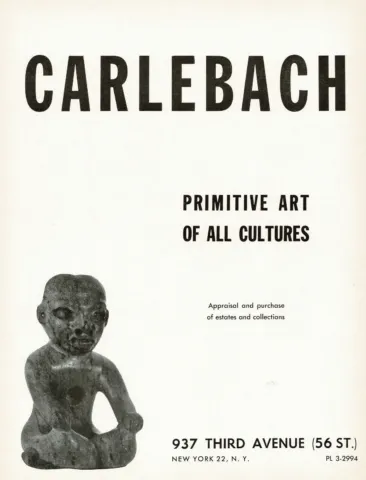
In 1958, most likely due to financial difficulties, Groenevelt decided to sell the Kuvera through the Carlebach gallery in New York, which had by then become an international hub for Asian art. On May 19, 1958, the KVVAK purchased the Kuvera from Carlebach for 1,700 US dollars.
The purchase of the Kuvera by the KVVAK
An interesting detail is that the purchase negotiations were conducted by J. Fontein (1927-2017), a member of the KVVAK and curator at the Museum of Asian Art in Amsterdam, which managed the KVVAK collection, and H.F.E. Visser (1890-1965), a co-founder and secretary of the KVVAK. Both men had also been closely involved in the 1954 exhibition where Groenevelt’s Kuvera was displayed; Fontein was one of the contributors to the exhibition catalogue, and Visser wrote an article about the exhibition for the Rijksmuseum Bulletin.
Consequently, the Kuvera was not merely an intriguing statuette to the KVVAK; the negotiators knew exactly which Kuvera it was and which collection it originated from. Indeed, the correspondence between Carlebach and the KVVAK explicitly refers to it as
- ‘the Kuvera from the Groeneveld collection’.
Provenance kept vague
When the KVVAK compiled its annual report later that year, the following note about the purchase of the Kuvera appeared in the draft material for the report:
‘a Hindu-Javanese bronze depicting Kuvera, a truly exquisite piece that had already left the Netherlands, but was subsequently acquired from an art dealer in New York, thereby ensuring its preservation for our country.’
In the draft of the annual report, the provenance of the Kuvera was kept relatively vague, unlike that of other acquisitions, whilst the KVVAK must have been very well aware of the object’s provenance thanks to the exhibition held four years earlier. Moreover, the acquisition of the Kuvera was the only one presented as an act of conservation for the benefit of ‘our country’ – the Netherlands.
Two top experts
This is all the more remarkable given the reputation of both Groenevelt and Carlebach. Groenevelt was known as a highly experienced collector with a keen eye for masterpieces. He had assembled significant collections for various museums and private individuals; his name was a guarantee of quality.
Carlebach was, at the time, one of the world’s premier sources for Asian art, such as the Kuvera figure. While both Groenevelt and he would have served as excellent references for the acquisition, their names appear in the private correspondence between Carlebach and the KVVAK, yet are absent from the records intended for the annual report, a document accessible to all association members and, likely, to others outside the organization as well.
In 1962, the Kuvera was described in detail in a supplement to the catalogue of the Museum of Asian Art; however, information regarding its provenance was omitted, even though the curator, J. Fontein, was aware of it as he had been involved in the 1954 exhibition and the negotiations with Carlebach.
Ten years later, in 1972, the KVVAK placed the Kuvera on loan to the RMA, where it remains on display in the Asian Pavilion to this day.
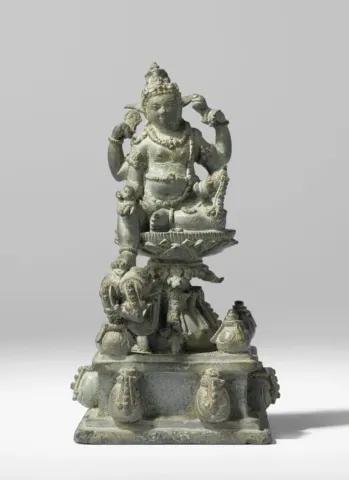
Photo Rijksmuseum Amsterdam
Conclusion
The rarity of the Kuvera mentioned in Groenevelt’s export license and the rarity of the Kuvera in the KVVAK-collection is a clear indication that this concerns the same statuette. This Indonesian statue was added to the KVVAK collection during a highly turbulent period in Indonesian-Dutch political history. The subsequent way its provenance was addressed, can at the very least be described as dubious. This raises questions about the legitimacy of the sculpture’s ownership and retention within the KVVAK collection. These questions merit further investigation, but my preliminary conclusion would be that the Kuvera mentioned in the export license, should have been returned to the Archaeological Service in Indonesia no later than the 24th of November 1950.
Hans Centen is freelance researcher and master student at the Open University of the Netherlands.
He would like to thank Caroline Drieënhuizen for her input.