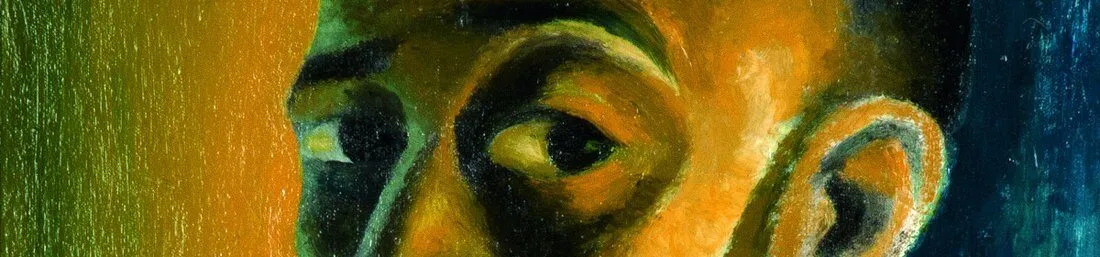
Paris Noir spans from the creation of the Présence Africaine review in 1947 by Alioune Diop— centered around the Négritude movement, and serving as a bookstore, publishing house, and gathering place for artists and intellectuals from various Black worlds—to the creation of Revue Noire in the 1990s.
This exhibition accompanies 50 years of decolonisation in Paris, which functioned as an anticolonial and pan-African lab, offering artists a space to envision emancipation.
It allowed these artists to align with political struggles and decisively contribute to redefining modernities and postmodernities in Paris.
The exhibition challenges the idea that artists left Paris for New York after World War II by showcasing a different story—one that opens the odyssey of Paris-Monde (ParisWorld) along geographical axes previously ignored by institutions.
Paris Noir is not only Paris-New York but also Paris-Fort-de-France, Paris-Dakar, Paris-Johannesburg, Paris-Algiers, Paris-Port-au-Prince, and more. The exhibition presents Paris as a relational and meeting space, inviting visitors to discover new landmarks of Paris Noir, such as schools, cafés, and galleries.