The items included royal regalia, drums and ceremonial gold weights, dating back to the 1870s – and reveal the cultural role gold played in Asante society.
Twenty-five of the pieces were donated by British art historian Hermione Waterfield and the rest by South African mining company AngloGold Ashanti.
Hermione Waterfield’s voluntary return marked one of the most personal acts in the restitution process. In a statement, she described her decision as a moral obligation: “These artifacts never truly belonged to me. They belong where their meaning was born.” Her contribution includes several ceremonial items inherited or purchased between 1967 and 1973.
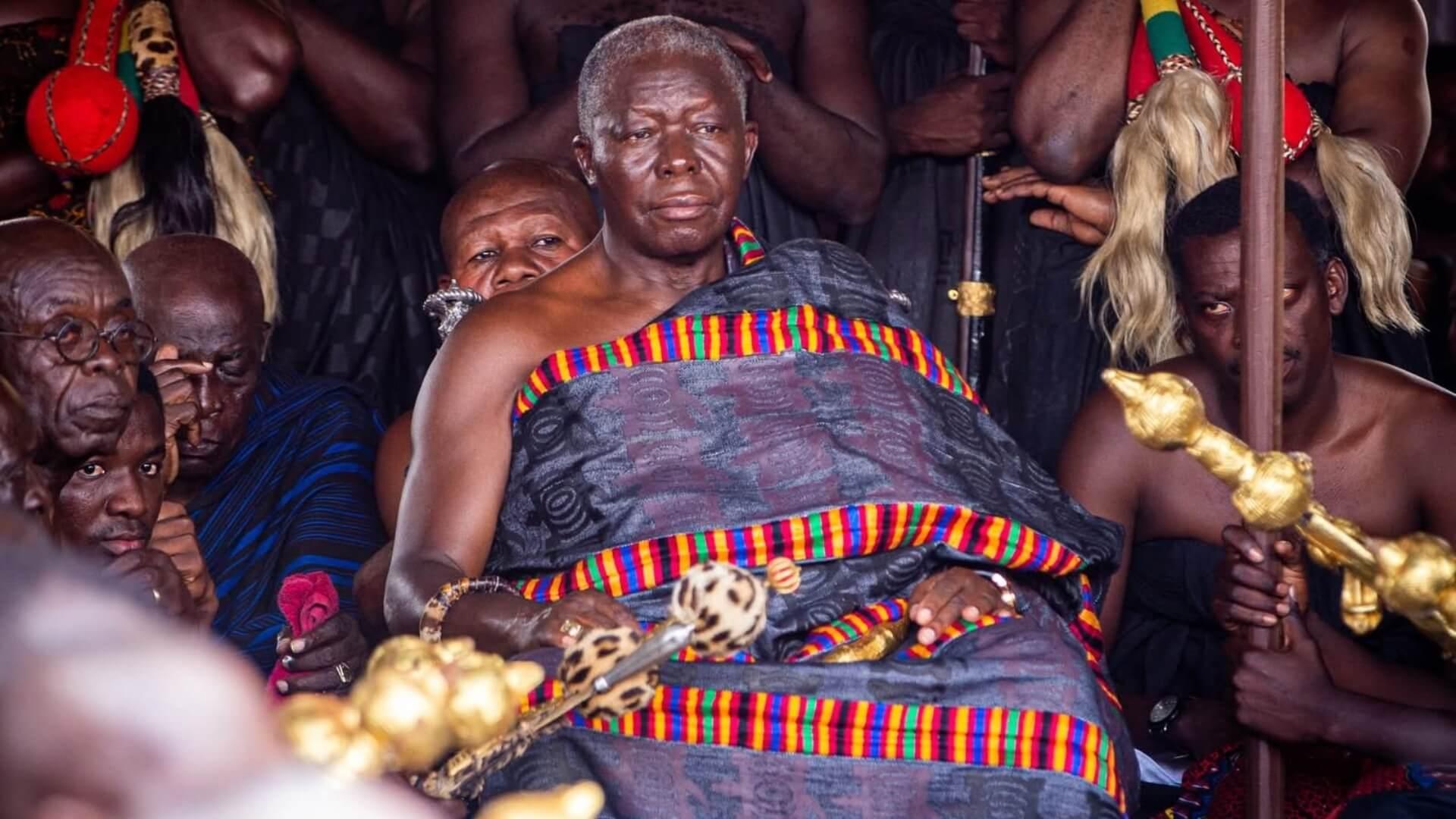
Courtesy Topping Africa
Among the recovered pieces is a wooden drum believed to have been seized by British troops during the Siege of Kumasi in 1900, a key battle that led to the fall of the Ashanti Kingdom before it was incorporated into the British Empire the following year.
Handing over the pieces at a ceremony at the Manhyia Palace, in the city of Kumasi, officials from AngloGold Ashanti said the gesture was made as an act of cultural respect and reconciliation.
King Osei Tutu II described the return as “a homecoming of the soul,” saying the artifacts “carry the spirit of our ancestors and tell our story, our dignity and our resilience.”
Their return comes as pressure mounts on Western museums and institutions to address the restitution of African artefacts plundered during colonial times by Britain, France, Germany and Belgium.
Returns by privet collectors are rare.