An ancient Inuvialuit kayak that has been held in the Vatican Museums’ collection since 1925 will be returned to the Canadian Museum of History in Gatineau, Québec, in a historically significant restitution.
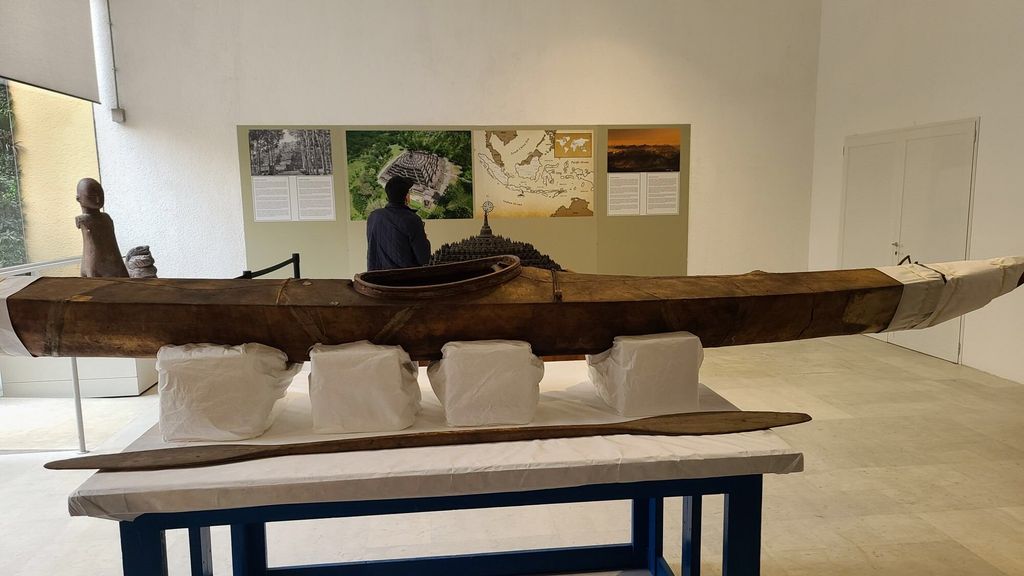
Courtesy CBC
The centuries-old kayak, one of only five in existence, came into the possession of the Vatican in the context of a world exhibition organised by Pope Pius the XI, who had instructed Catholic missionaries across the world to provide tangible examples of “Indigenous life” from their assigned regional communities.
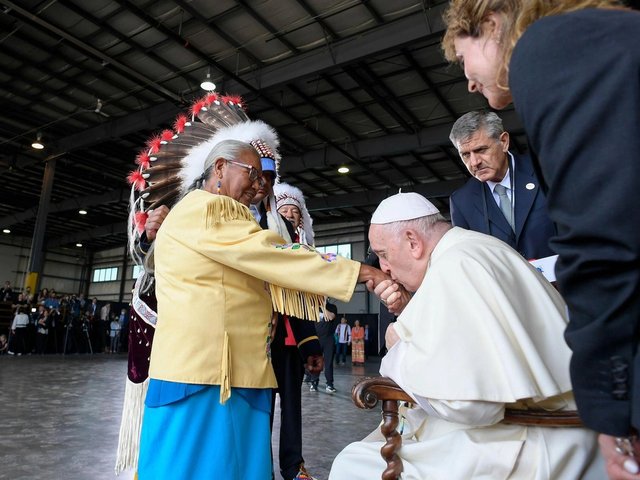
Courtesy Gabriele Angeletti
Over 100,000 objects were sent to Rome in this manner, many becoming part of the Vatican’s permanent collection.
The kayaj and other sacred items are in the process of being returned.
Gilbert Whiteduck says the repatriation of Indigenous items from the Vatican museum is an important step towards reconciliation, but the handling of those items needs to be done in a manner that reflects their sacred nature.
“It’s not just a matter of taking an object from where it’s sitting in the Vatican archives and museum and just moving them over,” said Whiteduck, the education director for Kitigan Zibi Anishinābeg.
“Some of these objects may very well be, depending on what it is, very sacred in themselves. And ceremony would need to be performed before they can even make this travel, the journey back to where they came from.”
Other Indigenous voices have also raised concerns about the “church-to-church donation” method of restitution.
Cheyenne Lazore, the manager of the Akwesasne Rights & Research Office: “First Nations need to see what is actually there and we need to identify what belongs to what nation”.
As of now, the items will first be returned to the Canadian Museum of History near the capital of Ottawa before their final resting places are decided.
The return of the items to individual communities has the potential to bring some peace, but is still far from full reconciliation.
“Thank you for returning our items, but a lot of our children still didn’t come home from the residential schools that these are taken from,” she said.

