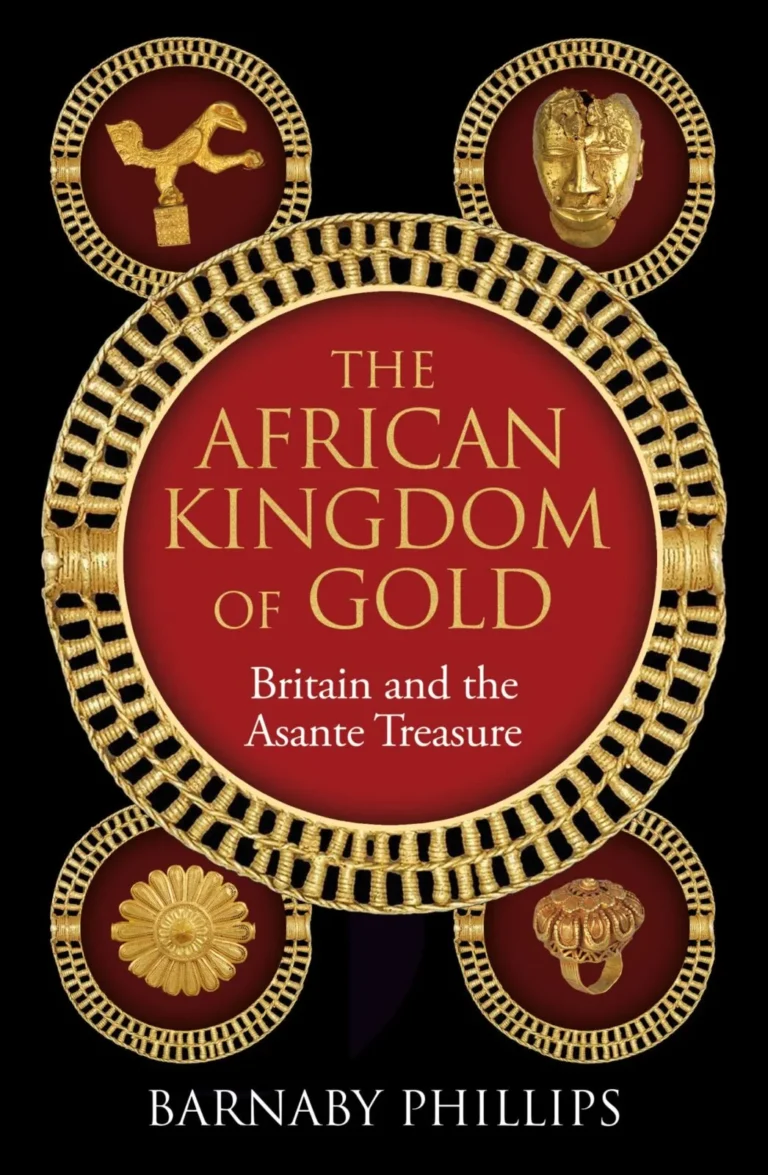
Author Barnaby Phillips will discuss its enduring significance of the Asante treasures for Britain, Ghana and our museums. He will be joined by Ivor Agyeman-Duah, the Asantehene’s envoy and director of the Manhyia Palace Museum in Kumasi and Malcolm McLeod, formerly of the British Museum, who both played critical roles in the negotiations leading to the recent returns.
Thirty-nine Naga ancestors will soon begin their journey home from Oxford to Nagaland. This is the culmination of a Naga-led process of dialogue, research and reconciliation that began in 2020, supported by the Forum for Naga Reconciliation, in collaboration with the Pitt Rivers Museum, a process the Naga partners describe as not an ending but as a step on the longer path towards healing.
The Greek government has denied a request from Frankfurt’s Liebieghaus Sculpture Collection for the loan of Parthenon marbles from the Acropolis Museum on the grounds that they would be shown alongside two British Museum pieces removed from the Acropolis by Lord Elgin in the 19th century.
In her (open access) thesis, Polly A Bence examines the Bristol Museum & Art Gallery’s Pacific collection as a local–global interface—a palimpsest of empire, anthropology, and emotion. With a focus on the Museum’s ethnographic collection from Australia and the Pacific Islands, stored in a city where the subjugation of other cultures was once central.
British Museum director Nicholas Cullinan pointed to the recent Bayeux Tapestry loan, agreed between Britain and France, as "a very compelling example of international partnership" that demonstrated the value of "reciprocal exchange." And: has PM Andy Burnham reversed his pro-restitution position?
This documentary tells the remarkable story of the repatriation and ceremonial homecoming of six Khoe and San ancestral remains from Scotland to South Africa in October 2025, and the profound significance of their return to the communities from which they originated.
While most museum repatriations begin with an external request, a new international research project, led by thew University of Toronto's Faculty of Information Professor Cara Krmpotich, will examine how museums can instead take the initiative in returning cultural belongings and ancestral remains.
Rachel Gatehouse and Jin Gao examine UK heritage institutions’ repatriation practices through a new database of repatriated items from 2010 to 2022. The dataset records 491 items across 29 case studies, returned to 7 countries, with most material consisting of human remains from London-based national museums, particularly the Natural History Museum. The list, created by Tamara Newton, is publicly accessible.
Drawing on his broad research, Chipangura explores how ethnographic museums holding African collections are confronting the enduring consequences of colonialism. His presentation moves beyond familiar debates on restitution and repatriation, asking a more fundamental question: What are museums for, and whom do they serve?
Emiline Smith argues that the 3,000-year-old Iranian gold discs, which American actress Zendaya showed at a London photocall for Christopher Nolan’s forthcoming adaptation of The Odyssey, are emblematic of a market that has spent decades quietly dismantling ancient objects for parts.
Adrian Plau of the Wellington Trust that recently returned Jain manuscripts to the Jain community in GB, argues: Restitution is not a remedy for the past alone – it’s about the future we can create together.
In her article 'From Cultural Hub to Crime Scene: British Museum Refuses Repatriation of Thefted Colonial Loot', Sierra Kinsey-Lawton argues that the British Museum is currently facing intensified pressure over the scale of its unprovenanced non‑European collection, following an internal review that found that more than 40% of those objects lack sufficient documentation to establish legal ownership.
In this podcast, Jessica Coldrey asks Miriama Bono to share her insights on the interconnectedness of land, culture, and ocean in Polynesian perspectives. She discusses her work in museums, repatriation efforts, and the importance of storytelling in preserving heritage. So far, 20 objects came back, be it most of them on a six years loan.
Daisy Sanderson concludes: Social media is helping drive the sale of skulls, bones and modified human remains, Legal loopholes leave much of the UK market beyond regulation. The on-going sale is a continuation of the trade in the colonial times.
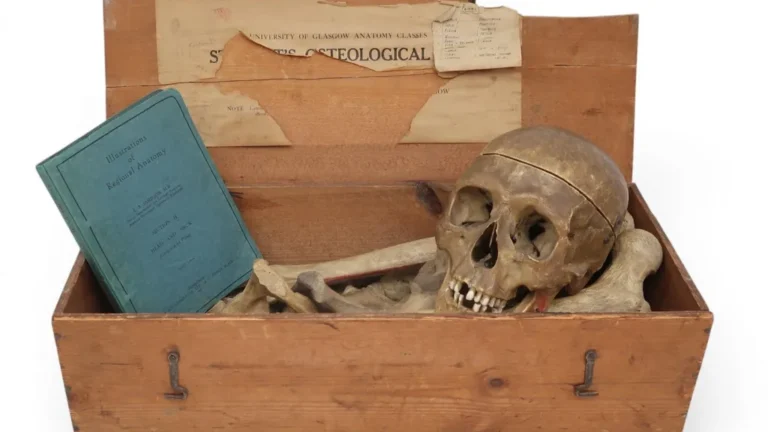
A Glasgow auction house founded by TV presenter Anita Manning has been criticised for offering human remains for sale. Human bones, including a skull, were due to go under the hammer on Friday, but Great Western Auctions withdrew the item for sale after being contacted by BBC Scotland News.
Kate Fitz Gibbon writes: The restitution of Asante-linked instruments from Los Angeles to Ghana exposes the limits of standard repatriation narratives, particularly when provenance is uncertain and human remains are involved. Rather than resolving historical injustice, the case highlights competing claims, ethical ambiguities, and the need for negotiated, context-specific outcomes.
The Wellcome Collection in London has committed to returning around 2,000 sacred manuscripts to the Jain religious community as part of a “landmark” restitution framework agreement. As a result of the agrrement, the manucripts will stay in the UK.
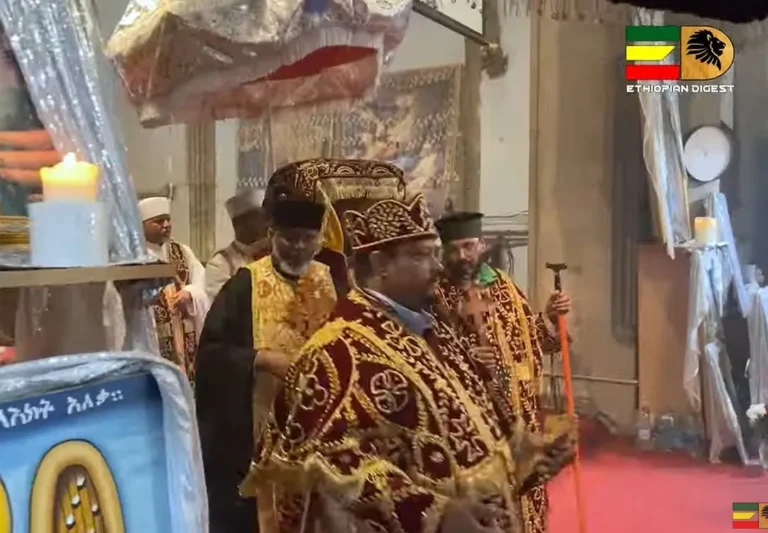
The Kings Own Royal Regiment Museum Trust presented ancient relics of Emperor Tewodros II of Abyssinia at the University of Cumbria in Lancaster o the Ethiopian Heritage Authority (EHA).
Plunder stolen from Ireland and stored in museums of former colonial powers should be returned. But there is no list of what is held abroad in ‘post-colonial museums’. Culute Minister also said that restitution cannot be a one-way street.
Minister Patrick O’Donovan said there was a “compulsion” on former colonial powers to return “loot” taken from people against their will.
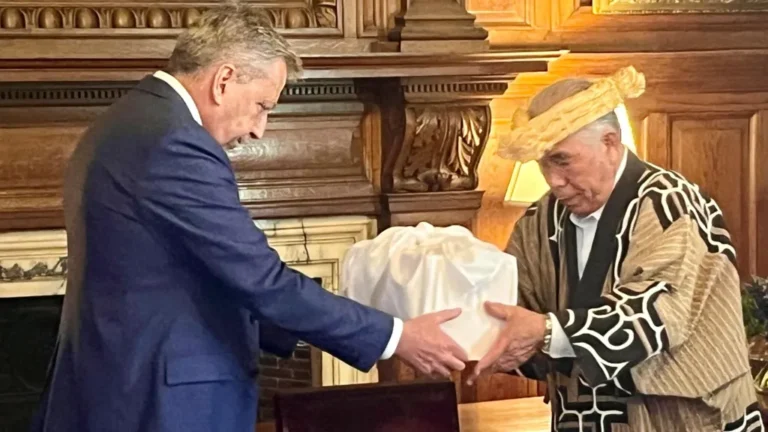
The Natural History Museum in London has formally returned seven ancestral remans to Japan as part of a ceremony this week. The museum hosted the Japan Government’s Minister for Ainu-related Policies and representatives from the Ainu Association of Hokkaido.
New York City Mayor Zohran Mamdani has called for the return of the priceless Koh-i-Noor diamond from the UK. The 105-carat diamond is part of the Crown Jewels but its ownership has been disputed by India, who claims that it was stolen during British rule. Mamdani was born in Uganda but has Indian roots.
This is about Yemen. About how an American foundation oversaw the exploitation of Yemen’s archaeological inheritance in British-occupied South Yemen during the early 1950s. About Yemen's policy to recover belogings that were lost in the colonial days. And it answers the question why, when and by whom Yemen was colonised.
The landscape of cultural property restitution has undergone a fundamental transformation over the past three decades. What was once a world governed by gentlemanly agreements between dealers, collectors, and museum curators has become a forensic battleground where digitized trafficking archives, scientific testing, and aggressive legal enforcement determine the fate of objects. This document provides a comprehensive analysis of the current state.
In recent years human remains in museums have been the subject of increasingly critical attention, both within the museum sector itself and in public debate. This raises a large number of ethical, legal, and practical questions for European museums. 'Museum meets University' organises this meeting at the crossroads of academic museology and museum practice.
Anthropologist Nancy Munn studied the Warlpiri people from 1956 to 1958. Now, with the repatriation of her collection to Australia, a younger generation is reunited with its ancestral heritage.
The V&A’s collections include around 90 objects from Ethiopia. The majority of these are in some way associated with a British military expedition to Ethiopia from 1867 – 68 against Emperor Tewodros. The museum also holds a selection of Ethiopian paintings from the 1940s. Restitution is out of the question. A provenance report.
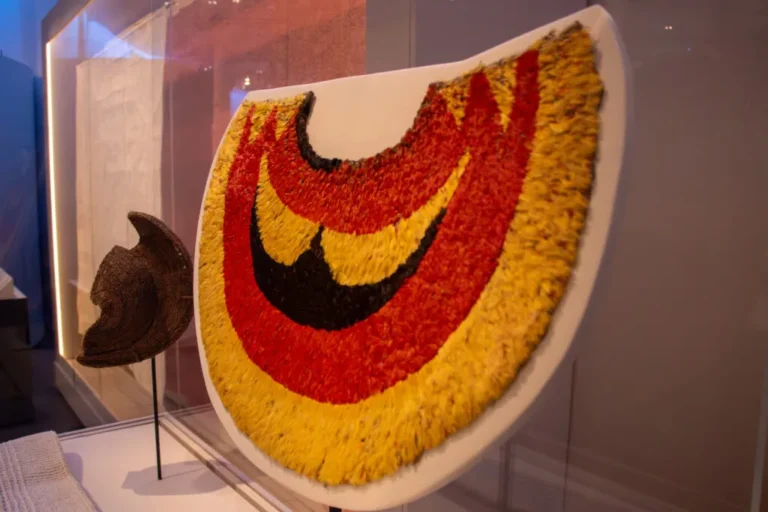
Makana Eyre thinks that the exhibit at The British Museum, “Hawaiʻi: a kingdom crossing oceans,” poses questions that have historically been uncomfortable for museums. Many items, though certainly not all, are sacred, intrinsically linked to ceremony, community, even Hawaiian sovereignty.
Late in 2025 , it was announced that five sets of Ainu ancestors' remains were to be repatriated to Japan from the Natural History Museum in London. This follows repatriations in 2017 (Germany), 2023 (Australia) and 2025 (Scotland). Inside Japan, the University of Tokyo has apologised to the Ainu community for collecting ancestral remains without their consent. The Japanese government, working with the Ainu Association of Hokkaido, supports the repatriations. How can this increase be explained?
South Africa has reburied the remains of 63 Khoisan people, among southern Africa's oldest indigenous communities. The remains were part of museum collections in the Hunterian at the University of Glasgow in Scotland and at the Iziko South African Museum in Cape Town. The remains were laid to rest at a historic monument near Steinkopf, in the Northern Cape province, during a ceremony attended by President Cyril Ramaphosa.
The remains of an unknown Aboriginal man taken to London in 1900, have been returned to Country in Sydney. A reburial was held for ‘Uncle’, conducted by Indigenous elders at Berowra Creek.
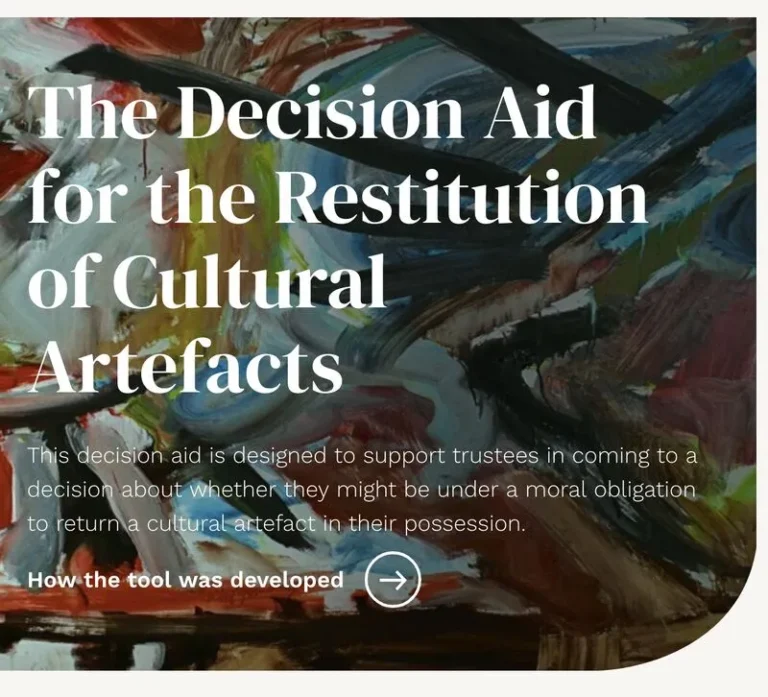
This DARCA decision aid is designed to support trustees of cultural institutions in coming to a decision about whether they might be under a moral obligation to return a cultural artefact in their possession.
The grandson of Ethiopian Emperor Haile Selassie I avoids confrontation and uses patience and strategy in oder to retrieve stolen objects from public and private parties in Great Britain. It is part of a wider demand for historical justice that continues to resonate across the African diaspora.
Descendants of Zimbabwe freedom fighters executed and beheaded in southern Africa by colonial British forces in the 1890s have called on the Natural History Museum in London and the University of Cambridge to help them find their ancestors’ looted skulls.
Exclusive Guardian study finds UK museums hold more than 260,000 items of remains, often in sacrilegious ways. MPs and archaeologists protest: It is a shameful legacy of colonialism.
The Ashmolean Musuem of the University of Oxfoird has returned a 16th-century bronze to the Government of India following research into the object’s provenance and liaison with Indian authorities.
‘Extraordinary’ golden lamb’s head pillaged in 1874 from what is now Ghana remains hidden in officers’ mess. The glistening golden ram’s head would seemingly be worthy of any museum, but it remains hidden within the regiment’s mess at Larkhill in Wiltshire.
Ganga Rajinee Dissanayaka discovered at a conference in Europe that Benin Bronzes, Egyptian antiquities and African collections were discussed. But Asia was unmentioned. And then when a colleague from Indonesia brought up the topic of Southeast Asian collections, the moderator nodded graciously and then moved on to another topic. Decolonisation, it appears, is an African story.
Jennifer Howes writes: Amaravati Stupa was the first Buddhist site in India to be systematically excavated by the British. Its first colonial excavation in 1816–17 led to 51 sculptures being removed from the site by amateur antiquarians. Some of these were sent to museums, but most of them were transported to the market town of Machilipatnam, where they were used to construct an eccentric marketplace monument.
Lewis McNaught writes: Britain’s Department for Culture, Media and Sport (DCMS) will review the exclusion it imposed on national collections that prevents them from returning cultural objects on moral grounds. The review provides an opportunity to reverse an unwelcome inconsistency in the UK Charities Act 2022.
Repatriation is urgent and important work and should be recognised as one of the UK museum sector’s top priorities. It is widely acknowledged that a lack of funding and capacity are two of the main reasons that more museums in the UK do not engage with repatriation, writes Amy Shakespeare.
Dan Hicks talks at the Society of Antiquaries of London (Burlington House, courtyard of the Royal Academy) about the return of ancestral human remains through the case of the Worcester College skull cup.
Tracing the course of Britain’s wars with the Asante alongside the course of its plundered relics, Barnaby Phillips weaves a thrilling and poignant tale of imperial ambition and African resistance. Travelling from the Gold Coast to the museum galleries, officers’ mess rooms and aristocratic homes of Britain, The African Kingdom of Gold confronts us with urgent questions about the legacy of Empire and, in particular, how our museums should respond.
Barnaby Phillips: The decision by the university’s Museum of Archaeology and Anthropology to return looted Nigerian treasures leaves larger institutions increasingly isolated. Which museum will be the next one? Uwa Igbafe: This case reflects a gradual transition from legal acknowledgement to the actual transfer of artefacts.
The British Museum’s attempt to frame its decision to ‘share’ a few colonial-era artefacts with the Chhatrapati Shivaji Maharaj Vastu Sangrahalaya (CSMVS) in Mumbai as a move to ‘decolonise’ its collection has been ridiculed by art historians as a ‘con’. There’s only one way to show contrition: return the stolen goods.
The V&A’s collection includes nearly 200 Ethiopian objects – from metalwork and textiles to photography, manuscripts, and paintings. One of the most exciting outcomes of this research, Molly Judd writes, was uncovering records for objects that had effectively become hidden within the collection.
[in English and Greek] Leading British legal experts have questioned the legality of the UK government’s decision to bar the country’s national museums from deciding independently on the repatriation of cultural objects.
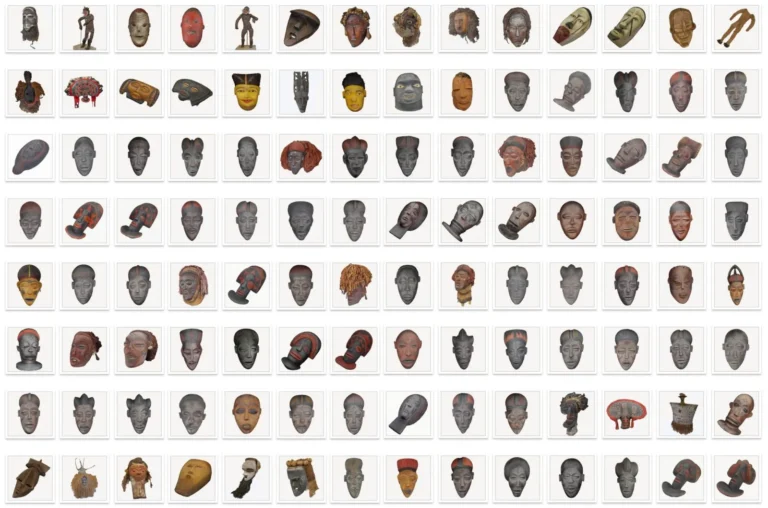
A new gallery at the Manchester Museum displays thousands of African artefacts, aiming to spark discussion on colonial-era looting and restitution. The initiative seeks public input on the origins and returns of these items, amid growing calls for repatriation of looted cultural heritage.
Emeline Smith writes: Long-term loans to former colonies are not restitution. They do not acknowledge historical wrongdoing, nor do they restore agency to source communities. The loan program is a rebranding exercise that preserves colonial power structures while pretending to dismantle them.
Heba Abd el Gawad writes: There is a point at which professional detachment becomes impossible. As a member of a community of descent as well as a curator, when I enter the Horniman store, I am not simply surveying collections. I am standing in the presence of my own kin. I encounter my Egyptian ancestors in spreadsheets, acid-free boxes and collection management plans.
The All-Party Parliamentary Group for Afrikan Reparations (APPG-AR) is calling for a ban on the public display of human remains without consent.
The group also recommended the establishment of a framework for museums to transparently audit their collections of human remains across the country as part of a briefing at the House of Commons last week.
Andreas Roth shows, the real story of the coral regalia does not fit the postcolonial narrative some want to attach to these artefacts. They do not provide a precedent for the return of Benin Bronzes.
David Abulafia writes: The history of the Rosetta Stone is not simply an Egyptian history. The inscription in three scripts, hieroglyphic, the less formal hieratic script, and classical Greek, is humdrum.
In April 2026, officials from the Japanese government and the Ainu Association of Hokkaido will travel to Britain to receive four of the five sets of remains, the government said Friday. The locations where the four sets were excavated are known.
Findings suggest that whilst there is strong support for retaining objects, namely under the guise of guaranteeing access for all peoples, there is also opposition from volunteers who feel that the British Museum is morally obliged to return objects.
A £1.1million Arts and Humanities Research Council (AHRC) standard grant has been awarded to an international team of scholars, archivists and filmmakers for a project on African film heritage restitution.
This article examines how an eighteenth-century decision to bureaucratize gift exchange continued to disrupt long-standing South Asian protocols of reciprocity and regard well into the twentieth century.
The aim of the project is to reveal and connect all collections of material made in Africa that are held in 32 Scottish museums, including lesser-known as well as better-known ones, and to connect these collections with relevant and interested diaspora and descendant communities.
The UK Government is to implement a change in law that will make it easier for museums in England and Wales to restitute objects from their collections on moral grounds. But national museums will be excluded from new rules.
It is well known that Australia's police perpetrated violence against First Nations throughout the colonial period, but their role in supplying Indigenous ancestral bodily remains and cultural heritage objects to domestic and overseas museums is little understood, nor too is whether they exceeded or abused their powers in doing so.
Ghana's Asante king has welcomed the return of 130 gold and bronze artefacts from the UK and South Africa some of which were looted during colonial times and others bought on the open market. 'These artifacts belong where their meaning was born'.
Yesterday, RM* published an item about the repatriation by museums in Great Britain of shrunken heads to Ecuador. Lewis McNaught explains that this is easier said than done. Given the particular cultural contexts of tsantsas (both making and taking), the need for further research and analysis have been agreed. According to him, no repatriation requests have been made to date and given the number of different groups involved, any future process is likely to be extremely complicated.
Several UK museums considering the future of “tsantsas” – also known as shrunken heads – in their collections following a visit by representatives of Shuar people from Ecuador, from whom the items originated. The delegates engaged with 68 human and seven animal tsantsas during their visit, along with other Shuar cultural objects.
There is growing debate around the ethics of displaying human remains. Against this background, the Museums Association (MA) has reviewed its Code of Ethics, and questions around storage and display of human remains are a key aspect.
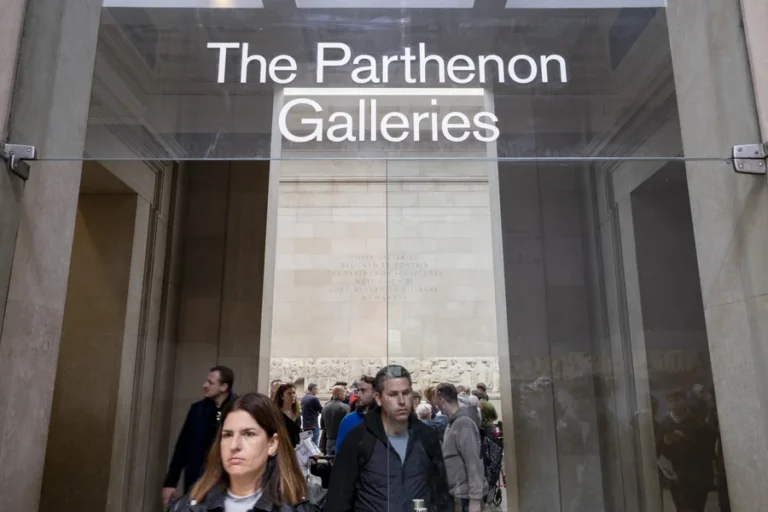
The British Museum has hosted a lavish fundraiser at 2,000 pounds ($2,668) per ticket, dubbed the "Pink Ball," in the room housing the Parthenon Marbles, igniting fierce criticism and reviving long-standing debates over cultural ethics and colonial restitution. Greek Culture Minister Lina Mendoni condemned as 'provocative indifference'. Here follows a comment by Global Times reporter Chen Xi.
Cultural leaders of an indigenous Ecuadorian community have called for the repatriation of a collection of shrunken heads in the Pitt Rivers Museum in Oxford [GB].
The Hunterian at the University of Glasgow, through the implementing agencies, Iziko Museums of South Africa and the South African Heritage Resources Agency (SAHRA), and in partnership with the Northern Cape Reburial Task Team, have jointly announced the repatriation of ancestral human remains to South Africa.
When tourists tread the halls of Sri Lanka’s national museums or glance over the plaques at sites of historical significance, they are reading stories of the past. But whose? Sri Lankan ethnographer Ganga Rajinee Dissanayaka wonders who made that judgement of what is worth saving, worth memorialising, worth forgetting?
The British Museum has announced that it will be holding a charity ball on 18 October 2025 to collect funds to further, inter alia, its international partnerships. This makes Kwame Opoku having a closer look at it.
Hugh Johnson-Gilbert and Alexander Herman write: It has long been the view in the UK that national museums are restricted by law from repatriating collection objects. But will legislation passed three years ago, the Charities Act 2022, point the way ahead?
Kulasumb Kalinoe (East Sepik area, Papua New Guinea; currrently James Cook University, Australia) focuses on the collection and removal of cultural material from Papua New Guinea (PNG) during the colonial era. She discusses views among the Papua New Guinean diaspora in Australia on museums and PNG collections, and argues that cultural heritage issues must be addressed before the work of decolonisation can begin.
Windsor Castle’s splendour hides a legacy of colonial loot, from Tipu Sultan’s swords to the Koh-i-Noor, raising debates on restitution and justice, Jan Muhammad Shaikh writes.
Muhammad Nishat Hussain writes: The 100th anniversary of the first formal excavation at Harappa (Punjab, NE Pakistan) is more than a commemoration of a century-old dig. It is an opportunity to reimagine how Pakistan studies and safeguards its past. Since the 1970s the country has tried to regain lost treasures. In vain.
Rohan Fernando emphasises the colonial roots of India’s great contemporary museums and the role of the British in rediscovering India’s past. Muhammad Nishan Hussain [University of Lahore] takes an opposite view and sees them as a tool of colonial control.
BREAKING: Three shrunken heads of South American persons and one hand of a mummified person from Egypt are currently offered by Hannam's Auctioneers, The Old Dairy Norton Farm, Selborne, GU34 3NB, Hampshire, UK.
In 2021, the University of Aberdeen returned a looted Benin object to the Oba of Benin, becoming the first UK institution to agree to an unconditional return. Neil Curtis [University of Aberdeen] outlines the process of giving back a pillaged object without a repatriation request being made.
The objects, comprising spears, spear throwers and a club, were collected in the late 19th and early 20th centuries and have been held in the museum’s collection for decades.
There has been a lack of academic focus related to how public facing or ‘live interpreter’ volunteers are strategically utilised to support the delivery of museum decolonisation, as well as the implications this has for volunteering.
For several years, Bristol Museum and Art Gallery and the Australian Institute of Aboriginal and Torres Strait Islander Studies (AIATSIS) have been discussing returns of cultural heritage to Australia. This event will reflect on those discussions with community members and AIATSIS staff.
Social media is helping drive trade in skulls, bones and skin products as UK legal void risks new era of ‘body snatching’. Paul Boateng (Labour Party), who will meet the culture secretary, Lisa Nandy, next month to appeal for a change in the law, has raised specific concerns about the trade in remains of ancestors from Indigenous communities.
Dan Hicks writes: Genuine transparency will require the V&A channelling its resources into creating a truly comprehensive public database of the artefacts, images and archives that it holds.
Paul Dailey (Guardian Australian columnist) writes: Bodies and body parts have long been part of collections of imperial plunder over the years – but museums must understand that attitudes have moved on.
The Indian government has secured the repatriation of ancient gem relics linked to the Buddha’s remains, two months after it halted their auction in Hong Kong. Indian prime minister, Narendra Modi, said the return of the Piprahwa gems after 127 years was “a joyous day for our cultural heritage”.
The June 2025 report by a working group of Edinburgh University DECOLONISED TRANSFORMATIONS CONFRONTING THE UNIVERSITY OF EDINBURGH’S HISTORY AND LEGACIES OF ENSLAVEMENT AND COLONIALISM focusses mainly on slavery an its current impact. At the en dit has an interesting recommendation for the university's Anatomical Museum and its 200 skulls.
On 7 July 2025, the French National Assembly has approved the restitution to Ivory Coast of the Djidji Ayôkwê, an important talking drum, stolen in 1916. In the same period, the British Museum came with a statement that it is unwilling to restitute an equally important drum to the Pokomo council of elders in Kenya.
[ in Portuguese ] A delegation from Nagaland in north-east India travels to the Pitt Rivers Museum in Oxford to negotiate the return of remains and artefacts taken during the colonial period.
High-profile figures, including the former UK Prime Minister Liz Truss, have written a letter criticising what it claims is an “accelerating” campaign to return the Parthenon Marbles from the British Museum to Greece.
The remains of a woman, described as a “non-European skeleton,” were given a full funeral service by Highgate School, the fee-paying secondary in Highgate Village. No relatives could be found.
An institution is asking its visitors for their view: The Manchester Museum is running a public consultation about the future of Asru, a woman who lived in Thebes, southern Egypt
The path to true restitution requires more than symbolic gestures, demanding that Britain repeal its obstructive laws, France accelerate its glacial restitution process, and all former colonial powers establish transparent frameworks for repatriation.
Catharine Titi examines the history of a series of objects in the museum's possession that are currently being claimed by their countries of origin and reviews the institution's inadequate response to the repatriation debate.
Mike Rutherford, curator of Zoology and Anatomy at the Hunterian, University of Glasgow, speaks at a conference in Manchester. Case-study: Repatriation Jamaican Giant Galliwasp.
'Mobile Heritage' explores how diverse digital technologies have allowed for new types of mobilities and introduced a novel set of practices, interventions, and politics for heritage collections, archives, exhibitions, entertainment, conservation, management, commerce, education, restitution, activism, and regulation. With a case-study about digitalised ancient manuscripts from Ethiopia in the British Library.
Quoting the recently deceased Kenyan author Ngũgĩ wa Thiong'o on decolonisation of the mind, Kwame Opoku critically analyses a recent interview in The Times with Nicholas Cullinan, the new director of the British Museum.
A delegation of Naga elders and leaders, along with representatives from the Forum for Naga Reconciliation (FNR) and Recover, Restore, and Decolonise (RRaD), gathered at the Pitt Rivers Museum (PRM), University of Oxford, to initiate the repatriation of Naga ancestral human remains.
According to the Greek newspaper Kathimerini, the Greek Government and the British Museum have made substantial headway in discussions regarding the Parthenon Sculptures.
In a five pages long joint statement, eight archaeological organisations from across the UK said a “cross-sector consultative forum” should be established to enable a wide range of viewpoints to be heard on any proposed changes to human remains legislation and practice.
In The Art Newspaper, Ben Luke wonders whether museums are ‘guilt tripping’ their visitors and concludes they aren’t doing enough.
Engaging with the difficult histories behind objects has deepened my experiences at cultural institutions — and the fact it is different for everyone is a good thing.
The House of Ni’isjoohl Memorial Pole, stolen in the 1920s, was rematriated from National Museums Scotland (NMS) in 2023. Noxs Ts’aawit (Dr. Amy Parent) of The Nisga’a Nation and Dr. John Giblin from NMS outline the process of international cooperation.
During the 19th century colonial wars, the library of the rulers of Palembang in Sumatra was looted by British and Dutch troops; its manuscripts were transported to other places and some of them are lost. Alan Darmawan looks for traces of some of these mishandled treasures.
At the global Museum & Heritage Awards 2025 the Pitt Rivers Museum won Partnership of the Year for the Maasai Living Cultures Project. The annual award celebrates the best in the world of museums, galleries plus cultural heritage visitor attractions.
The director of the British Museum, Nicholas Cullinan, has ruled out any move towards allowing restitution from its collections as he focuses instead on fostering global collaboration.
The paper 'Nkali and Kolo-collecting in Eastern Nigeria: interrogating colonial collections of ọfϙ and Ikenga, Igbo objects of sovereignty and authority' explores the changing narratives of Ọfϙ and Ikenga, sacred objects of sovereignty and authority among the Igbo of Eastern Nigeria, currently in the Museum of Archaeology and Anthropology (MAA), University of Cambridge (UK).
British Culture Secretary Lisa Nandy: “In the arts and creative industries, Britain and India lead the world and I look forward to this agreement opening up fresh opportunities for collaboration, innovation and economic growth for our artists, cultural institutions and creative businesses." (Not a single word about restitution)
The Natural History Museum in London hosted a formal ceremony on 10 April 2025 with Traditional Custodians from Queensland communities to mark the return of 36 First Nations ancestors.
With the deaccession policies of Britain’s national museums so diametrically different from Britain’s larger number of regional and university collections, learning how museums unencumbered by national legislation are dealing successfully with the same legacies of inequality and trauma is revealing.
A 1000-year-old statue of the Boddhisattva Guan Yin lives in The British Museum. When it emerges that the statue was stolen from its original home, the museum attempts to deflect both the public response and controversial repatriation claims from the Chinese government.
This gold crown with stunningly delicate filigree belonged to Emperor Tewodros II, the King of Kings of Abyssinia. It was the most remarkable artefact looted during the British Army’s 1868 siege of Maqdala, the king’s hilltop fortress capital.
According to the Japanese government, the remains of three Ainu Indigenous people that were kept at the University of Edinburgh in Scotland will be returned.
The repatriation of African art is gaining momentum, but a number of highly important and symbolic pieces remain in the hands of the continent’s former colonisers.
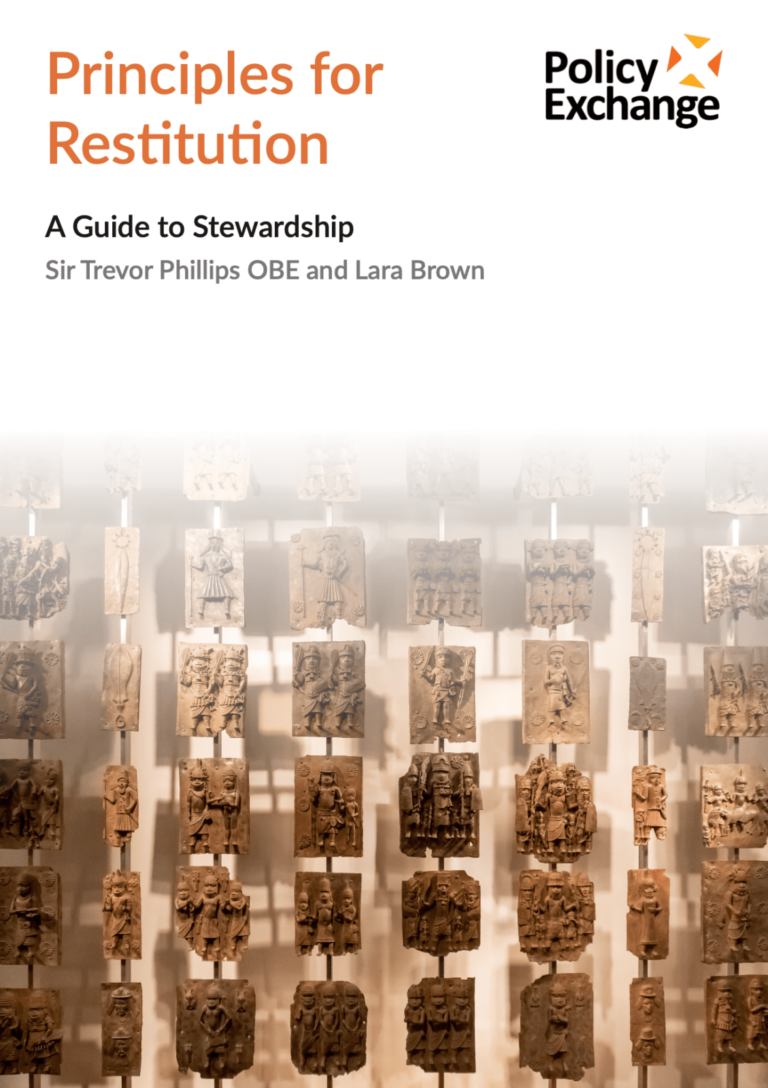
The British Museum must not succumb to pressure to return the Benin Bronzes to Africa, as the case for their restitution is 'weak', Sir Trevor Phillips says.
Muhammad Nishat Hussain explores how Pakistan has been doubly deprived of its cultural heritage, first through British colonial looting and later through India's post-Partition retention of thousands of artifacts.
After more than 170 years at the Scottish University of Aberdeen, the remains of a young Aboriginal man who was killed on his Country have returned home.
European governments negotiate restitutions only with the governments of countries of origin. The collections they negotiate usually are state-owned and contain valuable, not rarely iconic objects. The path followed by governments of former colonies is quite similar. It is the path of what Laurajane Smith called the authorized heritage discourse (AHD), where only a limited part of a country’s heritage dominates in national narratives and public policies. This approach has serious limitations.
The British Museum has welcomed a new slate of trustees, including Dr. Tiffany Jenkins, an academic and author staunchly opposed to returning stolen antiquities like the Parthenon Marbles.
Geraldine Kendall Adams delves into the moral and ethical arguments that surround the highly sensitive issue of human remains held in British museum collections.
The display of human remains in museums has long been a contentious issue. Earlier in March, the All-Party Parliamentary Group for Afrikan Reparations (APPG-AR) published the report Laying the Ancestors to Rest. Returning African human remains is time- and money-consuming. With the ongoing budget cuts, it becomes harder to return them.
Until 25 May 2025, the Louvre Abu Dhabi unveils 'Kings and Queens of Africa: Forms and Figures of Power', an exhibition celebrating 350 works of African art and majesty, most of them on loan from Musée Du Quai Branly-Jacques Chirac. Is this a manner to postpone their restitution?
The Tasmanian Aboriginal Centre and The Hunterian at the University of Glasgow have announced the repatriation of a rare shell necklace from The Hunterian collection in Glasgow to its home in Tasmania.
This dissertation investigates the histories and itineraries of Abelam collections from the East Sepik Province of Papua New Guinea held in museums in Europe (the Netherlands, Germany, Switzerland and the UK), Australia and Papua New Guinea.
The African Collections Futures project seeks to develop a better sense of where Africa-related objects and materials are present in diaspora and communities of origin have with these objects, and what more can be done. The scope covers the nine institutions – eight museums and the Botanic Garden – that make up the University of Cambridge Museums (UCM), the University Library, and less well-known collections such as those in various University departments and affiliated institutions.
The All-Party Parliamentary Group for African Reparations (APPG-AR) has produced a policy brief, ‘Laying Ancestors to Rest’, which makes the case that the display and sale of African ancestral remains by British institutions “causes profound distress to diaspora communities and countries of origin”.
Tristam Hunt, director V&A Museum, discusses the contradictory state of the restitution debate in Great Britain (GB): on the one hand, a quickening rhythm of returns from university and regional museums and on the other, continued confusion around deaccessioning contested objects from national collections such as the V&A and British Museum (BM).
RM* saw reports from AP, Hyperallergic, DutchNews, Jerusalem Post, ArtDependence, Punch, Arise, Voice of Alexandria, Devdiscours, Pinnacle Gazette and AllAfrica.
The British Museum has come under fresh pressure to hand over its Benin Bronzes after the Netherlands returned more than 100 of the artefacts to Nigeria.
Art historian Nana Oforiatta Ayim criticises Western voices for still dominating the restitution discourse, ‘whether they are directors, academics or curators. She rarely hears the voices from whom the objects were taken.
The focus of the campaign is on the process of retrieval of antiquities through bilateral cooperation and partnership, in a manner consistent with existing international arrangements. Great Britain has the most extensive collections.
A foundational handbook for critical heritage research about Africa and its diaspora. Part III African Objects and the Global Museum-Scape is relevant for RM*.
Collections in private hands and the trade can contain important objects, while no one has a grip on them. An example is the 18th-century sword stolen by British troops from Seringapatam in India that was featured at the Bonhams auction on May 23rd, 2023.
Buckingham Palace has declined a request to return the remains of an Ethiopian prince who came to be buried at Windsor Castle in the 19th Century. Prince Alemayehu was taken to the UK aged just seven and arrived an orphan after his mother died on the journey.
Unlike the British Museum and other UK national museums, the Royal Collection is able to deaccession, provided that this is advised by its trustees and authorised by the monarch. The collection is not owned personally by Charles, but he holds it in trust as sovereign to pass on to his successor.
The question of stolen cultural property during the colonial era is not just one of legality; it is deeply embedded in morality, historical injustice, and the unequal dynamics of power between former colonies and colonisers, argues dr. Naazima Kamardeen.
South Africa's Department of Sports, Arts and Culture is preparing to repatriate human remains which were allegedly stolen from graves in Port Alfred, in the Eastern Cape and other places. They currently are in the US and Europe.
Much ink has been spilled on the Parthenon marbles, mostly on the ethical and cultural merits of their repatriation. But what has generally not been considered are the legal merits of their return in light of contemporary international law.
Museum in Koko, Niger Delta, commemorates important exiled merchant prince Nanna Olomu . The restitution focus in Nigeria should not only be on Benin objects.
Who owns stolen art? Today on the show, the bloody journey of a Benin Bronze from West Africa to the halls of one of England's most elite universities — a tale of imperialism, betrayal, and the making of the modern world.
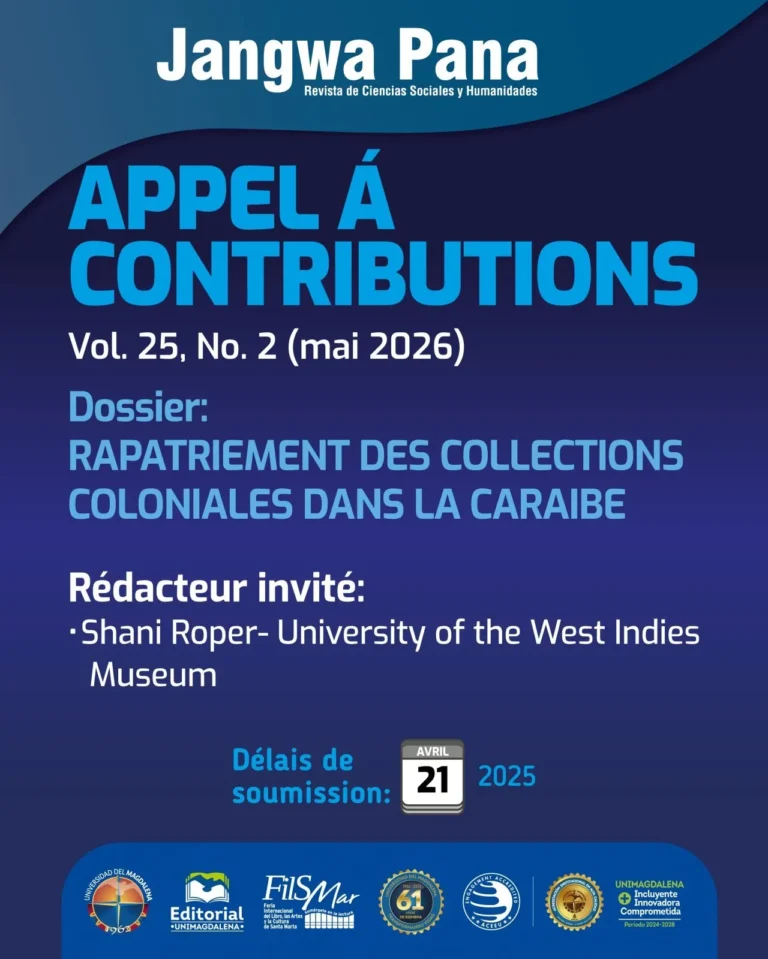
[ in English, French and Spanish ] This call invites researchers and academics from all areas of social sciences and humanities to submit their work for a special issue of Jangwa Pana dedicated to the repatriation of colonial collections in the Caribbean. Deadline 21 April 2025.
[ in Englis, in French ] The piece brought back by British Captain James Cook in 1771 is said to be the first Oceanian sculpture collected by a European.
With joy and ululation two families from the Loita clan of the Maasai in Narok South received 98 cows from Oxford University for ‘stolen’ cultural artefacts.
Prince Ermias Sahle-Selassie, the grandson of Ethiopia’s last emperor, will ask the universities of Oxford and Cambridge to return artefacts stolen by British soldiers in 1868.
An exquisite diptych which links Albrecht Dürer and Christian Ethiopia is being investigated at the British Museum, raising a fascinating story of cross-cultural links.
A YouGov poll, commissioned by the Parthenon Project, suggests the majority of Brits would back returning the sculptures to Greece in a "cultural partnership".
The Koh-i-Noor diamond, a 106-carat gem that is part of Britain's crown jewels, has been back on public display after initially being absent at Charles III's coronation. The diamond was gifted to Queen Victoria after Britain's East India Company formally annexed the Kingdom of Punjab in 1849.
Joint research on the 1868 Maqdala expedition led us to question assumptions about the legacy of empire in museums and to scrutinise unexpected connections in the history of museum collections.
Why is research into colonial collections in the private sector - I mean art dealers, auction houses and private collectors - so tough? The main reasons is that most of them have built a wall around themselves, and there is rarely a hole in this wall through which an outside observer can look inside their closed bulwark.
Emails leaked to BBC News claim the British Museum was alerted by Ittai Gradel, an antiquities dealer, to items being sold on eBay in 2021, but that it ignored the report.
Political turmoil across the continent is hampering plans for national structures to return colonial-era heritage. But the UK, once a laggard, appears to be preparing to review laws
During the European expansion constant fighting and violence and the taking of spoils of war went hand-in-hand. Palaces, shrines, homesteads and entire villages were plundered and destroyed. In the restitution debate, the focus is mostly on state-collections resulting from these confrontations. There is ample evidence, however, that many more parties were involved. This blogpost has some of the evidence.
The extensive article 'The ghosts are everywhere, about a museum beset by colonial controversy, difficult finances and the discovery of a thief on the inside.
Manchester Museum, UK, has handed over 174 items to the Australian Aboriginal Anindilyakwa Community, marking one of the largest restitution projects ever undertaken in the UK.
Museums from Glasgow to Cambridge are proactively repatriating objects. Glasgow has become the first UK museum to repatriate objects to India (“a very emotional event”, as Glaswegians of Indian heritage said).
The National Museum of Scotland nearly had to call off the high-profile repatriation of a totem pole to the Nisga’a in Canada after the Scottish Government reneged on a promise to cover costs.
The story of the discoveries is being told for the first time by Elisabeth Goring and her successor, Dr Margaret Maitland, in the Proceedings of the Society of Antiquaries of Scotland of 30 November 2023.
The semi-documentary sheds light on the Qing Dynasty (1644-1911). Taoist abbot Wang Yuanlu, who was the caretaker of the Mogao Caves (UNESCO World Heritage site) in Dunhuang in Northwest China's Gansu Province, discovered the Library Cave at the site, a repository of over 50,000 items dating back to the 4th to the 11th century.
Among the most intriguing objects in the British Museum is the Asante Ewer, a bronze jug made in England for Richard II in the 1390s, which somehow ended up in West Africa.
In 'The Parthenon Marbles Dispute', Alexander Herman examines the entire contentious history of the Parthenon marbles from their creation up to the famous restitution debate of the present day.
‘I’m a strong believer that trustees of museum collections should have autonomy over those collections, and be able to make the case whether they should retain them within the UK or loan them to other museums around the world – or indeed begin a conversation around restitution and repatriation.’
British Museum chair George Osborne (and Lord Cameron) criticise Sunak over Parthenon marbles. Osborne says the row gave the Labour Party a line of attack. Rishi Sunak opened the door to a ‘devastating line of attack’ from Labour by snubbing his Greek counterpart, PM
This is the “age of apology” for past wrongs. Reams of articles in Western media are devoted to former colonizer countries and yet, this is rarely the result of requests from former colonies. Example India.
British High Commissioner in Nigeria: UK museums operate independently of the government, as decisions relating to the care and management of UK collections are addressed by museum trustees, with claims for restitution addressable to relevant museums.
Nick Merriman, the chief executive of the Horniman Museum in south London, says inclusion of difficult stories of slavery and empire is not wokery, but ‘simply good history’.
Tony Blair considered a “long-term loan” of the Parthenon Marbles to Greece in the hope of support for a London 2012 Olympic Games bid, bypassing the issue of ownership.
In 2023, Sri Lanka retrieved six objects from the Netherlands. The hope is that future initiatives will lead to the return of more Sri Lankan artefacts from other countries and even private collectors, fostering a stronger connection between the country and its cultural heritage.
In 1863, Emperor Tewodros II of Abyssinia took a British consul hostage; five years later, the British sent a punitive expedition. This military expedition shaped later campaigns in Sudan and West Africa in the1890s. What was new for Maqdala was the inclusion of a member of staff from the British Museum.
British Museum and V&A to lend Ghana looted gold and silver. Tristram Hunt, director of the V&A, said the items were the equivalent of “our crown jewels” but added that the three-year was “not restitution by the back door”.
During Mongolia’s Minister of Culture, Nomin Chinbat’s visit to Britain, not only the 2027 exhibition Arts of the Mongol World was discussed but also provenance research and restitution. Mongolia’s treasures ‘provide a window on the country’s history and demonstrate the vibrancy and captivating nature of our nomadic culture’.
Rachel Ama Asaa Engmann of the Christiansborg Archaeoogical Heritage Project helps to understand how the agreement with one American and two British museums was reached.
The BM is tackling an influx of social media trolls from Chile, who have flooded the museum’s Instagram posts calling for the return of a moai statue, one of the stone monuments from Easter Island.
Fifty-four years ago, Ghanaian Nii Kwate Owoo was granted access to the storage facilities of the British Museum. The result was You Hide Me – a 40-minute film depicting Owoo and his colleague discovering an enormous volume of colonial objects hidden away in the institution’s basement.
Two British museums, the British Museum (BM) and the Victoria and Albert Museum (V&A) have agreed to return to Asante/Ghana respectively 15 and 17 looted objects. It is, however, a loan.
If you came here for a vicious takedown or a strident defence of Tristram Hunt’s position on “colonialism and collecting”, you might be slightly disappointed.
Guyana is seeking the return of various artefacts including a letter written by Quamina, the leader of a 19th century slave rebellion, held by the School of Oriental and African Studies, University of London (SOAS).
A group of 11 sacred Ethiopian altar tablets, which the museum acknowledges were looted by British soldiers after the Battle of Maqdala in 1868, have never been on public display and are considered to be so sacred that even the institution’s own curators and trustees are forbidden from examining them.
Robert Jenrick, MP Conservative Party since 2014 and Minister of State from 2022 to 2023, writes: Our museums have fallen into the hands of a careless generation. Foreign governments seeking restitution of art calculate that our institutions – the UK itself – lacks the self-confidence to fight back.
The British Museum (‘BM’) has a collection of 224 objects from or likely from Cambodia, which were acquired across a period spanning from the end of the nineteenth century to the beginning of the twenty-first century. In this figure BM’s collection of banknotes, coins and medals from Cambodia is not included.
32 Gold and silver items have been sent on long-term loan to Ghana by the Victoria & Albert Museum (V&A) and the British Museum (BM). They were stolen during 19th century conflicts.
Trinity College and the Museum of Archaeology and Anthropology (MAA) agreed in March 2023 to return the spears to descendants of the Gweagal people who crafted the spears more than 250 years ago. One year later, they were handed over.
The debates on the ownership of contested cultural objects bring forth questions regarding the representation of history. But might these debates also lead to the fabrication of history?
Semley Auctioneers – based in Dorset – have made 18 skulls available for auction and estimate each skull will be sold for between £200 and £300. The auction is scheduled to take place on 18 May 2024.
Ghanaians flocked to the Manhyia Palace Museum in Kumasi, the capital of Asante region, to welcome the 32 items home. "This is a day for Asante. A day for the Black African continent. The spirit we share is back," said Asante King Otumfuo Osei Tutu II.
There are obvious similarities between the episode in 1874 and 1896 (Asante Kingdom) and 1897 (Benin Kingdom). Both kingdoms have been asking for restitutions for decades. Barnaby Philips explores why is it taking Nigeria so long to put its returned treasures on display?
Many artefacts in UK collections were taken along with a war indemnity of 50,000 ounces of gold following the Third Anglo-Asante War, then auctioned off to collectors of major museums by the Crown jeweller in order to raise funds for injured soldiers.
Conversations between communities and institutions around the world are ramping up, with museums and universities agreeing to return culturally significant items. But in the case of the British Museum, there is one big roadblock.
Lewis McNaught investigates why the British Museum, which already has the authority to return a collection of Tabots (sacred objects) to Ethiopia, is failing to comply or explain why it won't return the Tabots.
On Wednesday (Nov. 20, 2024), Labour's Bell Ribeiro-Addy told the Commons that human remains are sold at auction and on social media and asked the government to end what she described as a "depraved practice."
The Federal Government has vowed to pursue all necessary measures, including legal action in international courts, to recover cultural artefacts stolen from Nigeria.
At a United Nations meeting, Turkey’s spokesperson denied that the Scottish diplomat who took them, Lord Elgin, had permission from the then-ruling Ottoman Empire. “We are not aware of any document legitimizing this purchase,” Zeynep Boz of the Turkish Culture Ministry told the UNESCO committee that oversees restitution cases.
The barriers are legal, as many of these items are held by private individuals rather than the state, Buddhasasana, Religious and Cultural Affairs Minister Vidura Wickremenayake said.
Popular British actor and writer Stephen Fry has compared Lord Elgin’s removal of the Parthenon sculptures from Greece to Nazi Germany stealing the Arc de Triomphe during the occupation of France.
David Guido Pietroni, Italian publisher, film, and music producer, offers an overview of the BM’s history, not only of its large collections of artworks, antiquities, and collectibles, but also of its large collections of controversies: colonial loot, Nazi-looted art works, stolen and lost objects, and links with big business.
In 1905, a colonial British officer killed Koitalel Arap Samoei, the supreme leader of the Nandi tribe. According to oral history, his severed head was taken to the UK. The Nandi have been searching for it ever since. The Nandi have been searching for it ever since.
Kwame Opoku wonders whether loans will be the future status of African objects in western museums. If so, western museums remain in control of what is not theirs.
The British Museum (BM) has an extensive collection of Chinese antiquities. Historically, many assumed that these treasures were obtained through imperialist plunder. However, recent findings by US historian Justin Jacobs present a different narrative, suggesting that a significant number of the artifacts in question were willingly given to the British Museum by Chinese officials.
In 'The Making of Museums in Nigeria - Kenneth C. Murray and Heritage Preservation in Colonial West Africa' Amanda H. Hellman, director of the Vanderbilt University Fine Arts Gallery, writes: In November 1927, Kenneth Crosthwaite Murray (1902-1972) left for Nigeria to develop the art program in the British colony.
The Parthenon Marbles, Rosetta Stone and Benin Bronzes are just some of the ‘contested objects’ in the British Museum (BM). The Marbles are ‘not going to be on the prime minister’s agenda. His focus will be on support for Ukraine and the urgent need for a ceasefire in Gaza.’ They remain ‘a matter for the BM, and the government has no plans to change the law to permit a permanent move of the Parthenon Sculptures.’ But the BM has more contested collections.
An estimated 350,000 African artefacts and manuscripts, as well as human remains, photographs and natural history specimens, have been found in the stores and archives of the eight museums and the Botanic Garden which together make up the University of Cambridge Museums, as well as the University Library and less-well known collections in university departments and institutions.
Keir Starmer reiterates support for British Museum reaching deal with Greek PM. “The mood music has completely changed,” said one source close to the negotiations.
In October 2024, a 19th-Century skull from the north-eastern Indian state of Nagaland was up for auction in the UK. The horned skull of a Naga tribesman was among thousands of items that European colonial administrators had collected from the state.
Jamaica will intensify efforts for the repatriation of its cultural and natural heritage artefacts taken from Jamaica by the British and housed in museums and universities in the United Kingdom. The negotiation for the return of a whole repository of artefacts from the Tainosis is ongoing. The country also works on reparations related to the slave trade. Recently, Minister of Culture Olivia Grange received a delegation from churches in the United Kingdom during which the United Reform Church apologised for its role in this trade.
As one of the oldest educational institutes in Scotland, the University of Edinburgh holds more than a million items in its historic collections. Around 13,000 are anatomical artefacts and of these, more than 1,800 are skulls. A large number of the skulls in the collection were amassed during the colonial period.
In November 2022, the Horniman Museum in London brought back six Benin objects to the Oba of Benin. Horniman’s Nick Merriman was rather enthusiastic. Independent researcher Mike Wells takes a hard look at Merriman’s historical and factual claims regarding the Horniman’s ‘research and consultation process’ and the museum’s arguments supporting return of the bronzes.
From this contribution by BBC correspondent Adaobi Tricia Nwaubani: Kenneth C Murray, a British colonial art teacher, was a key figure in Nigeria’s museum history. Murray was invited to Nigeria at the request of Aina Onabolu, a European-trained Yoruba fine artist who convinced the colonial government to bring qualified art teachers from the UK to Nigerian secondary schools and teacher training institutions.
The enduring controversy surrounding the Parthenon Sculptures, one of the world’s most prominent cultural property disputes, may see significant progress in 2025, according to The Economist’s The World Ahead 2025 report.
In June 2024, 39 artifacts were formally handed back to the government of Uganda by Britain's University of Cambridge. While the return is technically a three-year loan between museums, it is extendable, and could see them remain in their country of origin.
Culture Minister Fadli Zon told lawmakers that the United Kingdom is unwilling to repatriate historical artifacts and other antiquities taken from Indonesia in the 19th century. UK troops, led by Thomas Stamford Raffles, raided the Yogyakarta Palace in June 1812, seizing valuable items, including historic manuscripts.
A bamboo sunhat that was looted from the Kenyah Badeng people of Sarawak, Borneo, during British-led war expeditions in 1895 and 1896, is returning home. It is the Pitt Rivers Museum's first object to be returned (as opposed to ancestral remains).
Early in October 2024, RM* distributed news about an auction by Swan Fine Art at Tetsworth (UK) of Naga human remains estimated at 3,500 – 4,000 UK pounds. This had infuriated the Forum for Naga Reconciliation and many others.