ThomasFues writes about a recent report by the Culturebene portal in Cameroon that the government there is getting serious about the repatriation of human remains and cultural belongings from Germany. It is reported that Culture Minister Bidoung Mkpatt has granted the Maka community permission to recover the remains of their ancestors that were looted in 1905.
[ In Dutch ] The French parliament has passed a law that makes it easier to return at least 150,000 pieces of art stolen during the colonization. "In France, people prefer not to talk about historically disturbing topics." an interview with art historian, Bénédicte Savoy
Salinan Tribal Councilmember Robert Piatti remembers when he realized that what was sitting beneath a university campus wasn’t just archival material—it could also be people. “I was a reporter at Cal State Long Beach,” he said. “In the humanities building, down in the basement, there were boxes and boxes of bodies. And it was awful, really awful.”
Kate Fitz Gibbon notes that Chinese cultural claims to the return of artifacts looted during the attack on the Summer Palace in 1860, the Boxer Rebellion of 1900, and the Japanese invasion in the first half of the 20th century support the country's anti-Taiwanese and nationalist propaganda. But she also wants China to become more self-critical, not to exaggerate about the number of lost relics and to also tackle the abuses in its own country.
Kate Fitz Gibbon writes: The restitution of Asante-linked instruments from Los Angeles to Ghana exposes the limits of standard repatriation narratives, particularly when provenance is uncertain and human remains are involved. Rather than resolving historical injustice, the case highlights competing claims, ethical ambiguities, and the need for negotiated, context-specific outcomes.
Earlier, the French government supported a bill allowing for the remains of people who were exhibited in colonial-era “human zoos” in Paris to be returned to their ancestral lands in French Guiana. Now senators have also declared their support for the law. It meets a long-standing demand of Indigenous communities in France’s overseas territories, acknowledging a dark chapter from the country’s past. The association Moliko Alet+Po has played a crucal role.
[in French] With the law on the restitution of cultural property adopted, CNRS researcher Catharine Titi questions, in Le Monde, the legal and archaeological issues related to this question through a reflection on the fragments of the Parthenon at the Louvre. France could draw inspiration from the examples of the Vatican, Italy and Germany.
Open Restitution Africa (ORA) describes restitution as a pan-African process of remembrance, research, and the digital sharing of knowledge – an interview with Chao Tayiana Maina and Karen Ijumba. 'The bulk of the work in the restitution lies on the African side: the work of reintegration, the negotiation, and supporting people in dealing with the return of the artifacts.'
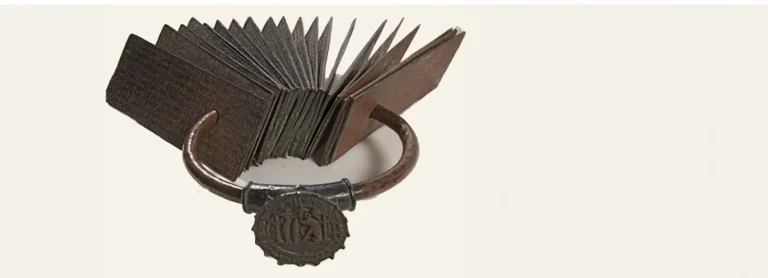
The Chola Plates , historical objects originating from India held by University Libraries Leiden (UBL) have been handed over to India at the occasion of India's PM Modi's visit to the Netherlands. The restitution of this heritage follows the advice of the Dutch (national) Colonial Collections Committee.
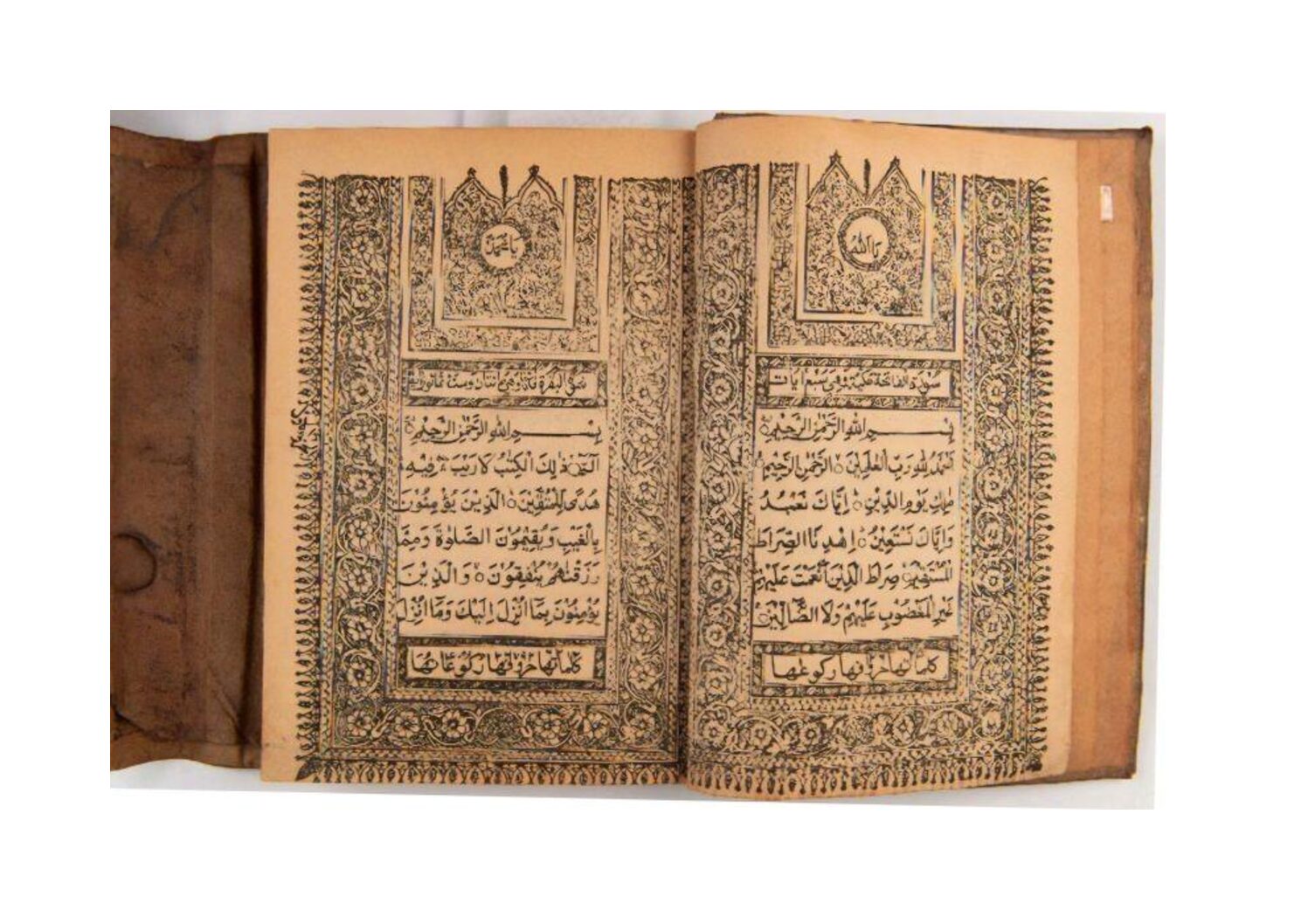
The Wellcome Collection in London has committed to returning around 2,000 sacred manuscripts to the Jain religious community as part of a “landmark” restitution framework agreement. As a result of the agrrement, the manucripts will stay in the UK.
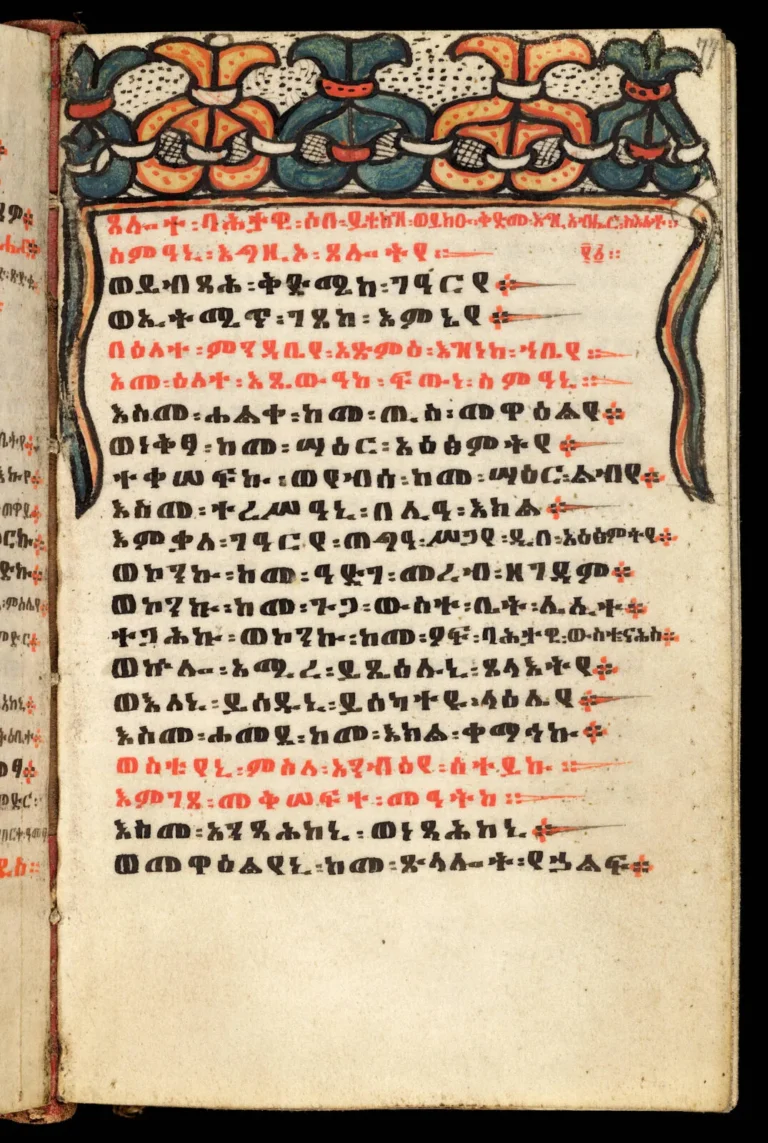
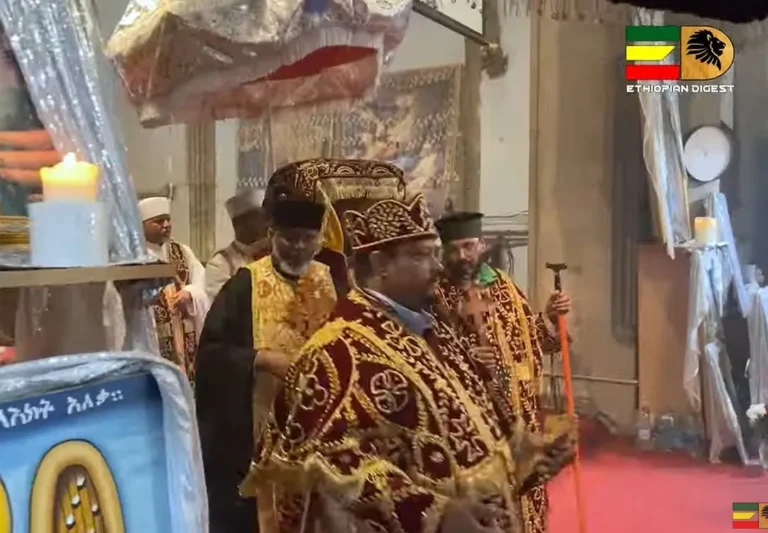
The Kings Own Royal Regiment Museum Trust presented ancient relics of Emperor Tewodros II of Abyssinia at the University of Cumbria in Lancaster o the Ethiopian Heritage Authority (EHA).
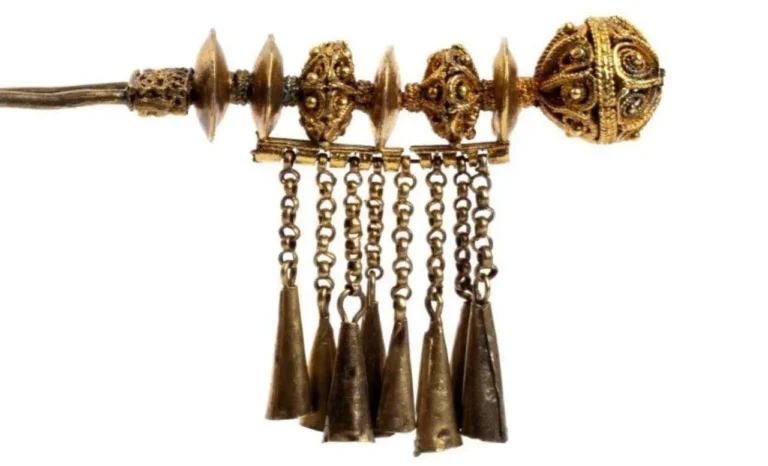
Mahlet Mehdi writes: The return of Empress Tiruwork Wube’s hairpin to Ethiopia underscores how much remains unresolved. Most artifacts taken from Magdala remain abroad. Legal frameworks offer limited recourse. Private markets remain opaque. And restitution continues to depend on chance discovery, rapid response, and negotiated compromise. The hairpin is less an endpoint than a case study.
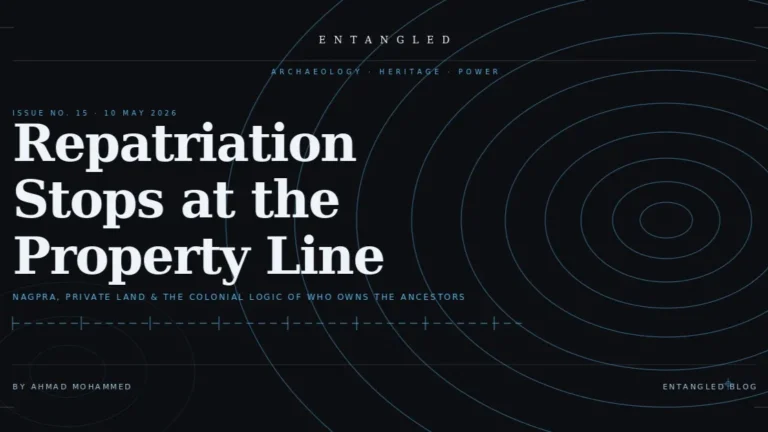
Ahmad Mohammad writes: As a wave of NAGPRA repatriation filings hit the Federal Register, this article asks what repatriation cannot reach, and why the limit is not accidental.
Plunder stolen from Ireland and stored in museums of former colonial powers should be returned. But there is no list of what is held abroad in ‘post-colonial museums’. Culute Minister also said that restitution cannot be a one-way street.
Minister Patrick O’Donovan said there was a “compulsion” on former colonial powers to return “loot” taken from people against their will.
Until its restitution in November 2025, Ama O Ghe Ehen, a 18th-century bronze plaque depicting a mudfish, was held in the colelction of the Museum de Fundatie in the Dutch city of Zwolle, since its acquisition in 1937. This symposium explores the process and implications of this return, and what restitution might mean in the context of this plaque.
The Restitution Law, approved by the French parliament, evokes all sorts of reactions. RM* summarises them in a few posts. In this post, the Chinese Global Times writes that while countries around the world have been progressively engaging in the repatriation of cultural relics, Japan stands out as a negative example.
The Restitution Law, approved by the French parliament, evokes all sorts of reactions. Most are explaining the law and positive in tone. In a previous post, an opponent of the law had his say. In this post, Saeed Saeed, journalist in Abu Dhabi, points to practical consequences for countries such as Algeria, Jordan, and Egypt.
Paul Stewens writes: Brazil and Germany have concluded an agreement to deepen their cooperation. The Joint Declaration covers a broad range of topics, with at the end the biggest dinosaur repatriation news in years: the decision to return the fossil of Irritator challengeri to Brazil.
28 April: Black Muse and Digital Benin: Benin Heritage & New Forms of Narratives: Digital Access & Reconnection to the Living Heritage of Benin Kingdom
3 May: Digital Benin and Kokopelli Gallery: Digital Benin: Digital heritage at the intersection of culture, data and practice
Two looted West African musical instruments languishing at the Fowler Museum in Los Angeles are creating a restitution challenge, because they have human skulls attached to them.
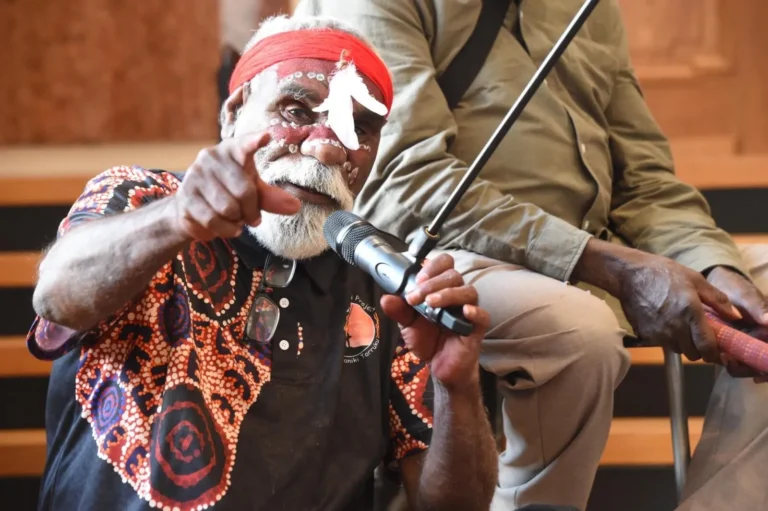
Since 2019, a number of sacred objects and ancestral remains have been repatriated to the Warlpiri people of Yuendumu community north-west of Alice Springs in the middle of Australia. For them repatriation is about healing the community, but in particular healing the young men and women of their community, writes Jamie Hampton*. In this Blog, he shares his story about the Yuendumu community and how repatriation has helped them heal from past injustices, providing pathways for the next generations of Warlpiri to ensure they live a life grounded in culture in a changing world.
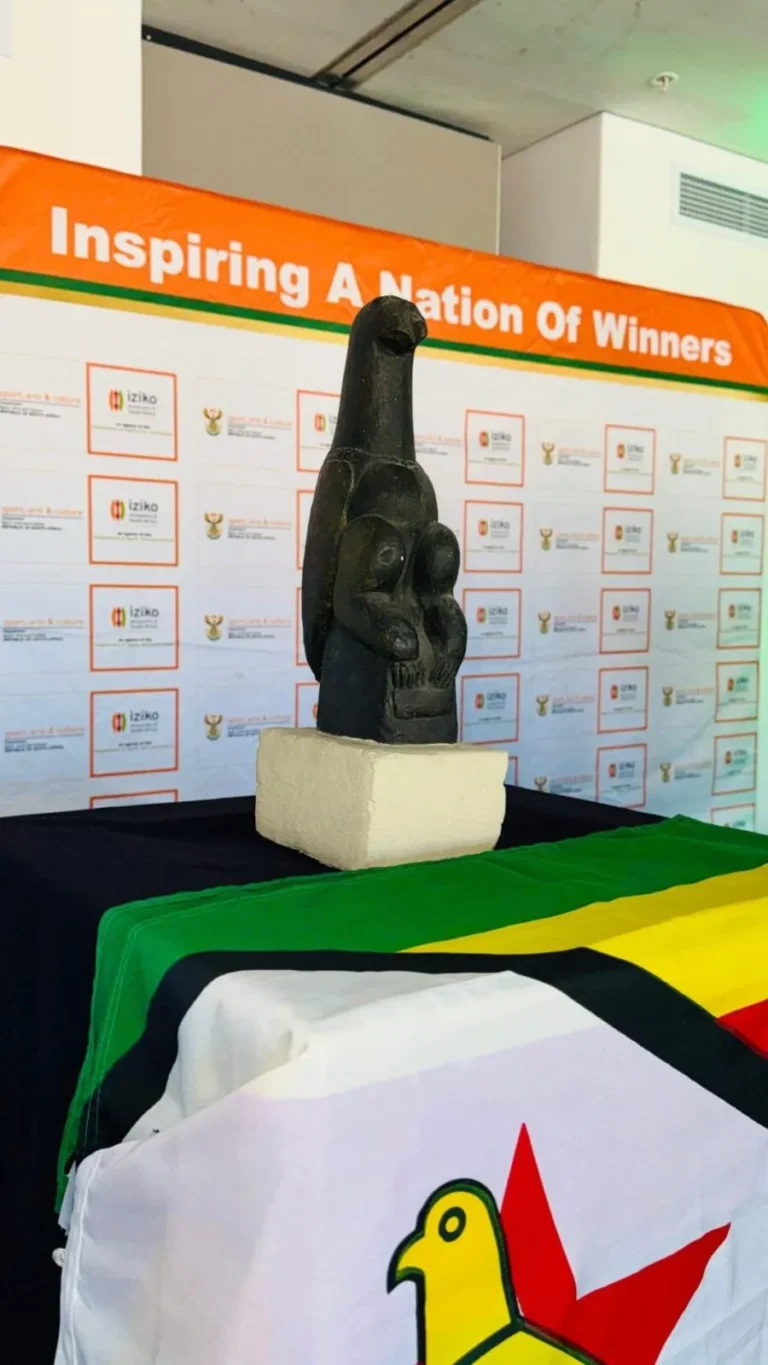
Lloyd Makonya writes: The systematic removal of cultural heritage formed part of a broader colonial strategy to undermine African civilisation. Against this historical backdrop, the handover of the Zimbabwe Bird and ancestral human remains by South African authorities to Zimbabwean officials marks the latest victory in Zimbabwe’s sustained push to reclaim its cultural inheritance.
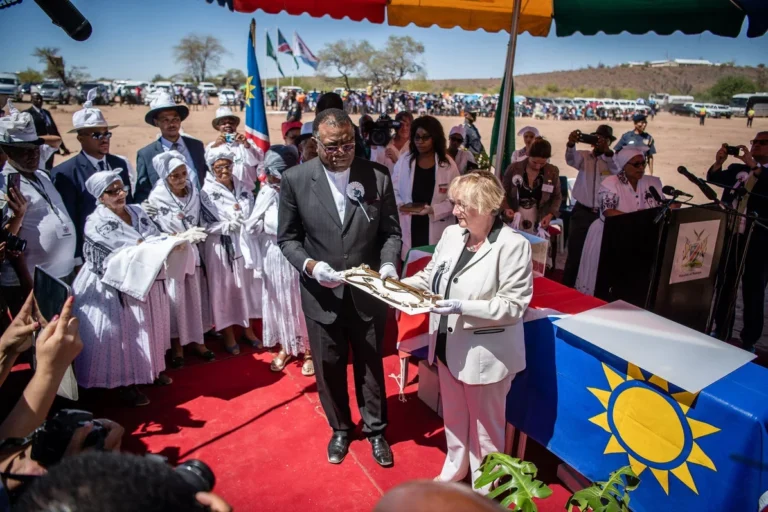
While Germany appears keen to expedite the conclusion of the negotiations with Namibia concerning the genocide committed against the Ovaherero and Nama communities between 1904 and 1908, the Namibian position reflects that the matter remains unresolved. Namibia continues to advocate for a comprehensive reparative framework grounded in five key elements: restitution, compensation, rehabilitation, guarantees of non-repetition, and satisfaction. Sarah Negumbo, the Director of Namibia Library and Archives Service, provides further insight into the historical, legal, and ethical dimensions underpinning these demands.
The handover ceremony, directed by South African President Cyril Ramaphosa, took place at the Iziko South African Museum in Cape Town, marking a significant moment in the restoration of African heritage. The repatriation also underscores growing cooperation among African nations in addressing historical injustices linked to colonial-era dispossession.
[in French, in English] The French government will support a bill on the return of Kali'na ancestral remains to French Guiana. They had been exhibited in a "human zoo" in Paris and kept in a museum in Paris since the end of the 19th century. A Kali'na Association had been asking for them since 2024.
The Expertise Center for Restitution (ECR) of the NIOD Institute for War, Holocaust and Genocide Studies and Resistance Museum Amsterdam present Robbery Art Ontrafeld, a lecture series that focuses on the less exposed aspects of loot art and restitution.
Historians associated with the NIOD present recent research and surprising insights and enter into dialogue with the public, led by moderator Yuki Kho.
Over 1,000,000 known African artefacts unwillingly held outside the continent. Of these, less than 1,000 have been returned... The Open Restitution Project is an Africa-led project seeking to open up access to information on the restitution of African material culture and human ancestors, to empower all stakeholders involved to make knowledge-based decisions.
The V&A’s collections include around 90 objects from Ethiopia. The majority of these are in some way associated with a British military expedition to Ethiopia from 1867 – 68 against Emperor Tewodros. The museum also holds a selection of Ethiopian paintings from the 1940s. Restitution is out of the question. A provenance report.
As one of the biggest targets of wartime looting in centuries past, China is now positioning itself as a global pioneer in repatriating lost cultural artefacts. In two articles, Xinlu Liang looks a Chinese demand that Japan returns an ancient tablet, which could mark a ‘historical reckoning’, and how China is wielding law, diplomacy and a Global South coalition to rewrite the rules of restitution, filling a void left by a retreating US.
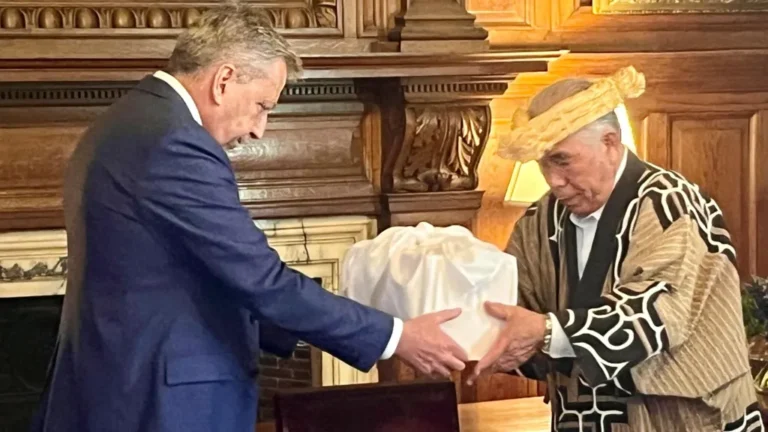
Late in 2025 , it was announced that five sets of Ainu ancestors' remains were to be repatriated to Japan from the Natural History Museum in London. This follows repatriations in 2017 (Germany), 2023 (Australia) and 2025 (Scotland). Inside Japan, the University of Tokyo has apologised to the Ainu community for collecting ancestral remains without their consent. The Japanese government, working with the Ainu Association of Hokkaido, supports the repatriations. How can this increase be explained?
An important moment! Congolese and Belgian experts presented their recommendations for the future of institutional provenance research at an open forum: ‘The current framework is insufficient.’
On 25 February 2026, the Togolese cabinet approved a draft law to establish a restitution committee. The committee will seek to repatriate tangible and intangible cultural heritage, as well as human remains and archives from colonial contexts. The bill refers to over 8,000 „objects“ currently held in foreign museums. They predominantly come from northern Togo.
Museums in a country like Ghana have an impoortant function in preserving ervidence of the past and in shaping together the country's history. A self-critical look from Ghanaian professionals in their museum practice, especially that of the National Museum.
South Africa has reburied the remains of 63 Khoisan people, among southern Africa's oldest indigenous communities. The remains were part of museum collections in the Hunterian at the University of Glasgow in Scotland and at the Iziko South African Museum in Cape Town. The remains were laid to rest at a historic monument near Steinkopf, in the Northern Cape province, during a ceremony attended by President Cyril Ramaphosa.
Reporters from the Chinese newspaper Global Times visited Japan and found that looted Chinese cultural relics are being displayed and even promoted as militarist "trophies," including at a notorious shrine. History must not be distorted, and heritage must not be plundered. But to this day, Japan has not returned these looted relics. Instead, it has attempted to conceal and deny this history.
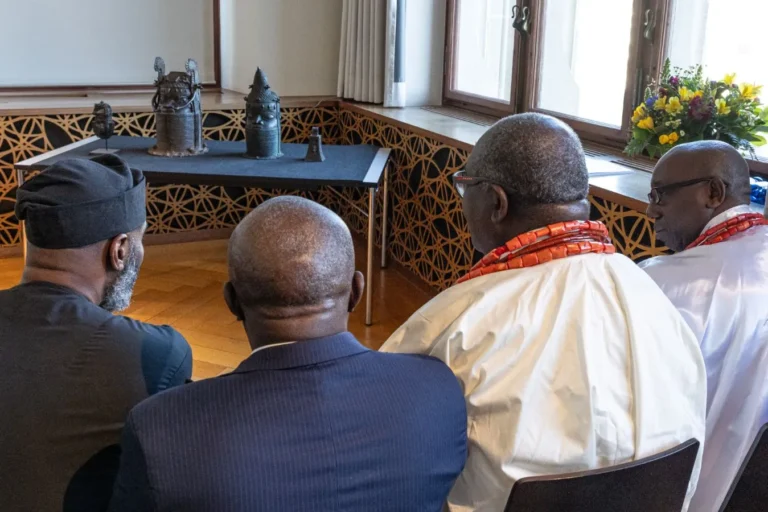
In March 2024, Nigeria’s National Commission for Museums and Monuments (NCMM) filed a formal restitution claim on behalf of the Nigerian government for 14 Benin artifacts held by the Ethnographic Museum at the University of Zurich (UZH). The University of Zurich has decided to honor this claim. "Signing the property agreement is not just a legal act, but the recognition of colonial injustices", Zürich's lord mayor, Corine Mauch, said.
The grandson of Ethiopian Emperor Haile Selassie I avoids confrontation and uses patience and strategy in oder to retrieve stolen objects from public and private parties in Great Britain. It is part of a wider demand for historical justice that continues to resonate across the African diaspora.
Descendants of Zimbabwe freedom fighters executed and beheaded in southern Africa by colonial British forces in the 1890s have called on the Natural History Museum in London and the University of Cambridge to help them find their ancestors’ looted skulls.
The aution included 40 archaeological pieces and were auctioned during a live sale on 27 February 2026, at Maison Millon in Paris. The Culture Ministry started legal procedures and used diplomatic channels to seek a return. In the meantime the lots have been sold for 1,2 million euro.
Reilly Clark writes: Two Benin plaques were among the ones looted by the British from the palace of the oba in Benin. Later, they were given to the British Museum and later still, to the Nigerian National Museum in Lagos. The plaques were removed without permission from the Nigerian National Museum between 1950 and 1991.
The Tangué is a ship’s beak carved from wood and placed on the bow of the ship of the royal Bele-Bele family. This mystical and sacred belonging symbolises power, particularly the ultimate authority of the King over the water tribes of the Douala kingdom, and is an integral part of socio-cultural and spiritual practices. n 1884, it was stolen by German military. Currently, it is in the Museum Fünf Kontinente in Munich.
‘Extraordinary’ golden lamb’s head pillaged in 1874 from what is now Ghana remains hidden in officers’ mess. The glistening golden ram’s head would seemingly be worthy of any museum, but it remains hidden within the regiment’s mess at Larkhill in Wiltshire.
[in English and in German] The Prussian Cultural Heritage Foundation (SPK) transfers custody of three ancestors to the Molelia family of Tanzania. They now have sole control over the remains. Howe ver, immediate repatriation to Kibosho is not possible because it requires the approval of the Tanzanian government, which has not yet responded to the SPK’s offer to return the remains.
[in Dutch] In museum De Fundatie in Zwolle, Nigerian artists shine their light on an antique plaque of a mud fish. The fish was stolen from Benin City at the end of the 19th century, and it will return to that city next summer. 'The mudfish is symbolic of the flexibility of the Edo people.'
France has officially returned the sacred Djidji drum to Ivory Coast. It is among 148 cultural belongings claimed by the Africab country in 2018. The text of the special law is included.
President John Dramani Mahama has sent a clear message to the international community: the time for "ceremonial language" regarding Africa’s historical injustices is over.
The restitution project, undertaken in Namibia from 2019 – 2024, was centred around 23 cultural belongings, which were selected from a collection of +/-1400 cultural belongings in the Ethnological Museum of Berlin, on the basis of their rarity, ability to travel well (fragility, arsenic poisoning etc), cultural, historical and aesthetic significance, as well as their connection to the history of Namibian fashion.
During negotiations in the 1960s about a new relationship, DR Congo claimed the archives with information about its rich natural resources. Belgium was not prepared to do so. The documents, housed at the AfricaMuseum are now being sought by DR Congo and KoBold Metals, a Bill Gates-backed mining and artificial intelligence company that struck a deal last year with Kinshasa to digitise them.
Around 1900, the Isanzu chief and seven of his bodyguards were arrested and hanged and/or beheaded, and their bodies were not returned to Isanzul and given for burial. Currently, they are in the University of Göttingen. Since the emptying of graves, there have been significant periods of drought and famine in the area. The Isanzu people believe that these environmental calamities are as a result of their human ancestors being dishonoured.
Vishakha N. Desai writes: The return of looted artworks shows India is no longer treating restitution as a zero-sum recovery, but as a negotiating tool that asserts ownership while deploying art as soft power.
Barnaby Phillips: The decision by the university’s Museum of Archaeology and Anthropology to return looted Nigerian treasures leaves larger institutions increasingly isolated. Which museum will be the next one? Uwa Igbafe: This case reflects a gradual transition from legal acknowledgement to the actual transfer of artefacts.
Restitution of cultural property is gaining momentum across Africa, framed not as symbolic but as a fundamental right. Senior officials, ambassadors, scholars, and international representatives gathered in Addis Ababa to debate restitution as a pillar of justice and identity.
Lucky Igohosa Ugbudian writes: Switzerland has witnessed curators playing an increasingly significant role in the restitution debate surrounding Benin artworks. The looting of these cultural objects in 1897 led to the illicit global circulation of these objects. The forceful trafficking of these items, alongside international laws and conventions, prompted Nigerian and Pan-African groups to demand restitution.
The French Senate on Wednesday adopted a draft legislation to facilitate the return of artworks and other prized artefacts looted during the country’s colonial era. This new procedure could help address requests already submitted by various countries, including Morocco, Mali, Algeria and Benin.
[English version, German version] Cultural heritage of the Nso in Germany - Episode with Dr Bulami Edward Fonyuy (Cameroon) by podcast Decolonial Memories (on all major platforms). In the podcast, Dr Bulami calls on the German government to play a long-term role in the healing process between the two countries, going beyond the restitution of colonial loot.
Ayọ̀ Akínwándé examines restitution, spiritual provenance, and the unresolved tensions between royal authority, state power, and museum-making in Benin City. The conflict between the MOWAA and the Benin Court goes back to the colonial days.
The British Museum’s attempt to frame its decision to ‘share’ a few colonial-era artefacts with the Chhatrapati Shivaji Maharaj Vastu Sangrahalaya (CSMVS) in Mumbai as a move to ‘decolonise’ its collection has been ridiculed by art historians as a ‘con’. There’s only one way to show contrition: return the stolen goods.
To commemorate years of diplomatic relation—and sure, with an eye to continued trade—France and Mexico exchanged two ancient manuscripts: the Codex Azcatitlán, and the Codex Boturini.
[in English and Greek] Leading British legal experts have questioned the legality of the UK government’s decision to bar the country’s national museums from deciding independently on the repatriation of cultural objects.
[in English and German] One of the mortal remains of three people of Indigenous Australian descent in the University of Cologne’s Anatomy Center, which were planned to be returned on 4 December 2025. was discovered during the preparations for the return to have been replaced.
In 2022, the Republic of Indonesia submitted an official application for the collection’s restitution after which the Dutch State Secretary for Culture requested the Colonial Collections Committee to provide advice on this request. In 2025, the Netherlands transferred it to Indonesia. This Blog offers a reflection.
Archaeologist and journalist Mariam Gichan wonders why complicated legal hurdles are sufficient to explain why the fossil hasn’t returned to Tanzania and whether “complicated” becomes a convenient reason for inaction.
This restitution of 107 objects is being recognized as exemplary due to its transparent process and the collaborative approach between the institutions involved. The artifacts, once held in private and public collections in Switzerland, have now been formally transferred to the National Museum of Abidjan.
In 2025, the Museum of Fine Arts in Boston (MFA) achieved two significant ownership resolutions. First, the museum was asked to rescind and return the long-term loan of Benin Kingdom artwork to the private collection of Robert Owen Lehman. Both of these resolutions speak to the facts that (1) restitution does not have to be a zero-sum game, and (2) museum restitution has expanded beyond what the letter of the law dictates.
The Wereldmuseum collection includes 3,647 objects that contain ancestral human remains. Particularly harrowing are the 26 premature and newborn babies preserved in fluid. Together with members of various communities, Manuwi C. Tokai created an altar in the Wereldmuseum Amsterdam to serve as a place of remembrance for the ancestors held in the museum’s collection.
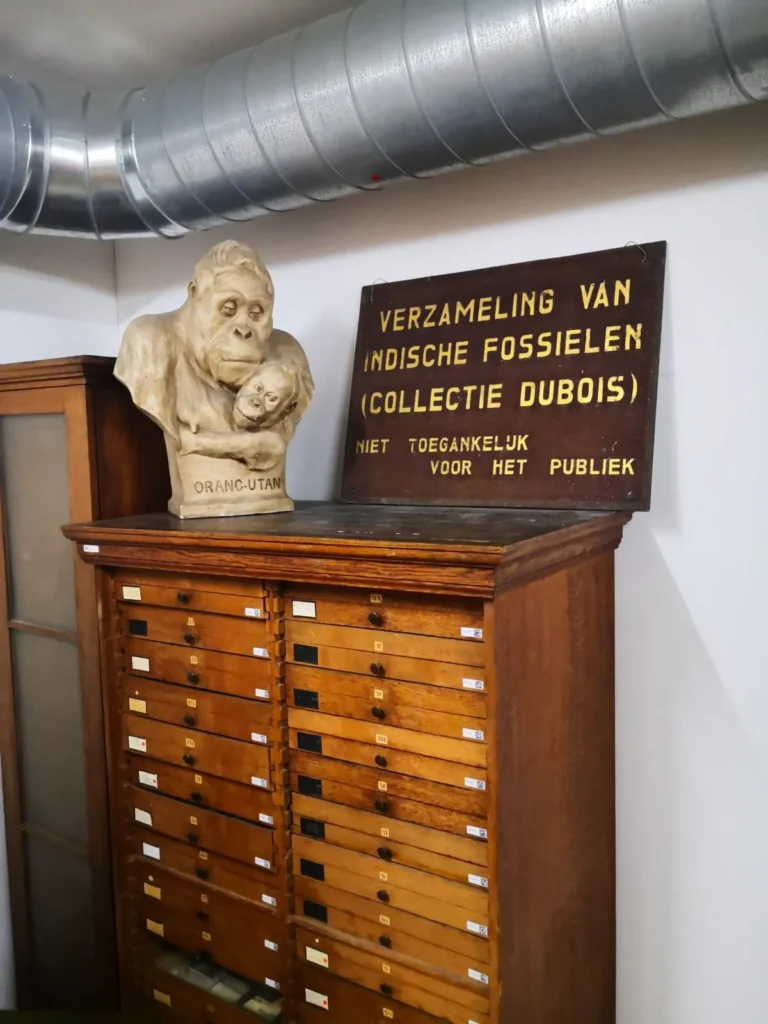
Naturalis Marcel Beukeboom: “We will take time to think of a new story to tell. That story will most likely include references to the evolution and early humans, and may also address colonialism and perhaps even the influence of Dubois. But without his collection, and with everything we have learned, this will be a different story.”
Andreas Roth shows, the real story of the coral regalia does not fit the postcolonial narrative some want to attach to these artefacts. They do not provide a precedent for the return of Benin Bronzes.
Rodney Westerlaken writes: The return of the Dubois Collection: principled restitution, unresolved policy questions: – At what point does scientific heritage become cultural heritage? – Which criteria should govern this classification, and by whom are they determined? - How can restitution frameworks avoid becoming normatively expansive without sufficient conceptual precision?
In April 2026, officials from the Japanese government and the Ainu Association of Hokkaido will travel to Britain to receive four of the five sets of remains, the government said Friday. The locations where the four sets were excavated are known.
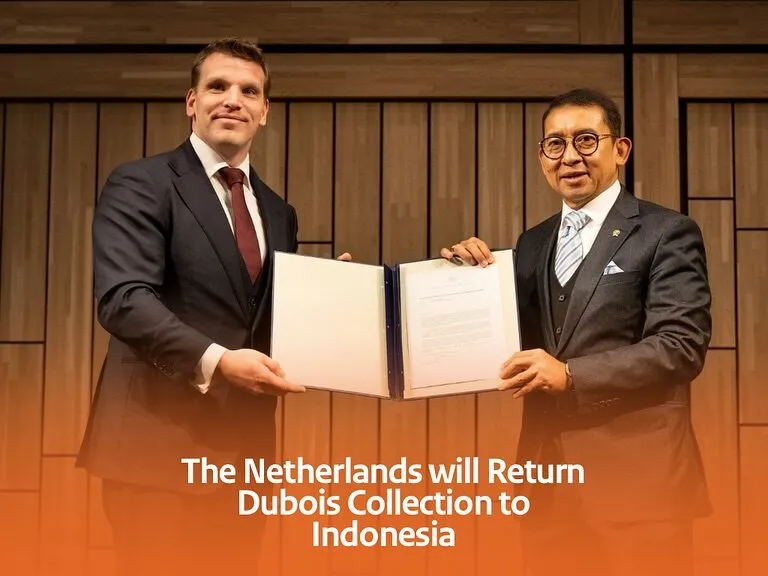
Four important objects from the Dubois collection were handed over to Indonesia on Wednesday 17 December. The handover ceremony took place at the National Museum of Indonesia in Jakarta, which will exhibit the objects.
Barnaby Philips discovers one more return of a Benin object from the Netherlands and further analyses what went wrong in Benin City: Two days before the aborted viewing of the Museum of West African Art (MOWAA), Oba Ewuare II visited his ally Monday Okpebholo, the governor of Edo State. ‘Please stop the opening of the MOWAA.’
All too often, the literature on the restitution of colonial cultural objects tends to focus on the public international law (PubIIL) aspects of the debate. With a few notable exceptions, the PubIIL and private international law (PIL) dimensions of the debate are rarely considered together. This article makes the case for a coordinated approach.
Western museums are returning the Benin Bronzes to Nigeria, but a state-of-the-art museum to display them is still a long way off. Alex Marshall saw hundreds of Benin Bronzes while reporting this article in Benin City and Lagos, Nigeria.
In January 2023, an online seminar was held to investigate the Vatican collections, their legal structure and how repatriation might be possible to countries and communities of origin. In particular we looked at the principle of ‘inalienability’ which governs the collections under Vatican civil law, Alexander Herman writes.
Restitution activist Mwazulu Diyabanza explains why he is taking the law into his own hands. His actions are a calculated act of civil disobedience, executed for maximum political impact without engaging in violence or damaging property.
[ in German ] The Stiftung Preußischer Kulturbesitz will return spiritual objects from Kpando containing human remains to Akpini People in Ghana, and spiritual objects to Australia. Currently, they are in the Ethnological Museum in Berlin.
In an address delivered in Algiers, the Caribbean Community (Caricom), unveiled a comprehensive ten-point plan calling for concrete reparations for the crimes of colonialism. This intervention strongly underscored the necessity of a unified, coordinated effort between Africa and its diaspora to confront centuries-long injustices, restore historical rights, and secure meaningful mechanisms for recognition, compensation, and restitution.
The Georg Steindorff Collection, comprising 163 objects, is a central, yet complex, component of the Egyptian Museum-Georg Steindorff at Leipzig University. The “loss” for Georg Steindorff’s family was placed at the forefront of this restitution of Nazi-looted art, while the original, broader loss of heritage for the country of origin (Egypt) due to colonial practices was sidelined.
Open Restitution Africa has published a case study that is centred around 119 cultural belongings from the historic Benin Kingdom. This collection includes intricately cast bronzes, carved ivories and terracotta. They serve dually as both historical artefact and active carriers of spiritual and cultural knowledge, many of which remain relevant in Benin cultural and religious life today.
The Royal Ethiopian Trust announces the acquisition and planned repatriation of a 19th-century gold hairpin belonging to Empress Tiruwork, wife of Emperor Tewodros II of Ethiopia. It is one of thousands of artifacts seized by British troops following the battle of Magdala in 1868.
Africa has renewed its most assertive push yet for historical justice (including restitution), as ministers, jurists, and diplomats gathered in Algiers for a landmark conference on the criminalisation of colonialism.
The documentary Elephants & Squirrels by Swiss filmmaker Gregor Brändli chronicles a Sri Lankan artist’s discovery of looted artefacts in Basel and her mission to return them to Sri Lanka, exposing Switzerland’s uneasy reckoning with its colonial entanglements.
Andrew Matthijssen of the Vendue House informs the authorities in Vanuatu that it withdraws the skulls from auction and will suggest to the owner(s) of the skulls to return them to Vanuatu.
In an email, in the hands of RM*, to the Vendue Huis in The Hague, the Netherlands, the Vanuatu Cultural Centre (VKS) and the National Museum of Vanuatu, the national authorities responsible for the safeguarding of Vanuatu’s cultural heritage, demand the immediate withdrawal of ancestral remains from sale.
[ in French ] It was in 2021, after 129 years of plunder by France, that the royal treasure of Abomey was returned to Benin. The restitution of this piece of history is part of a campaign launched by Benin in 2016 to make its heritage the cornerstone of its cultural influence.
On November 9th, 2025, as 250 Nigerian and international guests – donors, diplomats, and the heads of national cultural agencies – gathered in Benin City at the new Museum of West African Art’s opening event, protesters in red baseball caps broke into the museum, forcing its closure. Cultural Property News analyses what happen, and why.
Have a look at the way Vatican News reported about the return of 62 objects to Canada. No indigenous representatives or objects visible. Only Roman-catholic dignitaries. It is a fairly literal translation of the article.
“The university regards these historical facts with the utmost gravity, reflects on them with sincere remorse, and hereby expresses our heartfelt apologies.” A process of repatriation has started.
Phillip Ihenacho, director and chairman of the Museum of West African Art (MOWAA), has watched the restitution debate unfold with both pride and concern. Pride, because it signals a long-overdue recognition of West Africa’s cultural heritage; concern, because too often the conversation is shaped by Western priorities rather than African ones.
The Vatican is working with the Canadian Catholic Church to return 62 Indigenous objects, says Gilbert Whiteduck . He is the education director and former chief of the Algonquin community Kitigan Zibi Anishinābeg, in western Quebec.
Julien Volper, acurator at the Royal Museum for Central Africa (Tervuren, Belgium), is writing here in a personal capacity: The Dutch restitution of Benin objects, earlier this year, was motivated by Dutch self-interest, both of the government and of the museum that has to let go a collection.
From the crowns of Ethiopian emperors held abroad to the mummified remains of African ancestors still stored in Western institutions, the theft of Africa’s sacred heritage represents a deeper violence. Those which we speak of, are not mere museum exhibits; they are vessels of ancestral power and collective memory. Their continued displacement denies Africa’s children the right to know and connect with their lineage.
The opening of the Grand Egyptian Museum comes with renewed calls for restitution: the famous Nefertiti bust, in Berlin since 1913, and the Stone of Rosetta, in London since 1801. Differing points of view.
Several UK museums considering the future of “tsantsas” – also known as shrunken heads – in their collections following a visit by representatives of Shuar people from Ecuador, from whom the items originated. The delegates engaged with 68 human and seven animal tsantsas during their visit, along with other Shuar cultural objects.
Oba Ewuare II today, during a courtesy visit to the Government house spoke explicitly on the proposed plan to build Benin Royal Museum which the past Governor of the state, Mr. Godwin Obaseki converted to EMOWAA and later MOWAA.
In an address at the 2025 Conference of the African Bar Association (AfBA) in Accra, Chief Charles A. Taku of the AfBA Reparations Committee, made an impassioned appeal for what he termed “The Accra Declaration” — a continental demand compelling Europe and the West to pay reparations for the centuries of slavery, colonialism, and cultural theft inflicted upon Africa and its peoples.
The International Seminar on the Return of Cultural Heritage under the auspices of the 2025 Brazil BRICS Presidency will take place on 10 and 11 November and is organized by the University of São Paulo [ USP ].
The cultural goods – a carved wooden stick, a divination basket, and a bovine astragalus amulet - were originally owned by the Nkuna royal family of Limpopo and used in ritual and spiritual ceremonies dating back to the 19th century. They were taken in 1899 by Swiss missionary Dr. Henri Junod. The royal family had begun negotiations in 2016.
[ in Dutch ] Last Saturday, the Grand Egyptian Museum (GEM) opened in Cairo. German President Frank-Walter Steinmeier was also in attendance. The world's largest archaeological museum displays more than 100,000 art treasures from Egyptian history, but one important piece is missing: the bust of Queen Nefertiti. It has graced the walls of Berlin for over a century.
Over 4.250 respondents from Zimbabwe, Ghana, Ethiopia, South Africa, Morocco, Egypt, Nigeria and Mali participated in a survey, expressing that return of artefacts is an essential party of reparations to the continent.
At the G20 meeting, South African Minister for Sport, Arts and Culture, Gayton McKenzie, champions cultural restitution and digital equity at the G20 summit, advocating for a fairer future. Each G20 member state should have a restitution committee.
[ in German ] Berlin Postkolonial, Decolonize Berlin, and Flinn Works welcome the update of the “Joint Guidelines on Dealing with Cultural Property and Human Remains from Colonial Contexts.” Clearer procedures and the establishment of unconditional returns are steps in the right direction. At the same time, the guidelines fall far short of a human rights- and international law-based understanding of restitution and repatriation.
[ in English and in German ] The main focus is on cultural belongings from four Cameroonian communities, the Bakoko, Bamum, Duala, and Maka, whose heritage was absorbed by these institutions during the German colonial era (1884-1919). This should also become a basis for future restitutions.
Former Tanzanian lawmaker and environmental activist Riziki Saidi Lulida argues: 'It was taken from Lindi, from our soil. They carried it piece by piece for more than a hundred kilometers, and some of our people died doing it. But no one in Lindi has ever benefited.'
The British Museum has hosted a lavish fundraiser at 2,000 pounds ($2,668) per ticket, dubbed the "Pink Ball," in the room housing the Parthenon Marbles, igniting fierce criticism and reviving long-standing debates over cultural ethics and colonial restitution. Greek Culture Minister Lina Mendoni condemned as 'provocative indifference'. Here follows a comment by Global Times reporter Chen Xi.
The colonial collections in public museums and the private sector in Italy are not less substantial than elsewhere in Europe. Italy has made some significant returns. Nevertheless, this blog argues that the country is much better at reclaiming its own stolen relics than at accepting the consequences of the investigations into its colonial collections.
The German state Baden-Württemberg acknowledges its historical responsibility and is committed to provenance research in order to identify and return colonial cultural goods that were acquired unlawfully. The start was in 2019, when Hendrik Witbooi's Bible and whip were returned to Namibia.
Cultural leaders of an indigenous Ecuadorian community have called for the repatriation of a collection of shrunken heads in the Pitt Rivers Museum in Oxford [GB].
The Hunterian at the University of Glasgow, through the implementing agencies, Iziko Museums of South Africa and the South African Heritage Resources Agency (SAHRA), and in partnership with the Northern Cape Reburial Task Team, have jointly announced the repatriation of ancestral human remains to South Africa.
This project explores the colonial framework that has shaped our understanding and knowledge of historical objects, focusing on the Lombok Treasures looted from Cakranegara Palace in 1894. Adopting a decolonial perspective, this project reframes these heritage objects as living entities endowed with knowledge and cultural significance, rather than mere relics.
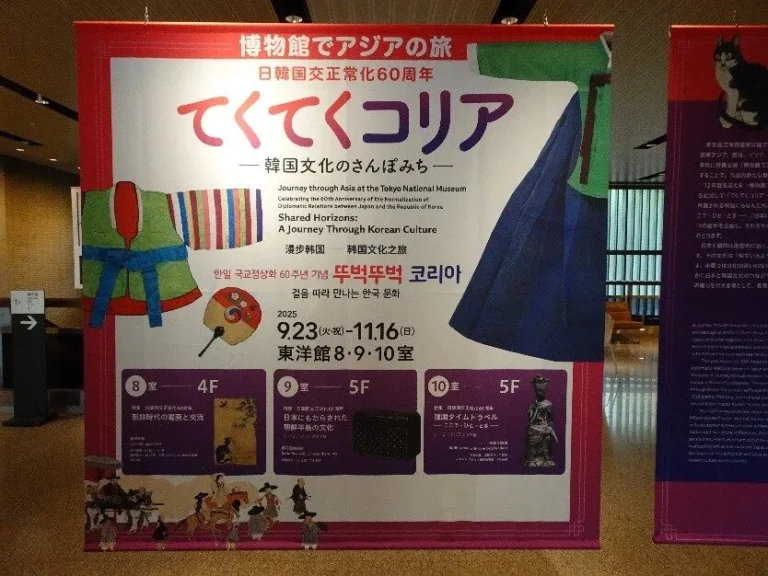
The restitution issue of cultural properties from Japan to South Korea has a long history. Back from a visit to South Korea, Eisei Kurimoto (National Institutes for the Humanities, Japan) concludes that this history still is being characterized by one dominant element: asymmetry. While in South Korea, it is an important national matter, the interest in Japan has been very low. Japanese governments consider it a ‘settled case’ and the issue is rarely publicly argued. To initiate change, joint provenance research projects could cultivate trust and friendship between stakeholders of both countries.
First Nations leaders talked about the need to develop a national repatriation strategy for artifacts, cultural items and ancestral remains at the Assembly of First Nations (AFN) annual general assembly in Winnipeg.
[ in Dutch ]'Dutch' fossils soon to be seen again in Indonesia: 'Young people here only know the Javaman from textbooks'
Indonesia will soon receive thousands of fossils that are still in museum Naturalis. It is a historic moment for his country, says Indonesian paleontologist Sofwan Noerwidi.
On 26 September 2025, the Dutch government returned 28,000 fossils, including the famous skullcap, a molar, and a thighbone (the so-called Java Man), to Indonesia following an official claim submitted by the Indonesian state in July 2022. They were part of the collection of Naturalis Biodiversity Centre in Leiden. With this, the government followed the advice of the Colonial Collections Committee. Now that the dust about this massive return has begun to settle, it is time for some reflection. I consider the acceptance of the advice of the independent Colonial Collections Committee groundbreaking in several respects.
[ in Dutch ] At the Indonesian Ministry of Culture, they can't count on their luck. The Netherlands returns an important archaeological find to Indonesia. It concerns the skullcap of Dubois, named after the Dutch finder Eugène Dubois. This proved in 1891 that other humanos had existed, which Dubois called the Javamen.
[ in Dutch ] The restitution process of the Dubois collection took an unusually long time. The responsible advisory committee and Naturalis point out the complexity of the case, experts make sharp accusations against the museum.
[ links are in Dutch or in English ] Today, Dutch Minister Moes (Education, Culture and Science) presented a letter to Indonesian Minister Fadli Zon (Culture) announcing this decision. The so-called Dubois collection is now managed by Naturalis Biodiversity Center in the city of Leiden.
Kulasumb Kalinoe (East Sepik area, Papua New Guinea; currrently James Cook University, Australia) focuses on the collection and removal of cultural material from Papua New Guinea (PNG) during the colonial era. She discusses views among the Papua New Guinean diaspora in Australia on museums and PNG collections, and argues that cultural heritage issues must be addressed before the work of decolonisation can begin.
Ahmad Mohammed writes: Sacred objects, ancestral remains, and ritual artifacts remain estranged from the communities that created and cherished them. This condition is what many scholars and practitioners now identify as cultural heritage alienation: the systematic displacement of heritage from its social, spiritual, and cultural lifeworlds into the frameworks of Western curatorial authority. But community control is crucial.
‘The most valuable Buginese manuscript of La Galigo, is held at Leiden University Library’ in the Netherlands, the university proudly communicates. It has come from Makassar on the Indonesian island of Sulawesi. For the Bugis who live there, it is an essential part of their history. But they have no access to it. A local group with academics, heritage professionals and activists in Makassar has begun to discuss its future. For them the repatriation of meaning is crucial. And this is only possible if the Dutch recognise their responsibility.
Muhammad Nishat Hussain writes: The 100th anniversary of the first formal excavation at Harappa (Punjab, NE Pakistan) is more than a commemoration of a century-old dig. It is an opportunity to reimagine how Pakistan studies and safeguards its past. Since the 1970s the country has tried to regain lost treasures. In vain.
Join us on Sept 16 | 16:00–21:30 | Kulturhaus Brotfabrik - World Premieres of Eternos Retornos and other films, with installations by Repatriates, and a dinner ritual inspired by the counter vibration physics of the headdress. This is more than art. It is a call to return what was taken.
In 2021, the University of Aberdeen returned a looted Benin object to the Oba of Benin, becoming the first UK institution to agree to an unconditional return. Neil Curtis [University of Aberdeen] outlines the process of giving back a pillaged object without a repatriation request being made.
Restitutions of colonial loot by Japan to former colonial possessions? Yes, that has happened and is still happening: manuscripts and objects to South Korea and China, ancestral remains to groups within Japan’s own borders. News about it is quite rare. What is actually known about the colonial collections and restitution practice of this former colonial power in the Far East?
Two pou - ornate carvings - that have been in the South Australian Museum's collection for more than 130 years are now destined for New Zealand after a ceremony in Adelaide on Tuesday.
In 2013, the AfricaMuseum near Brussels closed its doors and embarked on a major redesign. The architectural changes must have felt less challenging than the long overdue re-evaluation of the holdings and their presentation. Jeremy Harding reports.
Palmanova paid USD$17,340 for the object. But when it was sent by Fedex to Melbourne, it was seized under the Protection of Movable Cultural Heritage Act. And now, the High Court found the artefact was subject to forfeiture, because it is protected.
[ in French and in English ] Claimed for decades by Antananarivo, these bones had been taken as trophies by French colonial troops after a deadly attack in 1897 in Ambiky, the former royal capital of Menabe. 'Their absence was an open wound on our island'.
The objects, comprising spears, spear throwers and a club, were collected in the late 19th and early 20th centuries and have been held in the museum’s collection for decades.
Reclaiming stolen artefacts: Africa’s landmark museum at the heart of global discussion about restitution.
Senegal’s Museum of Black Civilisations is asserting Africa’s right to secure its cultural heritage and tell its own story.
Kwame Opoku writes: The French Minister of Culture presented a legislative text on 30 July to facilitate the restitution of artefacts in French museums by derogating from the principle of inalienability. It will not likely lead to a rush of restitutions from France. Excluding archaeological materials, military materials, and public records eliminates many objects. Archaeological finds from Egypt, Mali, and other African countries, such as those on the ICOM Red Lists, would be excluded.
[ English ] The exhibition "Benin Dues" --> Guided Tour in English with curator Alice Hertzog on 24 August 2025
[ German ] Vom Umgang mit historisch belastetem Kulturerbe – in Ethnologie und Recht on 30 September 2025
Thomas Fues writes: the German government emphasises its willingness to confront Germany’s colonial history and its consequences. But it remains to be seen whether and how such declarations of intent at the beginning of the legislative period will actually be implemented in the coming years.
[ in English and in French ] The French government has proposed a restitution law. After Belgium, it is the second former European colonial power to do so. Such a law streamlines restitution procedures and offers former colonies more clarity and even legal certainty. This blog discusses the draft-bill and examines whether countries of origin will benefit much from it.
Nearly five centuries after Spanish conquistador Hernán Cortés signed it and decades after someone swiped it from national archives, a priceless manuscript page has been returned by the FBI to Mexico.
In March 2025, Open Restitution Africa co-hosted a two-day gathering with the University of the Western Cape at the Iyatsiba Lab in Cape Town, bringing together African restitution practitioners, researchers and activists to reflect on how lived experience is shaping policy across the continent.
The Indian government has secured the repatriation of ancient gem relics linked to the Buddha’s remains, two months after it halted their auction in Hong Kong. Indian prime minister, Narendra Modi, said the return of the Piprahwa gems after 127 years was “a joyous day for our cultural heritage”.
Leading academic, Gloria Bell, argues that the Vatican is not only stalling on Pope Francis’ promises of restoring the looted artifacts — but continues to falsely 'refer to everything in their collection as a ‘gift.’
On 7 July 2025, the French National Assembly has approved the restitution to Ivory Coast of the Djidji Ayôkwê, an important talking drum, stolen in 1916. In the same period, the British Museum came with a statement that it is unwilling to restitute an equally important drum to the Pokomo council of elders in Kenya.
Eight years after French president Emmanuel Macron pledged to return African heritage to the continent, his government has adopted a bill facilitating the deaccession of cultural items plundered from former colonies. The text will be submitted for a vote in the senate on 24 September.
[ in Portuguese ] A delegation from Nagaland in north-east India travels to the Pitt Rivers Museum in Oxford to negotiate the return of remains and artefacts taken during the colonial period.
France's parliament approves returning to Ivory Coast a "talking drum" that colonial troops took from the Ebrie tribe in 1916, in the latest boost to the repatriation of colonial spoils.
High-profile figures, including the former UK Prime Minister Liz Truss, have written a letter criticising what it claims is an “accelerating” campaign to return the Parthenon Marbles from the British Museum to Greece.
La Galigo, an Bugis text, is poetry, written on palm leaves in Bugis language and is considered to be the most voluminous literary work in the world. But the majority of the manuscripts are stored in Leiden University, The Netherlands.
Thomas Fues writes: In an historic breakthrough for German restitution policy on colonial contexts, Cameroon’s official Restitution Committee has agreed upon the return of colonially appropriated cultural heritage in September 2025. Four German museums are involved.
On March 14, the remains of eight Mirning ancestors were returned to their country and buried. The ancestors lived between the late 1800s and 1979, and their remains had most recently been stored at the West Australian Museum.
The Museum of Fine Arts, Boston (MFA), today returned two works of art from the Benin Kingdom to His Royal Majesty Omo N’Oba Ewuare II, Oba of Benin, in a ceremony at the Nigeria House in New York City.
Gov. Greg Gianforte last week finalized Montana’s two-year budget, which contains several new investments for Indian Country, including a historic increase in funding for tribal colleges and money devoted to repatriation efforts.
Indigenous artefacts will be returned to their ancestral home on Mornington Island in Queensland's Gulf of Carpentaria. More than 3,000 kilometres away in Victoria, Baw Baw Shire staff uncovered the 37 articles in storage.
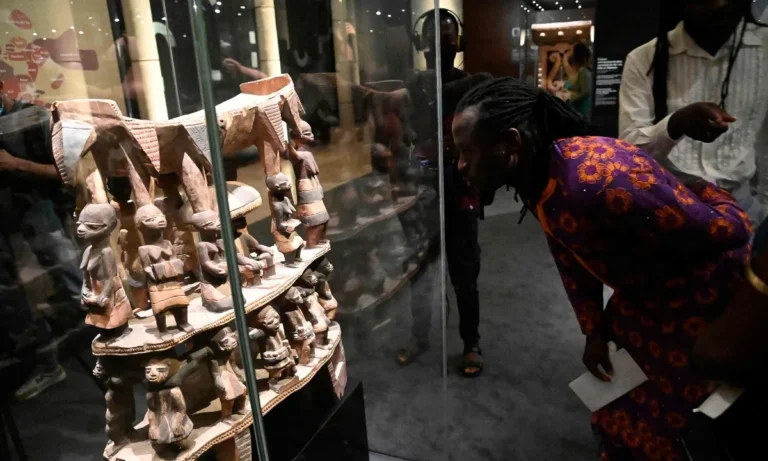
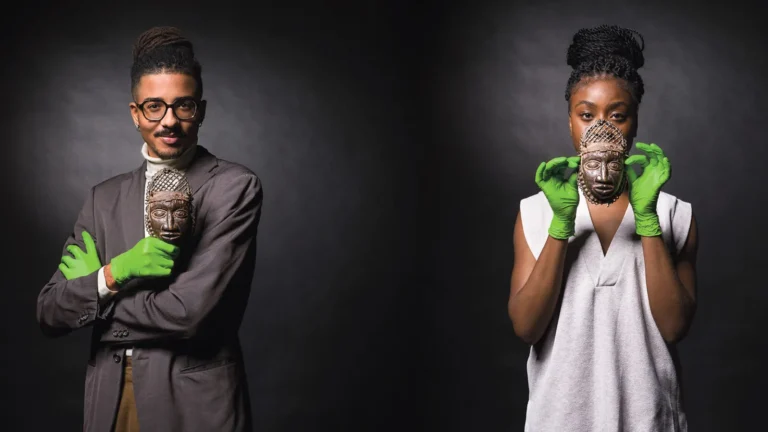
Nigeria has received 119 Benin Bronzes from the Netherlands — the largest physical repatriation of looted artefacts since the 1897 British invasion of the Benin Kingdom. According to an expert, some of the pieces date back to between the 14th and 16th century.
Mike Rutherford, curator of Zoology and Anatomy at the Hunterian, University of Glasgow, speaks at a conference in Manchester. Case-study: Repatriation Jamaican Giant Galliwasp.
Benin Digital mentions two objects in Portugal, one of which is in the Sociedade de Geografia de Lisboa. Sofia Lovegrove Pereira sends a podcast [ in Portuguese ], Reparacoes historicas - Preterito imperfeito (28 08 2023), which argues that the Sociedade has indeed one on display but another 76 in store.
South Africa is determined to repatriate the remains of its people taken abroad during the colonial era and those who died in exile as anti-apartheid activists, the culture minister Gayton McKenzie says. Including those of the Khoi-San, who are regarded as among the country's "first people".
The Albanese Labor Government has welcomed the return of 10 First Nations ancestors from three Japanese collecting institutions. A joint ceremony was held in Tokyo. This is the first ever return of ancestors from Japan.
Quoting the recently deceased Kenyan author Ngũgĩ wa Thiong'o on decolonisation of the mind, Kwame Opoku critically analyses a recent interview in The Times with Nicholas Cullinan, the new director of the British Museum.
A diaspora group discovers an object in the Wereldmuseum Amsterdam’s collection that the village of origin in Indonesia dearly misses. As it belongs to the Dutch national collection, its return requires the signature of the minister of Education, Culture and Science. But he only signs if the Indonesian minister of Culture supports the claim. After return, the latter must decide whether to deviate from the policy that returned objects are kept at the Museum Nasional Indonesia in Jakarta. Only then can the object go back to its village of origin. An interim report about a journey whose outcome no one yet knows.
A delegation of Naga elders and leaders, along with representatives from the Forum for Naga Reconciliation (FNR) and Recover, Restore, and Decolonise (RRaD), gathered at the Pitt Rivers Museum (PRM), University of Oxford, to initiate the repatriation of Naga ancestral human remains.
According to the Greek newspaper Kathimerini, the Greek Government and the British Museum have made substantial headway in discussions regarding the Parthenon Sculptures.
Minister of Culture Fadli Zon announced significant progress in repatriating Indonesian cultural artifacts from the Netherlands after bilateral talks with the Dutch Colonial Collections Committee (CCC) in Jakarta.
Within the national museum context, the Repatriasi exhibition risks becoming a missed opportunity to critically engage with the afterlives of returned objects, beyond marking their physical return.
Pope Francis promised to return artifacts to communities in Canada, but several years on, they remain in the Vatican’s museums and storage vaults. Recently, Canadian Prime Minister Mark Carney discussed the return in a meeting with Canadian Catholic Cardinals.
Tamara Lanier, who sued the school in 2019 over daguerreotypes of her enslaved ancestors held in its museum, called the outcome “a turning point in American history.”
Adéwolé Faladé, PhD candidate in History at the Central European University (CEU) in Vienna, highlights and analyzes the traces left by the 26 repatriated artefacts by France to the Republic of Benin in 2021.
Half of the 11 returned objects to the Larrakia community in Northern Australia first arrived at the Fowler Museum in 1965 through a large donation from the Wellcome Trust.
The House of Ni’isjoohl Memorial Pole, stolen in the 1920s, was rematriated from National Museums Scotland (NMS) in 2023. Noxs Ts’aawit (Dr. Amy Parent) of The Nisga’a Nation and Dr. John Giblin from NMS outline the process of international cooperation.
In Benin, a 'kataklè' – a ceremonial stool, and the final piece of the royal treasure of Abomey – has been returned by Finland, 133 years after being looted by French troops and later transferred to the National Museum of Finland. It began with an investigation by a Radio France International (RFI) journalist.
The Natural History Museum in London hosted a formal ceremony on 10 April 2025 with Traditional Custodians from Queensland communities to mark the return of 36 First Nations ancestors.
[ in French ] France Culture interviews historian Benjamin Storashares about some of the issues with the restitution of documents and objects that were looted during the 1950's war of independence of Algeria.
A 1000-year-old statue of the Boddhisattva Guan Yin lives in The British Museum. When it emerges that the statue was stolen from its original home, the museum attempts to deflect both the public response and controversial repatriation claims from the Chinese government.
This gold crown with stunningly delicate filigree belonged to Emperor Tewodros II, the King of Kings of Abyssinia. It was the most remarkable artefact looted during the British Army’s 1868 siege of Maqdala, the king’s hilltop fortress capital.
According to the Japanese government, the remains of three Ainu Indigenous people that were kept at the University of Edinburgh in Scotland will be returned.
France will repatriate the skulls of King Toera and two Sakalava warriors to Madagascar, marking the first return of human remains under a new French law passed in 2023.
Resistance hero Ras Desta Damtew was executed by Italian fascists in 1937, after which some of his belongings are believed to have been stolen. Now his grandchildren and the Ethiopian government are fighting to bring them home.
Algeria submitted a list of items held by France since the colonial era in order to restore them as part of the joint memory committee to look into that historical period.
After more than 170 years at the Scottish University of Aberdeen, the remains of a young Aboriginal man who was killed on his Country have returned home.
The British Museum has welcomed a new slate of trustees, including Dr. Tiffany Jenkins, an academic and author staunchly opposed to returning stolen antiquities like the Parthenon Marbles.
Julien Volper argues that the Netherlands practises double standards when it comes to restitution. On the one hand, the country returns 119 Benin objects to Nigeria. On the other, it was reluctant to return to Belgium parts of a 16th-century altarpiece by Pasquier Borman, stolen from a church of in Boussu (Belgium) in 1914, and it cut back its international assistance to the global south.
A ceremony took place in the Leiden World Museum around the restitution of the heritage of the Ysleta del Sur Pueblo tribe. It is the first time the Netherlands has returned objects to the United States. „The healing process can now begin.”
The Tasmanian Aboriginal Centre and The Hunterian at the University of Glasgow have announced the repatriation of a rare shell necklace from The Hunterian collection in Glasgow to its home in Tasmania.
RM* saw reports from AP, Hyperallergic, DutchNews, Jerusalem Post, ArtDependence, Punch, Arise, Voice of Alexandria, Devdiscours, Pinnacle Gazette and AllAfrica.
The British Museum has come under fresh pressure to hand over its Benin Bronzes after the Netherlands returned more than 100 of the artefacts to Nigeria.
Sonita Alleyne, Master of Jesus College in Cambridge, addressed the 32nd session of the United Nations Working Group of Experts on People of African Descent in Geneva
At the request of Nigeria, the Netherlands returns 119 ‘Benin Bronzes’ to Nigeria, 113 from the National Collection and six owned by the Rotterdam municipality. [Later this week, RM* will add the relevant links].
[ in German, in English ] The German government has again defended the return of the Benin bronzes to Nigeria. It was good and right to return them without conditions. Nigeria can decide where they stay, said the parliamentary state secretary in the foreign office, Müntefering, in the Bundestag.
In the late 1800s, Andreas Reischek, an Austrian scientist, robbed Māori graves and plundered Māori artefacts for his private collection. More than 140 years later, officials of the Austrian government have been repatriating what Reischek looted.
The focus of the campaign is on the process of retrieval of antiquities through bilateral cooperation and partnership, in a manner consistent with existing international arrangements. Great Britain has the most extensive collections.
During a solemn ceremony at the GRASSI Museum für Völkerkunde zu Leipzig, ancestral remains, which had been in the possession of the Staatliche Ethnographische Sammlungen Sachsen (SES), were returned to representatives of their Māori (New Zealand) und Moriori (Chatham Islands) communities of origin.
Collections in private hands and the trade can contain important objects, while no one has a grip on them. An example is the 18th-century sword stolen by British troops from Seringapatam in India that was featured at the Bonhams auction on May 23rd, 2023.
Germany had hoped that by returning 20 Benin Bronzes to Nigeria last year it was “healing the wounds” of colonialism. But when it emerged that ownership of the repatriated objects will pass to the king of Benin rather than the Nigerian state, Berlin found itself facing a public relations nightmare.
A long bloody and painful colonisation of Indochina by the French should lead to more antiques to be identified and repatriated in the future.
It will be difficult to get a true handle on just how much the nation has been plundered.
Museums in Leipzig, Göttingen, Stuttgart and three other German cities have transferred the remains of Māori and Moriori people to a New Zealand delegation, headed Te Herekiekie Herewini of the Museum of New Zealand Te Papa Tongarewa.
Unlike the British Museum and other UK national museums, the Royal Collection is able to deaccession, provided that this is advised by its trustees and authorised by the monarch. The collection is not owned personally by Charles, but he holds it in trust as sovereign to pass on to his successor.
According to a recent ProPublica investigation of the failure to bring about the expeditious return of human remains by federally funded universities and museums, over 110,000 ancestral remains are held by institutions in the U.S., from Harvard to Berkeley.
The Cape Verde President, José Maria Neves, has called on African nations to unite in demanding compensation for the invaluable properties and artifacts stolen from the continent by colonial powers.
When Sylvie Vernyuy Njobati saw the sacred statue of her Nso people for the first time, she was shaking. "I was seeing... our founder... our mother locked up in some glass container. And for 120 years, she's been yelling out. She needs to be back home," she told the BBC's The Comb podcast.
Known only as A01392 in the records of the Grassi Museum in Saxony, now the life mask of a Ngāti Toa tupuna has returned to his whenua and people as a taonga.
Germany has handed over to Colombia two masks made by the Indigenous Kogi people that had been in a Berlin museum’s collection for more than a century, another step in the country’s restitution of cultural artifacts as European nations reappraise their colonial-era past. They may have health risks.
A research project has been conducted with the participation of the museum department and independent researchers regarding 6 such artifacts in the Netherlands and it has been confirmed that all the artifacts were brought from Sri Lanka during the colonial period.
Much ink has been spilled on the Parthenon marbles, mostly on the ethical and cultural merits of their repatriation. But what has generally not been considered are the legal merits of their return in light of contemporary international law.
Objects from the Wereldmuseum Leiden collection to be returned to indigenous tribe in the US. This item contains the announcement by the Dutch government, the report by the Dutch advisory Committee Colonial Collections and reactions from local news stations in El Paso, Texas.
Museum in Koko, Niger Delta, commemorates important exiled merchant prince Nanna Olomu . The restitution focus in Nigeria should not only be on Benin objects.
After receiving a letter from the Thai government, it was not difficult for the Asian Art Museum in San Francisco to determine it was showing looted objects. Before their return the museum holds an exhibition. Is this becoming a trend?
Who owns stolen art? Today on the show, the bloody journey of a Benin Bronze from West Africa to the halls of one of England's most elite universities — a tale of imperialism, betrayal, and the making of the modern world.
[ in Englis, in French ] The piece brought back by British Captain James Cook in 1771 is said to be the first Oceanian sculpture collected by a European.
With joy and ululation two families from the Loita clan of the Maasai in Narok South received 98 cows from Oxford University for ‘stolen’ cultural artefacts.
Prince Ermias Sahle-Selassie, the grandson of Ethiopia’s last emperor, will ask the universities of Oxford and Cambridge to return artefacts stolen by British soldiers in 1868.
A civil rights group in New York, USA, Restitution Study Group, has petitioned the United Kingdom’s Charity Commission to reject the repatriation of looted Benin objects to Nigeria because the West African nation also “profited from slavery.”
According to the National Cultural Heritage Administration, more than 1,800 sets of cultural relics have been returned to China over the past decade.
RM* found two links; sometimes it is hard to open them.
Jakarta welcomes the Dutch returns. ‘The return is part of a broader agreement between Indonesia and the Netherlands in 1975. That deal, though, faced many obstacles in its implementation, said Sri Margana, a member of Indonesia’s Repatriation Committee and professor of history at Gadjah Mada University in Yogyakarta.
[ in English and in Dutch ] The Indonesian Repatriasi Commission and Naturalis will work together to explore how the importance of the Homo erectus fossils from the Dubois collection can best be safeguarded for Indonesia, the Netherlands and the rest of the world.
This Guide to Initiating Requests for the Return of Cultural Property to its Countries of Origin is part of the ECOWAS Action Plan 2019-2023 on the Return of Cultural Property to its Countries of Origin.
A YouGov poll, commissioned by the Parthenon Project, suggests the majority of Brits would back returning the sculptures to Greece in a "cultural partnership".
The Rochester Museum in New York and Harvard University return ancestral remains of Native Americans and funerary artifacts to the Oneida Indian Nation.
The Koh-i-Noor diamond, a 106-carat gem that is part of Britain's crown jewels, has been back on public display after initially being absent at Charles III's coronation. The diamond was gifted to Queen Victoria after Britain's East India Company formally annexed the Kingdom of Punjab in 1849.
One of the most preserved among the eleven remaining mantles of the Tupinambá native people will definitely return to Brazil. By the end of 2023, the treasure made with red feathers of the scarlet ibis will leave the ethnographic collection of the Nationalmuseet, the National Museum of Denmark, and will join the collection of the National Museum in Rio de Janeiro.
Dresden’s museum of world cultures returned four everyday objects to the Kaurna Aboriginal community of Australia at a ceremony in Sydney: the spear, digging stick, cudgel and net were brought to Germany by two protestant missionaries between 1838 and 1839.
Manchester Museum, UK, has handed over 174 items to the Australian Aboriginal Anindilyakwa Community, marking one of the largest restitution projects ever undertaken in the UK.
The National Museum of Scotland nearly had to call off the high-profile repatriation of a totem pole to the Nisga’a in Canada after the Scottish Government reneged on a promise to cover costs.
The Netherlands will physically hand over six Sri Lankan artefacts to Sri Lanka during a two-day event at the Colombo National Museum. All come from the Rijksmuseum Amsterdam, among them is a famous ceremonial cannon of the King of Kandy (captured in 1765).
Among the most intriguing objects in the British Museum is the Asante Ewer, a bronze jug made in England for Richard II in the 1390s, which somehow ended up in West Africa.
In 'The Parthenon Marbles Dispute', Alexander Herman examines the entire contentious history of the Parthenon marbles from their creation up to the famous restitution debate of the present day.
The Rosenbach Museum & Library in Philadelphia voluntarily transfers to the custody of the FBI a 16th-century manuscript for return to the Archivo General de la Nación del Perú, the Peruvian national archives.
On August 26, 2016, the Minister of Foreign Affairs and Cooperation of Benin, in a letter to his French counterpart, made an official request calling for the restitution of cultural goods brought back to mainland France by French colonial troops during the conquest of the kingdom of Danhomè. [ in French ]
[ in French ] The auction of an extremely rare African sculpted mask for 4.2 million euros, initially purchased for 150 euros by a second-hand dealer from a French couple, has been validated by the court of Alès (Gard).
Princess royals Ncedisa Maqoma and Princess Mamtshawe Zukiswa Kona of the Xhosa nation saw in Dublin, for the first time, their ancestor Chief Maqoma’s sacred warrior’s stick, looted and brought to Ireland 150 years ago.
Three decades after legislation pushed for the return of Native American remains to Indigenous communities, many of the nation’s top museums and universities still have the remains of thousands of people in their collections.
Almost nine decades after it was stolen by Benito Mussolini’s fascist regime, the Italian government has officially returned Ethiopia’s first plane, named Tsehay in honour of the princess daughter of Emperor Haile Selassie.
[ in French ] Indonesia is pursuing a process of complete repatriation of cultural works looted during the colonial period. By mid-December, 828 objects had been returned by the Netherlands, according to the Indonesian Heritage Agency.
Hundreds of Indonesian artefacts that were in the Netherlands for more than a century - the bulk of which were looted by the Dutch during their colonial rule - are now on display at Indonesia’s National Museum in Jakarta. They are among the latest batch of items returned after a lengthy process involving both countries.
Rachel Ama Asaa Engmann of the Christiansborg Archaeoogical Heritage Project helps to understand how the agreement with one American and two British museums was reached.
In Mati Diop’s film Dahomey, which premiered at the Berlin film festival, the director documents the 2021 journey of 26 treasures that the commander of French forces in Senegal looted from the royal palace of the kingdom of Dahomey, part of modern-day Benin, in 1890.
The BM is tackling an influx of social media trolls from Chile, who have flooded the museum’s Instagram posts calling for the return of a moai statue, one of the stone monuments from Easter Island.
An exhibition at the Foreign Ministry Museum in Mexico City is displaying more than 100 stolen pieces that have been recovered, thanks to intense work by the country’s diplomats.
The documentary "The Empty Grave" traces the mission of two families in Tanzania that embark on an emotional journey to reclaim their ancestors’ human remains from German museums.
Guyana is seeking the return of various artefacts including a letter written by Quamina, the leader of a 19th century slave rebellion, held by the School of Oriental and African Studies, University of London (SOAS).
Two great granddaughters of a Sakalava king, who was beheaded in 1897 by colonial troops, publicly addressed the French ambassador, asking him to speed up the repatriation of their ancestor’s skull.
An indigenous Mexican nation, the Nahñu people in the central Mexican state of Hidalgo, has written to the Assemblée Nationale in France seeking the return of its codex, arguing that the centuries-old manuscript describes traditions it still continues.
A 200-year-old wampum belt has spent much of its existence at the Vatican’s museums, across the ocean and thousands of kilometres away. Last year, the belt, made by Algonquin, Nipissing and Mohawk peoples in 1831, was returned to Canada for 51 days – for a brief appearance at a Montreal museum in the fall – before it was sent back the vaults of the Vatican. In 2023, nothing was returned, a Timeline reveals.
A group of 11 sacred Ethiopian altar tablets, which the museum acknowledges were looted by British soldiers after the Battle of Maqdala in 1868, have never been on public display and are considered to be so sacred that even the institution’s own curators and trustees are forbidden from examining them.
The Lebang community in Cameroon has been the recipient of eight (8) significant cultural and spiritual heritages sold in auction and online in The Netherlands and Germany.
Chief Charles Taku has made an impassioned call for the “urgent and unconditional restitution of the Bangwa Queen in Dapper Foundation in France, the Bangwa King in Metropolitan Museum in New York, USA and the cultural heritage artefacts which are in the National Ethnological Museum in Berlin and Municipal Museums in Germany, in the Netherlands and other parts of the world.”
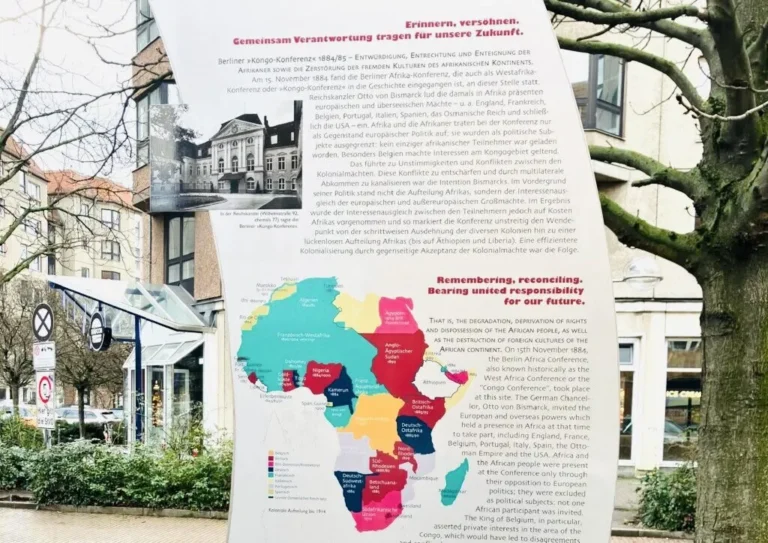
Chief Charles Taku argues that the resistance towards the restitution of African Heritage artefacts and the payment of reparations for colonial crimes is premised on the supposed legality of the crimes under the General Act of the Berlin Conference (26 February 1885).
This paper offers an overview of successful cases and unsettled claims submitted to West and East German museums, collections and private people between 1970 and 2021.
Peru’s Ministry of Culture triumphantly reclaimed 202 cultural artifacts, spanning various eras and civilizations, from Germany, Spain, the USA, Canada, and Belgium, showcasing successful international collaboration against illicit trafficking.
Spain maintains unwavering ownership of the Quimbaya Treasure, dismissing Colombia’s legal and diplomatic efforts to reclaim the pre-Columbian artifacts donated to Queen María Cristina in 1893. Both nations stand at a crossroads over the fate of 122 golden pieces, symbolizing cultural heritage and historical legacies intertwined with colonial conquests.
Ghanaians flocked to the Manhyia Palace Museum in Kumasi, the capital of Asante region, to welcome the 32 items home. "This is a day for Asante. A day for the Black African continent. The spirit we share is back," said Asante King Otumfuo Osei Tutu II.
There are obvious similarities between the episode in 1874 and 1896 (Asante Kingdom) and 1897 (Benin Kingdom). Both kingdoms have been asking for restitutions for decades. Barnaby Philips explores why is it taking Nigeria so long to put its returned treasures on display?
Omo N’ Oba N’ Edo, Oba of Benin, has taken custody of two looted royal stools from the German government, symbolising a significant step in the right direction.
Beninese President Patrick Talon has an ambitious development plan with culture and heritage at its core. “It is at the end of the old rope that the new one is best woven,” he said recently, citing an old African proverb.
In response to a request by the Mexican government, the Netherlands has decided to return a human skull which is part of the Dutch State Collection of Wereldmuseum Leiden to Mexico. The Ministry of Culture has handed over the skull to the Mexican embassy in The Hague.
The Federal Government has vowed to pursue all necessary measures, including legal action in international courts, to recover cultural artefacts stolen from Nigeria.
The Department of Antiquities of the State of Libya and the Cleveland Museum of Art have announced an agreement in principle for the transfer of a Ptolemaic statue of a man to the State of Libya. It was lost in 1941, during the Second World War.
[ in French ] Algeria has made a request for the return of objects that belonged to Emir Abdelkader, a great resistance fighter in the conquest of Algeria in the 19th century, who was defeated in 1847.
At a United Nations meeting, Turkey’s spokesperson denied that the Scottish diplomat who took them, Lord Elgin, had permission from the then-ruling Ottoman Empire. “We are not aware of any document legitimizing this purchase,” Zeynep Boz of the Turkish Culture Ministry told the UNESCO committee that oversees restitution cases.
The barriers are legal, as many of these items are held by private individuals rather than the state, Buddhasasana, Religious and Cultural Affairs Minister Vidura Wickremenayake said.