
Nefertiti Bust
- “The bust of Nefertiti was found in the course of an excavation authorized by the Egyptian Administration of Antiquities,” Stefan Müchler, spokesperson for the Prussian Cultural Heritage Foundation, told DW. “It came to Berlin on the basis of a — at that time customary — division of the find which encompassed many more objects.
- “The bust was legally taken out of the country and there is no restitution claim of the Egyptian government,” Müchler had added.

- Egyptian researcher and heritage campaigner Monica Hanna contests this claim. According to her research, Ludwig Borchardt intentionally and fraudulently downplayed the value of the bust when the time came to divide the finds. He’d described it as “a painted royal princess,” while his own notes show he was aware it depicted Queen Nefertiti.
- “Description is useless, must be seen,” the archaeologist enthusiastically added in his own notes.
- German historian Sebastian Conrad, author of “The Making of a Global Icon: Nefertiti’s Twentieth-Century Career,” added that beyond the disputed details surrounding the division of the find, the ethical validity of the law itself should be questioned.
- “It’s a law that could only exist under the unequal power relations of the imperialist era, because Egypt was essentially an English colony at the time. That means, in my opinion, that the real question is whether one can rightfully invoke such a law,” he told DW. “I would put it this way: It was formally legal, but from today’s perspective, it’s not legitimate.”
- Historian Jürgen Zimmerer, whose focus is colonialism and genocide studies, points out that a similar debate has taken place in Germany surrounding artworks that were taken from Jews by the Nazis during the Third Reich: “We don’t just stand there and say, ‘It was legal back then, so they have no claim.’ Instead, we see it as a moral achievement to say, ‘We don’t insist on the letter of the law, but rather on the spirit of the law.’ We know these were unlawful laws that dispossessed Jews, and we don’t want to profit from that,” he told DW. “And I wonder why we should be proceeding differently in a colonial context.”
Stone of Rosetta
- Former officials and Egyptologists demand restitution of key looted artifacts, citing colonial-era extractions and modern readiness.
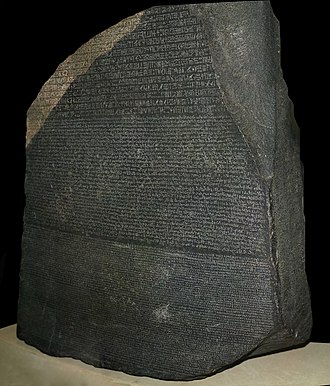
- The British Museum cites legal barriers under the British Museum Act of 1963, which places restrictions on returning objects.
- The Rosetta Stone was discovered in 1799 during the Napoleonic Wars in Egypt when French troops were knocking down a wall in the town of Rosetta. Following the French surrender to British forces in 1801, it was handed over in the Treaty of Alexandria and has been a part of the British Museum’s collection ever since.
- Adding to its defense, the British Museum noted that the Rosetta Stone is one of 29 known official decrees from the Ptolemaic period (332 B.C.E. to 30 B.C.E.), engraved with Egyptian hieroglyphs, Egyptian Demotic, and Ancient Greek that helped scholars understand hieroglyphic text. Twenty-two of these remain in Egypt, including the famed Decree of Canopus, a centerpiece of the Egyptian Museum in Cairo’s collection.

