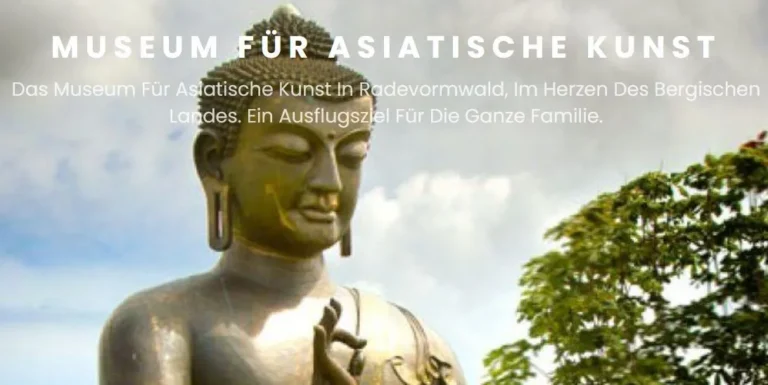
The 'Oceania and Indonesia' holdings in Altenburg (approx. 350 objects) and the entire ethnographic collection (approx. 250 objects) in Meerane will be examined. The initial check follows a research project on the Africa collection in Altenburg and the recommendation by ethnologist Ms Dolz from the State Ethnographic Collections of Saxony for Meerane.
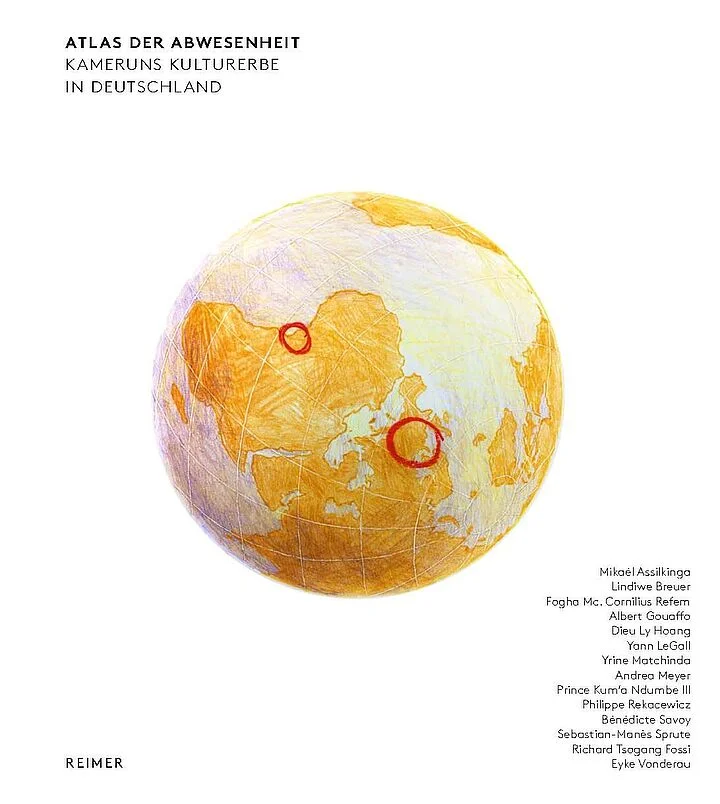
Yrine Matchinda examines in her disseration *Presence and Absence of Cameroonian Religious Objects in Colonial Collections of German Museums (1884–1919): Cultural and Religious Implications for Communities in Cameroon* how the musealisation of sacred/religious objects affects cultural identity, collective memory, and intergenerational transmission within communities of origin.
The conference 'Museums as Monuments to the Colonial Troops?' brings together historians, artists, curators and artists to examine the artefactual history of colonial warfare in three former German colonies: Togo, Kamerun and German East-Africa.
Ahmed Mohammad examines Germany's new Coordination Council for Returns of Cultural Property and Human Remains from Colonial Contexts — weighing what it genuinely achieves against the structural challenges that remain. The council's limitation is that it remains unclarified whether it will issue binding rulings or operate in an advisory capacity. The question of human remains is where this limitation is sharpest.
The main objective of this project is to create an interdisciplinary network of researchers working on the history of ancestral remains collections in museums in Germany and France from Central and Southern Africa, with a particular focus on provenance research.
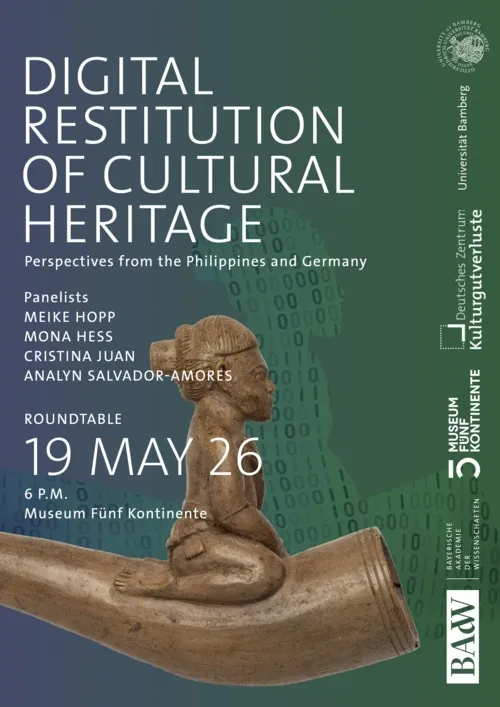
Roundtable about: From Collection to Collaboration: Revisiting the Colonial Philippine Collection of Heinrich Rothdauscher (1851–1937) at the Museum Fünf Kontinente in Munich
[in German] The Stiftung Preussischer Kulturbesitz (SPK) in Berlin is to return hundreds of skulls to Cameroon, Togo, Ghana and Nigeria. The origin of the human remains has been researched for several years. "If at all possible, the human bones should be able to return to where they came from," said foundation president Marion Ackermann.
The landscape of cultural property restitution has undergone a fundamental transformation over the past three decades. What was once a world governed by gentlemanly agreements between dealers, collectors, and museum curators has become a forensic battleground where digitized trafficking archives, scientific testing, and aggressive legal enforcement determine the fate of objects. This document provides a comprehensive analysis of the current state.
Paul Stewens writes: Brazil and Germany have concluded an agreement to deepen their cooperation. The Joint Declaration covers a broad range of topics, with at the end the biggest dinosaur repatriation news in years: the decision to return the fossil of Irritator challengeri to Brazil.
While Germany appears keen to expedite the conclusion of the negotiations with Namibia concerning the genocide committed against the Ovaherero and Nama communities between 1904 and 1908, the Namibian position reflects that the matter remains unresolved. Namibia continues to advocate for a comprehensive reparative framework grounded in five key elements: restitution, compensation, rehabilitation, guarantees of non-repetition, and satisfaction. Sarah Negumbo, the Director of Namibia Library and Archives Service, provides further insight into the historical, legal, and ethical dimensions underpinning these demands.
Thomas Fues (Dekolonial Erinnern) is monitoring all restitutions from German museums and universities to former colonial regions. Wherever possible, with a source. In 2026, Māori taonga („Pou of Hinematioro“) was returned to New Zealand by the University of Tübingen.
Laura Petersen argues that authors and artists have also taken up a responsibility for restitution. Deploying the literal translation ‘making-good-again’, this book focuses on the ‘making’ of law, literature and visual art to argue that restitution is a practice which is found in different genres, sites and temporalities.
[in English, in German] For the reconstruction of more than 90 % of human history, there are no other sources than archaeological ones. The ethical questions that arise in connection with the excavation, investigation, and exhibition of this central source group have been the subject of intensive study in English speaking countries for decades. Remains of colonial regions are part of this. How are these questions dealt with in Saxony Anhalt and other German speaking places?
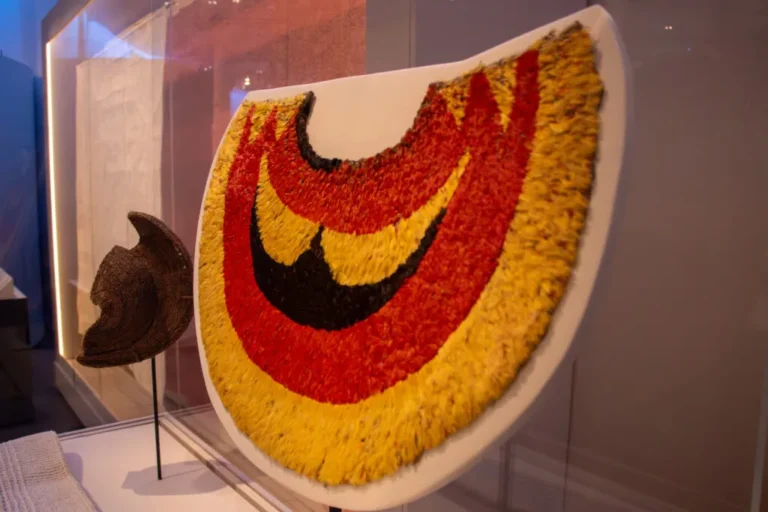
Makana Eyre thinks that the exhibit at The British Museum, “Hawaiʻi: a kingdom crossing oceans,” poses questions that have historically been uncomfortable for museums. Many items, though certainly not all, are sacred, intrinsically linked to ceremony, community, even Hawaiian sovereignty.
[in German, partially in English] In Germany, the federal, state and local governments decided to establish the "Coordination Council for Returns of Cultural Property and Human Remains from Colonial Contexts". The secretariat will be located at the Federal Foreign Office.
On 25 February 2026, the Togolese cabinet approved a draft law to establish a restitution committee. The committee will seek to repatriate tangible and intangible cultural heritage, as well as human remains and archives from colonial contexts. The bill refers to over 8,000 „objects“ currently held in foreign museums. They predominantly come from northern Togo.
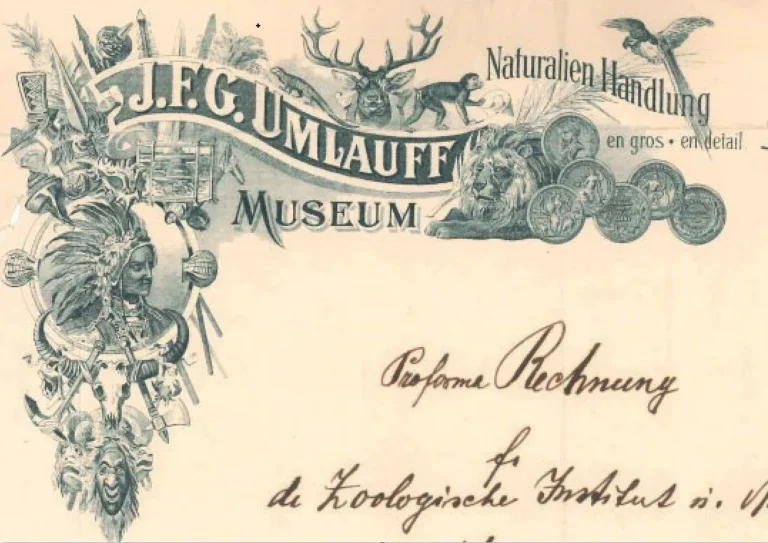
In addition to private and institutional collectors, natural history traders have historically been important sources of specimens and information for natural history museums in the past. However, the history and significance of the natural history traders is still little known and researched. One such naturalia trader with worldwide trading partners was the long-established Hamburg company of the J. F. G. Umlauff family.
The PAESE project (Provenance Research in Collections from Colonial Contexts in Lower Saxony) ran from 2018-2022. As part of the next phase, PAESE 3.0, we are updating and expanding this database. They do so recognising that the data concern the people, communities, and descendants from the regions where these *objects* come from.
In new episode of podcast "Decolonial Memories", Flaubert Djateng, coordinator of the civil society organisation Zenu Network in Cameroon, talks about remembrance work on the German colonial era in his country.
This article by Elias Aguigah, Yann LeGall and Jeanne-Ange Wagne (TU Berlin) is part of The Restitution of Knowledge project. It documents the history of ‘plunder’ of former African colonies and addresses its legacy in ethnological collections, with a focus on loot from so-called 'punitive expeditions', this time in the Grassi Museum für Völkerkunde in Leipzig (+ an addition about Togo loot in Stuttgart).
The Tangué is a ship’s beak carved from wood and placed on the bow of the ship of the royal Bele-Bele family. This mystical and sacred belonging symbolises power, particularly the ultimate authority of the King over the water tribes of the Douala kingdom, and is an integral part of socio-cultural and spiritual practices. n 1884, it was stolen by German military. Currently, it is in the Museum Fünf Kontinente in Munich.
Ganga Rajinee Dissanayaka discovered at a conference in Europe that Benin Bronzes, Egyptian antiquities and African collections were discussed. But Asia was unmentioned. And then when a colleague from Indonesia brought up the topic of Southeast Asian collections, the moderator nodded graciously and then moved on to another topic. Decolonisation, it appears, is an African story.
[in English and in German] The Prussian Cultural Heritage Foundation (SPK) transfers custody of three ancestors to the Molelia family of Tanzania. They now have sole control over the remains. Howe ver, immediate repatriation to Kibosho is not possible because it requires the approval of the Tanzanian government, which has not yet responded to the SPK’s offer to return the remains.
Thomas Laely writes: The debate on the repatriation of (in)tangible cultural heritage and belongings has developed a broad dynamic in recent years. This sudden activism raises questions. What is its background, what are the goals behind it, and how are they to be achieved? Is it primarily about African or rather European interests?
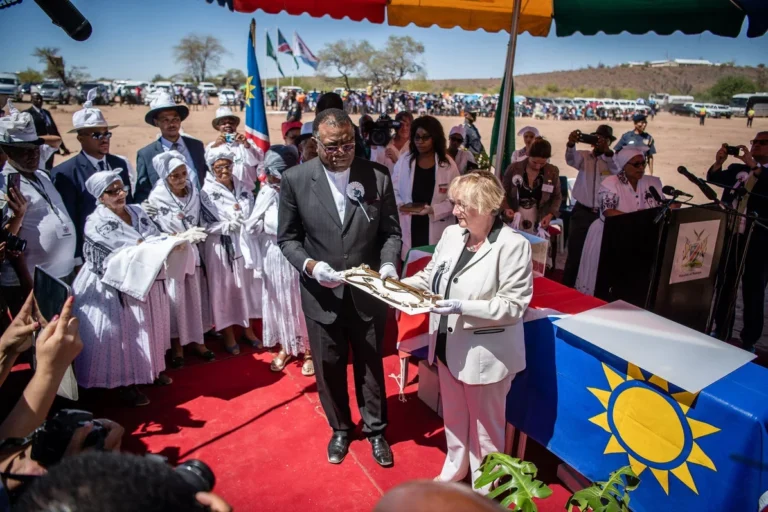
The restitution project, undertaken in Namibia from 2019 – 2024, was centred around 23 cultural belongings, which were selected from a collection of +/-1400 cultural belongings in the Ethnological Museum of Berlin, on the basis of their rarity, ability to travel well (fragility, arsenic poisoning etc), cultural, historical and aesthetic significance, as well as their connection to the history of Namibian fashion.
Around 1900, the Isanzu chief and seven of his bodyguards were arrested and hanged and/or beheaded, and their bodies were not returned to Isanzul and given for burial. Currently, they are in the University of Göttingen. Since the emptying of graves, there have been significant periods of drought and famine in the area. The Isanzu people believe that these environmental calamities are as a result of their human ancestors being dishonoured.
Restitution debates – the question of whether a cultural object should be returned from a museum or other collection to a person or community – often begin with a deceptively simple question: who owns an object?
This open access publication presents the results of a research project which is probably unique in this form: In the course of only two years, the provenances of approximately 1100 sets of Human Remains from the territory of the present-day nations of Kenya, Tanzania, and Rwanda were examined. Editors are Charles Mulinda Kabwete and Bernhard Heeb.
[English version, German version] Cultural heritage of the Nso in Germany - Episode with Dr Bulami Edward Fonyuy (Cameroon) by podcast Decolonial Memories (on all major platforms). In the podcast, Dr Bulami calls on the German government to play a long-term role in the healing process between the two countries, going beyond the restitution of colonial loot.
The handling of human remains from colonial contexts presents museums, collections and research institutions with complex professional as well as ethical challenges. According to a survey conducted by the German Contact Point, approximately 46% of the unmodified human remains recorded in German museums and university collections cannot be clearly attributed to a specific geographical origin.
[in German] Parts of the collection of the closed, missionary Werl museum "Forum der Völker" in Germany are under suspicion. Three collections may have originated from colonial looting. The German Lost Art Foundation sees a need for further research.
According to Ruby Satele, a PhD candidate from Sāmoa at the University of Vienna, rematriation involves not only the return of ancestors, but also practices of care while they remain in storage. Her research combines strong theoretical thinking with practical action to challenge power imbalances and promote greater justice in museums and universities.
[in English and German] One of the mortal remains of three people of Indigenous Australian descent in the University of Cologne’s Anatomy Center, which were planned to be returned on 4 December 2025. was discovered during the preparations for the return to have been replaced.
Between 1896-1916 today's Burundi was a German colony as part of what was known as ‘German East Africa’. Not only in colonial historiography, but also in provenance research, Burundi has been largely underrepresented and, similar to Rwanda, stands ‘in the shadow’ of the reappraisal of the material cultural heritage of present-day Tanzania.
Archaeologist and journalist Mariam Gichan wonders why complicated legal hurdles are sufficient to explain why the fossil hasn’t returned to Tanzania and whether “complicated” becomes a convenient reason for inaction.
More than 1,790 Aboriginal and Torres Strait Islander ancestral remains have been repatriated from 11 countries over the past 35 years. An unknown number remain abroad. Eight major museums can apply for up to $100,000 a year in federal funding to support the return of ancestors and cultural objects.
The Indonesian phrase pasang surut — “the tide in and out” — evokes the continuous movement of people, objects, and ideas across the seas that once linked Europe and the Indonesian archipelago. These currents shaped the emergence of colonial collections but also suggest the possibility of renewed circulation: of knowledge, accountability, and dialogue.
Leah Niederhausen and Nicole L. Immler joined forces with Markus Kooper (Hoachanas Community Library & Archives) and Talita Uinuses (Captain Hendrik Witbooi Auta !Nanseb Foundation) and listened to, archive, and amplify Nama knowledge (Namibia) on and experiences with restitution, reparation, and historical (in)justice.
[ in German ] The Stiftung Preußischer Kulturbesitz will return spiritual objects from Kpando containing human remains to Akpini People in Ghana, and spiritual objects to Australia. Currently, they are in the Ethnological Museum in Berlin.
The Georg Steindorff Collection, comprising 163 objects, is a central, yet complex, component of the Egyptian Museum-Georg Steindorff at Leipzig University. The “loss” for Georg Steindorff’s family was placed at the forefront of this restitution of Nazi-looted art, while the original, broader loss of heritage for the country of origin (Egypt) due to colonial practices was sidelined.
Twelve historical artefacts have been formally returned to Ethiopia after being kept by a German family for more than 100 years. The artefacts were y collected in the 1920s by Germany's then-envoy to Ethiopia Franz Weiss and his wife Hedwig.
[in English, in German] Thomas Fues sees many positive elements in the Joint Guidelines. which the federal government, the states and local authority associations adopted on 14 October 2025. They have some good guidelines but challenges remain as well.
The opening of the Grand Egyptian Museum comes with renewed calls for restitution: the famous Nefertiti bust, in Berlin since 1913, and the Stone of Rosetta, in London since 1801. Differing points of view.
[ in Dutch ] Last Saturday, the Grand Egyptian Museum (GEM) opened in Cairo. German President Frank-Walter Steinmeier was also in attendance. The world's largest archaeological museum displays more than 100,000 art treasures from Egyptian history, but one important piece is missing: the bust of Queen Nefertiti. It has graced the walls of Berlin for over a century.
[ in German ] Berlin Postkolonial, Decolonize Berlin, and Flinn Works welcome the update of the “Joint Guidelines on Dealing with Cultural Property and Human Remains from Colonial Contexts.” Clearer procedures and the establishment of unconditional returns are steps in the right direction. At the same time, the guidelines fall far short of a human rights- and international law-based understanding of restitution and repatriation.
[ in English and in German ] The main focus is on cultural belongings from four Cameroonian communities, the Bakoko, Bamum, Duala, and Maka, whose heritage was absorbed by these institutions during the German colonial era (1884-1919). This should also become a basis for future restitutions.
Former Tanzanian lawmaker and environmental activist Riziki Saidi Lulida argues: 'It was taken from Lindi, from our soil. They carried it piece by piece for more than a hundred kilometers, and some of our people died doing it. But no one in Lindi has ever benefited.'
[ in German ] The 2025 Guidelines promote dialogue with societies of origin and descendants, interdisciplinary provenance research, and proactive roles for museums, while they acknowledge the cultural, spiritual, and epistemological singularities of each case. They expand on communication channels for restitution requests, specifically notably requiring the consent of the state of origin, and call for a need to streamline procedures and call for an expert advisory body to be established to support restitution efforts. Further details on governance and the body’s specific mandate remain to be defined.
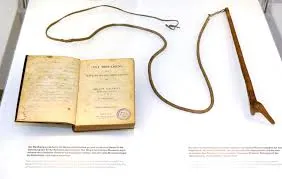
The German state Baden-Württemberg acknowledges its historical responsibility and is committed to provenance research in order to identify and return colonial cultural goods that were acquired unlawfully. The start was in 2019, when Hendrik Witbooi's Bible and whip were returned to Namibia.
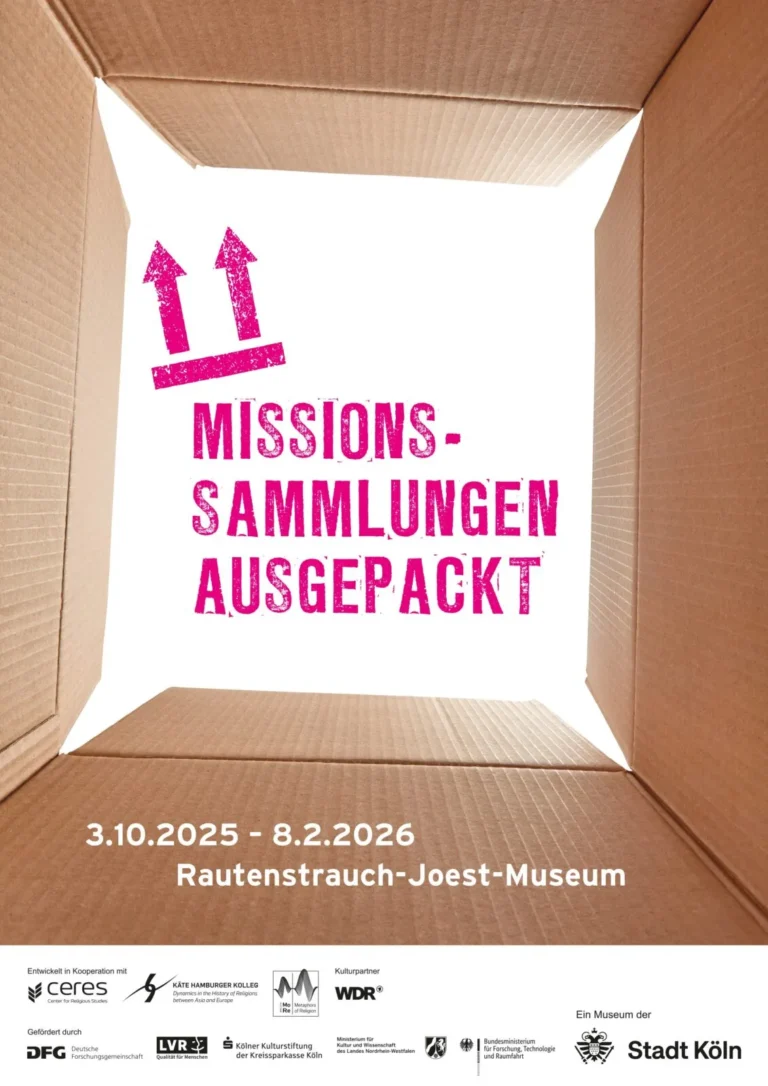
This special exhibition is dedicated to a long-overlooked collecting practice: The collection of objects by Catholic and Protestant missionary societies – primarily during the 19th and early 20th centuries.
The public display of artefacts looted by British colonial forces at the new Museum of West African Art was supposed to be the crowning glory of a decades-long restitution effort. What went wrong?
[ in English and in German ] Experience to date suggests that the portal has so far been little used by actors from the contexts of origin and other countries of the so-called Global South and their diasporic communities. To shed more light on this issue, we surveyed both the DDB as the provider and German and international researchers as (potential) users in writing.
Kulasumb Kalinoe (East Sepik area, Papua New Guinea; currrently James Cook University, Australia) focuses on the collection and removal of cultural material from Papua New Guinea (PNG) during the colonial era. She discusses views among the Papua New Guinean diaspora in Australia on museums and PNG collections, and argues that cultural heritage issues must be addressed before the work of decolonisation can begin.
Nigeria should establish a bilateral negotiating group with Germany on reparations to pay for its crimes against humanity, comprising the indigenous peoples of Nigeria and other African nations. Not as charity, but as a binding act of justice and a guarantee that such atrocities will never be repeated.
This workshop marks the conclusion of the interdisciplinary provenance research project "Human Remains from Colonial Contexts: Provenance Research in the Anthropological Collections of the University of Göttingen and MARKK Hamburg".
Thomas Fues writes: the German government emphasises its willingness to confront Germany’s colonial history and its consequences. But it remains to be seen whether and how such declarations of intent at the beginning of the legislative period will actually be implemented in the coming years.
[ in Spanish ] This special issue of Revista Memorias Disidentes shows debates and reflections on restitution, repatriation, return and reburial of ancestors in South America.
Vanessa Hava Schulmann (Freie Universität Berlin): The stories I will tell you about happened during my work in a Berlin university collection. I was tasked of meeting the deceased whose bones and tissues were stored in those dusty wooden cupboards and figure out how to handle their presence in a dignified way.
The Franco-German Fund for Provenance Research on cultural belonging from Sub-Saharan Africa has announced the funding of networking and parthership initiatives aimed at fostering the creation of international research teams and strengthening existing partnerships between Germany, France, and Sub-Saharan Africa.
Thomas Fues writes: In an historic breakthrough for German restitution policy on colonial contexts, Cameroon’s official Restitution Committee has agreed upon the return of colonially appropriated cultural heritage in September 2025. Four German museums are involved.
The human remains of a man from the indigenous Selk’nam community in Chile were handed over to a delegation from Tierra del Fuego at Lübeck Town Hall. The Selk’nam have now requested that their ancestor be buried in a Lübeck cemetery.
This working paper provides an analysis of grounds for return and restitution frameworks based upon them in different national contexts. One European policy context, namely the German, is analyzed alongside three Latin American legislative contexts: the Argentinian, Chilean, and Brazilian.
The path to true restitution requires more than symbolic gestures, demanding that Britain repeal its obstructive laws, France accelerate its glacial restitution process, and all former colonial powers establish transparent frameworks for repatriation.
This working paper offers an inventory of missionary orders and societies active in German colonial regions in Africa and Asia, the information available about them and the options for further research.
This article postulates that what we have seen in the past decade has been a turning point in memory politics of the colonial past, and it asks whether a new Franco-German paradigm in memory politics has emerged?
A first activity will be the hosting of a Memorial Service to honor 19 individuals whose crania were taken from New Orleans in the 1880s and sent to Leipzig, Germany.
Why and how is filmmaking important to the search for justice and efforts to right historical wrongs? Because filmmaking, as an art, is partly responsible for didactic, historical portraiture.
The repatriation of African art is gaining momentum, but a number of highly important and symbolic pieces remain in the hands of the continent’s former colonisers.
The (black-red) coalition agreement of Conservatives (CDU/CSU) and Social Democrats (SPD) in Germany contains remarkably positive statements on dealing with the colonial legacy.
Markus Scholz discusses the missionary practice and ideas of the Bavarian Capuchins among the Mapuche in Araucanía in south Chile from 1895–1896 onwards. Distinguishing themselves as defenders of Indigenous land rights and as linguistic experts on the Mapuche language, they also assembled a rich collection of ethnographic artifacts and natural specimens, which could be problematic today. [ open access ]
'Deconstructing Dinosaurs - The History of the German Tendaguru Expedition and its finds, 1906-2023' takes a fresh look at the history of the German Tendaguru Expedition (1909–1913), using recently uncovered sources to reveal how Berlin’s Natural History Museum appropriated and extracted 225 tonnes of dinosaur fossils from land belonging to modern-day Tanzania.
[ simultaneous translation into German, French and English ] 'Hidden paths and emerging networks - Provenance research between memory and responsibility' is the title of the event on the occasion of the 7th International Research Day on the Provenance of Cultural Objects, the Franco-German Research Fund on the Provenance of Sub-Saharan African Objects invites leading scientists and experts working at the intersection of provenance research, restitution issues and museum practices.
How are museum objects valued and who decides? Trevor Engel explores the relationship of perceived scientific value to the idea of hoarding applied to colonial institutions' holdings.
Contributing to current efforts to grapple with museums' colonial legacies, this article takes the question of evidence as an entry point to unlock the multi-layered make-up of African spiritual artifacts in missionary collections.
European governments negotiate restitutions only with the governments of countries of origin. The collections they negotiate usually are state-owned and contain valuable, not rarely iconic objects. The path followed by governments of former colonies is quite similar. It is the path of what Laurajane Smith called the authorized heritage discourse (AHD), where only a limited part of a country’s heritage dominates in national narratives and public policies. This approach has serious limitations.
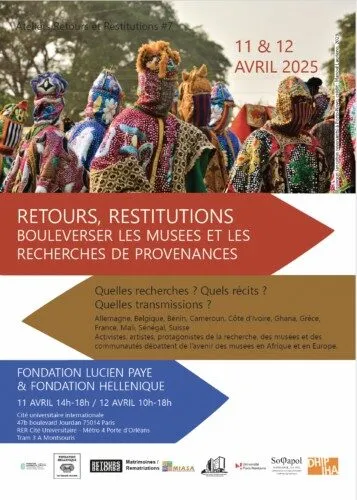
[ conference in French ] Germany, Benin, Cameroon, Ghana, Greece, France, Ivory Coast, Mali, Sénégal, Switzerland - Academics, activists, artists, experts from communities and museum actors debate the future of museums in Africa and in Europe.
Until 25 May 2025, the Louvre Abu Dhabi unveils 'Kings and Queens of Africa: Forms and Figures of Power', an exhibition celebrating 350 works of African art and majesty, most of them on loan from Musée Du Quai Branly-Jacques Chirac. Is this a manner to postpone their restitution?
This dissertation investigates the histories and itineraries of Abelam collections from the East Sepik Province of Papua New Guinea held in museums in Europe (the Netherlands, Germany, Switzerland and the UK), Australia and Papua New Guinea.
“Every empire, however, tells itself and the world that it is unlike all other empires that its mission is not to plunder and control but to educate and liberate” Edward W. Said.
RM* saw reports from AP, Hyperallergic, DutchNews, Jerusalem Post, ArtDependence, Punch, Arise, Voice of Alexandria, Devdiscours, Pinnacle Gazette and AllAfrica.
The workshop “People, Objects and Ideas Circulation: Transnational Entanglements between Brazil and Germany”, held in the context of the 200th anniversary of German-speaking people’s immigration to Brazil, offered a fresh perspective to reflect upon the relations between Brazil and Germany.
[ open access ] 'Displacing and Displaying the Objects of Others - The Materiality of Identity and Depots of Global History' brings a diverse range of contributions inspired by research from the "Hamburg’s (post-)colonial legacy" research center.
[ in German, in English ] The German government has again defended the return of the Benin bronzes to Nigeria. It was good and right to return them without conditions. Nigeria can decide where they stay, said the parliamentary state secretary in the foreign office, Müntefering, in the Bundestag.
A foundational handbook for critical heritage research about Africa and its diaspora. Part III African Objects and the Global Museum-Scape is relevant for RM*.
During a solemn ceremony at the GRASSI Museum für Völkerkunde zu Leipzig, ancestral remains, which had been in the possession of the Staatliche Ethnographische Sammlungen Sachsen (SES), were returned to representatives of their Māori (New Zealand) und Moriori (Chatham Islands) communities of origin.
Germany had hoped that by returning 20 Benin Bronzes to Nigeria last year it was “healing the wounds” of colonialism. But when it emerged that ownership of the repatriated objects will pass to the king of Benin rather than the Nigerian state, Berlin found itself facing a public relations nightmare.
[ in German ] The Roman-Catholic (RC) Institute for World-Church and Mission (IWM) in Frankfurt am Main is running a two-years pilot-project "Mission-History Collections", funded by two RC organisations.
[ in German, English and French ] German museums of world cultures hold 40,000 objects from Cameroon, more than the entire African collection of the British Museum, according to a new study, presented by Bénédicte Savoy (Technische Universität, Berlin) and Albert Gouaffo (University of Dschang).
Museums in Leipzig, Göttingen, Stuttgart and three other German cities have transferred the remains of Māori and Moriori people to a New Zealand delegation, headed Te Herekiekie Herewini of the Museum of New Zealand Te Papa Tongarewa.
The German government says it wants to confront the legacy of its colonial rule in Africa. But it is still failing to address issues such as its brutal repression of the Maji Maji uprising in Tanzania.
South Africa's Department of Sports, Arts and Culture is preparing to repatriate human remains which were allegedly stolen from graves in Port Alfred, in the Eastern Cape and other places. They currently are in the US and Europe.
When Sylvie Vernyuy Njobati saw the sacred statue of her Nso people for the first time, she was shaking. "I was seeing... our founder... our mother locked up in some glass container. And for 120 years, she's been yelling out. She needs to be back home," she told the BBC's The Comb podcast.
Known only as A01392 in the records of the Grassi Museum in Saxony, now the life mask of a Ngāti Toa tupuna has returned to his whenua and people as a taonga.
Germany has handed over to Colombia two masks made by the Indigenous Kogi people that had been in a Berlin museum’s collection for more than a century, another step in the country’s restitution of cultural artifacts as European nations reappraise their colonial-era past. They may have health risks.
Colonial looted art is finally being returned to its countries of origin. New problems lie ahead, as former colonies now fear the return of looted art may take the place of a comprehensive reparation for colonial crimes.
By looking into museum inventories and archives, The Restitution of Knowledge wishes to document and rethink the history of ‘plunder’ in ethnological collections.
Dresden’s museum of world cultures returned four everyday objects to the Kaurna Aboriginal community of Australia at a ceremony in Sydney: the spear, digging stick, cudgel and net were brought to Germany by two protestant missionaries between 1838 and 1839.
Political turmoil across the continent is hampering plans for national structures to return colonial-era heritage. But the UK, once a laggard, appears to be preparing to review laws
During the European expansion constant fighting and violence and the taking of spoils of war went hand-in-hand. Palaces, shrines, homesteads and entire villages were plundered and destroyed. In the restitution debate, the focus is mostly on state-collections resulting from these confrontations. There is ample evidence, however, that many more parties were involved. This blogpost has some of the evidence.
Since 2017, Berlin's Museum of Prehistory and Early History has been carrying out research on around 1,100 skulls from what was known as German East Africa.
A project to investigate the origins of human skulls taken from the former colony of German East Africa has concluded that nearly all are the remains of people from the same colonized region
Aurora Hamm argues that restituted objects are instruments of soft power through public and cultural diplomacy. The (former) coloniser states utilise them, with geopolitical considerations in mind, as a means of ‘restarting’ their bilateral relationships and thus obtaining a certain form the restitution
Germany asks forgiveness for 'dark' colonial legacy in Tanzania and discusses repatriation of human remains. German President Frank-Walter Steinmeier said his country would "open negotiations" with Tanzania to discuss the is colonial past in the East African nation.
When the southwestern jungles of Colombia were rediscovered by Spanish colonizers in the 18th century, looters arrived looking for gold. Scientists eventually followed to survey, study, and inventory the site.
This is the “age of apology” for past wrongs. Reams of articles in Western media are devoted to former colonizer countries and yet, this is rarely the result of requests from former colonies. Example India.
Germany and France will jointly spend €2.1m (£1.8m) to further research the provenance of African heritage objects in their national museums’ collections, which could prepare the ground for their eventual return.
An exhibition at the Foreign Ministry Museum in Mexico City is displaying more than 100 stolen pieces that have been recovered, thanks to intense work by the country’s diplomats.
The documentary "The Empty Grave" traces the mission of two families in Tanzania that embark on an emotional journey to reclaim their ancestors’ human remains from German museums.
Tea sets, paravents, spears and shields – even if today’s heirs were not involved in their acquisition or theft, these artefacts are inextricably linked to German colonial history.
'Measina' or cultural artefacts kept in the Uebersee Museum in Bremen will be back in Samoa in June 2024. A team from the National University of Samoa, led by Ta’iao Matiu Dr Matavai Tautunu, will be making this trip.
Some 17,000 human remains are said to be in the collections of German museums and universities. It's often no longer clear how they ended up in Germany. Colonialists committed horrific crimes.
The Lebang community in Cameroon has been the recipient of eight (8) significant cultural and spiritual heritages sold in auction and online in The Netherlands and Germany.
This publication compiles information on 39 institutions in museums and universities in German-speaking countries that have accessioned, altogether, almost 19,000 pieces of tangible cultural heritage produced in Namibian communities over a period of time of more than 160 years (pre-1860s to date).
Chief Charles Taku has made an impassioned call for the “urgent and unconditional restitution of the Bangwa Queen in Dapper Foundation in France, the Bangwa King in Metropolitan Museum in New York, USA and the cultural heritage artefacts which are in the National Ethnological Museum in Berlin and Municipal Museums in Germany, in the Netherlands and other parts of the world.”
This paper offers an overview of successful cases and unsettled claims submitted to West and East German museums, collections and private people between 1970 and 2021.
Omo N’ Oba N’ Edo, Oba of Benin, has taken custody of two looted royal stools from the German government, symbolising a significant step in the right direction.
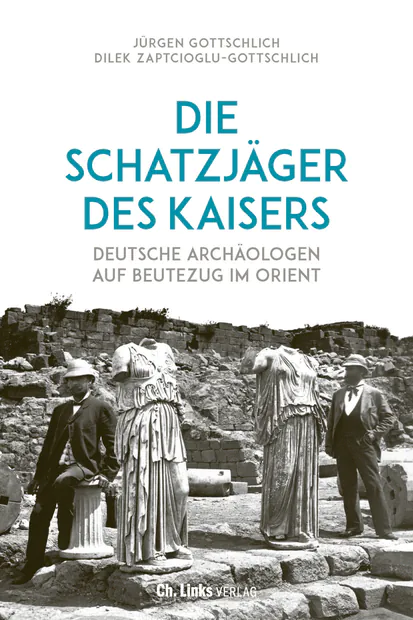
[ in German ] While the debate on looted art has so far focussed on works of art from African and Asian colonies, Jürgen Gottschlich and Dilek Zaptcioglu-Gottschlich focus on archaeological finds in the former Ottoman Empire in their 2021 book Die Schatzgräber des Kaisers. Deutsche Archäologen auf Beutesuch in Oriënt.
Seven German museums under the management of the Zentralarchiv of the Staatliche Museen zu Berlin (Central Archive of the Staatliche Museen zu Berlin) systematically examine their holdings for looted goods from the Boxer War in cooperation with the Palace Museum Beijing.
In the German Historical Institute London (GHIL) podcast interview, Kokou Azamede, Associate Professor at the Department of German Studies at the University of Lomé tells about restitution in his country and the role of communities.
[ in Dutch ] Museum Huis Doorn in the Netherlands, the exiling place where Wilhelm II lived until his death in 1941, owns 36,000 objects from the ex- emperor. How many of these have a colonial origin, and whether there is colonial predatory art, for example, the museum did not know until recently.
In a lengthy contribution, Kwame Opoku wonders how long the Ovaherero must wait for justice and reparation for the German genocide? He extensively quotes a press release of the Ovaherero Traditional Authority-Ouhonapare uo Mananeno uo Vaherero. Part of it is about repatriation.
Egypt has launched an international petition to repatriate the 3,400-year-old bust of Queen Nefertiti from Berlin, marking the latest effort in its long-standing campaign to reclaim its stolen artefacts.
For decades, families in Tanzania have been demanding the return of their ancestors’ human remains from Germany. These ancestors, executed leaders of resistance efforts against German colonial rule, were exhumed from their graves and taken to Germany. Cece Mlay discusses co-producing a new documentary on how their descendants are seeking justice and closure today.
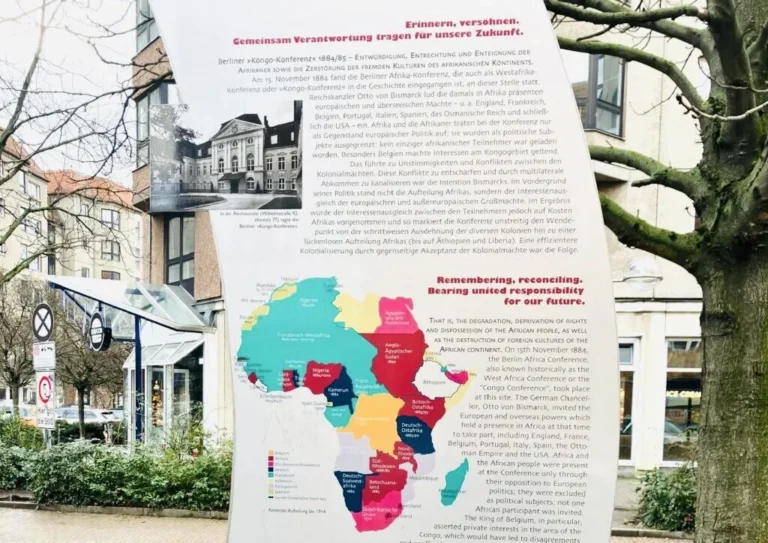
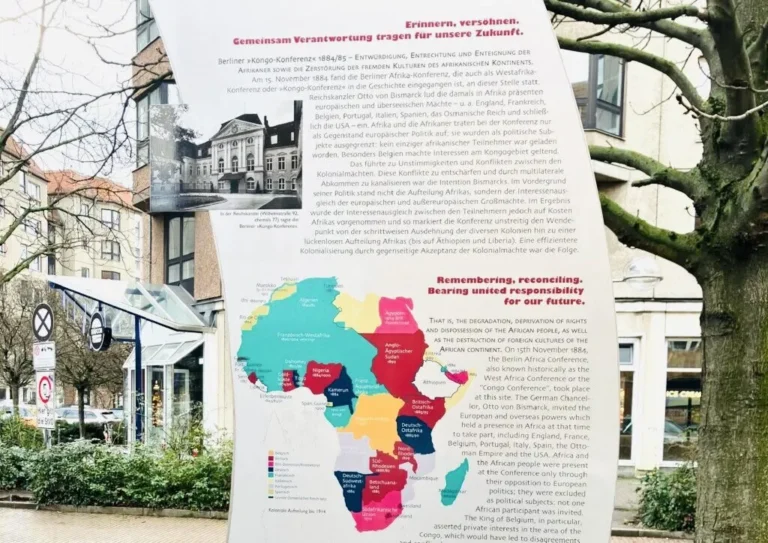
2024 marks the 140th anniversary of the start of the historic Berlin West Africa Conference of 1884/85. Germany is working hard to come to terms with its colonial history, including restitution.
Germany was a significant – and often brutal – colonial power in Africa. But this colonial history is not told as often as that of other imperialist nations. A new book called The Long Shadow of German Colonialism: Amnesia, Denialism and Revisionism aims to bring the past into the light. It explores not just the history of German colonialism, but also how its legacy has played out in German society, politics and the media.
Julia Binter talks about knowledge justice in relation to Namibian cultural assets and investigates cooperative research on cultural assets from colonial contexts in museums.