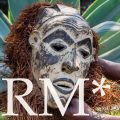
[ in Dutch ] An argument sometimes used not to give back art objects is the claim that Africans are unable to properly care for their own art objects. This paternalistic view was illustrated by Didier Rykner, a prominent French art critic and editor-in-chief of online art magazine La Tribune de l’Art. He stated in 2018: ‘Africans should recognize that Europeans have preserved heritage that otherwise might have disappeared. Without collectors, most objects would have been lost due to ignorance, decay or destruction.’
Rykner’s comment was widely criticized because it reflected a colonial mentality that still affects debates about stolen cultural heritage. Mark Olaitan, curator of the Benin City National Museum in Nigeria, therefore strongly rejects Rykner’s view: “We have made these artifacts and preserved them for more than five hundred years. When the Europeans came to steal them, they were intact: no mold, no termites, nothing. And now, after being held in ‘exile’ for 129 years, they claim that we cannot take care of it?” Ayodele Odesola, a Nigerian country expert and lecturer in international trade at Windesheim University of Applied Sciences, emphasizes the essence of the matter: “Even if we could not take care of it, we still have the right to choose what happens to it.”
Many former colonial powers only offer to lend stolen treasures, but do not want to return them. Another problem is that local researchers often remain dependent on European programs and therefore cannot operate autonomously, says heritage researcher Jos van Beurden, senior researcher on cultural heritage at the Vrije Universiteit Amsterdam who works closely with communities in former colonies. Because many projects are funded by European governments or universities, local scientists are used as assistants rather than as equal partners.
For Timothy Toto, born in the Netherlands with an Ugandan-Rwandan background and chairman of the Association of African Students at Erasmus University in Rotterdam, the debate about artifacts is about much more than objects or money. “At school in the Netherlands, we learned too little about how the Dutch government enslaved others in countries like South Africa,” he says. “By truthfully teaching history and facing the awkward past, communities can regain their identity and pride.” According to him, restoration of dignity means: acknowledging that colonial looting has left deep wounds, and not just material losses. But not only education in the Netherlands falls short, but also in Nigeria. Conservator Olaitan believes that the return of predatory art offers an opportunity to decolonize education.