Zimbabwe Birds were carved from single blocks of stone and discovered at the archaeological site of Great Zimbabwe – a vast stone city considered to be a political and spiritual center of a powerful pre‑colonial kingdom built between the 11th and 15th centuries. During the late 19th century several original Zimbabwe Birds were removed from Zimbabwe.
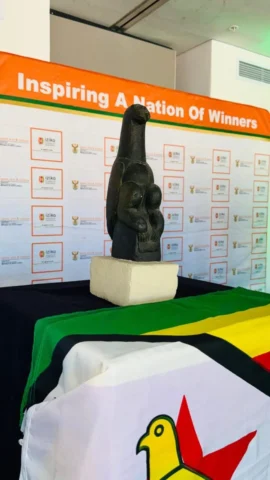
Courtesy Iziko Museums
Zimbabwe bird, known as Hungwe, is a symbol of resilience and unity. It has been incorporated into Zimbabwe’s national insignia, as central to the flag and coat of arms. The bird is considered to be a powerful symbol of cultural restitution and post‑colonial justice.
After Zimbabwe’s independence in 1980, international diplomatic efforts to reclaim these resulted in all but one being returned, which is the one in South Africa. It was party of the private colelction of Cecil Rhodes, and ended up later in the Iziko Museums.
The handover ceremony forms part of South Africa’s broader country-to-country repatriation programme for heritage objects and ancestral remains which seeks to restore dignity to those impacted during the colonial era. Through continued collaboration between governments and heritage institutions, South Africa is working to ensure ethical stewardship, restorative justice and cultural recognition.
As Council, we reaffirm Iziko Museums of South Africa’s unwavering commitment to upholding the principles of human dignity, social justice, and the recognition of our shared heritage, said Chairperson of Iziko Council, Mr Marvin Mdhluli.
For scholar Njabu Chipangura, ‘it was an emotional home sending ceremony of my own heritage‘.

