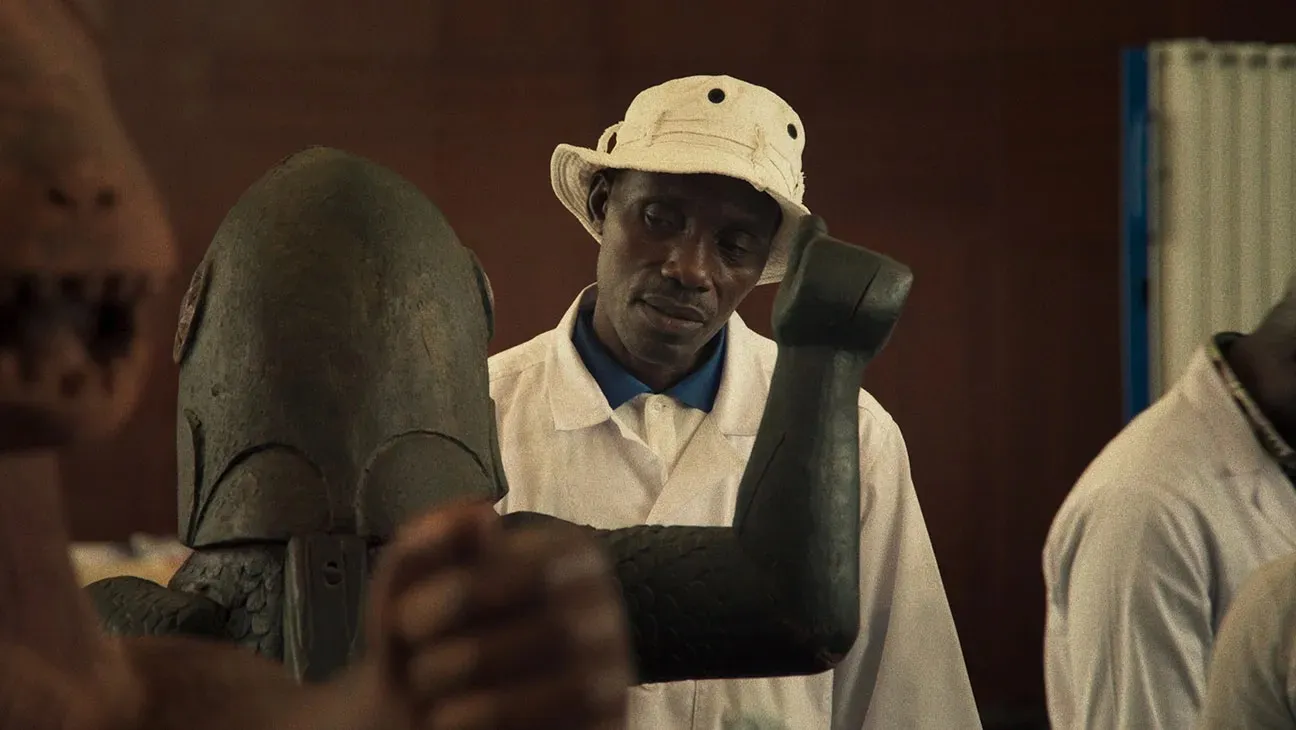
That may explain why, in the documentary Dahomey, filmmaker Masti Diop shoots the backrooms of Paris’s Musée Quai Branly with such a cold gaze, as though they were the hallways of a penitentiary. But the 26 objects that finally went home, do not talk until they are examined by Quai Branly staff, who have removed it from its holding cell and placed it inside a wooden crate. Diop’s camera joins 26 inside this coffin-like space, which is nailed shut before our very eyes. To watch that sequence feels like being buried alive.
Dahomey smartly exceeds the West by spending most of its runtime in Benin. This is itself a subversion of the Western repatriation narrative, which typically ends with objects flying home from Europe. Diop is instead more interested in exploring what happens once those objects come back.