In The Mapuche Collections in the Ethnologisches Museum Berlin: (Re)Interpretations of the Collections in the Present, Lena Steffens, Nicolás Valenzuela Quintupil and Carolina Bayer write:
The ca. 600 cultural artefacts of the Mapuche in the Ethnologisches Museum were brought to Berlin between 1829 and 2015, with the majority coming to Berlin in the decades following the colonisation of Mapuche territory and the arrival of German settlers in Chile.
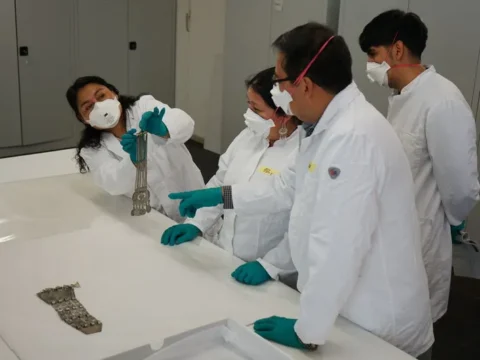
Courtesy CoMuse
For the Mapuche, these pieces are still significant today, as they reveal cultural and historical processes and a resistant and vibrant
culture existing right up to the present day. Their centuries-long resistance to colonisation by the Spanish colonial power from the sixteenth century and subsequently by the states of Chile and Argentina up to the present day, is reflected in Mapuche identity
politics and cultural processes.
In a cooperation project, representatives of the Mapuche have been working with the collection in Berlin on (re)interpretations of the objects in the present and the stories, knowledge and practices associated with them.