Kwame Opoku: The Republic of Benin has claimed another 35 cultural belongings from the five thousand or so held in French collections. With the new French restitution law accepted, hopes have been revived that Gou can be welcomed in Cotonou soon. How realistic is this?
Bénédicte Savoy noted: “You have a huge collection of African books looted by the French in the 19th century in the Bibliothèque Nationale. But they are not in a department for African manuscripts because they are written in Arabic. It is African language but in Arabic letters. So in France, if you would go to the Bibliothèque Nationale, they would say, ‘No, we have no manuscript Africain. We have manuscript Arabe.’”
Patrice Robertson: The repatriation conversation extends beyond financial compensation to cultural restitution, truth-telling, legal pathways, education, stronger relationships between Africa and its diaspora, and other forms of repair. The language matters. The conversation recognises that the injury did not happen only to African states. It happened to African people, including those whose descendants now live beyond the continent.
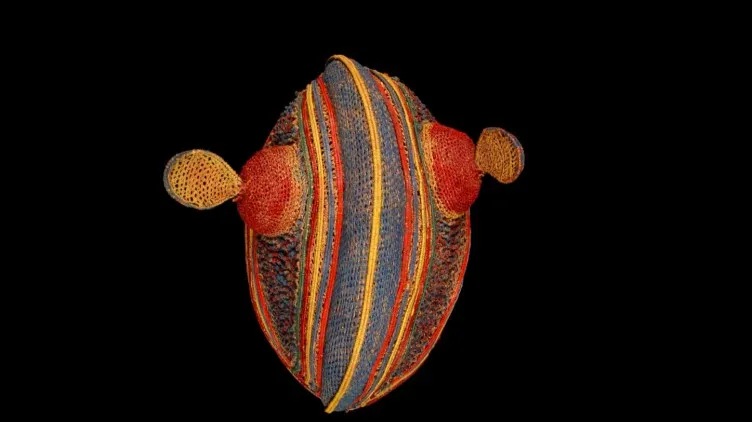
Over three hundred masks left Ceylon for Hamburg and arrived in Cologne as a single line in a dealer's ledger. Names, villages, carvers, ritual lineages: none of it travelled with them. At the Rautenstrauch-Joest-Museum (RJM), Cologne, they are studied now by scholars from three different disciplines.
Thirty-nine Naga ancestors will soon begin their journey home from Oxford to Nagaland. This is the culmination of a Naga-led process of dialogue, research and reconciliation that began in 2020, supported by the Forum for Naga Reconciliation, in collaboration with the Pitt Rivers Museum, a process the Naga partners describe as not an ending but as a step on the longer path towards healing.
Tamara Newton writes a short piece about the phrase "modern standards of consent". She includes a few historical examples of resistance and perspectives on why the burden of proof should sit with museums and institutions.
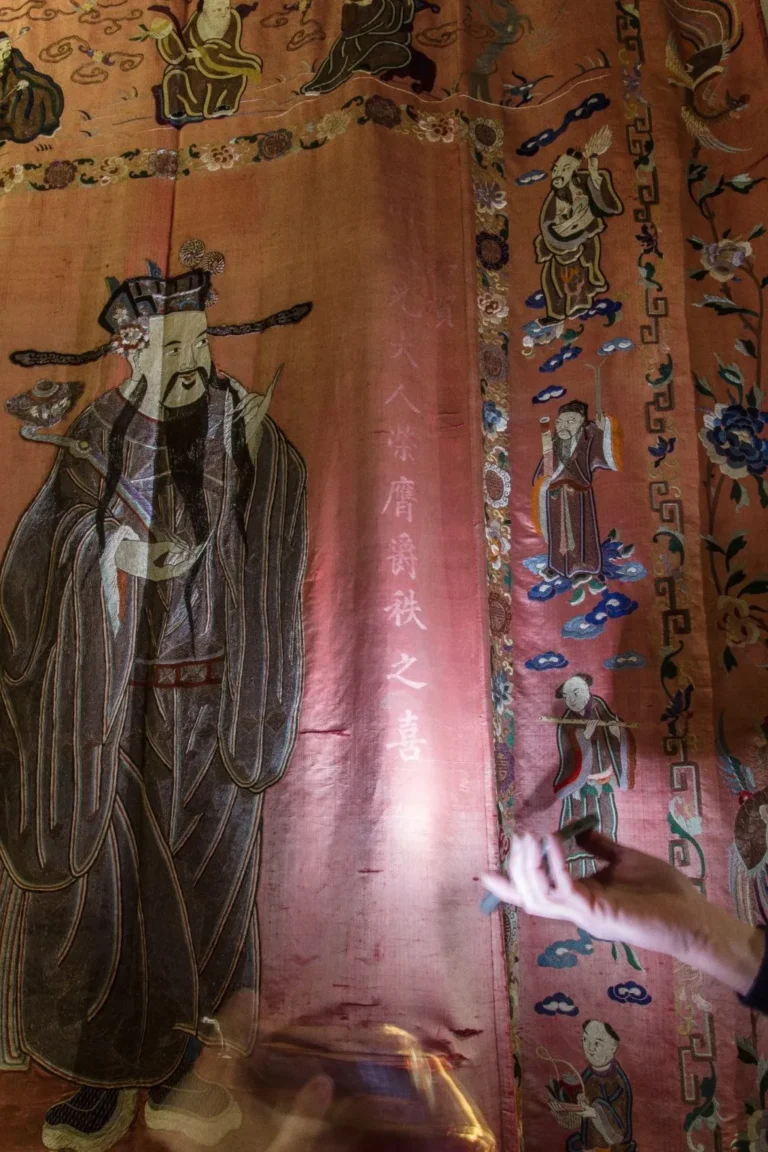
The provenance of a Chinese honorary tapestry – which disappeared from China in 1901 and became part of the collection of Mission Museum Steyl under circumstances that are not entirely clear – has been investigated. The SVD missionaries played a role in fuelling the Boxer Rebellion.
A group of students at University College London’s (UCL) Institute of Archaeology critically examined the Petrie Palestinian Collection (PPC) to explore colonial legacies embedded in Western institutions. This reflection foregrounds Palestinian experiences with the collection.
Rachel Gatehouse and Jin Gao examine UK heritage institutions’ repatriation practices through a new database of repatriated items from 2010 to 2022. The dataset records 491 items across 29 case studies, returned to 7 countries, with most material consisting of human remains from London-based national museums, particularly the Natural History Museum. The list, created by Tamara Newton, is publicly accessible.
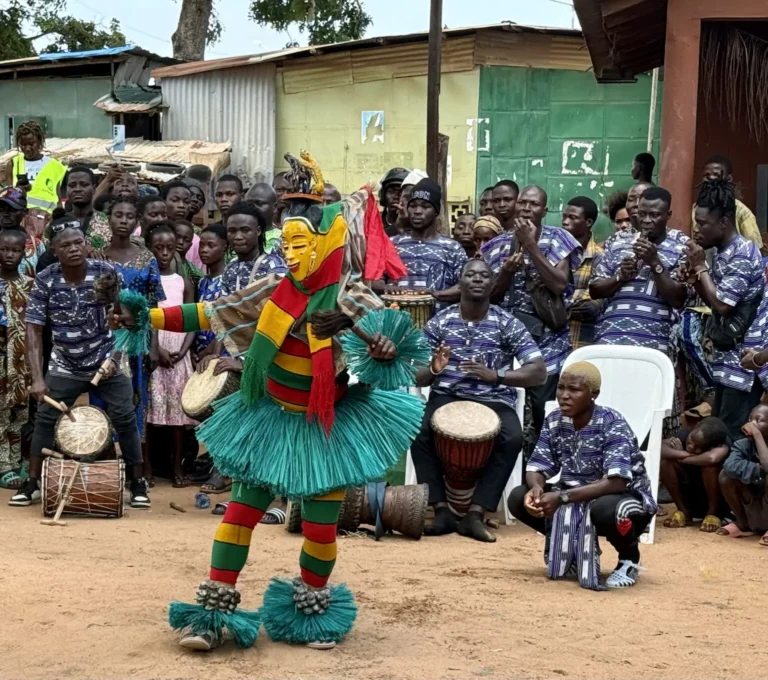
As Benin invests in museums, welcomes the return of looted royal treasures and stages the Festival of Masks, it is advancing a new vision of heritage in which ritual, scholarship and cultural policy converge, challenging conventional understandings of what museums preserve and how history is told.
Whilst repatriation alone does not equal a decolonised museum, elements of the repatriation process provide learnings that can be applied to anti-colonial museum practice more broadly. Amy Shakespeare puts forward a new practical framework for anti-colonial museum practice and museology – The Radicals.
Indigenous knowledge systems (IKS) contemplate the world through an interconnected lens, reflecting the integrated way life is lived and the symbiotic relationship between humans and their immediate tangible and intangible environment. Open Restitution Africa sees how the invocation of an IKS lens shifts the means and desired ends of restitutionary work around African cultural belongings and human ancestors.
Four authors argue that the rise of social media has amplified international trafficking of mummified humans and animals. However, these preserved remains pose health and biosecurity risks due to the toxicity of embalming methods and/or suboptimal storage that can promote microbial growth. This article investigates these risks by analysing 128 online posts from Meta platforms, e-commerce sites, web-stores, and auction houses.
The practice of provenance research has exploded beyond museum staff and investigative journalists to become a nearly mainstream area of academic study across the developed world. But the general public still knows very little about what the word actually means. Art historian Melissa Metzgar shows steps towards making provenance more accessible and decolonising collecting practices.
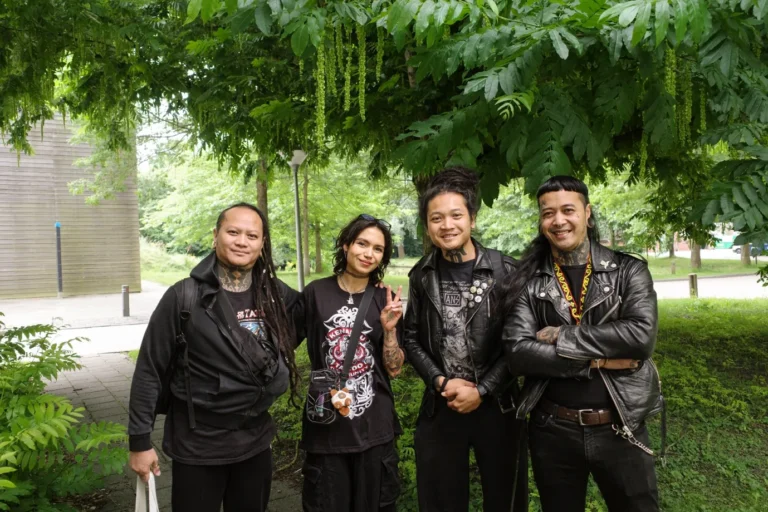
In 'Towards Decolonising Dutch Museums: Provenance research, participatory methodologies, and Indigenous tattooists', Talisha Schilder critically reflects about museums, after doing provenance research with Sylvester (Iban), Talisha (Dutch-Indo), Pai (Bidayuh), and Yanto (Punan) at the depot of the University Museum Groningen. Her conclusion: the inclusion of Indigenous tattooists in provenance research is an important step towards decolonising museums.
Ireland has never had a formal mechanism for determining restitution or repatriation claims. However, this may change with the recent publication of a report from the Advisory Committee on the Restitution and Repatriation of Cultural Heritage. Ronan Bergin thinks it is a 'refreshing advice:
Nepali content creator Nikki Thapa writes: Decades of looting turned living Deities into costly global commodities, but the era of quiet disappearance is giving way to one of recovery and return.
Drawing on his broad research, Chipangura explores how ethnographic museums holding African collections are confronting the enduring consequences of colonialism. His presentation moves beyond familiar debates on restitution and repatriation, asking a more fundamental question: What are museums for, and whom do they serve?
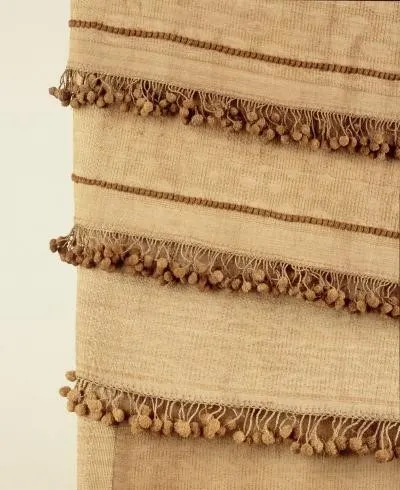
[in French] Vicky Victoire Muke (Kinshasa Uni) shares a new preliminary study devoted to the colouring materials of the costumes and heritage fabrics of the Democratic Republic of Congo, based on the inventory records of the Musée du quai Branly - Jacques Chirac. His questions: How did you dye a kuba loincloth a century ago? Where does the deep red of mbuti adornments come from? And why is mangbetu black called "earth pigment"?
[in French] The metaphor of “objects as ambassadors” - used to refer to Kanak objects originating in New Caledonia and currently kept outside the territory, and sometimes returned there temporarily for exhibitions, arises in a context of institutional decolonisation and the aspiration for full Kanak sovereignty, with New Caledonia remaining a sui generis French overseas collectivity.
Emiline Smith argues that the 3,000-year-old Iranian gold discs, which American actress Zendaya showed at a London photocall for Christopher Nolan’s forthcoming adaptation of The Odyssey, are emblematic of a market that has spent decades quietly dismantling ancient objects for parts.
Reilly Clark argues that, if the return of African cultural objects ends with the literal return of physical objects, it does little to address legacies of colonial theft, value extraction, and epistemicide but can reinscribe the power of Western interpretive frameworks and reproduce Western patterns of state power by returning objects to Western-style institutions within postcolonial nation-states...
Adrian Plau of the Wellington Trust that recently returned Jain manuscripts to the Jain community in GB, argues: Restitution is not a remedy for the past alone – it’s about the future we can create together.
Art historian Muhammad Nishat Gurmani writes: The bronze figurine of the Dancing Girl of Mohenjo-daro was made 4500 years ago by the Indus Valley Civilisation. She resides in a museum in India but she comes from what is now Pakistan. She has been the subject of various controversies in recent years...
In her article 'From Cultural Hub to Crime Scene: British Museum Refuses Repatriation of Thefted Colonial Loot', Sierra Kinsey-Lawton argues that the British Museum is currently facing intensified pressure over the scale of its unprovenanced non‑European collection, following an internal review that found that more than 40% of those objects lack sufficient documentation to establish legal ownership.
[in French] Vicky Victoire Muke (Kinshasa Uni) writes: This is a first effort to the heritage costumes of the Democratic Republic of Congo (DRC) as they appear in the online collections of the Royal Museum for Central Africa (RMCA – AfricaMuseum, Belgium). It is intended as a situational resource, intended for anyone wishing to familiarise themselves with the diversity of costumes, loincloths and adornments preserved in these collections.
For many museum professionals, the answer appears self-evident. Collections exist to be preserved. Conservation safeguards objects for future generations. Museums are institutions built around permanence. Johm Moses challenges these assumptions. Rather than taking conservation, collections, or even museums themselves as given, Moses invites us to begin elsewhere: with people, languages, relationships, and the continuity of cultural life.
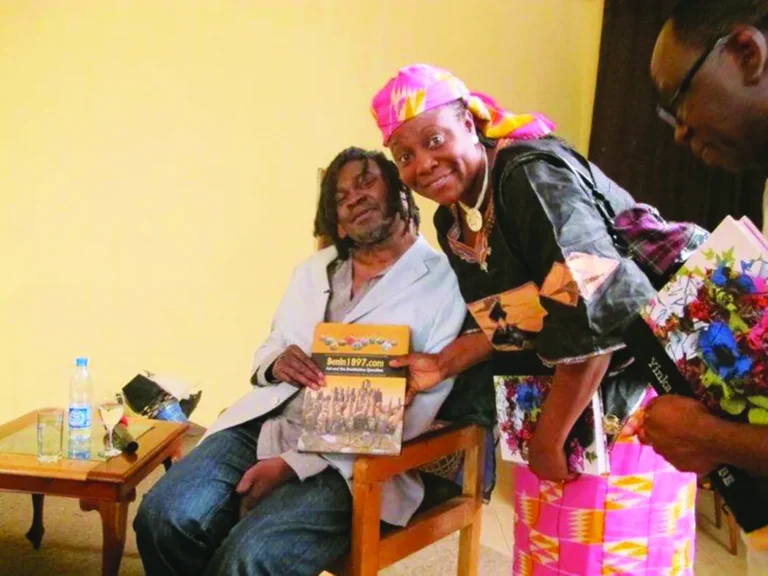
Okechukwu Uwaezuoke argues: The homecoming of Yinka Shonibare’s work from the 2024 Venice Biennale “Monument to the Restitution of the Mind and Soul” to Benin City seemed to complete one historical circle while quietly opening another debate.
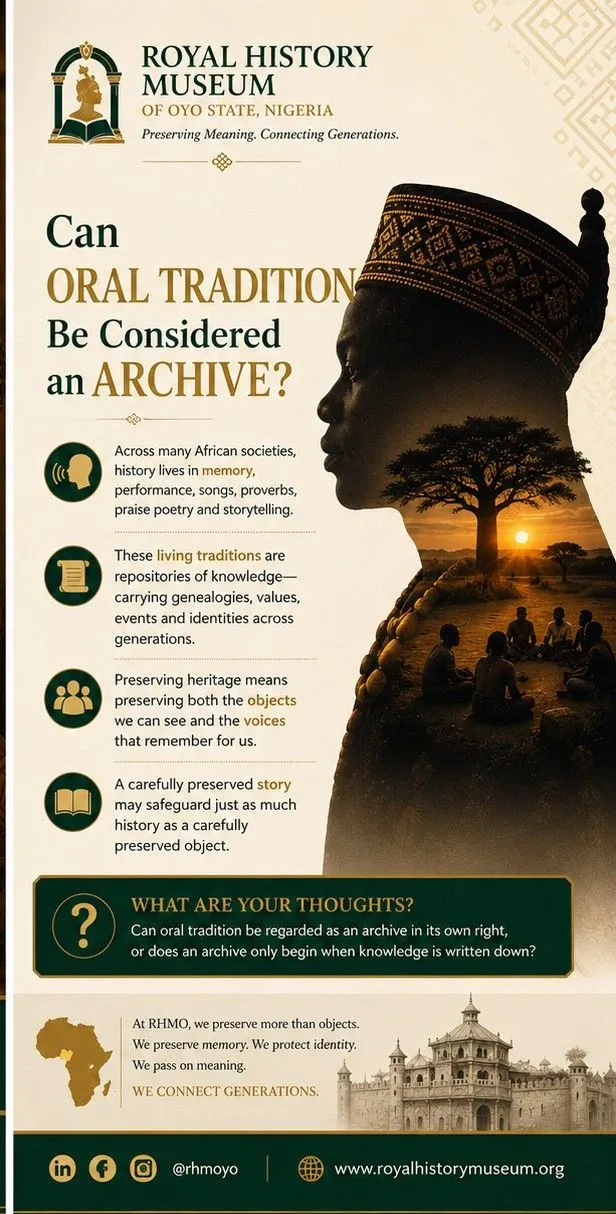
Joan-Mary Ogiogwa writes: When we hear the word archive, most of us imagine shelves lined with documents, manuscripts, maps, photographs, and official records. But what if some of a people's oldest and most enduring archives have never been written down?
NAGPRA specialist Rachael Carnes warns: Museums and AI Consultants build AI interfaces that let visitors "ask the collection" questions directly. Objects that answer. Catalogues that talk back. But listen closely to whose voice.
Legal expert Ayale Do Vale Vales argues: While Indigenous peoples have long mobilised against appropriation, sometimes succeeding in claims to have their appropriated heritage returned to them, discussions on restitution have largely focused on tangible heritage. By contrast, the restitution of intangible cultural heritage (ICH), despite its importance and vulnerability to misappropriation, remains underexplored.
[in French] French authors Alexandre Decroix and Asena Poyrazer write: Despite an increasingly important presence in the public debate, the term "restitution" is misunderstood. In contrast to the "new relationship with Africa" promoted by Emmanuel Macron, the issue of the restitution of African cultural property betrays a colonialism that is still very much alive. France retains tight control.
Nigerian art curator Yahuza Rabiu Garba argues: We need to decolonize our understanding of heritage spaces. The Eurocentric model insists on the "four walls" idea, a quiet archive where artifacts are curated to be looked at, but never touched. But...
Zimbabwean archaeologist Mutyandaedza Bright argues: The global movement to repatriate African cultural heritage has gained unprecedented momentum. While much attention has been given to whether objects should be returned, far less attention has been paid to an equally important question: Are local communities prepared to receive them? Yes, they are, but strengthening institutional capacity is essential.
Moon Above Art Advisory argues: For decades, the auction room was considered the theatre of the art market. Today, some of the most important transactions are happening elsewhere: quietly, privately, and with far greater strategic control.
Senior Ethiopian researcher Tadesse Simie Metekia argues: To implement the landmark UN slavery resolution, reparations should be defined as a framework for truth, responsibility, repair, reconciliation and global justice.
Ganga Rajinee Dissanayaka writes: When I conduct my work as a provenance researcher, reconstructing how some piece of Kandyan art from Sri Lanka came to be in a museum in Amsterdam or Berlin, I am engaging precisely these traditional archival documents, and I am repeatedly realise that they were created for the purposes of ruling us, not remembering us.
On 29 June 2026, at the National Museum in Lagos, three Swiss museums formally returned 18 Benin Bronzes to Nigeria, alongside a bronze bracelet and four archaeological monoliths seized during criminal investigations. Lawyer Kai Loon Loh analyses what makes the Swiss approach distinctive, and why it matters for cultural heritage law and practice.
This article describes the sensitive historical and cultural contexts of the collection and gives a special place to the significance and relevance of these artefacts for the Mapuche today, and their integration into cultural and social processes in relation to historical events and provenances.
Hansjörg Dilger writes: Ethnographic collections can be understood as affective forces: relational entities that connect people, institutions, histories, and more-than-human worlds, while shaping contemporary debates about care, collaboration, and restitution. (open access)
'Law no 2026-351 of 9th May 2026 on restitution of cultural property which has been illicitly acquired' is a step forward and shows, at the same time, that many in France are not ready to accept their colonial past and continue to deny their brutal history in Africa.
Chana Algarvio's paper reshapes and redefines our understanding of books, challenging modern beliefs influenced by Western bias so that the field of Egyptology can unhesitatingly incorporate the topic of books and bibliography explicitly into scholarship.
Sierra Kinsey-Lawton discovers a long-running pattern: French cultural institutions, their leadership, and their overseas partnerships have a history of corruption, self-dealing, and ethical blindness. She has a special case too: that of former Louvre Abu Dhabi's director Manuel Rabaté. 'Manuel Rabaté is a symptom, not a cause. The disease is the system that created him.'
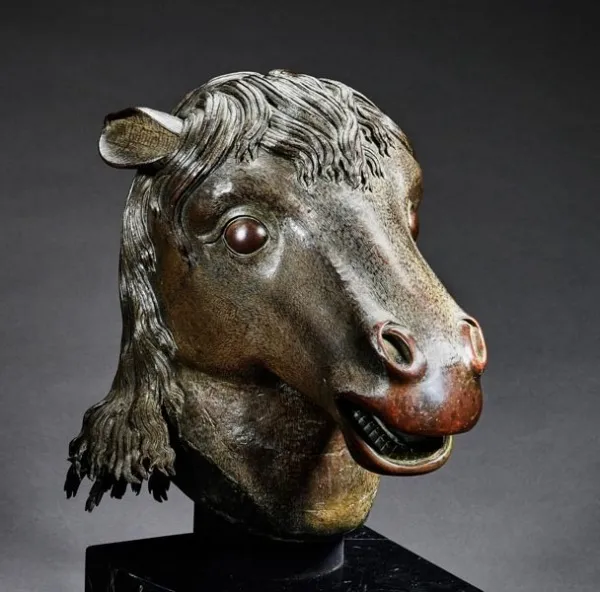
These two bronze zodiac heads once formed part of the clepsydra (water clock) that adorned the entrance to the Western style Yuanmingyuan or Old Summer Palace gardens in Beijing. After the sacking of the Summer Palace by Anglo-French forces in 1860, the zodiac heads were stolen and dispersed among private collections.
Livia Solaro investigates how a museum—especially one with a problematic past, such as an ethnographic institution—can critically confront its colonial heritage while keeping the public informed and actively involved in the process.
How do museum-exhibitions enable visitors to critically engage with the complex histories of colonial collections and reflect on their potential (re)distribution? The Wereldmuseum Amsterdam’s Unfinished Pasts: Return, Keep, or...? brings this question into curatorial focus. Pao-Yi Yang assesses how its interpretive design both deepens and complicates the viewing experience.
Erin Canning argues: Museums are responding to the presence of offensive, biased, and harmful language in catalogue records through the practice of ‘critical cataloguing’: an umbrella term encompassing a range of tactics such as revising records, applying content warnings, adding paradata, and more.
Andreas Giorgallis argues that prevailing approaches often frame decolonisation as a series of discrete corrective interventions, rather than as a challenge to the structural foundations through which heritage is constituted and governed. Unless the enduring colonial architectures embedded in these frameworks are addressed, decolonisation risks remaining symbolic rather than transformative.
Sierrea Kinsey-Lawton argues: Museums and art houses have never acknowledged that the living descendants of enslaved Africans are, themselves, looted cultural heritage. Solutions for stolen people are not analogous to solutions for stolen bronzes. You cannot deaccession a person.
Kate Fitz Gibbon notes that Chinese cultural claims to the return of artifacts looted during the attack on the Summer Palace in 1860, the Boxer Rebellion of 1900, and the Japanese invasion in the first half of the 20th century support the country's anti-Taiwanese and nationalist propaganda. But she also wants China to become more self-critical, not to exaggerate about the number of lost relics and to also tackle the abuses in its own country.
Kate Fitz Gibbon writes: The restitution of Asante-linked instruments from Los Angeles to Ghana exposes the limits of standard repatriation narratives, particularly when provenance is uncertain and human remains are involved. Rather than resolving historical injustice, the case highlights competing claims, ethical ambiguities, and the need for negotiated, context-specific outcomes.
Open Restitution Africa (ORA) describes restitution as a pan-African process of remembrance, research, and the digital sharing of knowledge – an interview with Chao Tayiana Maina and Karen Ijumba. 'The bulk of the work in the restitution lies on the African side: the work of reintegration, the negotiation, and supporting people in dealing with the return of the artifacts.'
Ganga Rajinee Dissanayaka explores how heritage, power, and narrative relate to each other, and how the subtle, insidious dependencies shape who tells the story of a culture in 2026 and who becomes little more than a footnote at the back of a museum. In Sri Lanka, Vedda cultures, coastal Muslim traders, Tamil ritual practices, and Catholic-Sinhalese syncretism could be studied ethnographically, none qualified as heritage.
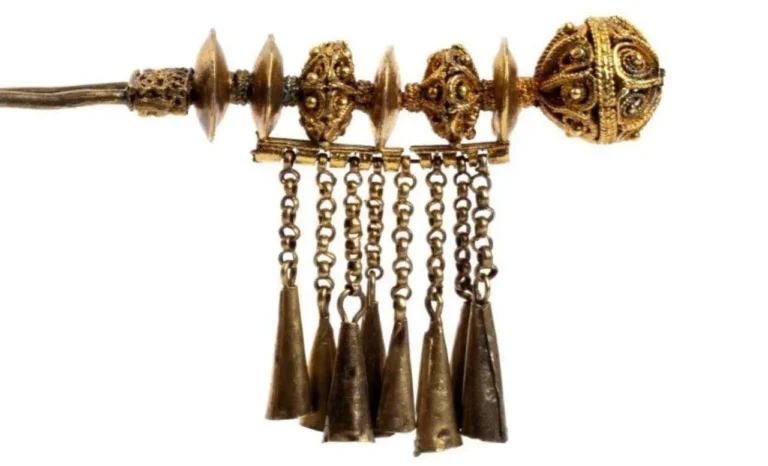
Mahlet Mehdi writes: The return of Empress Tiruwork Wube’s hairpin to Ethiopia underscores how much remains unresolved. Most artifacts taken from Magdala remain abroad. Legal frameworks offer limited recourse. Private markets remain opaque. And restitution continues to depend on chance discovery, rapid response, and negotiated compromise. The hairpin is less an endpoint than a case study.
Sierra Kinsey-Lawton takes the Musauem of Us in San Diego, California, as a case study: the Museum of Us hired a decolonization team because it was fashionable. Every museum was doing it. But the moment the team pushed for something larger—a major repatriation, a public apology, a shift in governance—the discomfort became too great. The team became a problem. And problems are easier to eliminate than to solve. Budget shortfalls became the perfect excuse. They are neutral and impersonal. They allow the museum to avoid saying what it really means: we no longer wish to fund this work.
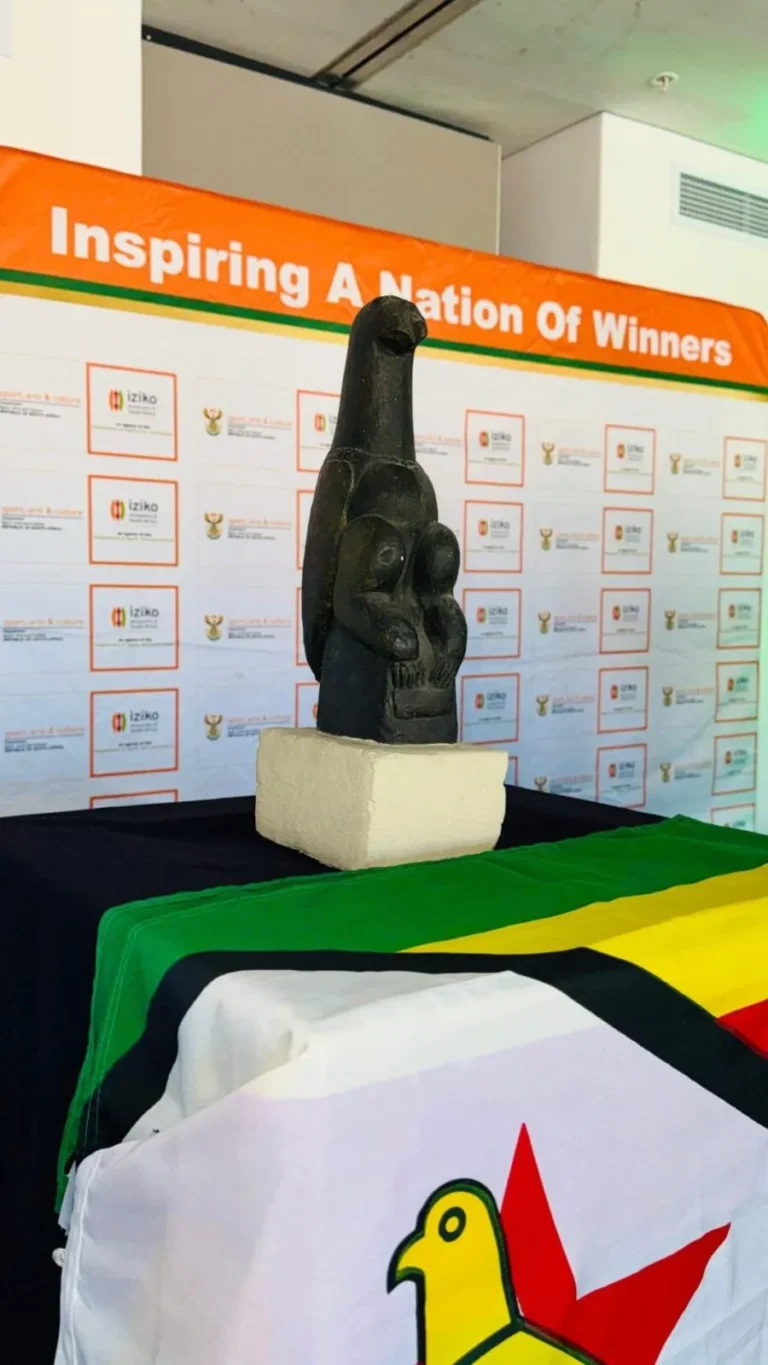
Lloyd Makonya writes: The systematic removal of cultural heritage formed part of a broader colonial strategy to undermine African civilisation. Against this historical backdrop, the handover of the Zimbabwe Bird and ancestral human remains by South African authorities to Zimbabwean officials marks the latest victory in Zimbabwe’s sustained push to reclaim its cultural inheritance.
[English version, French version] Alioune Samb, provenance researcher in Senegal: African museums are too often described as if they were catching up with Western museums. What if they are exposing the poverty of the Western model itself? That is a question the sector still avoids.
Over 1,000,000 known African artefacts unwillingly held outside the continent. Of these, less than 1,000 have been returned... The Open Restitution Project is an Africa-led project seeking to open up access to information on the restitution of African material culture and human ancestors, to empower all stakeholders involved to make knowledge-based decisions.
Lia Iannarilli and Malaika Bunzigiye conclude: The story of looted art from the Democratic Republic of the Congo is inseparable from broader struggles of political sovereignty. By holding on to these items, European powers are holding on to the narrative of their colonial rule. In a world shaped by imperial legacies, the decolonial project must be both material and symbolic. To repatriate art is to repatriate power.
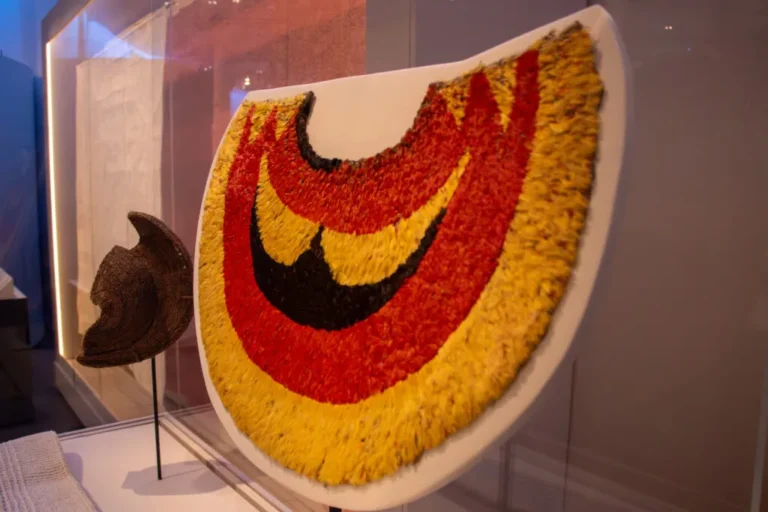
Makana Eyre thinks that the exhibit at The British Museum, “Hawaiʻi: a kingdom crossing oceans,” poses questions that have historically been uncomfortable for museums. Many items, though certainly not all, are sacred, intrinsically linked to ceremony, community, even Hawaiian sovereignty.
The lechwe skin cloaks are a rare remnant of Batwa people's traditional intellectual, cultural and social worlds. They were recently rediscovered in a museum collection in Stockholm, Sweden. These belongings were slated for digital repatriation, along with +/- 100 other belongings, through a collaborative project between the Women's History Museum of Zambia, and the National Museums of World Culture, Sweden.
Reilly Clark writes: Despite the return of Benin belongings, the relations between Africa and the West have remained fundamentally unchanged. African cultural objects were taken from the continent as part of the dual projects of Western imperialism and resource extraction.
[in French] Cécile Mendy, a student in Heritage Professions at the Gaston Berger University of Saint Louis in Senegal, discusses her research on endogenous conservation – the idea that conservation practices grounded in local knowledge can act as a form of cultural sovereignty.
[in French] The PROCHE project, implemented by the Royal Museum for Central Africa, is part of the 2022 Belgian law on the restitution of colonial collections. It aims to retrace the conditions of acquisition of the museum's so-called "ethnographic" and musicological objects, in close collaboration with Congolese institutions and cultural actors.
Bradley J. Gordon, Melina Antoniadis & Sokunthyda Long write: Cambodia is among the countries most profoundly affected by the large-scale looting of cultural heritage, particularly from the 1960s to the 1990s—before, during, and after civil war and genocide—as well as during the French colonial era, which saw the large-scale removal of artifacts.
Reilly Clark writes: Two Benin plaques were among the ones looted by the British from the palace of the oba in Benin. Later, they were given to the British Museum and later still, to the Nigerian National Museum in Lagos. The plaques were removed without permission from the Nigerian National Museum between 1950 and 1991.
This article by Elias Aguigah, Yann LeGall and Jeanne-Ange Wagne (TU Berlin) is part of The Restitution of Knowledge project. It documents the history of ‘plunder’ of former African colonies and addresses its legacy in ethnological collections, with a focus on loot from so-called 'punitive expeditions', this time in the Grassi Museum für Völkerkunde in Leipzig (+ an addition about Togo loot in Stuttgart).
[in French] Yasmina Zian, Aline Bosuma, Alexandre Chevalier and Laurent Licata make critical remarks about Belgium's decolonisation of museums effort. Belgium keeps control over decisions and there is a lack of a balanced dialogue with the DRC.
The Tangué is a ship’s beak carved from wood and placed on the bow of the ship of the royal Bele-Bele family. This mystical and sacred belonging symbolises power, particularly the ultimate authority of the King over the water tribes of the Douala kingdom, and is an integral part of socio-cultural and spiritual practices. n 1884, it was stolen by German military. Currently, it is in the Museum Fünf Kontinente in Munich.
[in English, in Portuguese] Pedro de Niemeyer Cesarino and Lucas da Costa Maciel raise important questions: What if so-called objects in museums are not just that? What if they refuse such constraints?
Jennifer Howes writes: Amaravati Stupa was the first Buddhist site in India to be systematically excavated by the British. Its first colonial excavation in 1816–17 led to 51 sculptures being removed from the site by amateur antiquarians. Some of these were sent to museums, but most of them were transported to the market town of Machilipatnam, where they were used to construct an eccentric marketplace monument.
Repatriation is urgent and important work and should be recognised as one of the UK museum sector’s top priorities. It is widely acknowledged that a lack of funding and capacity are two of the main reasons that more museums in the UK do not engage with repatriation, writes Amy Shakespeare.
The restitution project, undertaken in Namibia from 2019 – 2024, was centred around 23 cultural belongings, which were selected from a collection of +/-1400 cultural belongings in the Ethnological Museum of Berlin, on the basis of their rarity, ability to travel well (fragility, arsenic poisoning etc), cultural, historical and aesthetic significance, as well as their connection to the history of Namibian fashion.
Around 1900, the Isanzu chief and seven of his bodyguards were arrested and hanged and/or beheaded, and their bodies were not returned to Isanzul and given for burial. Currently, they are in the University of Göttingen. Since the emptying of graves, there have been significant periods of drought and famine in the area. The Isanzu people believe that these environmental calamities are as a result of their human ancestors being dishonoured.
Restitution debates – the question of whether a cultural object should be returned from a museum or other collection to a person or community – often begin with a deceptively simple question: who owns an object?
In the column, Alexander Hermann takes a look at the principle of INALIENABILITY that applies in many countries, barring the removal of cultural objects from #museum collections, including for purposes such as #restitution.
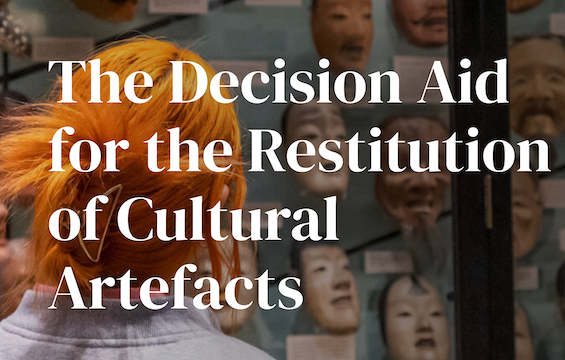
DARCA, or the Decision Aid for the Restitution of Cultural Artefacts (DARCA), is a user-friendly tool designed to assist museums and others in understanding the moral issues relating to restitution, developed by practical ethicists at the Oxford Uehiro Institute and supported by the philosophical literature in this field.
In the last hundred years, France has restituted only twenty-nine looted artefacts to Africa (26 to Benin, 1 to Senegal, 1 to Côte d’Ivoire, 1 to the Malagasy Republic). At this rate, how long will it take France to return the other 96 971 looted African artefacts in France? Kwame Opoku points to an African scholar and his troubling support who actively enables the Louvre/Musée du Quai Branly to retain, among others, the statue of Gou, the Vodun divinity from Benin, in Paris.
Cultural heritage occupies a paradoxical position in law: It is protected as property but experienced as a repository of identity, memory, and dignity. This article examines whether cultural heritage could, in principle, be recognized as a subject of law, drawing on emerging developments in environmental and nonhuman personhood.
Lucky Igohosa Ugbudian writes: Switzerland has witnessed curators playing an increasingly significant role in the restitution debate surrounding Benin artworks. The looting of these cultural objects in 1897 led to the illicit global circulation of these objects. The forceful trafficking of these items, alongside international laws and conventions, prompted Nigerian and Pan-African groups to demand restitution.
Grounded primarily in historical investigation into post-colonial memory, Edith Isoken Erhokpaidamwen examines how colonial conquest and Western ideological domination produced enduring psychological and cultural consequences without idealizing pre-colonial societies.
The protection of cultural heritage is increasingly shifting towards favouring the return of cultural property to its people of origin. Evidence of this shift can be found in a more intentional distinction between cultural property rights on the one hand, and traditional rights in rem on the other; the strengthening of international cooperation; as well as the reconstruction of traditional doctrines.
For several years, the Wereldmuseum in the Netherlands has actively engaged in provenance research, focusing on the unequal power dynamics that shaped the collection of objects amidst European colonialism. Daantje van de Linde and Karolien Nédée investigate this approach. 'The broader discipline is still in its infant years, and its goals and research methods are continuously developing.'
Archaeologist and journalist Mariam Gichan wonders why complicated legal hurdles are sufficient to explain why the fossil hasn’t returned to Tanzania and whether “complicated” becomes a convenient reason for inaction.
In recent years, there has been growing recognition that these collections carry painful legacies. In all these engagements, two words are often used: repatriation and restitution.
At first glance they may seem to mean the same thing, and both involve the return of something. But as South African scholars, working in the fields of history, museum studies and human biology, Victoria Ribbon and Ciraj Rassool argue that the difference between these terms is not just semantic. The choice of word reflects deeper politics of justice, recognition and repair.
[ in Spanish ] Lucas da Costa Maciel, Mario Blaser and Marisol de la Cadena invite readers to think of ethnography from friction—not as an obstacle to be resolved, but as a material and creative condition of encounters between worlds.
This paper investigates the political and cultural grounds in disseminating manuscripts’ digital copies and ask what kinds of shifting assumptions about the nature of textuality and manuscripts are indicated by digital returns. This is especially relevant given that some manuscripts in traditional Java, those designated as pusaka, are not merely media transmitting textual information. Rather, their materiality contains a power of its own.
[ in Dutch ] Heritage organizations preserve and make accessible archives, publications, and objects that tell interesting or moving stories. At the same time, these same collections often contain heritage that reflects painful and poignant histories. This heritage raises questions or even comes under fire.
All too often, the literature on the restitution of colonial cultural objects tends to focus on the public international law (PubIIL) aspects of the debate. With a few notable exceptions, the PubIIL and private international law (PIL) dimensions of the debate are rarely considered together. This article makes the case for a coordinated approach.
In January 2023, an online seminar was held to investigate the Vatican collections, their legal structure and how repatriation might be possible to countries and communities of origin. In particular we looked at the principle of ‘inalienability’ which governs the collections under Vatican civil law, Alexander Herman writes.
This paper explores the challenges of repatriating poorly documented Aboriginal secret-sacred objects—known as tywerrenge—to central Australia. 'No story, but we still want to see them come back. Then people can know them.'
[ in French ] Marie-Anne Léourier administered a questionnaire focused on these questions to visitors of the permanent collections area of the Quai Branly – Jacques Chirac Museum (MQB).
The Georg Steindorff Collection, comprising 163 objects, is a central, yet complex, component of the Egyptian Museum-Georg Steindorff at Leipzig University. The “loss” for Georg Steindorff’s family was placed at the forefront of this restitution of Nazi-looted art, while the original, broader loss of heritage for the country of origin (Egypt) due to colonial practices was sidelined.
Open Restitution Africa has published a case study that is centred around 119 cultural belongings from the historic Benin Kingdom. This collection includes intricately cast bronzes, carved ivories and terracotta. They serve dually as both historical artefact and active carriers of spiritual and cultural knowledge, many of which remain relevant in Benin cultural and religious life today.
Findings suggest that whilst there is strong support for retaining objects, namely under the guise of guaranteeing access for all peoples, there is also opposition from volunteers who feel that the British Museum is morally obliged to return objects.
Ngaire Blankenberg writes: While the world debates restitution, Africa’s own heritage institutions are collapsing. The question is no longer who took our past, but who is keeping it alive.
This article examines how an eighteenth-century decision to bureaucratize gift exchange continued to disrupt long-standing South Asian protocols of reciprocity and regard well into the twentieth century.
On November 9th, 2025, as 250 Nigerian and international guests – donors, diplomats, and the heads of national cultural agencies – gathered in Benin City at the new Museum of West African Art’s opening event, protesters in red baseball caps broke into the museum, forcing its closure. Cultural Property News analyses what happen, and why.
It is well known that Australia's police perpetrated violence against First Nations throughout the colonial period, but their role in supplying Indigenous ancestral bodily remains and cultural heritage objects to domestic and overseas museums is little understood, nor too is whether they exceeded or abused their powers in doing so.
The purpose of this article is to take a closer look at such instances of return of cultural heritage, by particularly focusing on the relationship between the matters of return and the questions of identity and collective memory in this respect. The third part focuses on the question of repatriation of cultural objects removed during the times of colonialism.
Phillip Ihenacho, director and chairman of the Museum of West African Art (MOWAA), has watched the restitution debate unfold with both pride and concern. Pride, because it signals a long-overdue recognition of West Africa’s cultural heritage; concern, because too often the conversation is shaped by Western priorities rather than African ones.
Kwame Opoku looks back at the year 2025. Two fragments, one about the Western dedain for looted objects and human remains. The other about a publication of Open Restitution Africa. But first, a positive event.
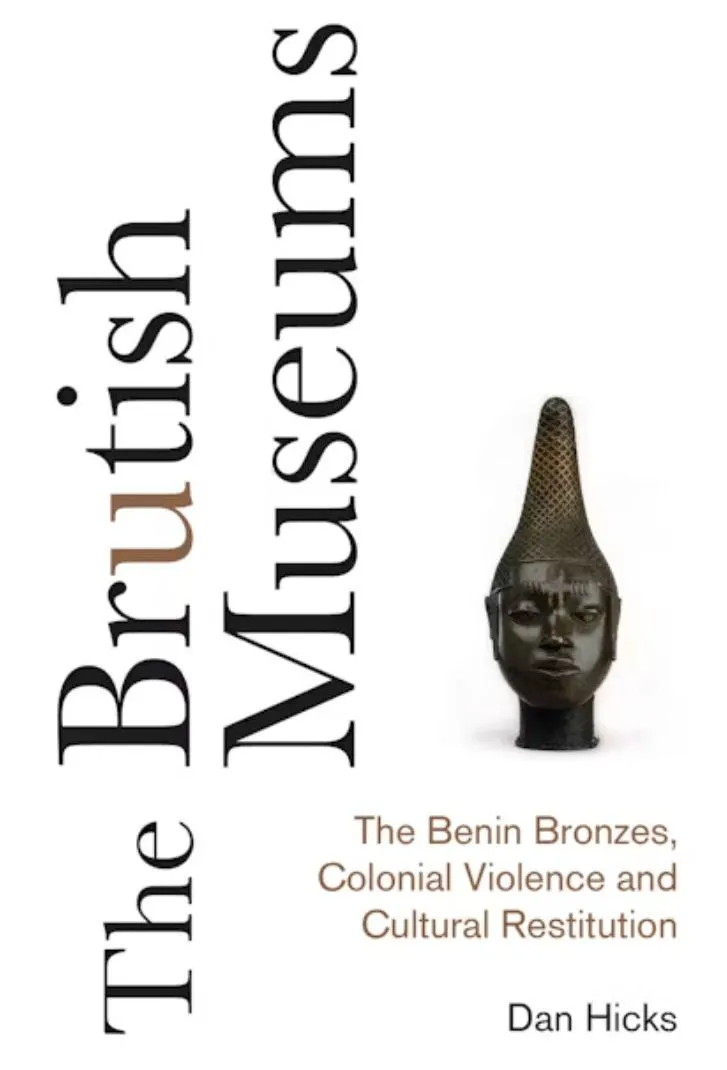
Dan Hicks argues that the allegation that his book The Brutish Museums is “part of a trend away from pro-British perspectives” is contextualised and refuted. On the contrary, this reply argues, openness and transparency about the colonial past and present is a key element of the reclamation and
reimagining of Britishness that is unfolding in the 2020s – this unfinished period that the book calls “the decade of returns”.
Nikolaus Perneczky examines three archival films produced in the 1960s and 1970s, locating them within struggles over the historical memory of colonialism and political contestations of the post-independence era. These works were some of the earliest African-directed films to employ found (still and moving) images.
[ in French ] The French government intends to go further with a bill that could become a landmark law in this area. What are the terms of the bill, and why does it potentially represent a historic turning point? Catharine Titi writes....
The British Museum has announced that it will be holding a charity ball on 18 October 2025 to collect funds to further, inter alia, its international partnerships. This makes Kwame Opoku having a closer look at it.
Hugh Johnson-Gilbert and Alexander Herman write: It has long been the view in the UK that national museums are restricted by law from repatriating collection objects. But will legislation passed three years ago, the Charities Act 2022, point the way ahead?
Kulasumb Kalinoe (East Sepik area, Papua New Guinea; currrently James Cook University, Australia) focuses on the collection and removal of cultural material from Papua New Guinea (PNG) during the colonial era. She discusses views among the Papua New Guinean diaspora in Australia on museums and PNG collections, and argues that cultural heritage issues must be addressed before the work of decolonisation can begin.
Rohan Fernando emphasises the colonial roots of India’s great contemporary museums and the role of the British in rediscovering India’s past. Muhammad Nishan Hussain [University of Lahore] takes an opposite view and sees them as a tool of colonial control.
Tilda Gladwell likes to divert your attention from news of war and geopolitical instability for just a moment to an equally pressing issue: the decades-long debate concerning repatriation.
In 2021, the University of Aberdeen returned a looted Benin object to the Oba of Benin, becoming the first UK institution to agree to an unconditional return. Neil Curtis [University of Aberdeen] outlines the process of giving back a pillaged object without a repatriation request being made.
There has been a lack of academic focus related to how public facing or ‘live interpreter’ volunteers are strategically utilised to support the delivery of museum decolonisation, as well as the implications this has for volunteering.
[ in Dutch ] How are Belgium and the Netherlands dealing with the sensitive issue of returning looted art and researching its colonial origins? An exploration of some treacherous areas in the quagmire of new Dutch and Belgian restitution policy. A discussion between museum director Wayne Modest and activist Nadia Nsayi.
Thupten Kelsang quotes Clare Harris: 'The bulk of Tibet’s portable cultural heritage has been retained everywhere other than Tibet, and is now most readily at the disposal of everyone other than Tibetans.' About a 'doubly colonial' Tibet.
Kwame Opoku writes: The French Minister of Culture presented a legislative text on 30 July to facilitate the restitution of artefacts in French museums by derogating from the principle of inalienability. It will not likely lead to a rush of restitutions from France. Excluding archaeological materials, military materials, and public records eliminates many objects. Archaeological finds from Egypt, Mali, and other African countries, such as those on the ICOM Red Lists, would be excluded.
This paper is the outcome of joint reflections by the two authors, based in Europe and in Africa. Since the diverse practices of restitution have attracted more attention than certain concepts related to it, this paper addresses this imbalance by focusing on conceptual issues.
The article 'Journey of No Return: The Impact of Looted Heritage on Nigeria’s Cultural Legacy' explores the profound impact of looted heritage on Nigeria’s cultural legacy, highlighting the historical, cultural, and economic implications of the plundered artifacts.
It’s no easy matter resolving the current ethical debate over the retention and exhibition of human remains. But one public collection is asking visitors to cast their vote.
[ in Dutch ] How do Belgium and the Netherlands deal with the sensitive issue of returning looted art and investigating its colonial origins? What do you see of this in museums and what remains underexposed?
This article about 500 palm-leaf manuscripts, looted during the conquest of Lombok by the Netherlands East Indies in 1894, is especially urgent as the demand for provenance research grows. It helps to better understand the complex historical trajectories of these cultural heritage objects.
The colonial legacy continues to resonate in Portugal, shaping “organized forgetting” of colonial violence. Finding ways to dismantle the real effects of that historical legacy includes restitution of looted collections.
On 7 July 2025, the French National Assembly has approved the restitution to Ivory Coast of the Djidji Ayôkwê, an important talking drum, stolen in 1916. In the same period, the British Museum came with a statement that it is unwilling to restitute an equally important drum to the Pokomo council of elders in Kenya.
Ahmad Mohammed writes: While digital repatriation offers an alternative or complementary pathway to physical restitution, its success hinges not only on ethical intent or technological innovation but on the socio-technical infrastructure available to source communities.
Andreas Giorgallis provides an overview of how race manifests itself when it comes to cultural heritage, with reference to the restitution of colonial cultural objects, statues related to slavery and colonialism, intangible cultural heritage but also its protection during armed conflict.
[ in Dutch ] According to FARO, the Flemish support centre for cultural heritage, organisations in this part of Belgium increasingly involve communities of origin as active partners in management, description, research and showing collections of these communities that the Flemish organisations preserve.
[ in Dutch ] Daantje van de Linde delves into the history of a power statue that has been called the face of the World Museum Rotterdam's Africa collection. Her conclusion: case of involuntary loss of possession.
Catharine Titi examines the history of a series of objects in the museum's possession that are currently being claimed by their countries of origin and reviews the institution's inadequate response to the repatriation debate.
'Mobile Heritage' explores how diverse digital technologies have allowed for new types of mobilities and introduced a novel set of practices, interventions, and politics for heritage collections, archives, exhibitions, entertainment, conservation, management, commerce, education, restitution, activism, and regulation. With a case-study about digitalised ancient manuscripts from Ethiopia in the British Library.
This article postulates that what we have seen in the past decade has been a turning point in memory politics of the colonial past, and it asks whether a new Franco-German paradigm in memory politics has emerged?
Dominic Senayah presents an in-depth exploration of reparations using Ghana as a case study. He highlights the multivalent dimensions of reparations and has a set of recommendations.
The House of Ni’isjoohl Memorial Pole, stolen in the 1920s, was rematriated from National Museums Scotland (NMS) in 2023. Noxs Ts’aawit (Dr. Amy Parent) of The Nisga’a Nation and Dr. John Giblin from NMS outline the process of international cooperation.
(Re)collecting Natural History in Europe is a research project that examines how natural history and ethnographic collections are curated and displayed, with a particular focus on European museums.
The paper 'Nkali and Kolo-collecting in Eastern Nigeria: interrogating colonial collections of ọfϙ and Ikenga, Igbo objects of sovereignty and authority' explores the changing narratives of Ọfϙ and Ikenga, sacred objects of sovereignty and authority among the Igbo of Eastern Nigeria, currently in the Museum of Archaeology and Anthropology (MAA), University of Cambridge (UK).
The paper argues that the ensuing negotiations and the state-imposed criteria for reburial reflect an ongoing colonial impulse to control Indigenous bodies and restrict ontological and political self-determination.
Understanding the Restorative museum practices begins with a departure from static preservation models. It involves recognizing that cultural institutions operate within complex social and ecological systems, bearing responsibility for their historical impacts and future roles.
This gold crown with stunningly delicate filigree belonged to Emperor Tewodros II, the King of Kings of Abyssinia. It was the most remarkable artefact looted during the British Army’s 1868 siege of Maqdala, the king’s hilltop fortress capital.
A central assumption in the political process of restitution of looted properties and cultural objects is that their return helps societies to redeem histories of injustice and dispossession. In this article, we ask which objects address whose histories, and how processes of restitution are influenced by the presence and absence of objects and collections.
This essay by Ahmad Mohammed critically interrogates how decolonisation discourse is being used—sometimes productively to drive real change, but other times performatively as a mere buzzword—within the heritage sector.
Markus Scholz discusses the missionary practice and ideas of the Bavarian Capuchins among the Mapuche in Araucanía in south Chile from 1895–1896 onwards. Distinguishing themselves as defenders of Indigenous land rights and as linguistic experts on the Mapuche language, they also assembled a rich collection of ethnographic artifacts and natural specimens, which could be problematic today. [ open access ]
Muhammad Nishat Hussain explores how Pakistan has been doubly deprived of its cultural heritage, first through British colonial looting and later through India's post-Partition retention of thousands of artifacts.
How are museum objects valued and who decides? Trevor Engel explores the relationship of perceived scientific value to the idea of hoarding applied to colonial institutions' holdings.
Contributing to current efforts to grapple with museums' colonial legacies, this article takes the question of evidence as an entry point to unlock the multi-layered make-up of African spiritual artifacts in missionary collections.
Senegalese art historian El Hadji Malick Ndiaye says discussions and decisions about the restitution of African artefacts cannot be dictated by the West. He also discusses inter-Africa repatriations.
This collaboration between the Académie des Traces and C& explores the traces of colonial heritage today in several texts by emerging scholars and museum professionals from the African and European continents.
Geraldine Kendall Adams delves into the moral and ethical arguments that surround the highly sensitive issue of human remains held in British museum collections.
This article presents recent provenance research on the Indigenous ancestral human remains gathered by Alphonse Louis Pinart (1852-1911) during his journey in Oceania on board the French navy cruiser Le Seignelay.
The restitution of material objects has become central for engaging with past injustices in post-conflict situations. Thereby, restitution is increasingly attributed a transformative potential to enable dialogues between different victim and perpetrator groups in the aftermath of mass violence.
This paper demonstrates that communities and victims of colonial crimes who suffered gross violations of international human rights and serious violations of international humanitarian law are entitled to reparations and the restitution of their stolen or looted African cultural heritage.
This essay proceeds from the observation that the “Egypt” portrayed in museums and school education misrepresents the lived realities of modern Egyptians, their experiences, and their expectations concerning Egypt’s past and present.
“Every empire, however, tells itself and the world that it is unlike all other empires that its mission is not to plunder and control but to educate and liberate” Edward W. Said.
The collection of the Musée des Rois Bamoun (MRB, Museum of the Bamoun Kings), located in Foumban in Cameroon’s West Region, testifies to the richness and diversity of the Bamoun Kingdom’s art, culture, and history.
[ in German ] Scientists from the global south criticize museum provenance research and restitutions as a colonial project: The assignment of work orders copies the mapping of the world shut down by imperialism.
Since the later stage of the Qing Dynasty, many imperial objects have been moved to Europe due to a series of Sino-European wars. Perceived as having less material value, Qing imperial books, manuscripts, and scrolls are studied less by contemporary scholars.
The report offers an overview of the restitutions and claims processed in the Netherlands until recently, and the legal framework in which they took place.
The State-centric discourse that surrounds Indonesia’s cultural heritage protection and repatriation policies impede locally-led activism related to cultural heritage.
This article explores the ownership of cultural objects within national and traditional customary law in Suriname, with the aim to provide a legal context to the issue of claims for the return of some of these cultural objects from the Netherlands.
In Switzerland, the decolonization of ethnological and historical museums and collections is in progress. This is true in practice, especially by federally funded provenance research projects and by single restitutions of human remains and colonial objects.
The article 'Hidden Colonial Legacies and Pathways of Repair'investigates how the question of ancestral remains out of colonial contexts in Belgian museum collections is understood in the DR Congo.
[ in French ] The article 'Between Belgian archives and Congolese oral sources in provenance research. The case of the statue of Chief Nkolomonyi at MAS (Belgium)' examines the value of sources in the country of the former coloniser and that of the ex-colonised. It broadens the scope of provenance research.
The Bill of 3 July 2022 to recognize the alienability of goods linked to the Belgian State’s colonial past and to determine a legal framework for their restitution and return (“the Restitution Bill”) puts Belgium at the forefront of international restitutions of colonial collections.
Despite the existence of codes of ethics and other published guidelines for the ethical treatment of human remains in many countries and for most professional bodies, there is still widespread anxiety among many professionals in museum and research contexts about whether they are getting it right.
The Netherlands and other European countries are developing policies to return objects and ancestral remains appropriated in the colonial period. This offers hope for postcolonial countries to retrieve their lost treasures. Bangladesh should make more use of this opportunity. To begin with, it can claim an object from the Rijksmuseum Amsterdam.
Modern treaties and statutes protecting cultural property apply only prospectively to items stolen or illegally exported after their effective dates. But while the United States does not have a law concerning looted cultural objects taken from formerly colonized peoples overseas, it does have a statute governing the repatriation of Native American cultural items and human remains.
[ in English but also available in French ] With the release of the documentary film Dahomey, which follows France’s restitution of twenty-six works of art to Benin, various research teams continue to work on the return of African cultural property to their communities of origin.
From a historical point of view, the practice of the restitution of cultural artefacts among States emerged at the beginning of the 19th century, during the Congress of Vienna in 1815. Unfortunately, these rules were not universal. They were only applicable among contracting States, stopping at the borders of Europe, the ‘civilised world’, and did not apply to territories which were or were to be colonised.
Denunciations of the ‘evils’ of colonialism occur over and over again, as does an intermittent readiness to listen to them. But the wounds that have been inflicted cannot be healed, not least because the colonial systems in all their forms have upset the deep structures of the social, economic and political organization of the societies they have targeted.
The age of many of museums, particularly those in the UK, means that they have artefacts dating back to colonial times. This article lists arguments pro and con restitution. Here the con's are presented.
Joint research on the 1868 Maqdala expedition led us to question assumptions about the legacy of empire in museums and to scrutinise unexpected connections in the history of museum collections.
Held in 1972, the Santiago de Chile Round Table was a fundamental milestone in the historiography of museums and museology from the Global South, and a pivotal event for practices and reflections related to the ‘social role’ of museums.
The extensive article 'The ghosts are everywhere, about a museum beset by colonial controversy, difficult finances and the discovery of a thief on the inside.
This paper examines the complex relationship between African art and colonial encounter while interrogating the commodification and restitution of African artifacts which has become a topical issue.
Many European countries deal with their colonial history and their collections of ethnographic material. As much as human remains seem like the essence of the need to do reparations to indigenous cultures, they are but a small part of the responsibility to understand our entangled histories
In the Review of African Political Economy, Aguigah argues that current debates around restitution of looted art from Africa mostly ignore politico-economic aspects of neocolonialism, reflecting the trend in academia as well as the wider public to separate cultural from economic issues.
Many African countries are becoming more proactive in their quest for the repatriation of their cultural heritage. They increasingly participate in international conventions and adopt more effective policies in these areas.
Cultural assets such as the large corpus of Benin bronzes housed in museums are part of the cultural world heritage of mankind. It is time to give up the exclusive concept of private property– or a single nation’s property – for these cultural assets in favor of a concept of multiple stakeholders. “Shared heritage,” in other words. The same patterns anchored in the socioeconomic structure of European societies unfold their power again and again: It is not the victims, the slaves, who receive compensation, but the dispossessed slave owners, then as now.
The MFA distinguishes five theft categories: garden-variety theft, archaeological looting, wartime pillage, state expropriation, and sales under duress or other forcible transfers. The last form the most expansive category.
Aurora Hamm argues that restituted objects are instruments of soft power through public and cultural diplomacy. The (former) coloniser states utilise them, with geopolitical considerations in mind, as a means of ‘restarting’ their bilateral relationships and thus obtaining a certain form the restitution
The story of the discoveries is being told for the first time by Elisabeth Goring and her successor, Dr Margaret Maitland, in the Proceedings of the Society of Antiquaries of Scotland of 30 November 2023.
For Indigenous museum visitors, long-prevalent display methods like ‘wonder cabinets’ or ‘white cubes’ can be an alienating way to encounter their cultural heritage. This article will illustrate how exhibition designers are influenced by the colonial imagination, a term we use for the settler mythology behind imperial ambition, both historical and contemporary.
European powers often dismissed or devalued the cultural expressions of colonised peoples, labelling them as ‘crafts,’ ‘artifacts,’ or ‘ethnographic objects’ rather than art and reinforcing the idea that European art holds a superior place in global culture.
This is the “age of apology” for past wrongs. Reams of articles in Western media are devoted to former colonizer countries and yet, this is rarely the result of requests from former colonies. Example India.
Anaïs Mattez (University of Hongkong) argues that provenance research has been key in the downfall of the internationalist ideology about cultural property.
This ethnographic study aims to construct a thick description of how one migrant and diaspora community in a particular location – Somalis in Finland – preserve and discuss their cultural heritage.
In January 2021, the Dutch government became the first in Europe to approve a central mechanism for repatriating colonial loot. One aspect of the new policy raises concerns given that artefacts that were looted from non-Dutch colonies will not automatically be repatriated.
In 2021, the Belgian federal state declared that Belgium, with a deep history immersed in colonialism, would return looted artefacts to the Democratic Republic of the Congo, by way of transfer of legal ownership of the antiquities to the Congolese state.
In 1863, Emperor Tewodros II of Abyssinia took a British consul hostage; five years later, the British sent a punitive expedition. This military expedition shaped later campaigns in Sudan and West Africa in the1890s. What was new for Maqdala was the inclusion of a member of staff from the British Museum.
Who should own Benin objects returned to Nigeria? And what about the Oba of Benin commenting, prior to 2023, that the Benin objects to be returned to Nigeria should be returned to him and not the federal government?
Rachel Ama Asaa Engmann of the Christiansborg Archaeoogical Heritage Project helps to understand how the agreement with one American and two British museums was reached.
As part of donation agreements with private collectors, such museums could agree to make the objects the focus of courses centred on provenance research and related issues. A key goal of the research would be to trace as complete an ownership history as possible and identify the most likely country of origin for all the objects.
Fifty-four years ago, Ghanaian Nii Kwate Owoo was granted access to the storage facilities of the British Museum. The result was You Hide Me – a 40-minute film depicting Owoo and his colleague discovering an enormous volume of colonial objects hidden away in the institution’s basement.
In a lengthy and worthwhile essay in ARTnews about the progress in the restitution discourse, both steps forward and steps back in the former colonizers’ countries and the former colonies are discussed.
Two British museums, the British Museum (BM) and the Victoria and Albert Museum (V&A) have agreed to return to Asante/Ghana respectively 15 and 17 looted objects. It is, however, a loan.
'Measina' or cultural artefacts kept in the Uebersee Museum in Bremen will be back in Samoa in June 2024. A team from the National University of Samoa, led by Ta’iao Matiu Dr Matavai Tautunu, will be making this trip.
Europeans collected a huge number of Aboriginal artefacts during the colonisation of Australia. Gemmia Burden's research is on the Queensland Museum’s collecting networks.
The British Museum (‘BM’) has a collection of 224 objects from or likely from Cambodia, which were acquired across a period spanning from the end of the nineteenth century to the beginning of the twenty-first century. In this figure BM’s collection of banknotes, coins and medals from Cambodia is not included.
Chief Charles Taku argues that the resistance towards the restitution of African Heritage artefacts and the payment of reparations for colonial crimes is premised on the supposed legality of the crimes under the General Act of the Berlin Conference (26 February 1885).
The debates on the ownership of contested cultural objects bring forth questions regarding the representation of history. But might these debates also lead to the fabrication of history?
Police played an important role in the collecting of Aboriginal objects for colonial and imperial museums. Although most scholars have noted the unequal power relationship that occurred when police ‘collected’ Aboriginal objects on the frontier, scholarship has not previously explored the ‘authority’ of the police to collect objects.
Tomos Llywelyn Evans (William & Mary UNi, USA) describes, how, in 1937–38, the American William R. Bascom conducted research in the sacred Yorùbá city of Ilé-Ifẹ̀, Nigeria. Bascom saw unique copper and copper alloy heads, two of which he acquired and exported to the USA. Bascom’s actions in 1938
In the colonialist moves to collect human remains, and the desire to demonstrate grandeur and strength, many soldiers relied on racist and blood-thirsty narratives to rationalize their cruel actions.
Rachel Mariembe discusses the collection of the Musée des Rois Bamoun (MRB, Museum of the Bamoun Kings), located in Foumban in Cameroon’s West Region, as a framework for studying issues related to the concepts of museum, cultural heritage, conservation, and the restitution of cultural property looted during the colonial period.
Although there is no lack of information on individual repatriated works, the larger picture of where they came from and how, who is returning them and why can be lost in the anecdotes. This is where the Museum of Looted Antiquities (Mola) comes in—a new digital platform that traces not only the histories of specific repatriated objects but also compiles metadata in order to better understand smuggling networks and the museum industry’s intensifying repatriation efforts.
For decades, families in Tanzania have been demanding the return of their ancestors’ human remains from Germany. These ancestors, executed leaders of resistance efforts against German colonial rule, were exhumed from their graves and taken to Germany. Cece Mlay discusses co-producing a new documentary on how their descendants are seeking justice and closure today.
Panorama of the Nord Deutsche Rundfunk wrote an extended commentary on a 35-minute-long documentary: ‘African human skull, early 20th century, €2000’ - this is how dealers openly advertise human skulls on social media such as Instagram. Panorama reporters uncover just how dubious this trade is, especially when you realise the origin of these skulls (in German).
Although there is no overarching framework for the repatriation of human remains at the international level, most repatriation efforts now operate within a more rigorous legal framework at the national and subnational level, which includes national laws and guidelines from public authorities.
Germany was a significant – and often brutal – colonial power in Africa. But this colonial history is not told as often as that of other imperialist nations. A new book called The Long Shadow of German Colonialism: Amnesia, Denialism and Revisionism aims to bring the past into the light. It explores not just the history of German colonialism, but also how its legacy has played out in German society, politics and the media.
It has become a tradition, Kwame Opoku’s annual retrospect. For him, the most spectacular event of the year for restitution was the royal lecture of the Asantehene, Nana Osei Tutu II (19 July 2024) at the British Museum London.
The Pennsylvania Museum’s Cultural Center in Philadelphia is launching a study that examines 450 museum collections, collecting policies and practices in the US and formulates a collection framework.