
Analysis of the responses confirms the public’s interest in restitutions and, consequently, provenance research.
- 95% of visitors had heard of them
- The issue of restitutions is considered important (56%), or even very important (28%)
- 66% of visitors expressed interest in the history of the collections, a percentage that rises to 73% for first-time visitors
- This interest is more pronounced among young people (86% of 18-25 year olds
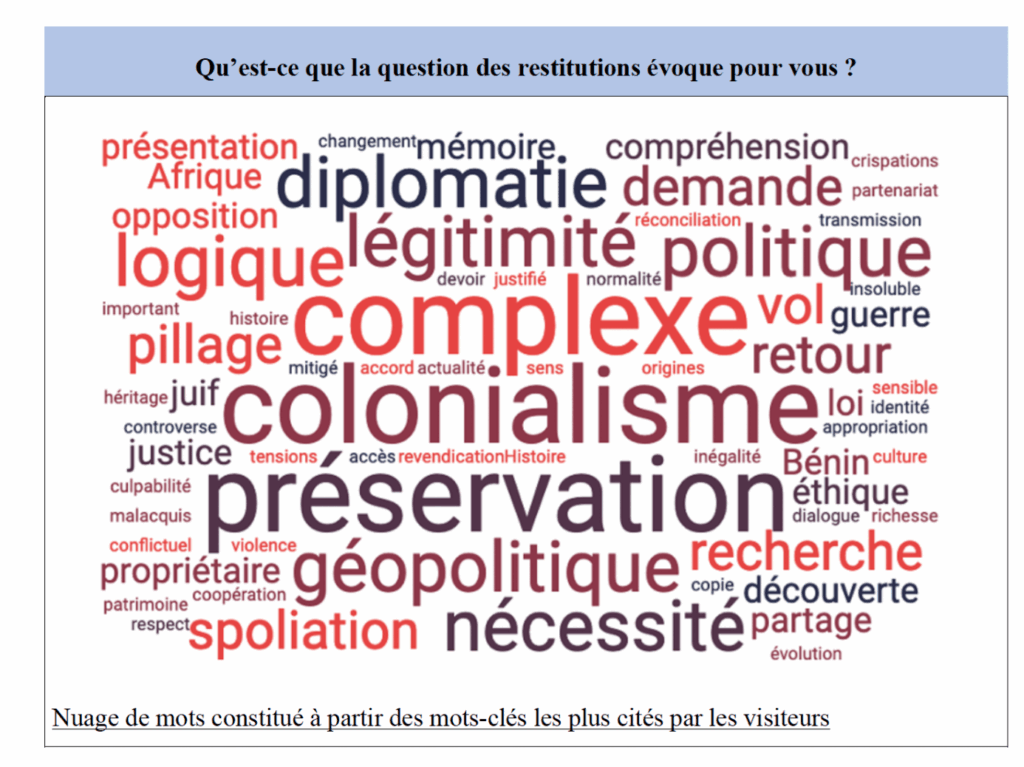
But the mechanisms of restitution are poorly understood.
- In fact, 87% of visitors admit to knowing nothing about the legal framework surrounding it.
Indeed, the issue of restitution has entered the public consciousness through the media, in the context of specific cases: the treatment of human remains, individual or collective claims, media campaigns surrounding these restitutions, and political discourse.
Reactions to these events are initially emotional. Restitution is viewed primarily as a moral issue, a principle of justice.
From this perspective, visitors interviewed often express support for restitution, even without being asked.
However, public opinion oscillates between two imagined extremes: “everything was stolen” and “they’re going to empty the museum.”