In the wake of the wave of colonization in the 19th and early 20th centuries, large numbers of missionaries, affiliated with dozens of religious institutes in Belgium, left for mission areas around the world.
These missions generated a constant stream of studies, reports, correspondence, images, and publications about the regions, cultures, and societies in which they were active.
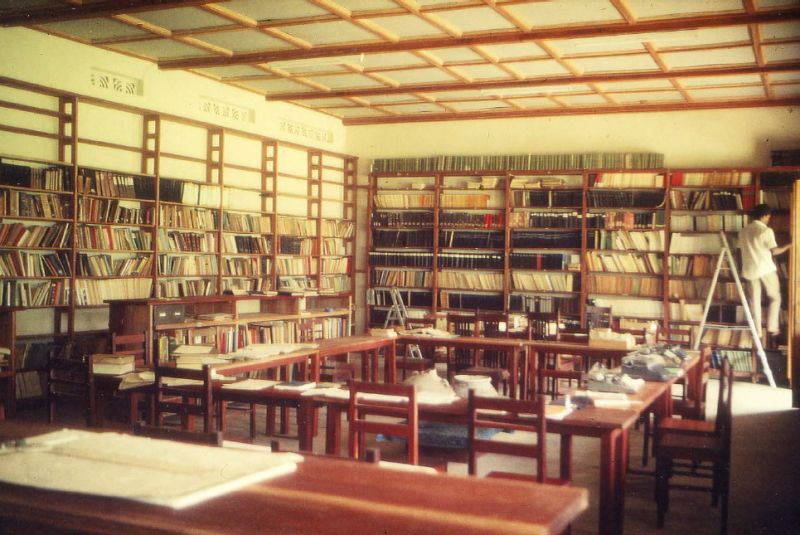
Missionaries of the Sacred Heart of Jesus – Courtesy KADOC
These diverse and richly stocked collections were assembled by missionaries and incorporated into the monastery library for reporting to (colonial) authorities, news coverage and propaganda for those at home and benefactors, and the training of future missionaries.
Many missionaries developed ethnographic and scientific interests and published on a wide spectrum of subjects, such as geography, spiritual practices, morality, social structures, flora and fauna, and language.
Not only their own writings, known as scripta, ended up in the mission libraries, but also reference works they used for their research. The collection’s content also reflects the personal motivations of missionaries, such as a sense of adventure, the pursuit of knowledge, and professional ambition.
Mission archives and libraries sometimes contain derogatory, racist, and offensive language and images that depict unequal power dynamics and sometimes cruelty, both implicitly and explicitly.
In the past, archivists sometimes adopted certain terms—written on old packaging or used in existing inventories—into their own descriptions.