Okechukwu Uwaezuoke, editor at ThisDay writes:
Yinka Shonibare’s installation directly intervened in ongoing debates about the restitution of looted African cultural heritage.
Its arrival in Nigeria amounted to more than the relocation of an artwork between exhibition venues. It completed a symbolic circle, bringing the work to the very kingdom from which the Benin objects it references were looted during the British Punitive Expedition of 1897.
The irony is difficult to miss: while the original bronzes remain dispersed across museums in London, Berlin, Vienna and elsewhere, their clay stand-ins have arrived home first.
(l) Yinka Shonibare, (r) Peju Layiwola
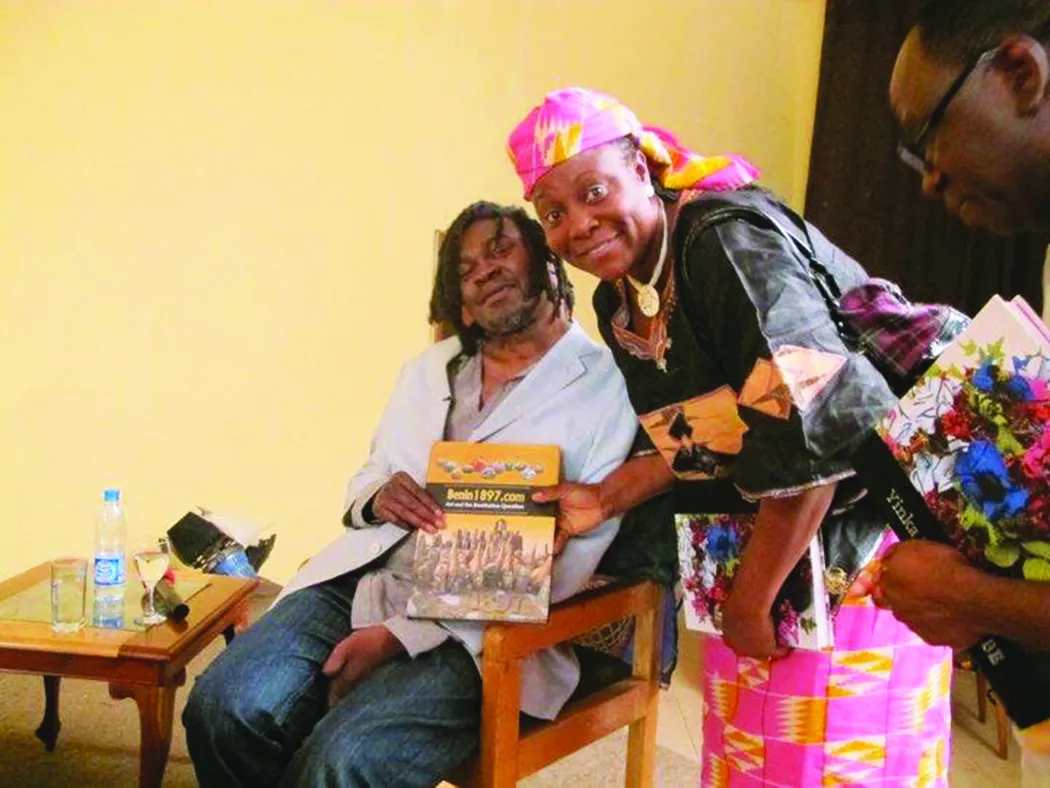
Standing before “Monument to the Restitution of the Mind and Soul”, anyone familiar with Professor Peju Layiwola’s 2010 landmark exhibition Benin1897.com: Art and the Restitution Question is likely to experience a distinct sense of déjà vu. The resemblance extends far beyond the shared subject of the Benin Bronzes. It extends into the work’s material choices, installation strategy and conceptual framework.
Long before the restitution debate acquired its current international prominence, Layiwola had established herself as one of its most rigorous artistic voices. An artist, art historian, curator and granddaughter of Oba Akenzua II, she occupies a unique position within this history. Her engagement with the events of 1897 is at once scholarly, artistic and deeply personal.
Shonibare’s “Monument to the Restitution of the Mind and Soul” deserves its place in the history of restitution. Its return to Benin City completed a powerful symbolic circle. Yet perhaps the work’s homecoming also invites another act of historical repair: a fuller recognition of the artists whose pioneering engagement with the Benin question helped make such a work possible. Because the provenance of an idea can be as important as the provenance of an artefact, a movement committed to restitution should recognise both.