
The return of African cultural objects from Western collections to communities of origin is not the end of a process of restorative justice. Rather, it is just the beginning.
Advocates for the return of African cultural objects have seen important victories in recent years, particularly with the Benin bronzes and other artworks from the Kingdom of Benin.
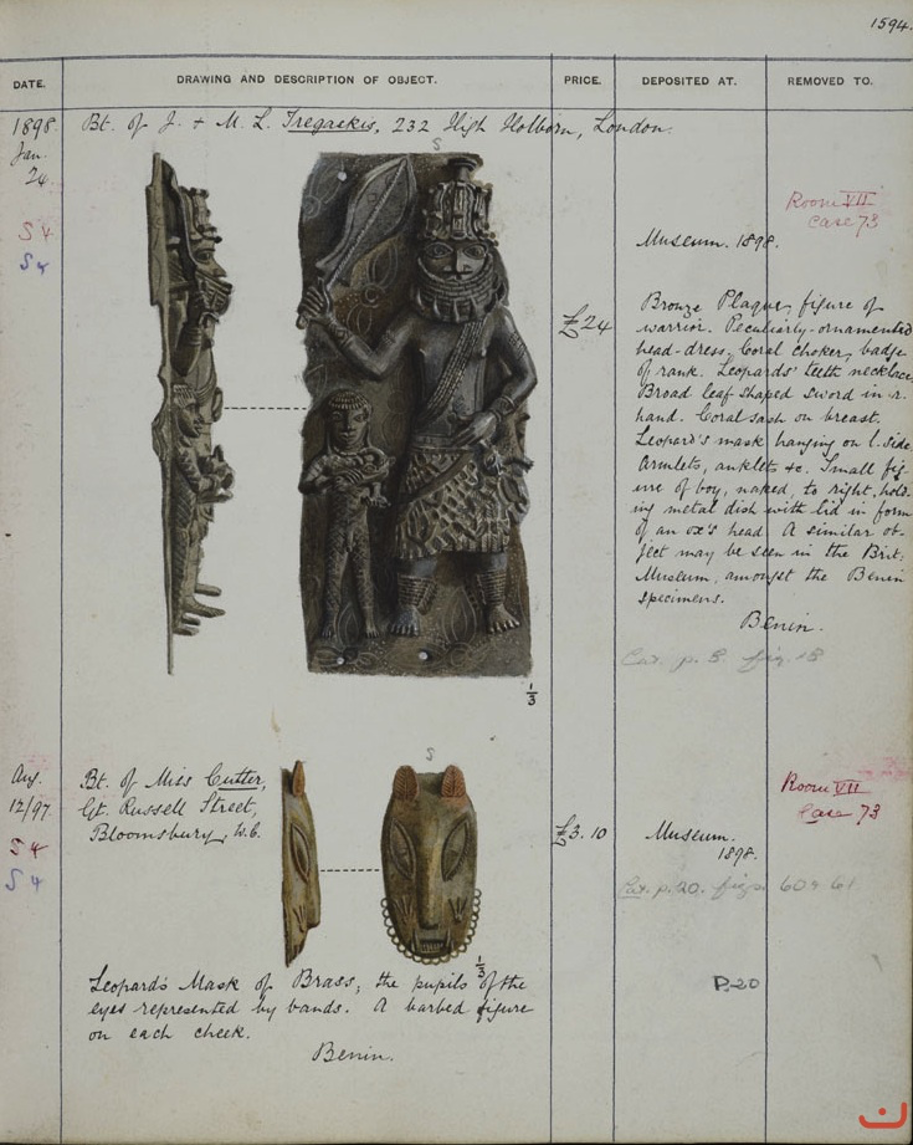
Courtesy Pitt Rivers Museum, Oxford
As Dan Hicks argues, Britain’s looting of Benin and its bronzes is the direct result of “corporate militarist colonialism.”
In 1897, the British claimed to attack the Kingdom of Benin as part of a “punitive expedition,” but the Royal Niger Company had determined to take the kingdom years prior. The company’s private, commercial interests came together with state violence and eventually, formal annexation.
The result of this “corporate militarist colonialism” was the expropriation of labor, land, and natural resources – as well as cultural objects like the Benin bronzes.
This makes restitution a complicated, multilayered excercition.
The problem, Clark argues, is that traditional indigenous communities, like the Kingdom of Benin, remain out of negotiations.
In the same way that repatriation can reinscribe the existing power relations between Africa and the West, as is the case with France and its former colonies, repatriation can reinscribe existing power relations between local communities and national governments.
The return of cultural objects presents an opportunity to remake relations not just between Africa and the West, but also between Africa’s independent national governments and indigenous communities like the Kingdom of Benin.