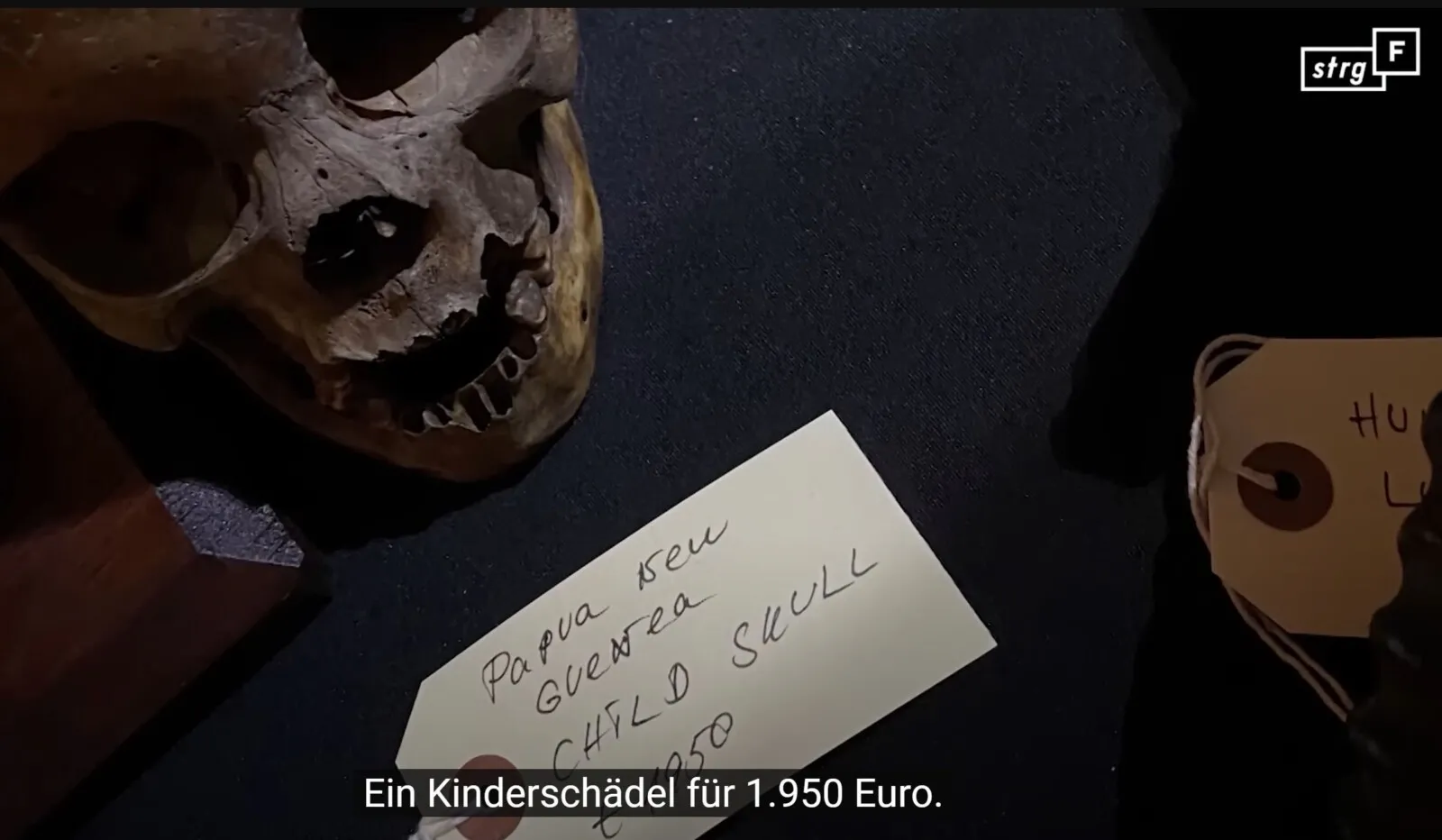
While traders at the market wave off the camera and claim that no real human skulls from the colonial era are being traded here, the Panorama reporters go undercover to investigate. After a short time, they are presented with numerous dubious skulls. A skull from Borneo, Indonesia for 15,000 euros, for example, and skulls from African countries such as Togo, Congo and Cameroon. A tataoed Maori head is offered for € 100,000.
‘This skull comes from Africa. It has a bullet hole and costs 2,000 euros,’ advertises a French dealer. A seller from England offers a child’s skull from Papua New Guinea, raving about the ‘beautiful patina’. These skulls were either traded or stolen during the colonial era, he says openly. At a nearby stall, a Belgian is offering three skulls, an African one from Cameroon, one from Indonesia and an Inuit skull.
Mikael Assilkinga aus Kamerun: ‘They play a very active role in the lives of every family that has such an ancestral room at home, because they communicate with the deceased persons through whom they have skulls at home. And that means. Such ancestral rooms are also sacred places’