This approach makes that marginalised groups, minorities and ancient royal courts in countries of origin have little chance of recovering lost treasures. And in the few cases when their treasures áre returned, they often end up in the national museum in the country’s capital rather than in the homes from which they disappeared.
Experiences in Egypt, Ethiopia, Nigeria and Indonesia illustrate this.
Egypt: hidden layers
In Egypt, restitution efforts are dominated by objects such as the Nefertiti bust in Berlin and the Rosetta Stone in London. For many Egyptians, however, this focus is too narrow. According to Heba Abd el-Gawad, a University College London scholar, the Egypt portrayed in museums and school-education ‘misrepresents the lived realities of modern Egyptians and their expectations concerning Egypt’s past and present’. It is a Western, monolithic construction adopted by the country’s cultural authorities.
When Napoleon invaded Egypt in 1798, he was mainly after pharaonic treasures. ‘But Egypt is a society with many layers’, Abd el-Gawad tells me at a recent conference in Portugal. ‘Throughout its history, it has experienced waves of migration. It is African, but also borders Asia. The country knows also Christian Copts, Nubians, Bedouins and other minorities. This diversity should be reflected in restitution policies.’
Abd el-Gawad would like to see communities involved in discussions on restitution. ‘People should be at the centre, not objects. We should sit together and discuss, that’s the indigenous way.’
Ethiopia: poorly equipped
Ethiopia also has a diverse material culture. Yet the country’s authorised heritage discourse mainly includes items related to the British attack on Emperor Tewodros in Maqdala (1868) or to Mussolini’s occupation (1935-1941): weapons, dresses, crowns and other ceremonial objects of the imperial family, religious objects of the Ethiopian Orthodox Church or to mosques, or the obelisk of Axum. These categories have been well-researched, and attempt to bring them back receive support from the cultural authorities.
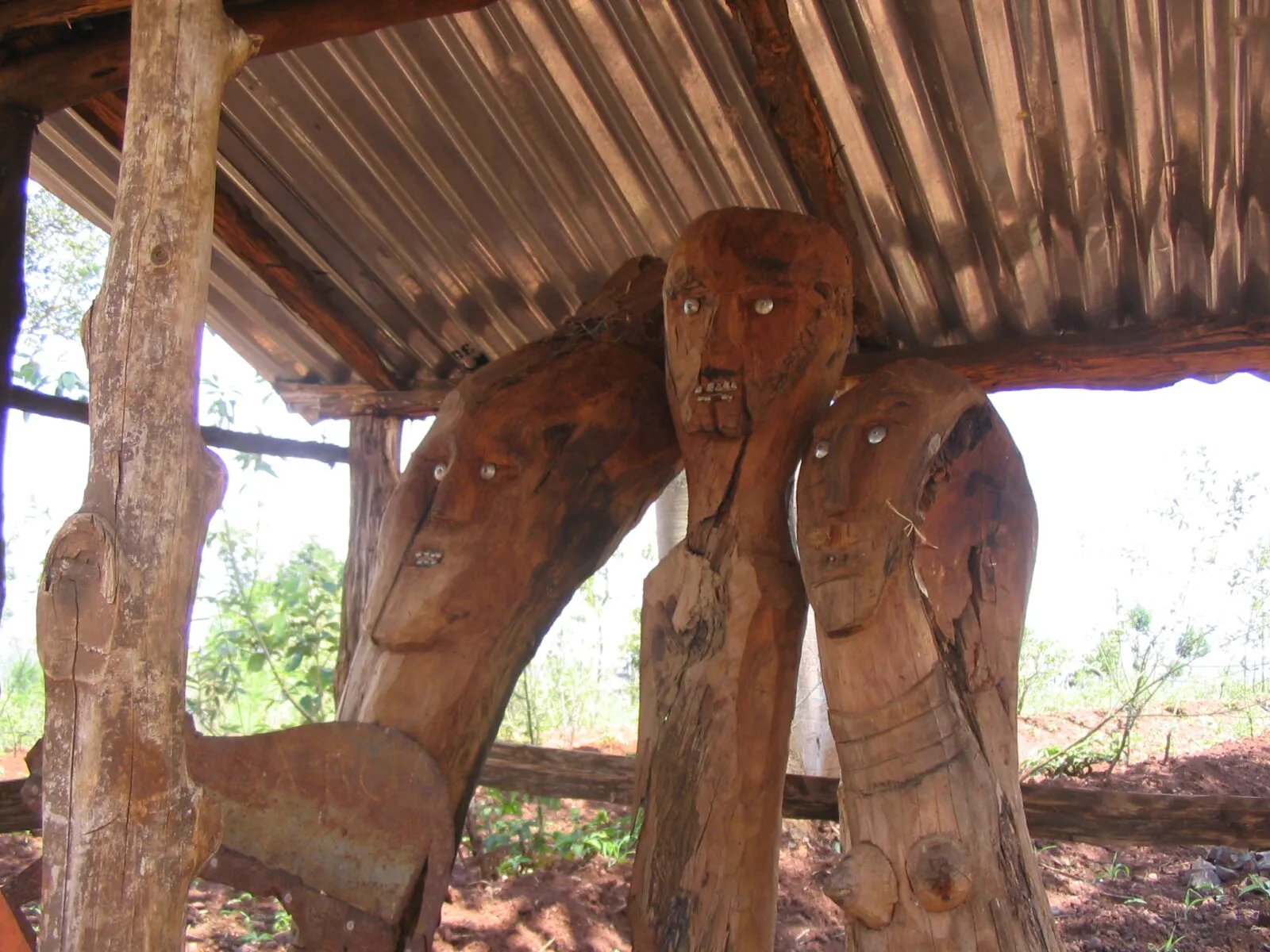
Less attention has been paid to, for example, ancestral statues of the Konso Wagaa in the remote south. The Konso, known for their terraced agriculture, have a grave custom in which a wooden statue depicting the dead person is placed on top of his or her grave. The graves are located in a family field. For decades these statues have been sought after by traders and collectors.
During a visit to Konso’s cultural department some years ago, an official showed a shed with ancestral statues, captured from smugglers. ‘Many more have disappeared for decades’ he said. ‘We lack federal government support, personnel and vehicles to protect the statues, let alone to recover them if we find one in a sale catalogue’.
Nigeria: more than one kingdom
Nigeria is a colonial construct, home to ancient kingdoms, indigenous cultures and hundreds of languages. While the country has a restitution policy to tackle the on-going illicit trade in art and antiquities, with a focus on objects from the Nok, Ife, Sokoto and Ogoni cultures, its restitution policy for colonial collections is mostly focussed on objects from the Benin Kingdom.
Western countries are responding accordingly. With the transfer by the German federal government of the property titles of over 1,100 Benin objects to Nigeria, the return of some by university museums and the Horniman Museum in Great Brittain and the recent restitution of 119 Benin objects by the Netherlands, momentum is beginning to build for the return of these spoils of war.
This good news also has a shadow side, as this focus hinders other stakeholders from also recovering lost treasures. One example is the Nanna Living History Museum in the Niger Delta. In 1894, three years before the raid on the palaces of the Benin Kingdom, the British attacked the residence of merchant prince Nanna Olomu. Flags, guns and swords disappeared to London, and are now in the National Maritime Museum.
The ill-equipped Nigerian museum would love to have them back. But discussions on restitution largely neglect the Olomu’s history and losses. In The Guardian (GB), a museum official complained about the ‘general oversimplification of British colonial history in West Africa that tends to focus on Benin’.
Indonesia: limited options for regions
Thinking about Indonesia and restitution policies, a first thought might be: How do you develop a policy that everyone on the 17,000 islands agrees with. Half of the 280 inhabitants in the world’s largest archipelagic state live on the island of Java, which dominates the country. Indonesia has a Muslim-majority, but the country recognises also Christianity, Hinduism, Buddhism, Confucianism and indigenous religions.
Inevitably, many groups feel disadvantaged.
From conversations with the Nias Heritage Museum, historian Panggah Ardiyansyah learnt that the museum has regularly managed to acquire objects once brought from this small island near Sumatra by Dutch and German missionaries. But when the Netherlands offered a 15,000 items collection, the museum had no chance of a say.
The collection came from the Museum Nusantara in the city of Delft, after it had closed in 2013. Cultural authorities in Jakarta eventually accepted ten percent. Ardiyansyah argues that it was very likely that there were objects among the remaining 90 per cent that the Nias museum could have put to good use.
How to support community initiatives for restitution?
Attempts to retrieve lost collections of marginalised groups, minorities and former royal houses, of Christian Copts, Nubians, Bedouins, regional museums and smaller princedoms receive much less official support than efforts aimed at collections that fit into the authorised heritage discourse. Yet, some of these neglected collections are more ‘valuable’ to the former owners than those that fit into a country’s official heritage discourse.
In ‘The Restitution of African Cultural Heritage’, Felwine Sarr and Bénédicte Savoy point to this friction when they emphasise that ‘the model of a centralized museum for all objects of cultural heritage is only one possible example among many others.’
Recently, the Netherlands returned seven objects from the Dutch National Art Collection, held at the Wereldmuseum in Leiden, to the Ysleta del Sur Pueblo in Texas. This is a federally recognised nation. On that occasion, Marieke van Bommel, one of the directors of the Wereldmuseum, wondered, how to help communities like this one engage with the government of the country where they live, without interfering in internal state politics. In a way, the Ysleta del Sur Pueblo had been lucky, as the Biden administration had decided that the objects would go directly to the Ysleta.
The need for social provenance research
But helping communities of origin engage with their governments will help only a few. Finding other ways is going to be a challenge. One thing that could help is developing a type of provenance research that supports these communities in their efforts to retrieve their lost heritage.
Historians Leah Nierderhause and Klaas Stutje wonder too, how can these lesser-known collections ‘become part of the dialogues that restitution envisions’? They therefore shift their ‘focus to these alternative social entities and their material cultures’. And much of the archive about these collections can be found by listening to the ‘the silent and silenced voices’ of these entities.
Community led claims and a more social provenance research help achieve an important goal of restitution: reconciliation, undoing injustice.