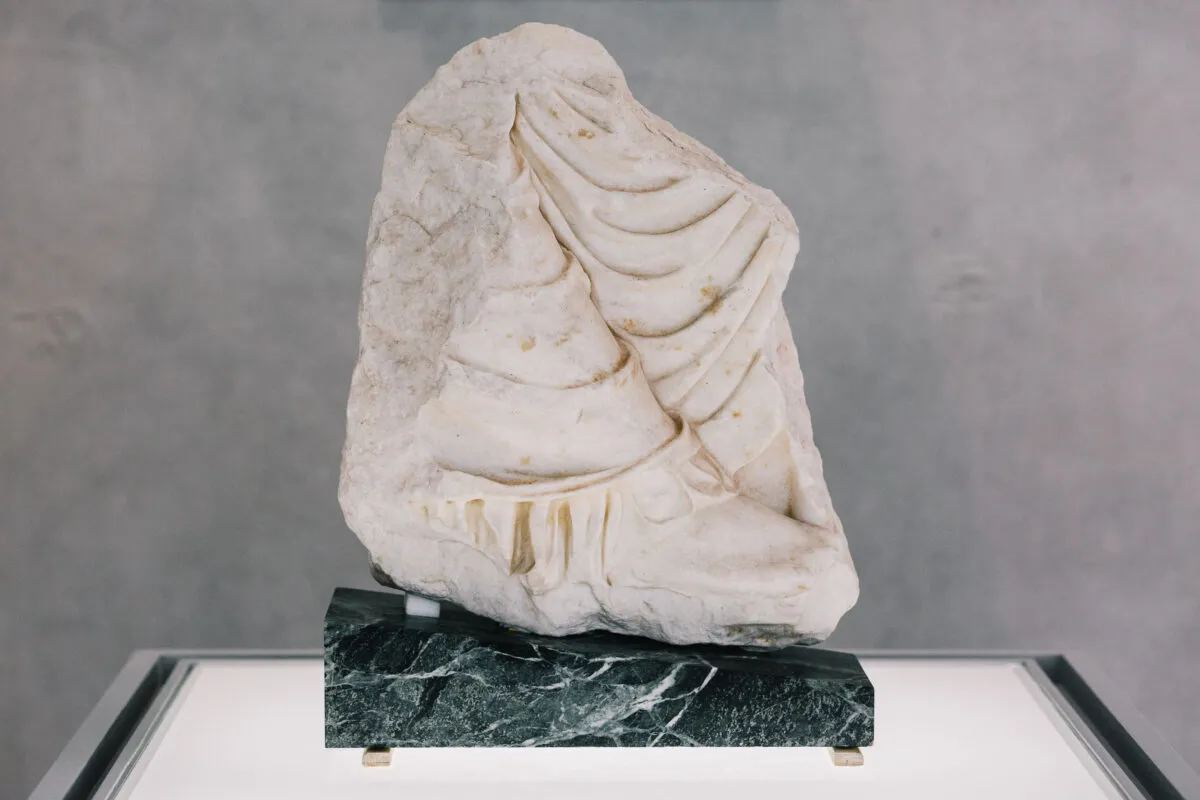
Last year, Trabucco della Torretta organised a campaign against the sculptures’ return and helped coordinate a letter to British Prime Minister Sir Keir Starme. Now, he has challenged the legality of the transfer of the Fagan Fragment from Sicily to Athens, which took place in 2022.

Fagan Fragment, Acropolis Museum, Athens. ©Acropolis Museum. Photo: Paris Tavitian
His complaint to Italy’s Court of Audit raises the prospect of fresh legal scrutiny of the celebrated agreement – and potentially even demands for the fragment’s return to Italy.
Trabucco della Torretta believes the reunification of the Parthenon Sculptures should not take precedence over the preservation of their subsequent history, challenges the Greek government’s interpretation of Lord Elgin’s removal of the antiquities and questions the legal foundations of the agreement that brought the Fagan Fragment to Athens.
He also criticises Greek PM Minister Kyriakos Mitsotakis’s description of the sculptures as ‘stolen’, warns that their return could trigger a wider wave of restitution claims against museums around the world, and argues that even a long-term loan to Greece would undermine fundamental principles governing museum collections.
Trabucco della Torretta:
- As soon as you say “restitution”, you evoke corrective justice, which imposes a duty to redress a wrong by actions aimed at repairing the damage it caused or providing relief from its consequences. But there was no wrong here, nor is there a damaged party. Elgin removed the Sculptures (including most probably also the Fagan Fragment) with the authorisation of the legitimate and internationally recognised authority over Athens, at a time when the people of Athens considered those items building material at best, and pagan talismans at worst.