The Research Center in Shanghai, established on May 14, 2021, boasts a vast collection of domestic and international first-hand materials as well as leads on lost cultural relics, and has amassed solid academic research achievements in the field of Chinese overseas cultural heritage studies, according to the official website of the university.
The Center said it had restored the historical truth that Japan illegally seized the Chinese Tang Honglu Well Stele of the Tang Dynasty (618-907) and its pavilion on the pretext that they were “war trophies” from the Russo-Japanese War and transported them to Japan, the report said.
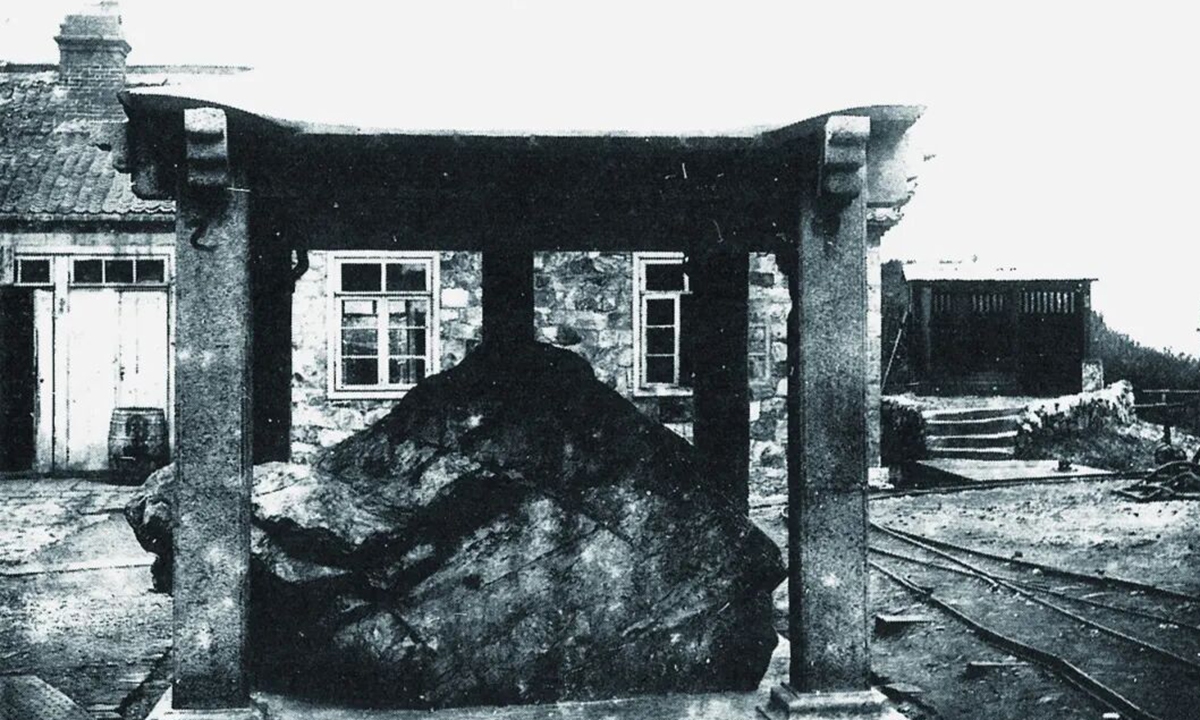
Early 20th century photo of the Tang Honglu Well Stele
As an important historical artifact, the stele holds significant value as a record of interactions between the Tang Dynasty and the Bohai Kingdom, a local ethnic regime in ancient China.
The stele is 3 meters wide, 2-2.5 meters thick, 1.7-1.8 meters high, and weighs approximately 9.5 tons.
It bears seven inscriptions, most of which were written by officials and scholars of successive dynasties from the Ming to the Qing as records of their visits to the stele, the report said.
It is the largest and heaviest looted Chinese cultural relic in the possession of the Japanese Imperial Palace.
The donation records of spoils in the Meiji era, the Russo-Japanese War period, compiled by Japan in 1908, clearly state that the Stele Pavilion was delivered to the Japanese Imperial Palace on April 30 in the 41st Year of Meiji.
The records also note that the item was “originally located at the foot of Golden Mountain in Lüshun,” which constitutes the most critical evidence that Japan plundered the stele as spoils of war from the Russo-Japanese War and transported it to Japan.
According to the South China Morning Post, ‘Chinese authorities are investigating reports that cultural treasures from a leading state-run museum were secretly sold on the market by museum staff in an alleged scam that has been described as making the Louvre thieves look “dumb”’.

