
In Cairo, the German Federal President said nothing about the statue of Nefertiti, also known as Nofretete.
The 3,400-year-old limestone bust of the Egyptian queen is world-famous, with her almond-shaped eyes and tall blue crown.
Although it is among the masterpieces of Egyptian antiquity, Nefertiti has been exhibited in Berlin museums since 1924.
Since 2009, she has been on display at the Neues Museum.
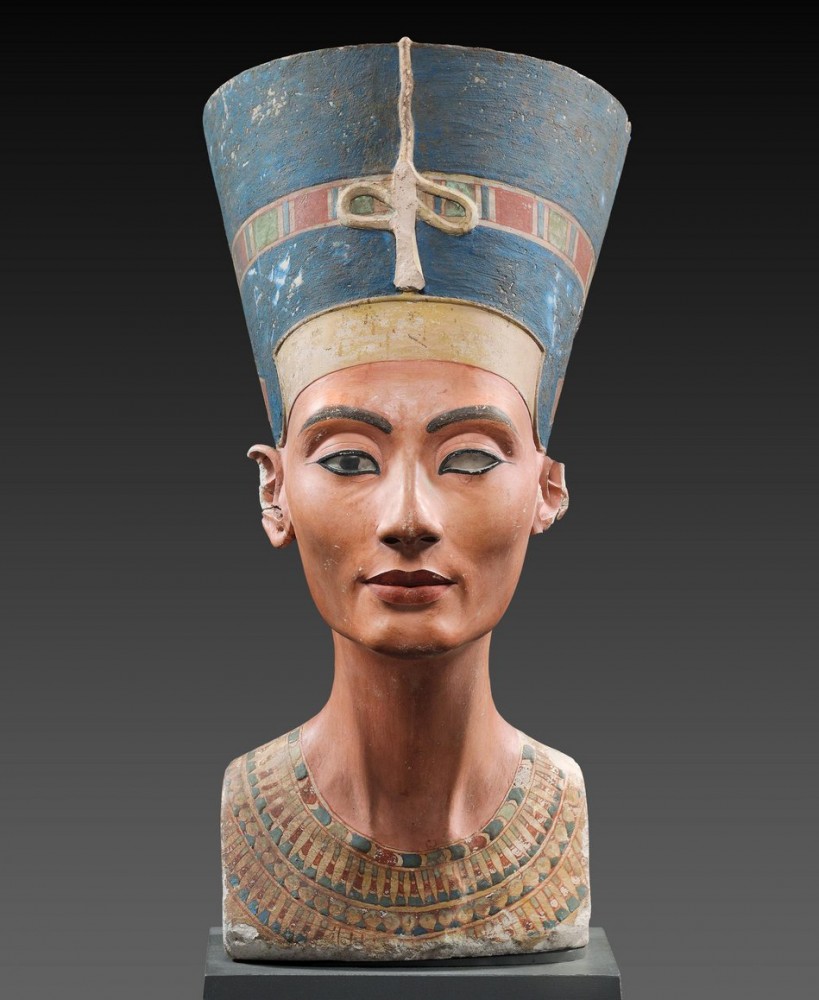
© Staatliche Museen zu Berlin, Ägyptisches Museum und Papyrussammlung/Sandra Steiß smb /CC-by-SA 4.0
“Steinmeier should have brought Nefertiti with him,” German historian Jürgen Zimmerer wrote on his social media channels on Sunday.
Zimmerer is a professor of African and colonial history at the University of Hamburg and one of the leading voices in the German debate on the restitution of colonial (looted) art.
“Participating in a museum opening while completely ignoring the demand for the return of the Nefertiti statue is also a form of courage that almost resembles a statement: postponing the reckoning with the colonial legacy,” Zimmerer said.
Egypt has previously requested the return of the Nefertiti statue, but current President Abdel-Fattah al-Sisi’s position on the matter is unclear.
Egyptian archaeologist Zahi Hawass has been campaigning for the artwork’s restitution for years, even when he was still Secretary General of the Egyptian Antiquities Authority.
Germany has no intention of returning Nefertiti. The Preußischer Kulturbesitz Foundation (SPK), which owns the statue, has maintained its position for decades: the bust was legally brought to Berlin in 1913.
Zimmerer thinks Germany’s adherence to colonial regulations is problematic. “We don’t consider the expropriations by the National Socialists to be lawful either, even though they were once valid law”.
Historian Sebastian Conrad, who wrote a book about Nefertiti last year, argues that German institutions adhering to a 1913 law are perpetuating the hierarchy of that era.