As a country debates easing return of colonial loot, attention turns to pieces still held in its national colelctions.
While not all cases are at the same stage, these five objects from Algeria, Egypt and Jordan sit within that broader restitution debate, whether through formal state requests, public campaigns or long-standing calls for their return.
- Baba Merzoug, Algeria [return requested in 2012]
The 16th-century bronze cannon from the Ottoman era in Algiers is housed at the naval base in the French coastal city of Brest after being taken by French forces in 1830 following the capture of Algiers.
- France’s reluctance to return stolen art from its former Empire shows decolonisation is far from over.
- Algeria was considered the jewel in the crown of the Gallic Empire, and many French people remain furious that it was lost. Handing it back represented lost honour and a betrayal of all the colonialists who had ethnically cleansed and then settled on land that never belonged to them.
- In fact, creativity is all the former colonisers have left as they desperately continue to defy the march of history. They should return the treasures, apologise profusely, and offer appropriate reparations to the proud peoples they exploited for so long.
- Emir Abdelkader’s effects, Algeria [claimed in 2021]
Rather than a single object, this refers to personal items associated with the 19th-century Algerian leader Emir Abdelkader, who led the resistance against French invasion before his surrender in 1847.
- Dendera Zodiac, Egypt [no formal request, but cited in repatriation campaigns]
The Dendera Zodiac is an ancient bas-relief that formed part of the ceiling of the Temple of Hathor in Upper Egypt and is now held at the Louvre in Paris. Removed in the early 19th century, it has been part of the Louvre collection since 1822 and has become one of the most recognisable Egyptian antiquities in a French museum.
- Mesha Stele, Jordan [return requested by Jordanian NGO in 2014]
Also known as the Moabite Stone, the Mesha Stele is a 9th-century BC basalt monument from present-day Jordan and is considered one of the most important inscriptions from the ancient Levant. Discovered in 1868 by the Anglican missionary Frederick Augustus Klein at Dhiban, it was later shattered by the Bani Hamida tribe over an ownership dispute, before the fragments were recovered and reassembled in France.
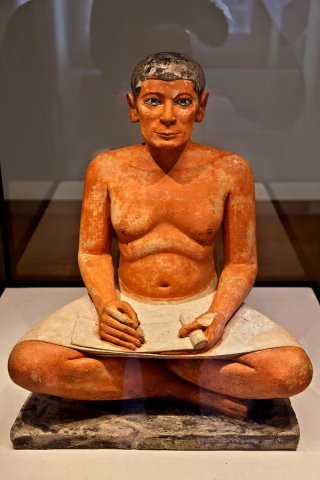
Seated scribe, Egypt – Courtesy Louvre
- The Seated Scribe, Egypt [no formal request, but cited in repatriation campaigns]
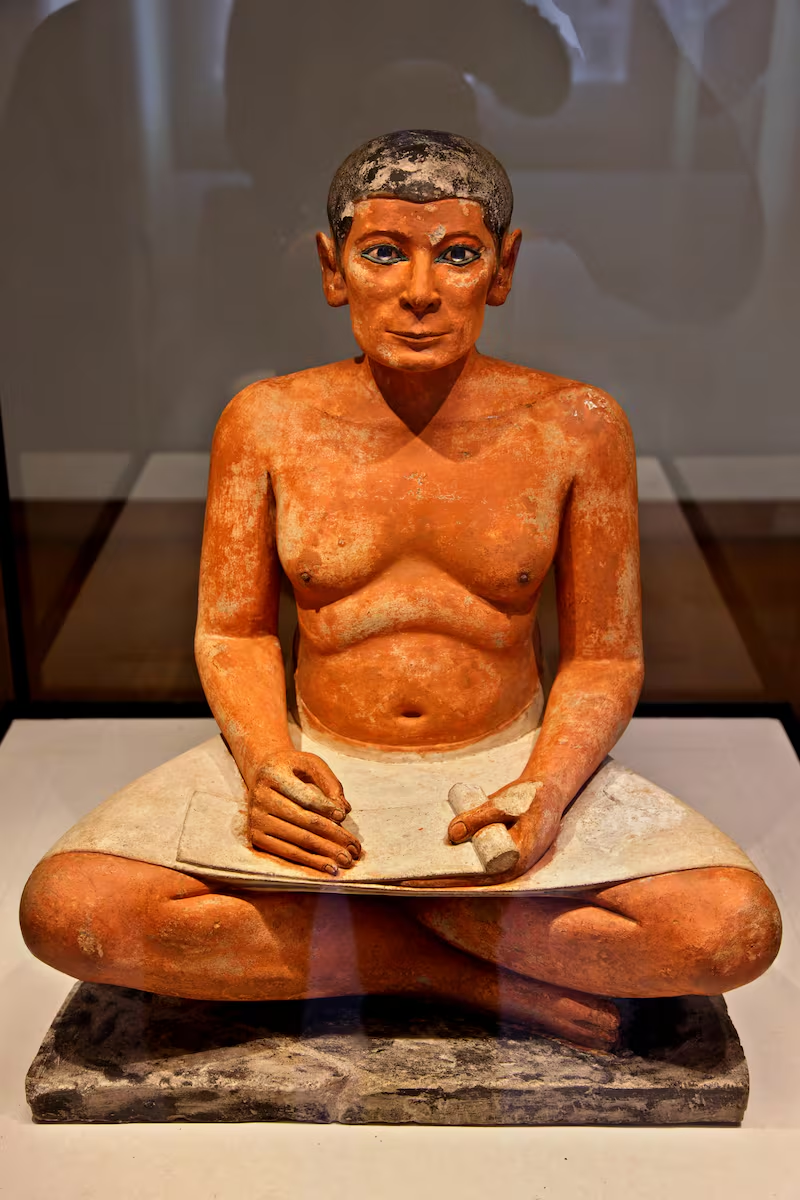
One of the Louvre’s most famous Egyptian works, the Seated Scribe is a painted limestone sculpture from the Old Kingdom, dating back to circa 2600BC-2350BC. It is famed for its striking realism and remarkably preserved features. Found at Saqqara in the 19th century by the French archaeologist Auguste Mariette, it is among the most celebrated masterpieces of the Louvre’s Department of Egyptian Antiquities.