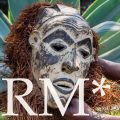
This text examines how Belgium approaches the decolonization of its cultural institutions, often reduced to a mere facade rather than a genuine paradigm shift.
Using the emblematic case of the AfricaMuseum and the cultural policies stemming from it, it highlights the continuity of colonial logics in the management of knowledge, the representation of otherness, and the distribution of power.
Talking about “decolonizing” a museum has become almost commonplace. A redesigned room here, a temporary exhibition there, words like “diversity,” “inclusion,” or “dialogue” displayed on the walls.
Since the reopening of the AfricaMuseum in 2018, that of the MusAfrica in Namur, and the “When We See Us” exhibition at Bozar, institutional interest in decolonization seems to be a given.
Yet, for many people of African descent working in the fields of art, culture, and education, this promise seems more like a performance than a genuine redistribution of power.
It is impossible to discuss decolonisation without mentioning the former Royal Museum of Central Africa, now known as the Africa Museum. An emblematic institution of colonial imagination, it long served to legitimise racial hierarchy in the national narrative. Renovated in 2018 at a cost of more than €70 million, the museum attracted only 106,000 visitors in 2024 (compared to 1.24 million at the Quai Branly in the same year).
This decline reflects a failing internal policy, marked by a flagrant lack of renewal in terms of profiles and imagery. Key positions remain occupied by the same types of expertise—often white, European, and from development cooperation backgrounds—thus perpetuating an institutional clique. Participatory approaches, meanwhile, are too often limited to symbolic consultations, without any real decision-making power being granted to the people concerned.

