REGARTLESS reports: In three German museums, restitution decisions have been made for 31 objects from Nso, yet their return remains delayed. Communities continue to wait. The Cameroon government must take action to facilitate these returns.
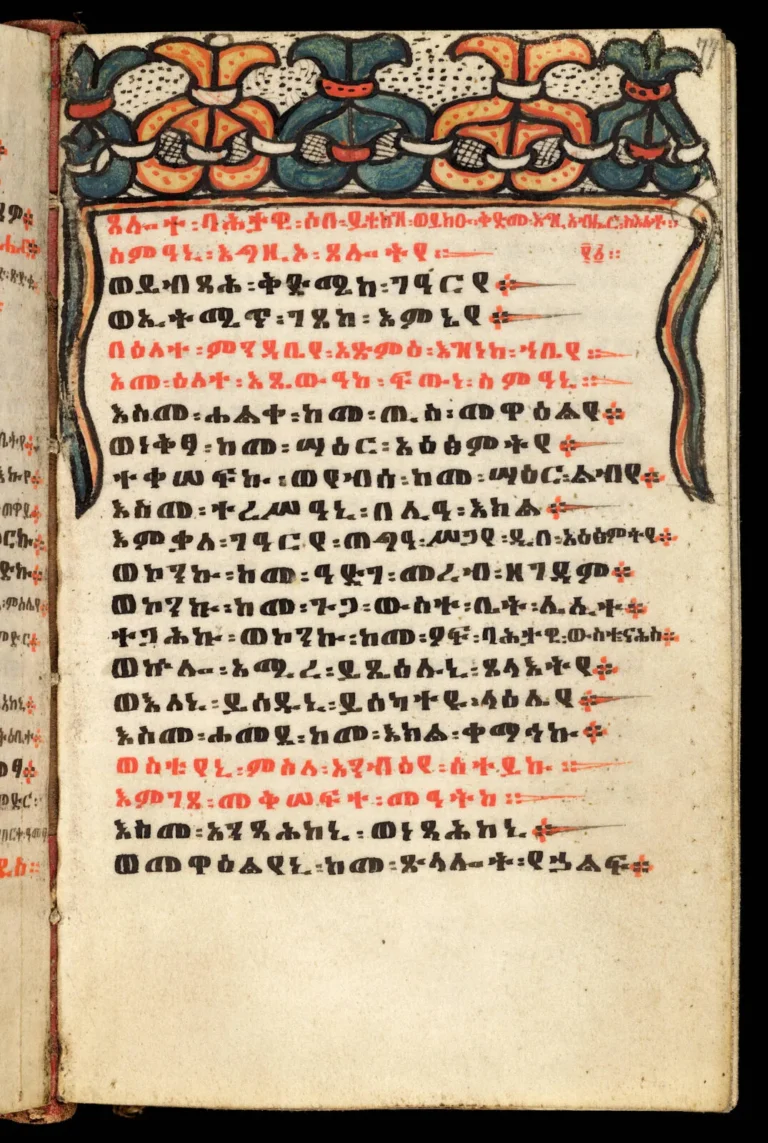
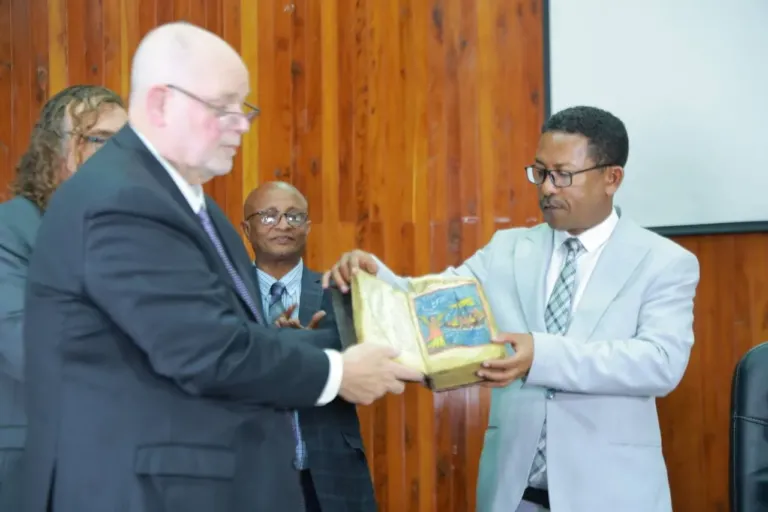
Abreha Kiros reports: The return from the USA of 17 ancient spiritual parchment manuscripts to Ethiopia marks an important achievement in the recovery, preservation, and responsible stewardship of the country’s cultural heritage.
Kwame Opoku: The Republic of Benin has claimed another 35 cultural belongings from the five thousand or so held in French collections. With the new French restitution law accepted, hopes have been revived that Gou can be welcomed in Cotonou soon. How realistic is this?
Bénédicte Savoy noted: “You have a huge collection of African books looted by the French in the 19th century in the Bibliothèque Nationale. But they are not in a department for African manuscripts because they are written in Arabic. It is African language but in Arabic letters. So in France, if you would go to the Bibliothèque Nationale, they would say, ‘No, we have no manuscript Africain. We have manuscript Arabe.’”
Open Restitution Africa (ORA) designed the guide Building Restitution Frameworks to support practitioners in developing holistic and sustainable frameworks for restitution, the guide Rethinking Inventories for making external inventories that catalogue all objects from a country that are held abroad, and the guide Reclaiming Restitution - Centuring and contextualising the African narrative.
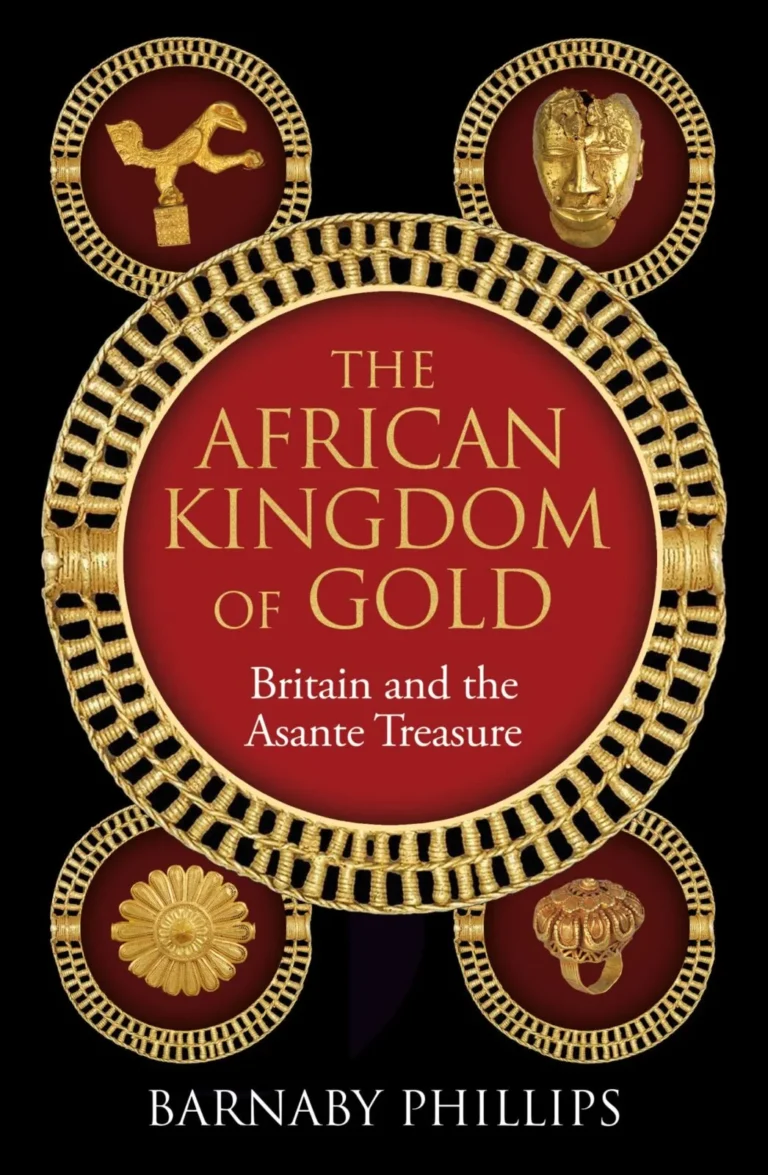
Author Barnaby Phillips will discuss its enduring significance of the Asante treasures for Britain, Ghana and our museums. He will be joined by Ivor Agyeman-Duah, the Asantehene’s envoy and director of the Manhyia Palace Museum in Kumasi and Malcolm McLeod, formerly of the British Museum, who both played critical roles in the negotiations leading to the recent returns.
With speakers from Africa only. Returning an object is not the end of the story. What needs to be repaired? Who decides the terms of return? And how can restitution contribute to a broader movement for reparative justice?
[in English and German] The 2 days event 'From Colonial War to Postcolonial Memory: Transformations of Colonial Military Violence since 1918' is organised by the Center for Military History and Social Sciences of the Bundeswehr (ZMSBw).
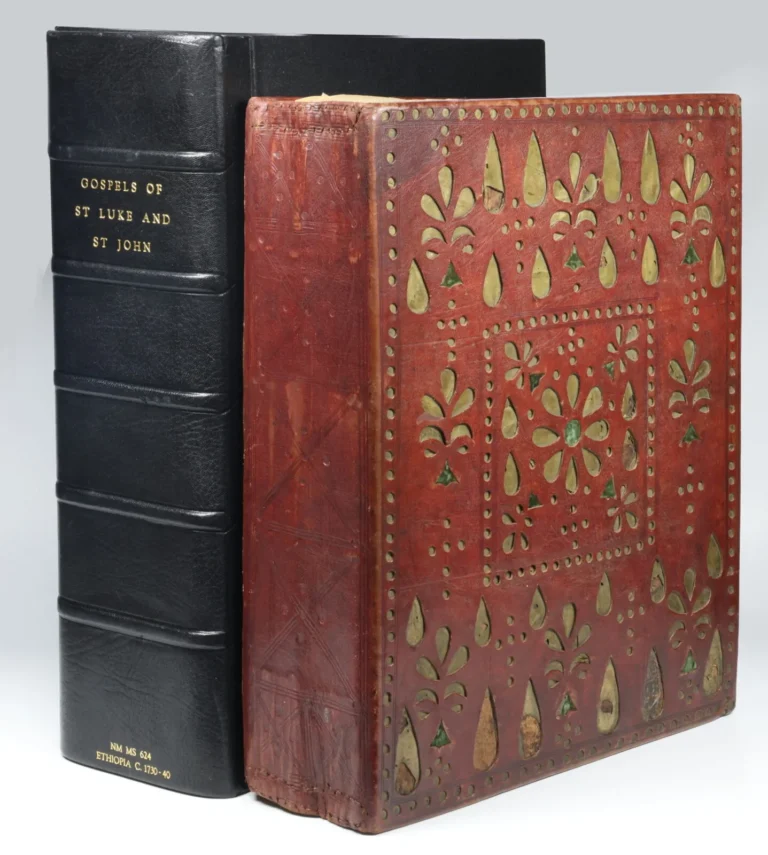
This large Ethiopian manuscript, written in Ge'ez on vellum circa 1730-1740, preserves the Luke and John half of a celebrated two-volume royal Gospel commission, forming the companion volume to the Gospels of Matthew and Mark now in the Bavarian State Library. Date 13 September 2026. Auction House INLIBRIS Gilhofer Nfg, Abu Dhabi. Asking price €250,000. On 6 September 2026, INLIBRIS sold already the 108 manuscripts comprising Zemen collection.
Just as the narrative of the "clean Wehrmacht" long covered up the violent warfare and the involvement of soldiers and officers in National Socialist crimes, the myth of a "clean protection force" existed in Germany for a long time. Speakers from Cameroon and Tanzania will discuss this.
The Toledo Museum of Art (TMA) announced partnership with the Ethiopian Heritage Authority (EHA). At the center of the partnership is the acquisition of a collection of approximately 380 Ethiopian artworks. The museum will immediately return two 15th century religious manuscripts. Further returns will be prepared.
Yann LeGall has finished a list with evidence of 236 military operations led by German colonial troops between 1883 and 1912 in today's Tanzania, Rwanda, Burundi, Uganda and DRC (former German East-Africa). He has located 464 towns, villages and regions targeted by this colonial militarist violence and place them on a contemporary map.
The Museologies of Africa explores decolonial museum practice in Sub-Saharan Africa, asking how to decolonize knowledge production in Africa and to meaningfully collaborate with indigenous communities to reimagine museology.
This documentary tells the remarkable story of the repatriation and ceremonial homecoming of six Khoe and San ancestral remains from Scotland to South Africa in October 2025, and the profound significance of their return to the communities from which they originated.
In 1899, French troops burned villages and looted cultural artifacts in the quest to include Niger in its West African colonial portfolio. Now, France has signaled willingness over possible restitution, but Niger is not interested.
The Pan African Heritage Museum is pleased to invite researchers, scholars, museum professionals, cultural practitioners, policymakers, artists, heritage experts, and students to submit abstracts for the upcoming Annual Conference. Theme: The Future of Africa’s Museums: Reclaiming Heritage, Pathways to Restitution and Renewal
On 19 August 2026, South Africa hosts a historic repatriation send-off and handover ceremony at Iziko Museums in the Western Cape. The occasion honours the return of ancestral remains currently held at Iziko Museums, marking an important step in restoring dignity, identity, and belonging to communities whose ancestors were separated from their homeland for generations.
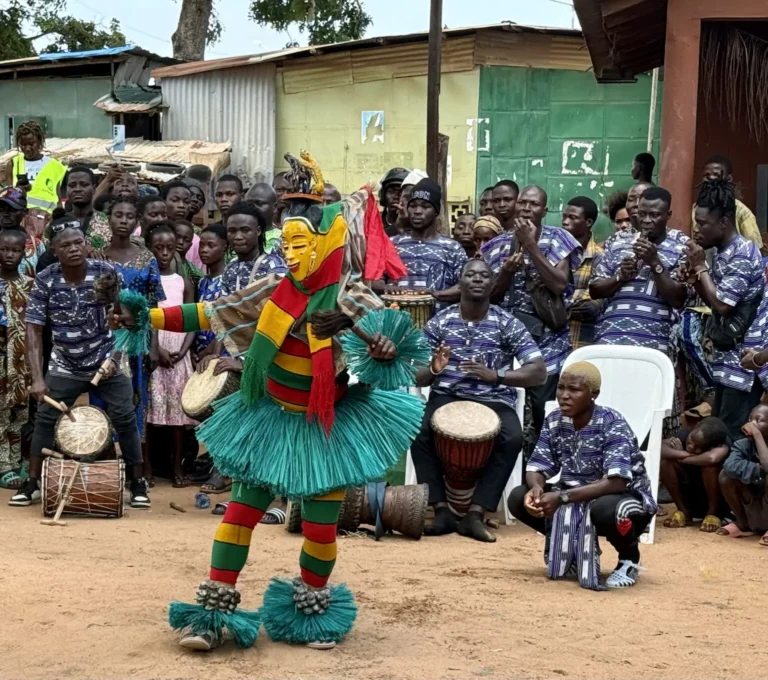
As Benin invests in museums, welcomes the return of looted royal treasures and stages the Festival of Masks, it is advancing a new vision of heritage in which ritual, scholarship and cultural policy converge, challenging conventional understandings of what museums preserve and how history is told.
For decades, the descendants of the Senegalese Muslim mystic, scholar, and military commander Omar Saïdou Tall have been trying to retrieve the “treasure of Ségou” (looted in 1890) from the French state. The new French restitution law offers new hope.
Suzette Bell-Roberts writes: As Benin invests in museums, welcomes the return of looted royal treasures and stages the Festival of Masks, it is advancing a new vision of heritage in which ritual, scholarship and cultural policy converge, challenging conventional understandings of what museums preserve and how history is told.
Five years after the return of 26 objects from the royal treasures of Dahomey, Benin has submitted a new restitution request to Paris for 35 colonial works and archives. This action is based on a French framework law that came into effect in May, designed to facilitate such transfers. Benin's approach resonates what more ECOWAS states are after.
[in German] Thomas Fues argues that the handover of six Maka ancestors in Freiburg University has not brought the breakthrough for the German-Cameroonian reappraisal of the colonial heritage that many had hoped for.
Indigenous knowledge systems (IKS) contemplate the world through an interconnected lens, reflecting the integrated way life is lived and the symbiotic relationship between humans and their immediate tangible and intangible environment. Open Restitution Africa sees how the invocation of an IKS lens shifts the means and desired ends of restitutionary work around African cultural belongings and human ancestors.
The four-days conference 'Restitution Beyond Return: Reclaiming African Heritage in Today's Geopolitical and Technological Realities' brings together legal practitioners, policymakers, cultural institutions, artists, technologists, researchers and civil society to examine how restitution is evolving in response to changing geopolitical realities, international human rights law, and emerging technologies.
[in French] Donatien Dibwe dia Mwembu (Uni Lumbumbashi, DRC) explores the question of the restitution of cultural objects looted from communities in his country. With two case studies he establishes a dialogue between written and oral sources.
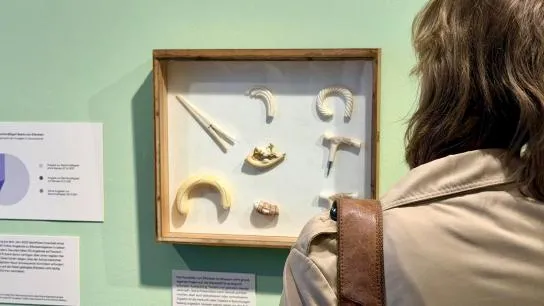
[in German] The merchant Theodor Francke (1830-1896) ran an ivory bleaching plant in the 19th century. Imported ivory from colonial trade networks was bleached here and processed into piano keyboards, for example. Francke GmbH was also involved in the trade in looted art such as the Benin bronzes. An exhibition at Museum Tempelhof in Berlin has the story...
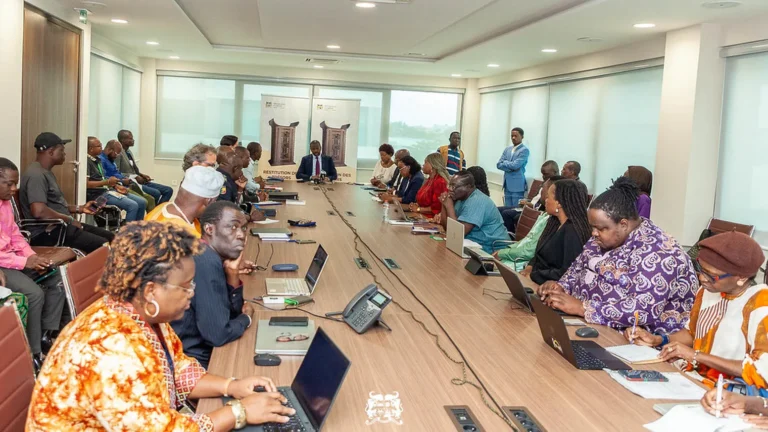
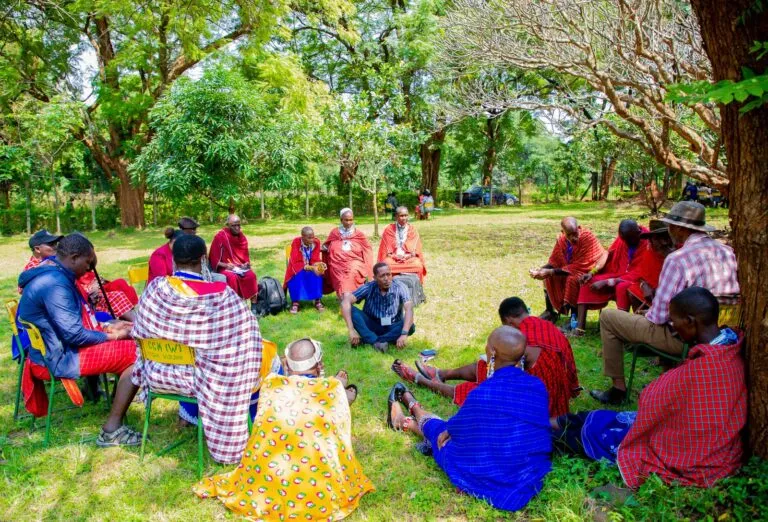
In the Marejesho Research and Information Centre in Moshi, Tanzania, 150 representatives of different communities in the Kilimanjaro and Arusha regions focused on the Marejesho initiative's history (from mobile exhibition to provenance research project), current research goals, restitution and repatriation efforts, and findings about cultural belongings and ancestral remains in German museums. With some remarkable conclusions.
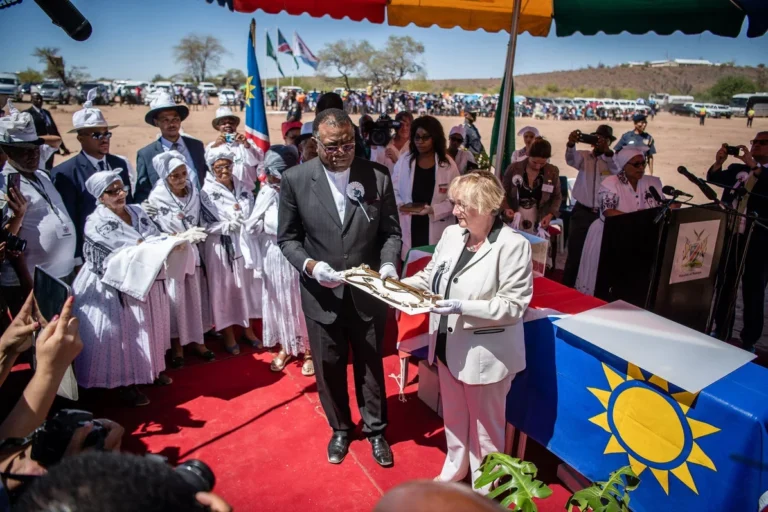
[in German] In a festive ceremony, the Governor of the Erongo Region, Nathalia /Goagoses, accepted the "Usakos Railway Workers' Collection" collection on behalf of the Republic of Namibia. A Swiss railway engineer and his wife collected them between 1903 and 1905 in a context of colonial violence.
Drawing on his broad research, Chipangura explores how ethnographic museums holding African collections are confronting the enduring consequences of colonialism. His presentation moves beyond familiar debates on restitution and repatriation, asking a more fundamental question: What are museums for, and whom do they serve?
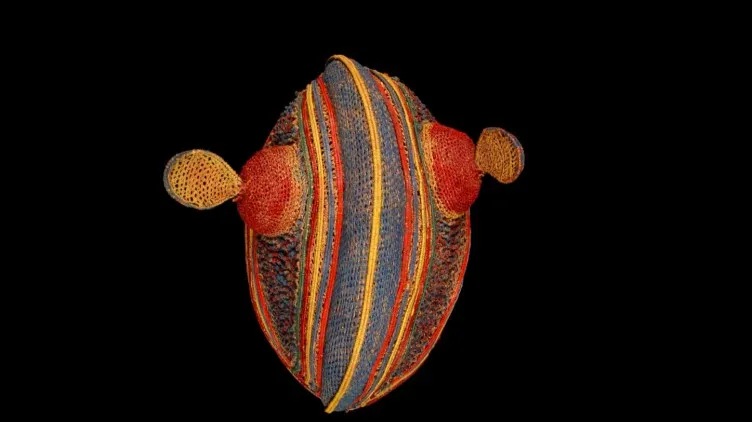
[in French] Vicky Victoire Muke (Kinshasa Uni) shares a new preliminary study devoted to the colouring materials of the costumes and heritage fabrics of the Democratic Republic of Congo, based on the inventory records of the Musée du quai Branly - Jacques Chirac. His questions: How did you dye a kuba loincloth a century ago? Where does the deep red of mbuti adornments come from? And why is mangbetu black called "earth pigment"?
Reilly Clark argues that, if the return of African cultural objects ends with the literal return of physical objects, it does little to address legacies of colonial theft, value extraction, and epistemicide but can reinscribe the power of Western interpretive frameworks and reproduce Western patterns of state power by returning objects to Western-style institutions within postcolonial nation-states...
How are colonial violence, looted cultural assets and partnership projects related? This exhibition sheds light on the eventful history between the Cameroonian city of Tibati and Bremen. The focus is on current questions: What is the status of the projects? What is the significance of the restitution of colonial objects and how can a common future be shaped?
The most important is the Quran of Samory Touré, one of Guinea's leading figures of resistance against the French colonial conquest. It is Guinea's first restitution request since 1968.
[in French] Vicky Victoire Muke (Kinshasa Uni) writes: This is a first effort to the heritage costumes of the Democratic Republic of Congo (DRC) as they appear in the online collections of the Royal Museum for Central Africa (RMCA – AfricaMuseum, Belgium). It is intended as a situational resource, intended for anyone wishing to familiarise themselves with the diversity of costumes, loincloths and adornments preserved in these collections.
During a ceremony and an ecumenical service in the University Church of Freiburg, Freiburg University prepared for the repatriation of ancestors of the Maka community from Cameroon. The human skulls are part of the Alexander-Ecker collection, anatomist from Freiburg in c. 1860.
Okechukwu Uwaezuoke argues: The homecoming of Yinka Shonibare’s work from the 2024 Venice Biennale “Monument to the Restitution of the Mind and Soul” to Benin City seemed to complete one historical circle while quietly opening another debate.
[in French] French authors Alexandre Decroix and Asena Poyrazer write: Despite an increasingly important presence in the public debate, the term "restitution" is misunderstood. In contrast to the "new relationship with Africa" promoted by Emmanuel Macron, the issue of the restitution of African cultural property betrays a colonialism that is still very much alive. France retains tight control.
Nigerian art curator Yahuza Rabiu Garba argues: We need to decolonize our understanding of heritage spaces. The Eurocentric model insists on the "four walls" idea, a quiet archive where artifacts are curated to be looked at, but never touched. But...
An exhibition at the Slovene Ethnographic Museum confronts the colonial imbalance of Tanzanian artefacts being more accessible to Europeans than Tanzanians, asking who truly holds the right to tell the nation’s history.
Zimbabwean archaeologist Mutyandaedza Bright argues: The global movement to repatriate African cultural heritage has gained unprecedented momentum. While much attention has been given to whether objects should be returned, far less attention has been paid to an equally important question: Are local communities prepared to receive them? Yes, they are, but strengthening institutional capacity is essential.
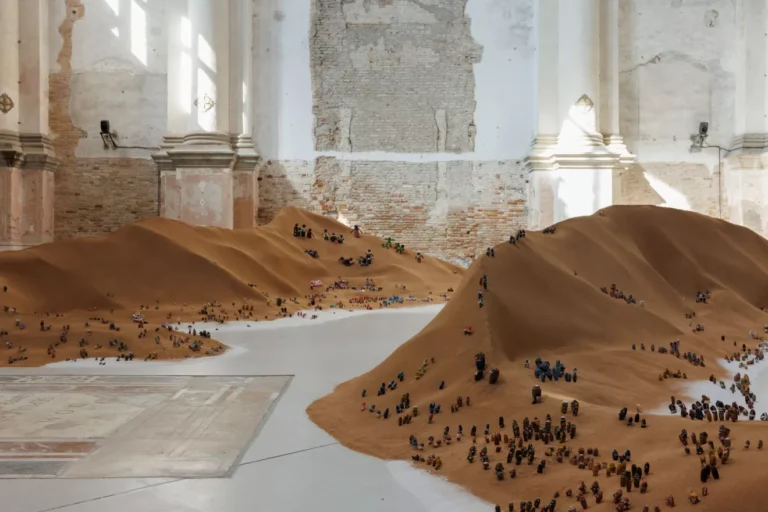
Running from 28 March through 11 October 2026 at Ocean Space, the Venice Art Biennale exhibition “Tide of Returns” by Khadija von Zinnenburg Carroll raises questions about such issues as ownership and ways of acquisition.
The Marejesho Research and Information Centre is building on the long-standing efforts of the communities in Kilimanjaro and Arusha to examine German colonial history and its consequences, and specifically to search for and reclaim the ancestral remains of the leaders who were hanged on March 2, 1900 in Old Moshi on the orders of German colonial officers.
Senior Ethiopian researcher Tadesse Simie Metekia argues: To implement the landmark UN slavery resolution, reparations should be defined as a framework for truth, responsibility, repair, reconciliation and global justice.
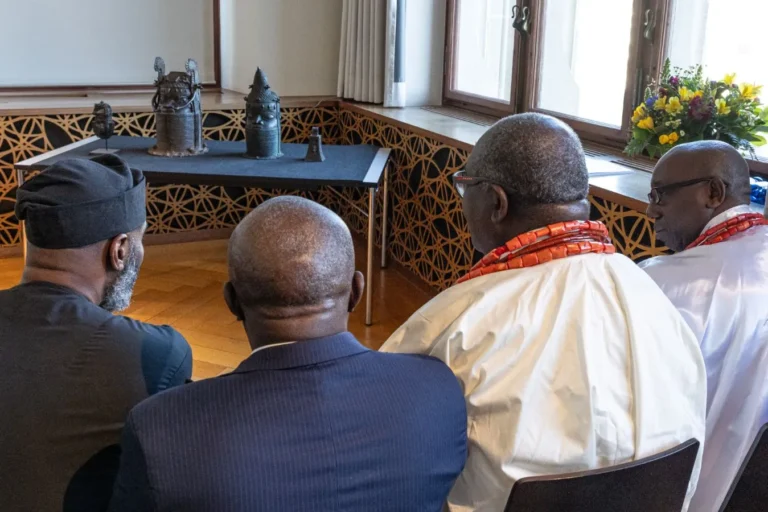
On 29 June 2026, at the National Museum in Lagos, three Swiss museums formally returned 18 Benin Bronzes to Nigeria, alongside a bronze bracelet and four archaeological monoliths seized during criminal investigations. Lawyer Kai Loon Loh analyses what makes the Swiss approach distinctive, and why it matters for cultural heritage law and practice.
The Museum für Naturkunde Berlin, the Botanischer Garten and the Botanisches Museum, together with the Ethnologisches Museum and the Zentralarchiv der Staatliche Museen zu Berlin (SPK),and the Archives Nationales du Togo and the University of Ghana are jointly investigating the contexts of acquisition of collections from the German colony of Togo, and neighbouring Ghana.
Hansjörg Dilger writes: Ethnographic collections can be understood as affective forces: relational entities that connect people, institutions, histories, and more-than-human worlds, while shaping contemporary debates about care, collaboration, and restitution. (open access)
That the Netherlands will return 2,000 stolen objects to Ghana, is - according to the Dutch Ministry of Education, Culture and Science (OCW) - a premature conclusion. For claims of looted colelctions, the normal Dutch procedures will have to be followed. The catalogue with the objects is a first step. See RM* of 21 June 2026.
'Law no 2026-351 of 9th May 2026 on restitution of cultural property which has been illicitly acquired' is a step forward and shows, at the same time, that many in France are not ready to accept their colonial past and continue to deny their brutal history in Africa.
Ghana is set to receive over 2,000 cultural artefacts from the Netherlands, while Germany has also identified items linked to the Kpando traditional area for return, according to Foreign Affairs Minister Samuel Okudzeto Ablakwa during the “Accra Next Steps” discussions on cultural restitution. The move forms part of ongoing international efforts on cultural restitution and Ghana’s push to recover artefacts taken during the colonial era.
Chana Algarvio's paper reshapes and redefines our understanding of books, challenging modern beliefs influenced by Western bias so that the field of Egyptology can unhesitatingly incorporate the topic of books and bibliography explicitly into scholarship.
In a major step toward cultural restitution, taken during a high-stakes African Union summit in Addis Ababa, a specialised international task force has been established to spearhead the return of looted and illicitly trafficked cultural artifacts back to the African continent.
ThomasFues writes about a recent report by the Culturebene portal in Cameroon that the government there is getting serious about the repatriation of human remains and cultural belongings from Germany. It is reported that Culture Minister Bidoung Mkpatt has granted the Maka community permission to recover the remains of their ancestors that were looted in 1905.
The rejection by the city of Bordeaux of a private donation of 53 art objects allows for the direct repatriation of these works to their countries of origin, especially Gabon, which will receive 33 pieces from the collection. The other recipients are Nigeria, Niger, Ivory Coast, the Democratic Republic of Congo, Burkina Faso, and Togo.
Sierrea Kinsey-Lawton argues: Museums and art houses have never acknowledged that the living descendants of enslaved Africans are, themselves, looted cultural heritage. Solutions for stolen people are not analogous to solutions for stolen bronzes. You cannot deaccession a person.
Kate Fitz Gibbon writes: The restitution of Asante-linked instruments from Los Angeles to Ghana exposes the limits of standard repatriation narratives, particularly when provenance is uncertain and human remains are involved. Rather than resolving historical injustice, the case highlights competing claims, ethical ambiguities, and the need for negotiated, context-specific outcomes.
[in French] Session: Does the emergence of a legal framework for the restitution of African cultural property play a sufficient role in the reparation enterprise following colonization?
During his visit to Kenya, French President Emmanuel Macron said the process of returning African artworks looted during the colonial era had become "unstoppable". But, despite a growing number of restitution requests, France has returned only a handful of artefacts to its colonies.
Samuel Bachmann (Bern Historical Museum) argues: If museums are to confront their – and Switzerland’s – coloniality, they require a new mandate: one that questions their interpretive authority and addresses fundamental questions about why, and for whom, cultural heritage is preserved, researched and communicated.
The Kings Own Royal Regiment Museum Trust presented ancient relics of Emperor Tewodros II of Abyssinia at the University of Cumbria in Lancaster o the Ethiopian Heritage Authority (EHA).
Culture Minister Samira Tovela announced Mozambique’s official effort to reclaim around 800 colonial-era artworks stolen during colonization. The process, supported by UNESCO and EU nations, comes ahead of the country’s 50th independence anniversary in June. The cultural and symbolic value is estimated at over USD 100 million.
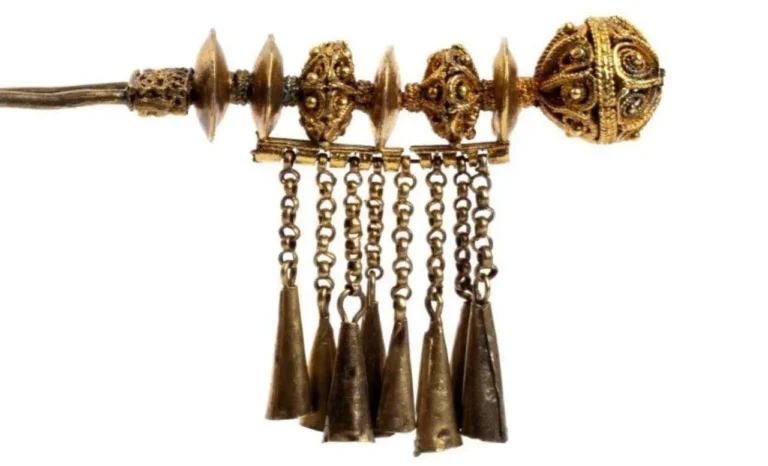
Mahlet Mehdi writes: The return of Empress Tiruwork Wube’s hairpin to Ethiopia underscores how much remains unresolved. Most artifacts taken from Magdala remain abroad. Legal frameworks offer limited recourse. Private markets remain opaque. And restitution continues to depend on chance discovery, rapid response, and negotiated compromise. The hairpin is less an endpoint than a case study.
Yrine Matchinda examines in her disseration *Presence and Absence of Cameroonian Religious Objects in Colonial Collections of German Museums (1884–1919): Cultural and Religious Implications for Communities in Cameroon* how the musealisation of sacred/religious objects affects cultural identity, collective memory, and intergenerational transmission within communities of origin.
The conference 'Museums as Monuments to the Colonial Troops?' brings together historians, artists, curators and artists to examine the artefactual history of colonial warfare in three former German colonies: Togo, Kamerun and German East-Africa.
Until its restitution in November 2025, Ama O Ghe Ehen, a 18th-century bronze plaque depicting a mudfish, was held in the colelction of the Museum de Fundatie in the Dutch city of Zwolle, since its acquisition in 1937. This symposium explores the process and implications of this return, and what restitution might mean in the context of this plaque.
The main objective of this project is to create an interdisciplinary network of researchers working on the history of ancestral remains collections in museums in Germany and France from Central and Southern Africa, with a particular focus on provenance research.
Brighton & Hove Museums will return 45 cultural belongings to Botswana following a 2022 repatriation claim by the Khama III Memorial Museum in Serowe. The belongings were acquired in the Gammangwato region of Botswana in the 1890s by Reverend William Charles Willoughby, a missionary in Old Palapye. He worked with Kgosi (Chief) Khama III as a translator and advisor.
[in German] The Stiftung Preussischer Kulturbesitz (SPK) in Berlin is to return hundreds of skulls to Cameroon, Togo, Ghana and Nigeria. The origin of the human remains has been researched for several years. "If at all possible, the human bones should be able to return to where they came from," said foundation president Marion Ackermann.
The landscape of cultural property restitution has undergone a fundamental transformation over the past three decades. What was once a world governed by gentlemanly agreements between dealers, collectors, and museum curators has become a forensic battleground where digitized trafficking archives, scientific testing, and aggressive legal enforcement determine the fate of objects. This document provides a comprehensive analysis of the current state.
The Restitution Law, approved by the French parliament, evokes all sorts of reactions. RM* summarises them in a few posts. In this post, the Chinese Global Times writes that while countries around the world have been progressively engaging in the repatriation of cultural relics, Japan stands out as a negative example.
The Restitution Law, approved by the French parliament, evokes all sorts of reactions. Most are explaining the law and positive in tone. In a previous post, an opponent of the law had his say. In this post, Saeed Saeed, journalist in Abu Dhabi, points to practical consequences for countries such as Algeria, Jordan, and Egypt.
28 April: Black Muse and Digital Benin: Benin Heritage & New Forms of Narratives: Digital Access & Reconnection to the Living Heritage of Benin Kingdom
3 May: Digital Benin and Kokopelli Gallery: Digital Benin: Digital heritage at the intersection of culture, data and practice
In recent years human remains in museums have been the subject of increasingly critical attention, both within the museum sector itself and in public debate. This raises a large number of ethical, legal, and practical questions for European museums. 'Museum meets University' organises this meeting at the crossroads of academic museology and museum practice.
Two looted West African musical instruments languishing at the Fowler Museum in Los Angeles are creating a restitution challenge, because they have human skulls attached to them.
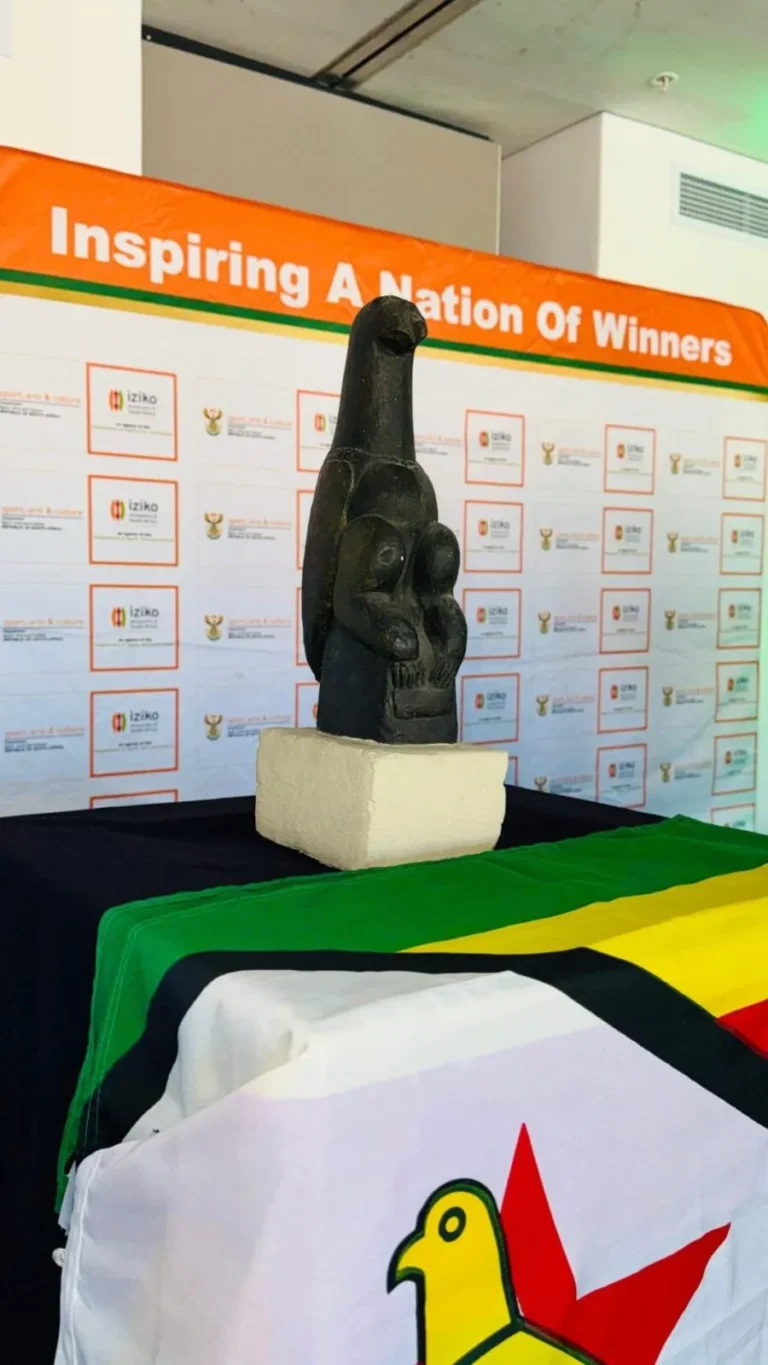
Lloyd Makonya writes: The systematic removal of cultural heritage formed part of a broader colonial strategy to undermine African civilisation. Against this historical backdrop, the handover of the Zimbabwe Bird and ancestral human remains by South African authorities to Zimbabwean officials marks the latest victory in Zimbabwe’s sustained push to reclaim its cultural inheritance.
Books, oral histories, artefacts, images, textiles, posters, manuscripts, architectural documentation, and cultural records across Africa, the diaspora, and the Global South. It contains 70 locally indexed records · 300,000+ archive horizon · static-hosted discovery architecture, etc.
While Germany appears keen to expedite the conclusion of the negotiations with Namibia concerning the genocide committed against the Ovaherero and Nama communities between 1904 and 1908, the Namibian position reflects that the matter remains unresolved. Namibia continues to advocate for a comprehensive reparative framework grounded in five key elements: restitution, compensation, rehabilitation, guarantees of non-repetition, and satisfaction. Sarah Negumbo, the Director of Namibia Library and Archives Service, provides further insight into the historical, legal, and ethical dimensions underpinning these demands.
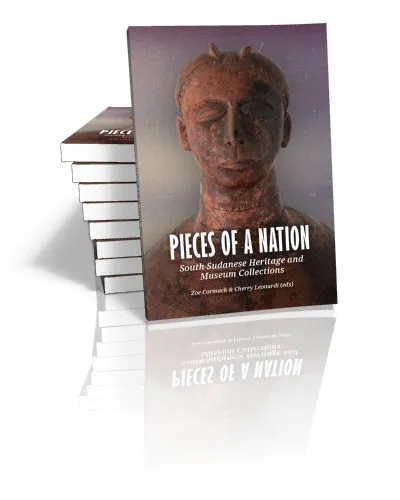
Although published in 2021, RM* distributes this open access book, as South Sudan is a much forgotten area. According to editors Zoe Cormack and Cherry Leonardi, the long-term effects of colonialism and conflict have largely precluded any concerted attempts to preserve material culture within the country; museums remained in Khartoum, the capital of the formally united Sudan. Furthermore, tens of thousands of objects had been removed from what is now South Sudan during the nineteenth and twentieth centuries to museum and private collections around the world...
The handover ceremony, directed by South African President Cyril Ramaphosa, took place at the Iziko South African Museum in Cape Town, marking a significant moment in the restoration of African heritage. The repatriation also underscores growing cooperation among African nations in addressing historical injustices linked to colonial-era dispossession.
Over 1,000,000 known African artefacts unwillingly held outside the continent. Of these, less than 1,000 have been returned... The Open Restitution Project is an Africa-led project seeking to open up access to information on the restitution of African material culture and human ancestors, to empower all stakeholders involved to make knowledge-based decisions.
Lia Iannarilli and Malaika Bunzigiye conclude: The story of looted art from the Democratic Republic of the Congo is inseparable from broader struggles of political sovereignty. By holding on to these items, European powers are holding on to the narrative of their colonial rule. In a world shaped by imperial legacies, the decolonial project must be both material and symbolic. To repatriate art is to repatriate power.
Vast majority of Africa’s cultural legacy remains abroad, where institutions claim superior care, shared human heritage. Three African analysts comment. ‘Biggest issue is changing the historical narrative that excluded us.’
The V&A’s collections include around 90 objects from Ethiopia. The majority of these are in some way associated with a British military expedition to Ethiopia from 1867 – 68 against Emperor Tewodros. The museum also holds a selection of Ethiopian paintings from the 1940s. Restitution is out of the question. A provenance report.
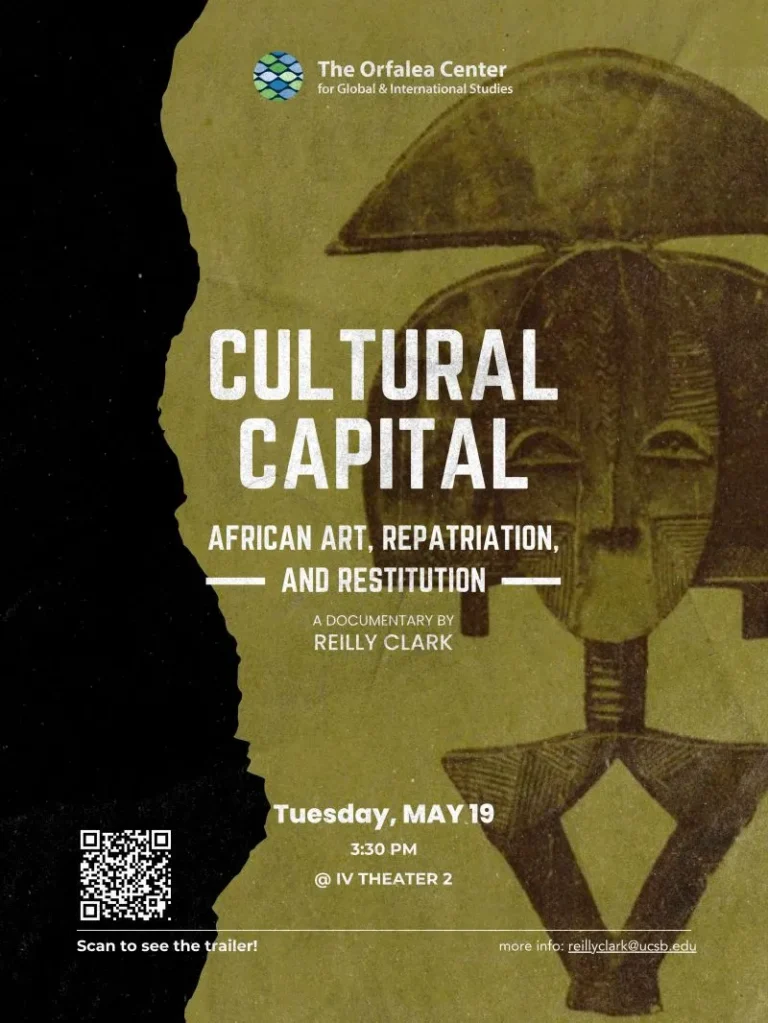
'Cultural Capital: African Art, Repatriation, and Restitution', a critical documentary by Reilly Clark on art from Africa in western museums, will be released on 19 May 2026.
The lechwe skin cloaks are a rare remnant of Batwa people's traditional intellectual, cultural and social worlds. They were recently rediscovered in a museum collection in Stockholm, Sweden. These belongings were slated for digital repatriation, along with +/- 100 other belongings, through a collaborative project between the Women's History Museum of Zambia, and the National Museums of World Culture, Sweden.
[in German, partially in English] In Germany, the federal, state and local governments decided to establish the "Coordination Council for Returns of Cultural Property and Human Remains from Colonial Contexts". The secretariat will be located at the Federal Foreign Office.
An important moment! Congolese and Belgian experts presented their recommendations for the future of institutional provenance research at an open forum: ‘The current framework is insufficient.’
On 25 February 2026, the Togolese cabinet approved a draft law to establish a restitution committee. The committee will seek to repatriate tangible and intangible cultural heritage, as well as human remains and archives from colonial contexts. The bill refers to over 8,000 „objects“ currently held in foreign museums. They predominantly come from northern Togo.
Museums in a country like Ghana have an impoortant function in preserving ervidence of the past and in shaping together the country's history. A self-critical look from Ghanaian professionals in their museum practice, especially that of the National Museum.
South Africa has reburied the remains of 63 Khoisan people, among southern Africa's oldest indigenous communities. The remains were part of museum collections in the Hunterian at the University of Glasgow in Scotland and at the Iziko South African Museum in Cape Town. The remains were laid to rest at a historic monument near Steinkopf, in the Northern Cape province, during a ceremony attended by President Cyril Ramaphosa.
In March 2024, Nigeria’s National Commission for Museums and Monuments (NCMM) filed a formal restitution claim on behalf of the Nigerian government for 14 Benin artifacts held by the Ethnographic Museum at the University of Zurich (UZH). The University of Zurich has decided to honor this claim. "Signing the property agreement is not just a legal act, but the recognition of colonial injustices", Zürich's lord mayor, Corine Mauch, said.
Alioune Samb writes: As part of my research, I developed and tested a system called SYDOCOM. Not to “add voices”. But to create conditions where different forms of knowledge can exist without being reduced to a single authorised version.
The Royal Ethiopian Trust (RET) is celebrating the return of a historic treasure: the gold hairpin of Etege Tiruwork Wube, wife of Emperor Tewodros, once taken during the storming of Magdala in 1868.
In new episode of podcast "Decolonial Memories", Flaubert Djateng, coordinator of the civil society organisation Zenu Network in Cameroon, talks about remembrance work on the German colonial era in his country.
The grandson of Ethiopian Emperor Haile Selassie I avoids confrontation and uses patience and strategy in oder to retrieve stolen objects from public and private parties in Great Britain. It is part of a wider demand for historical justice that continues to resonate across the African diaspora.
Descendants of Zimbabwe freedom fighters executed and beheaded in southern Africa by colonial British forces in the 1890s have called on the Natural History Museum in London and the University of Cambridge to help them find their ancestors’ looted skulls.
Reilly Clark writes: Despite the return of Benin belongings, the relations between Africa and the West have remained fundamentally unchanged. African cultural objects were taken from the continent as part of the dual projects of Western imperialism and resource extraction.
[in French] Cécile Mendy, a student in Heritage Professions at the Gaston Berger University of Saint Louis in Senegal, discusses her research on endogenous conservation – the idea that conservation practices grounded in local knowledge can act as a form of cultural sovereignty.
[in French] The PROCHE project, implemented by the Royal Museum for Central Africa, is part of the 2022 Belgian law on the restitution of colonial collections. It aims to retrace the conditions of acquisition of the museum's so-called "ethnographic" and musicological objects, in close collaboration with Congolese institutions and cultural actors.
Reilly Clark writes: Two Benin plaques were among the ones looted by the British from the palace of the oba in Benin. Later, they were given to the British Museum and later still, to the Nigerian National Museum in Lagos. The plaques were removed without permission from the Nigerian National Museum between 1950 and 1991.
This article by Elias Aguigah, Yann LeGall and Jeanne-Ange Wagne (TU Berlin) is part of The Restitution of Knowledge project. It documents the history of ‘plunder’ of former African colonies and addresses its legacy in ethnological collections, with a focus on loot from so-called 'punitive expeditions', this time in the Grassi Museum für Völkerkunde in Leipzig (+ an addition about Togo loot in Stuttgart).
[in French] This issue of Relations Internationales, edited by Anne Sophie Gijs, Matthieu Gillabert and Serge Jaumain offers a range of interesting articles about restiution issues, museums, diaspora groups and communitie sof origin, mostly in Switzerland and Belgium and in African countries as Cameroon and DR Congo.
[in French] Yasmina Zian, Aline Bosuma, Alexandre Chevalier and Laurent Licata make critical remarks about Belgium's decolonisation of museums effort. Belgium keeps control over decisions and there is a lack of a balanced dialogue with the DRC.
The Tangué is a ship’s beak carved from wood and placed on the bow of the ship of the royal Bele-Bele family. This mystical and sacred belonging symbolises power, particularly the ultimate authority of the King over the water tribes of the Douala kingdom, and is an integral part of socio-cultural and spiritual practices. n 1884, it was stolen by German military. Currently, it is in the Museum Fünf Kontinente in Munich.
‘Extraordinary’ golden lamb’s head pillaged in 1874 from what is now Ghana remains hidden in officers’ mess. The glistening golden ram’s head would seemingly be worthy of any museum, but it remains hidden within the regiment’s mess at Larkhill in Wiltshire.
[in English and in German] The Prussian Cultural Heritage Foundation (SPK) transfers custody of three ancestors to the Molelia family of Tanzania. They now have sole control over the remains. Howe ver, immediate repatriation to Kibosho is not possible because it requires the approval of the Tanzanian government, which has not yet responded to the SPK’s offer to return the remains.
[in Dutch] In museum De Fundatie in Zwolle, Nigerian artists shine their light on an antique plaque of a mud fish. The fish was stolen from Benin City at the end of the 19th century, and it will return to that city next summer. 'The mudfish is symbolic of the flexibility of the Edo people.'
France has officially returned the sacred Djidji drum to Ivory Coast. It is among 148 cultural belongings claimed by the Africab country in 2018. The text of the special law is included.
Thomas Laely writes: The debate on the repatriation of (in)tangible cultural heritage and belongings has developed a broad dynamic in recent years. This sudden activism raises questions. What is its background, what are the goals behind it, and how are they to be achieved? Is it primarily about African or rather European interests?
President John Dramani Mahama has sent a clear message to the international community: the time for "ceremonial language" regarding Africa’s historical injustices is over.
[in French] After the Porto-Novo symposiums in 2022 and Yaoundé in 2023, after several days of study in Paris, the Dakar symposium is the final stage (or almost) of 5 years of research, publications, meetings of the international program "Returns: geopolitics, economies and imaginaries of restitution".
The restitution project, undertaken in Namibia from 2019 – 2024, was centred around 23 cultural belongings, which were selected from a collection of +/-1400 cultural belongings in the Ethnological Museum of Berlin, on the basis of their rarity, ability to travel well (fragility, arsenic poisoning etc), cultural, historical and aesthetic significance, as well as their connection to the history of Namibian fashion.
Tracing the course of Britain’s wars with the Asante alongside the course of its plundered relics, Barnaby Phillips weaves a thrilling and poignant tale of imperial ambition and African resistance. Travelling from the Gold Coast to the museum galleries, officers’ mess rooms and aristocratic homes of Britain, The African Kingdom of Gold confronts us with urgent questions about the legacy of Empire and, in particular, how our museums should respond.
During negotiations in the 1960s about a new relationship, DR Congo claimed the archives with information about its rich natural resources. Belgium was not prepared to do so. The documents, housed at the AfricaMuseum are now being sought by DR Congo and KoBold Metals, a Bill Gates-backed mining and artificial intelligence company that struck a deal last year with Kinshasa to digitise them.
Around 1900, the Isanzu chief and seven of his bodyguards were arrested and hanged and/or beheaded, and their bodies were not returned to Isanzul and given for burial. Currently, they are in the University of Göttingen. Since the emptying of graves, there have been significant periods of drought and famine in the area. The Isanzu people believe that these environmental calamities are as a result of their human ancestors being dishonoured.
Barnaby Phillips: The decision by the university’s Museum of Archaeology and Anthropology to return looted Nigerian treasures leaves larger institutions increasingly isolated. Which museum will be the next one? Uwa Igbafe: This case reflects a gradual transition from legal acknowledgement to the actual transfer of artefacts.
In the last hundred years, France has restituted only twenty-nine looted artefacts to Africa (26 to Benin, 1 to Senegal, 1 to Côte d’Ivoire, 1 to the Malagasy Republic). At this rate, how long will it take France to return the other 96 971 looted African artefacts in France? Kwame Opoku points to an African scholar and his troubling support who actively enables the Louvre/Musée du Quai Branly to retain, among others, the statue of Gou, the Vodun divinity from Benin, in Paris.
[in English, in Mozambiquan Portuguese] The five texts in this richly illustrated issue nr. 9 of Troubles dans les Collections trace how new local contexts in Mozambique and global debates have resonated in the country since the restitution debate gained heightened visibility. Civil society actors play a crucial role in raising the restitution issue.
Restitution of cultural property is gaining momentum across Africa, framed not as symbolic but as a fundamental right. Senior officials, ambassadors, scholars, and international representatives gathered in Addis Ababa to debate restitution as a pillar of justice and identity.
Lucky Igohosa Ugbudian writes: Switzerland has witnessed curators playing an increasingly significant role in the restitution debate surrounding Benin artworks. The looting of these cultural objects in 1897 led to the illicit global circulation of these objects. The forceful trafficking of these items, alongside international laws and conventions, prompted Nigerian and Pan-African groups to demand restitution.
The Kingdom of the Netherlands has formally handed over an inventory of Ghanaian cultural artefacts held in Dutch collections, marking a major step toward the restitution of objects looted during the colonial era.
This open access publication presents the results of a research project which is probably unique in this form: In the course of only two years, the provenances of approximately 1100 sets of Human Remains from the territory of the present-day nations of Kenya, Tanzania, and Rwanda were examined. Editors are Charles Mulinda Kabwete and Bernhard Heeb.
[in French] On 7 February 2026, an open forum at the AfricaMuseum in Tervuren follows on two public events that took place in December 2025 in Kinshasa where researchers, heritage institutions and partners from both countries engaged in discussions on various themes in connection with provenance research and restitution of cultural heritage.
[mostly in French] Based on research in the DR Congo, Vicky Van Bockhaven explores a tension within contemporary museum and cultural policies, focusing on the decolonisation of colonial collections and associated knowledge production. These initiatives often remain under the control of Western institutions, leaving the concerned countries and communities unequally involved.
[English version, German version] Cultural heritage of the Nso in Germany - Episode with Dr Bulami Edward Fonyuy (Cameroon) by podcast Decolonial Memories (on all major platforms). In the podcast, Dr Bulami calls on the German government to play a long-term role in the healing process between the two countries, going beyond the restitution of colonial loot.
Grounded primarily in historical investigation into post-colonial memory, Edith Isoken Erhokpaidamwen examines how colonial conquest and Western ideological domination produced enduring psychological and cultural consequences without idealizing pre-colonial societies.
Ayọ̀ Akínwándé examines restitution, spiritual provenance, and the unresolved tensions between royal authority, state power, and museum-making in Benin City. The conflict between the MOWAA and the Benin Court goes back to the colonial days.
Colonial officials, collectors, and anthropologists dismembered African buildings and dispersed their parts to museums in Europe and the United States. Most of these artifacts were cataloged as ornamental art objects, which erased their intended functions, and the removal of these objects often had catastrophic consequences for the original structures.
[in German] Parts of the collection of the closed, missionary Werl museum "Forum der Völker" in Germany are under suspicion. Three collections may have originated from colonial looting. The German Lost Art Foundation sees a need for further research.
The purpose of this article by Mirosław M Sadowski is to take a closer look at such instances of return of cultural heritage, by particularly focusing on the relationship between the matters of return and the questions of identity and collective memory in this respect. With case studies from Brazil and Angola.
The V&A’s collection includes nearly 200 Ethiopian objects – from metalwork and textiles to photography, manuscripts, and paintings. One of the most exciting outcomes of this research, Molly Judd writes, was uncovering records for objects that had effectively become hidden within the collection.
For decades, the demand for colonial reparations in Africa was treated by Western capitals as a rhetorical exercise — a radical plea from the fringes that could be safely ignored or pacified with vague “expressions of regret.” By the end of 2025, however, that era of Western comfort officially ended in Algiers.
Between 1896-1916 today's Burundi was a German colony as part of what was known as ‘German East Africa’. Not only in colonial historiography, but also in provenance research, Burundi has been largely underrepresented and, similar to Rwanda, stands ‘in the shadow’ of the reappraisal of the material cultural heritage of present-day Tanzania.
For more than fifty years, my father quietly assembled one of the most significant private collections of Nigerian and West African art ever held in a family home. Carvings. Bronzes. Masks. Ritual objects. Works that carried centuries of history, belief, and mastery.
As Africa enters 2026, its museums stand as vibrant guardians of the continent’s layered history, from ancient pharaonic legacies to the scars of colonialism and the triumphs of independence. Amid global conversations on cultural restitution, with artifacts slowly returning from European institutions, new and revitalised venues are reshaping how Africans and the world engage with the past.
Archaeologist and journalist Mariam Gichan wonders why complicated legal hurdles are sufficient to explain why the fossil hasn’t returned to Tanzania and whether “complicated” becomes a convenient reason for inaction.
[ in French ] The exhibition draws on more than eighty photographs from colonial archives, mainly held at the Royal Museum for Central Africa in Tervuren. But far from a simple presentation of heritage, Boma La Première offers a critical reading of these images.
[ in French ] The AfricaMuseum in Tervuren, Belgium, changed from a ‘museum for colonial propaganda’ and a ‘museum of avoidance’ into one that ‘multiplies voices on colonial history and its persistence’, says historian Yasmina Zian.
This restitution of 107 objects is being recognized as exemplary due to its transparent process and the collaborative approach between the institutions involved. The artifacts, once held in private and public collections in Switzerland, have now been formally transferred to the National Museum of Abidjan.
In 2025, the Museum of Fine Arts in Boston (MFA) achieved two significant ownership resolutions. First, the museum was asked to rescind and return the long-term loan of Benin Kingdom artwork to the private collection of Robert Owen Lehman. Both of these resolutions speak to the facts that (1) restitution does not have to be a zero-sum game, and (2) museum restitution has expanded beyond what the letter of the law dictates.
Heba Abd el Gawad writes: There is a point at which professional detachment becomes impossible. As a member of a community of descent as well as a curator, when I enter the Horniman store, I am not simply surveying collections. I am standing in the presence of my own kin. I encounter my Egyptian ancestors in spreadsheets, acid-free boxes and collection management plans.
Andreas Roth shows, the real story of the coral regalia does not fit the postcolonial narrative some want to attach to these artefacts. They do not provide a precedent for the return of Benin Bronzes.
David Abulafia writes: The history of the Rosetta Stone is not simply an Egyptian history. The inscription in three scripts, hieroglyphic, the less formal hieratic script, and classical Greek, is humdrum.
[ in French ] What does decolonization mean when power relations remain unchanged? Anne Wetsi Mpoma invites us to rethink decolonization as a political, epistemic and restorative process — where art becomes a space of resistance, reappropriation and symbolic justice.
Barnaby Philips discovers one more return of a Benin object from the Netherlands and further analyses what went wrong in Benin City: Two days before the aborted viewing of the Museum of West African Art (MOWAA), Oba Ewuare II visited his ally Monday Okpebholo, the governor of Edo State. ‘Please stop the opening of the MOWAA.’
Leah Niederhausen and Nicole L. Immler joined forces with Markus Kooper (Hoachanas Community Library & Archives) and Talita Uinuses (Captain Hendrik Witbooi Auta !Nanseb Foundation) and listened to, archive, and amplify Nama knowledge (Namibia) on and experiences with restitution, reparation, and historical (in)justice.
All too often, the literature on the restitution of colonial cultural objects tends to focus on the public international law (PubIIL) aspects of the debate. With a few notable exceptions, the PubIIL and private international law (PIL) dimensions of the debate are rarely considered together. This article makes the case for a coordinated approach.
Western museums are returning the Benin Bronzes to Nigeria, but a state-of-the-art museum to display them is still a long way off. Alex Marshall saw hundreds of Benin Bronzes while reporting this article in Benin City and Lagos, Nigeria.
Restitution activist Mwazulu Diyabanza explains why he is taking the law into his own hands. His actions are a calculated act of civil disobedience, executed for maximum political impact without engaging in violence or damaging property.
December 15th, at 4 pm (Lagos time), the International Repatriation Network (IRN) will host an online session exploring what restitution and repatriation mean for diverse communities and stakeholders in Nigeria today.
[ in German ] The Stiftung Preußischer Kulturbesitz will return spiritual objects from Kpando containing human remains to Akpini People in Ghana, and spiritual objects to Australia. Currently, they are in the Ethnological Museum in Berlin.
In an address delivered in Algiers, the Caribbean Community (Caricom), unveiled a comprehensive ten-point plan calling for concrete reparations for the crimes of colonialism. This intervention strongly underscored the necessity of a unified, coordinated effort between Africa and its diaspora to confront centuries-long injustices, restore historical rights, and secure meaningful mechanisms for recognition, compensation, and restitution.
Senegalese economist and thinker Felwine Sarr called for a deep reconsideration of the museum, its history, its functions, and the narratives it upholds as African artworks dispersed across Western museums gradually return to the continent. Africa should rethink museum models.
The Georg Steindorff Collection, comprising 163 objects, is a central, yet complex, component of the Egyptian Museum-Georg Steindorff at Leipzig University. The “loss” for Georg Steindorff’s family was placed at the forefront of this restitution of Nazi-looted art, while the original, broader loss of heritage for the country of origin (Egypt) due to colonial practices was sidelined.
Open Restitution Africa has published a case study that is centred around 119 cultural belongings from the historic Benin Kingdom. This collection includes intricately cast bronzes, carved ivories and terracotta. They serve dually as both historical artefact and active carriers of spiritual and cultural knowledge, many of which remain relevant in Benin cultural and religious life today.
The Royal Ethiopian Trust announces the acquisition and planned repatriation of a 19th-century gold hairpin belonging to Empress Tiruwork, wife of Emperor Tewodros II of Ethiopia. It is one of thousands of artifacts seized by British troops following the battle of Magdala in 1868.
Africa has renewed its most assertive push yet for historical justice (including restitution), as ministers, jurists, and diplomats gathered in Algiers for a landmark conference on the criminalisation of colonialism.
[ in Dutch, in French ] The MAS in Antwerp investigated the provenance of three important cultural objects from its Congolese collection. How did they end up in Antwerp, and what do they mean to Congolese communities today? The results are published in the new publication "On Origin and Future" and incorporated into the permanent exhibition.
The Catalan project "(Tr)African(t)s. Museums and collections of Catalonia in the face of coloniality" has recently created a travelling exhibition titled “To whom does history belong? Struggles for the decolonization of museums". This exhibition “invites us to reflect on the role of museums in colonial history and to rethink heritage from a critical perspective."
A £1.1million Arts and Humanities Research Council (AHRC) standard grant has been awarded to an international team of scholars, archivists and filmmakers for a project on African film heritage restitution.
[ in Dutch ] Time is running out to return the hundreds of human remains collected by soldiers, missionaries and others in Congo, says historian and anthropologist Lies Busselen. The combination of archival and fieldwork in Belgium and Congo continuously encourages us to reflect on the colonial past.
[ in French ] It was in 2021, after 129 years of plunder by France, that the royal treasure of Abomey was returned to Benin. The restitution of this piece of history is part of a campaign launched by Benin in 2016 to make its heritage the cornerstone of its cultural influence.
The aim of the project is to reveal and connect all collections of material made in Africa that are held in 32 Scottish museums, including lesser-known as well as better-known ones, and to connect these collections with relevant and interested diaspora and descendant communities.
On November 9th, 2025, as 250 Nigerian and international guests – donors, diplomats, and the heads of national cultural agencies – gathered in Benin City at the new Museum of West African Art’s opening event, protesters in red baseball caps broke into the museum, forcing its closure. Cultural Property News analyses what happen, and why.
Twelve historical artefacts have been formally returned to Ethiopia after being kept by a German family for more than 100 years. The artefacts were y collected in the 1920s by Germany's then-envoy to Ethiopia Franz Weiss and his wife Hedwig.
The purpose of this article is to take a closer look at such instances of return of cultural heritage, by particularly focusing on the relationship between the matters of return and the questions of identity and collective memory in this respect. The third part focuses on the question of repatriation of cultural objects removed during the times of colonialism.
Phillip Ihenacho, director and chairman of the Museum of West African Art (MOWAA), has watched the restitution debate unfold with both pride and concern. Pride, because it signals a long-overdue recognition of West Africa’s cultural heritage; concern, because too often the conversation is shaped by Western priorities rather than African ones.
Ghana's Asante king has welcomed the return of 130 gold and bronze artefacts from the UK and South Africa some of which were looted during colonial times and others bought on the open market. 'These artifacts belong where their meaning was born'.
Julien Volper, acurator at the Royal Museum for Central Africa (Tervuren, Belgium), is writing here in a personal capacity: The Dutch restitution of Benin objects, earlier this year, was motivated by Dutch self-interest, both of the government and of the museum that has to let go a collection.
From the crowns of Ethiopian emperors held abroad to the mummified remains of African ancestors still stored in Western institutions, the theft of Africa’s sacred heritage represents a deeper violence. Those which we speak of, are not mere museum exhibits; they are vessels of ancestral power and collective memory. Their continued displacement denies Africa’s children the right to know and connect with their lineage.
Kwame Opoku looks back at the year 2025. Two fragments, one about the Western dedain for looted objects and human remains. The other about a publication of Open Restitution Africa. But first, a positive event.
The opening of the Grand Egyptian Museum comes with renewed calls for restitution: the famous Nefertiti bust, in Berlin since 1913, and the Stone of Rosetta, in London since 1801. Differing points of view.
Oba Ewuare II today, during a courtesy visit to the Government house spoke explicitly on the proposed plan to build Benin Royal Museum which the past Governor of the state, Mr. Godwin Obaseki converted to EMOWAA and later MOWAA.
In an address at the 2025 Conference of the African Bar Association (AfBA) in Accra, Chief Charles A. Taku of the AfBA Reparations Committee, made an impassioned appeal for what he termed “The Accra Declaration” — a continental demand compelling Europe and the West to pay reparations for the centuries of slavery, colonialism, and cultural theft inflicted upon Africa and its peoples.
The cultural goods – a carved wooden stick, a divination basket, and a bovine astragalus amulet - were originally owned by the Nkuna royal family of Limpopo and used in ritual and spiritual ceremonies dating back to the 19th century. They were taken in 1899 by Swiss missionary Dr. Henri Junod. The royal family had begun negotiations in 2016.
[ in Dutch ] Last Saturday, the Grand Egyptian Museum (GEM) opened in Cairo. German President Frank-Walter Steinmeier was also in attendance. The world's largest archaeological museum displays more than 100,000 art treasures from Egyptian history, but one important piece is missing: the bust of Queen Nefertiti. It has graced the walls of Berlin for over a century.
Dan Hicks argues that the allegation that his book The Brutish Museums is “part of a trend away from pro-British perspectives” is contextualised and refuted. On the contrary, this reply argues, openness and transparency about the colonial past and present is a key element of the reclamation and
reimagining of Britishness that is unfolding in the 2020s – this unfinished period that the book calls “the decade of returns”.
Over 4.250 respondents from Zimbabwe, Ghana, Ethiopia, South Africa, Morocco, Egypt, Nigeria and Mali participated in a survey, expressing that return of artefacts is an essential party of reparations to the continent.
At the G20 meeting, South African Minister for Sport, Arts and Culture, Gayton McKenzie, champions cultural restitution and digital equity at the G20 summit, advocating for a fairer future. Each G20 member state should have a restitution committee.
[ in English and in German ] The main focus is on cultural belongings from four Cameroonian communities, the Bakoko, Bamum, Duala, and Maka, whose heritage was absorbed by these institutions during the German colonial era (1884-1919). This should also become a basis for future restitutions.
Former Tanzanian lawmaker and environmental activist Riziki Saidi Lulida argues: 'It was taken from Lindi, from our soil. They carried it piece by piece for more than a hundred kilometers, and some of our people died doing it. But no one in Lindi has ever benefited.'
This kick-off seminar, led by Pietro Sullo, discusses the legal status of colonial artefacts from Africa held in European museums, clarifying whether there is a duty to repatriate them. The research hypothesis is that European states have a legal duty to return colonial artefacts acquired without the consent of the communities of origin.
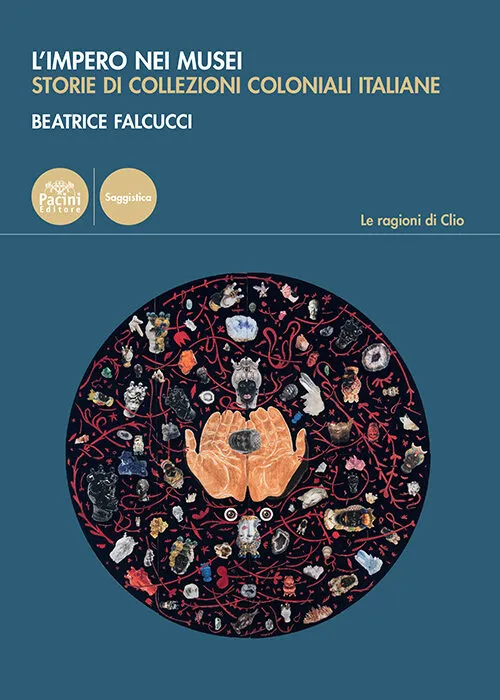
The colonial collections in public museums and the private sector in Italy are not less substantial than elsewhere in Europe. Italy has made some significant returns. Nevertheless, this blog argues that the country is much better at reclaiming its own stolen relics than at accepting the consequences of the investigations into its colonial collections.
The decolonisation of museums worldwide is an unstoppable process. Spain aimed to join the wave of museological decolonisation. In the case of the Canary Islands, this practice presents a series of peculiarities related to their unique historical process.
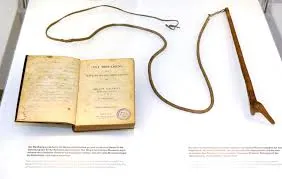
The German state Baden-Württemberg acknowledges its historical responsibility and is committed to provenance research in order to identify and return colonial cultural goods that were acquired unlawfully. The start was in 2019, when Hendrik Witbooi's Bible and whip were returned to Namibia.
The Hunterian at the University of Glasgow, through the implementing agencies, Iziko Museums of South Africa and the South African Heritage Resources Agency (SAHRA), and in partnership with the Northern Cape Reburial Task Team, have jointly announced the repatriation of ancestral human remains to South Africa.
The British Museum has announced that it will be holding a charity ball on 18 October 2025 to collect funds to further, inter alia, its international partnerships. This makes Kwame Opoku having a closer look at it.
The Director of the Museum of Black Civilisations in Dakar Mohamed Abdallah Ly reflects on the urgent need to decolonize cultural institutions, the symbolism of absence, and the politics of restitution. He also discusses efforts to reconnect the museum with diaspora communities and reimagine its role in Africa’s cultural and intellectual future.
The public display of artefacts looted by British colonial forces at the new Museum of West African Art was supposed to be the crowning glory of a decades-long restitution effort. What went wrong?
[ in Portuguese ] The exhibition "The Photographic Impulse. (Dis)arrangement of the Colonial Archive" proposes a decolonial reading of the images and scientific objects from geodesy and anthropology expeditions carried out in territories colonized by Portugal.
Alliance Française Kampala has launched a month-long program, Ethics of Loaning: Strengthening the Discourse on Restitution in Uganda, aimed at involving communities in discussions on the return and ethical management of cultural heritage.
BREAKING: Three shrunken heads of South American persons and one hand of a mummified person from Egypt are currently offered by Hannam's Auctioneers, The Old Dairy Norton Farm, Selborne, GU34 3NB, Hampshire, UK.
Nigeria should establish a bilateral negotiating group with Germany on reparations to pay for its crimes against humanity, comprising the indigenous peoples of Nigeria and other African nations. Not as charity, but as a binding act of justice and a guarantee that such atrocities will never be repeated.
The Ethnographic Museum Zagreb presents the exhibition “Travellers” – Collection of Non-European Cultures, tracing the journeys of people and objects from colonial times to the present day.
In 2021, the University of Aberdeen returned a looted Benin object to the Oba of Benin, becoming the first UK institution to agree to an unconditional return. Neil Curtis [University of Aberdeen] outlines the process of giving back a pillaged object without a repatriation request being made.
In 2013, the AfricaMuseum near Brussels closed its doors and embarked on a major redesign. The architectural changes must have felt less challenging than the long overdue re-evaluation of the holdings and their presentation. Jeremy Harding reports.
[ in French and in English ] Claimed for decades by Antananarivo, these bones had been taken as trophies by French colonial troops after a deadly attack in 1897 in Ambiky, the former royal capital of Menabe. 'Their absence was an open wound on our island'.
This workshop marks the conclusion of the interdisciplinary provenance research project "Human Remains from Colonial Contexts: Provenance Research in the Anthropological Collections of the University of Göttingen and MARKK Hamburg".
According to Darius Spierman, France has begun a significant process of confronting its colonial history. This includes the recent return of human remains to Madagascar and a draft restitution bill.
[ French translation ] La France débat actuellement de la création d’un cadre juridique pour la restitution des collections publiques historiques, principalement d’origine coloniale. La Belgique dispose déjà d’une telle loi. Ce court article propose une comparaison entre les deux dispositifs – la loi belge et le projet de loi français – en se concentrant sur trois points :
• l’approche centrée sur l’État,
• le champ d’application,
• la procédure de restitution.
Reclaiming stolen artefacts: Africa’s landmark museum at the heart of global discussion about restitution.
Senegal’s Museum of Black Civilisations is asserting Africa’s right to secure its cultural heritage and tell its own story.
Kwame Opoku writes: The French Minister of Culture presented a legislative text on 30 July to facilitate the restitution of artefacts in French museums by derogating from the principle of inalienability. It will not likely lead to a rush of restitutions from France. Excluding archaeological materials, military materials, and public records eliminates many objects. Archaeological finds from Egypt, Mali, and other African countries, such as those on the ICOM Red Lists, would be excluded.
American firm KoBold Metals' desire to scan the Congolese geological archives is causing embarrassment in Belgium, which holds a large collection inherited from the colonial era. A project for the digitisation of said archives for research purposes backed by EU funding is already underway.
[ English ] The exhibition "Benin Dues" --> Guided Tour in English with curator Alice Hertzog on 24 August 2025
[ German ] Vom Umgang mit historisch belastetem Kulturerbe – in Ethnologie und Recht on 30 September 2025
This paper is the outcome of joint reflections by the two authors, based in Europe and in Africa. Since the diverse practices of restitution have attracted more attention than certain concepts related to it, this paper addresses this imbalance by focusing on conceptual issues.
The article 'Journey of No Return: The Impact of Looted Heritage on Nigeria’s Cultural Legacy' explores the profound impact of looted heritage on Nigeria’s cultural legacy, highlighting the historical, cultural, and economic implications of the plundered artifacts.
Thomas Fues writes: the German government emphasises its willingness to confront Germany’s colonial history and its consequences. But it remains to be seen whether and how such declarations of intent at the beginning of the legislative period will actually be implemented in the coming years.
Paul Dailey (Guardian Australian columnist) writes: Bodies and body parts have long been part of collections of imperial plunder over the years – but museums must understand that attitudes have moved on.
The African Renaissance made restitution central to reclaiming cultural sovereignty. But the reality is that implementation is still shaped by donor-led systems that often bypass African agency and African audiences.
The Latin America and the Caribbean chapter of the Association of Critical Heritage Studies (LAC-ACHS), together with Centro de Patrimonio Cultural and Núcleo Milenio Nupats of Universidad Católica de Chile and the Department of Arts and Culture Studies of Erasmus University Rotterdam, warmly invites abstracts for its inaugural conference “Encounters. Collaborative Approaches to Heritage in Latin America and the Caribbean”.
In March 2025, Open Restitution Africa co-hosted a two-day gathering with the University of the Western Cape at the Iyatsiba Lab in Cape Town, bringing together African restitution practitioners, researchers and activists to reflect on how lived experience is shaping policy across the continent.
Leading academic, Gloria Bell, argues that the Vatican is not only stalling on Pope Francis’ promises of restoring the looted artifacts — but continues to falsely 'refer to everything in their collection as a ‘gift.’
Vanessa Hava Schulmann (Freie Universität Berlin): The stories I will tell you about happened during my work in a Berlin university collection. I was tasked of meeting the deceased whose bones and tissues were stored in those dusty wooden cupboards and figure out how to handle their presence in a dignified way.
The colonial legacy continues to resonate in Portugal, shaping “organized forgetting” of colonial violence. Finding ways to dismantle the real effects of that historical legacy includes restitution of looted collections.
The June 2025 report by a working group of Edinburgh University DECOLONISED TRANSFORMATIONS CONFRONTING THE UNIVERSITY OF EDINBURGH’S HISTORY AND LEGACIES OF ENSLAVEMENT AND COLONIALISM focusses mainly on slavery an its current impact. At the en dit has an interesting recommendation for the university's Anatomical Museum and its 200 skulls.
On 7 July 2025, the French National Assembly has approved the restitution to Ivory Coast of the Djidji Ayôkwê, an important talking drum, stolen in 1916. In the same period, the British Museum came with a statement that it is unwilling to restitute an equally important drum to the Pokomo council of elders in Kenya.
France's parliament approves returning to Ivory Coast a "talking drum" that colonial troops took from the Ebrie tribe in 1916, in the latest boost to the repatriation of colonial spoils.
[ in French ] Are you an academic researcher, a person from the museum, private or public, political-diplomatic, community and government sectors, or from the sphere of regional and international cooperation?
An institution is asking its visitors for their view: The Manchester Museum is running a public consultation about the future of Asru, a woman who lived in Thebes, southern Egypt
Thomas Fues writes: In an historic breakthrough for German restitution policy on colonial contexts, Cameroon’s official Restitution Committee has agreed upon the return of colonially appropriated cultural heritage in September 2025. Four German museums are involved.
The Museum of Fine Arts, Boston (MFA), today returned two works of art from the Benin Kingdom to His Royal Majesty Omo N’Oba Ewuare II, Oba of Benin, in a ceremony at the Nigeria House in New York City.
The path to true restitution requires more than symbolic gestures, demanding that Britain repeal its obstructive laws, France accelerate its glacial restitution process, and all former colonial powers establish transparent frameworks for repatriation.
In “Relooted” players find themselves in a major museum, busting through walls, arms full of ill-begotten African artifacts to be returned to their rightful homes. The game features a crew of Robin Hood-esque thieves staging elaborate heists to take back stolen artifacts from Western museums, and repatriating them to the peoples from whom they were taken.
Hotel Drouot has auctioned off three Benin objects, without guaranteeing that they are not related to the British invasion of the Kingdom of Benin in 1897. The provenance only goes to the 1950s and 1960s. It also auctioned Nok and Sokoto objects from Nigeria, both of which are on ICOM's Red List for West Africa.
This working paper offers an inventory of missionary orders and societies active in German colonial regions in Africa and Asia, the information available about them and the options for further research.
[ in Dutch ] Daantje van de Linde delves into the history of a power statue that has been called the face of the World Museum Rotterdam's Africa collection. Her conclusion: case of involuntary loss of possession.
Nigeria has received 119 Benin Bronzes from the Netherlands — the largest physical repatriation of looted artefacts since the 1897 British invasion of the Benin Kingdom. According to an expert, some of the pieces date back to between the 14th and 16th century.
Benin Digital mentions two objects in Portugal, one of which is in the Sociedade de Geografia de Lisboa. Sofia Lovegrove Pereira sends a podcast [ in Portuguese ], Reparacoes historicas - Preterito imperfeito (28 08 2023), which argues that the Sociedade has indeed one on display but another 76 in store.
'Mobile Heritage' explores how diverse digital technologies have allowed for new types of mobilities and introduced a novel set of practices, interventions, and politics for heritage collections, archives, exhibitions, entertainment, conservation, management, commerce, education, restitution, activism, and regulation. With a case-study about digitalised ancient manuscripts from Ethiopia in the British Library.
[ in Dutch ] Tervurologie sets its sights on the AfricaMuseum and radically bets on imagination - to think new Tervurens, plural. Not as escape, but as intervention. Not as recovery, but as restart. Not as an answer, but as another question. Tervurologie is an attempt at exorcism.
South Africa is determined to repatriate the remains of its people taken abroad during the colonial era and those who died in exile as anti-apartheid activists, the culture minister Gayton McKenzie says. Including those of the Khoi-San, who are regarded as among the country's "first people".
Southern Africa is spearheading a transformative shift in the restitution discourse. This shift means reframing restitution as an act of healing, justice, and empowerment for communities still grappling with the enduring scars of historical dispossession.
[ in Italian ] From the dawn of Italian exploration in Africa and throughout the colonial period, objects and samples from overseas came to the Peninsula, finding their way into temporary exhibitions and more than one hundred permanent displays, where they were studied, described and presented to the public.
Dominic Senayah presents an in-depth exploration of reparations using Ghana as a case study. He highlights the multivalent dimensions of reparations and has a set of recommendations.
Adéwolé Faladé, PhD candidate in History at the Central European University (CEU) in Vienna, highlights and analyzes the traces left by the 26 repatriated artefacts by France to the Republic of Benin in 2021.
At the global Museum & Heritage Awards 2025 the Pitt Rivers Museum won Partnership of the Year for the Maasai Living Cultures Project. The annual award celebrates the best in the world of museums, galleries plus cultural heritage visitor attractions.
In Benin, a 'kataklè' – a ceremonial stool, and the final piece of the royal treasure of Abomey – has been returned by Finland, 133 years after being looted by French troops and later transferred to the National Museum of Finland. It began with an investigation by a Radio France International (RFI) journalist.
The paper 'Nkali and Kolo-collecting in Eastern Nigeria: interrogating colonial collections of ọfϙ and Ikenga, Igbo objects of sovereignty and authority' explores the changing narratives of Ọfϙ and Ikenga, sacred objects of sovereignty and authority among the Igbo of Eastern Nigeria, currently in the Museum of Archaeology and Anthropology (MAA), University of Cambridge (UK).
Why and how is filmmaking important to the search for justice and efforts to right historical wrongs? Because filmmaking, as an art, is partly responsible for didactic, historical portraiture.
Objects taken from former colonies have been incorporated into collections. They express universality, which should be valued, without ignoring the need to trace their journey and restore their ownership.
The Museum of Fine Arts (MFA) in Boston returned 27 Benin objects to Robert Lehman, from whom it had received them on loan. Kwame Opoku: The museum's attempt to keep up an ethical image is not convincing.
[ in French ] France Culture interviews historian Benjamin Storashares about some of the issues with the restitution of documents and objects that were looted during the 1950's war of independence of Algeria.
Deliberate avoidance, lack of interest, or lack of sources, African arts have found themselves to the margins of the history of spoliations, destruction and displacement of works of art during the 1933-45 period, with research largely focusing on European art. Conference on 13 November 2025 in Paris.
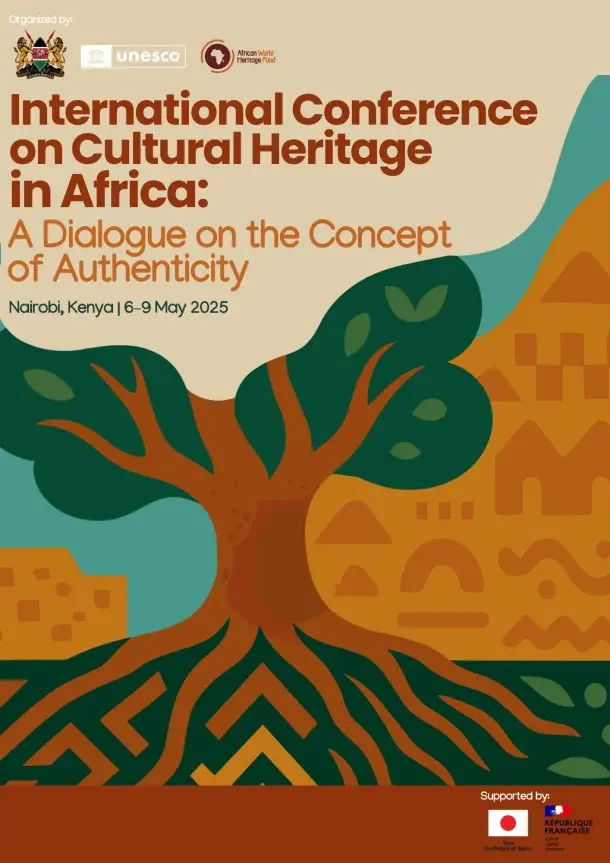
The International Conference on Cultural Heritage in Africa: A Dialogue on the Concept of Authenticity will take place in Nairobi, Kenya, from 6 to 9 May 2025.
This gold crown with stunningly delicate filigree belonged to Emperor Tewodros II, the King of Kings of Abyssinia. It was the most remarkable artefact looted during the British Army’s 1868 siege of Maqdala, the king’s hilltop fortress capital.
The repatriation of African art is gaining momentum, but a number of highly important and symbolic pieces remain in the hands of the continent’s former colonisers.
In an unprecedented move for a United States arts institution, the Museum of Fine Arts, Boston, will return a promised gift of Benin Bronzes to collector Robert Owen Lehman and close the collection’s dedicated gallery on April 28.
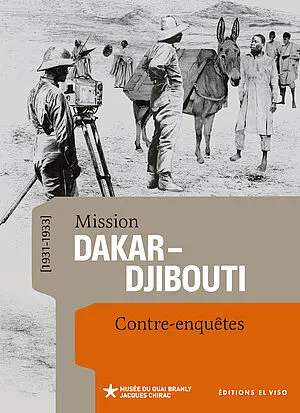
The Paris museum has invited African researchers to study the archives of the expedition, which took place between 1931 and 1933, and to carry out field studies to retrace the conditions of the undercover raid on artifacts.
France will repatriate the skulls of King Toera and two Sakalava warriors to Madagascar, marking the first return of human remains under a new French law passed in 2023.
Resistance hero Ras Desta Damtew was executed by Italian fascists in 1937, after which some of his belongings are believed to have been stolen. Now his grandchildren and the Ethiopian government are fighting to bring them home.
Algeria submitted a list of items held by France since the colonial era in order to restore them as part of the joint memory committee to look into that historical period.
The African Union (AU) has said that the Year of Reparations 2025 is about economic liberation and ending Africa’s systemic wealth drain. Onyekachi Wambu writes: 'Restitution is a key part of the agenda. it has been explicitly mentioned in all the AU related reparations meeting I have attended.'
'Deconstructing Dinosaurs - The History of the German Tendaguru Expedition and its finds, 1906-2023' takes a fresh look at the history of the German Tendaguru Expedition (1909–1913), using recently uncovered sources to reveal how Berlin’s Natural History Museum appropriated and extracted 225 tonnes of dinosaur fossils from land belonging to modern-day Tanzania.
Contributing to current efforts to grapple with museums' colonial legacies, this article takes the question of evidence as an entry point to unlock the multi-layered make-up of African spiritual artifacts in missionary collections.
European governments negotiate restitutions only with the governments of countries of origin. The collections they negotiate usually are state-owned and contain valuable, not rarely iconic objects. The path followed by governments of former colonies is quite similar. It is the path of what Laurajane Smith called the authorized heritage discourse (AHD), where only a limited part of a country’s heritage dominates in national narratives and public policies. This approach has serious limitations.
Senegalese art historian El Hadji Malick Ndiaye says discussions and decisions about the restitution of African artefacts cannot be dictated by the West. He also discusses inter-Africa repatriations.
This collaboration between the Académie des Traces and C& explores the traces of colonial heritage today in several texts by emerging scholars and museum professionals from the African and European continents.
Julien Volper argues that the Netherlands practises double standards when it comes to restitution. On the one hand, the country returns 119 Benin objects to Nigeria. On the other, it was reluctant to return to Belgium parts of a 16th-century altarpiece by Pasquier Borman, stolen from a church of in Boussu (Belgium) in 1914, and it cut back its international assistance to the global south.
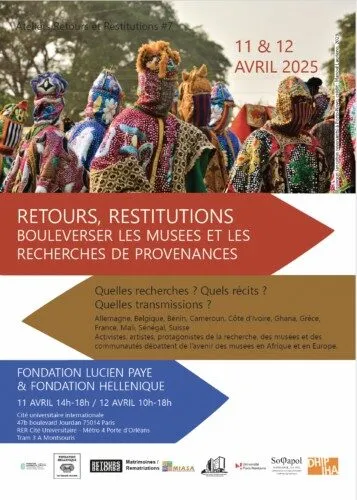
[ conference in French ] Germany, Benin, Cameroon, Ghana, Greece, France, Ivory Coast, Mali, Sénégal, Switzerland - Academics, activists, artists, experts from communities and museum actors debate the future of museums in Africa and in Europe.
Until 25 May 2025, the Louvre Abu Dhabi unveils 'Kings and Queens of Africa: Forms and Figures of Power', an exhibition celebrating 350 works of African art and majesty, most of them on loan from Musée Du Quai Branly-Jacques Chirac. Is this a manner to postpone their restitution?
[ in French ] Study day organised as part of the PRD-ARES project (ULB-UNILU-UCLouvain) ‘Towards the psychosocial reappropriation and resocialisation by the source-communities of Katanga of the remains of former soldiers to be repatriated and the cultural objects to be recovered’.
The African Union (AU) has declared 2025 the “Year of Justice for Africans and People of African Descent Through Reparations” — a bold demand for accountability from former colonial powers. Reparations are not charity — they are a long-overdue debt.
British lawmakers, NGOs, and researchers urge the UK to address a 'legislative vacuum' permitting the display of African ancestral remains from the colonial era. T
In Morocco, the post-colonial power has implemented cultural policies aiming for a return to the precolonial times with a conception of tradition that was produced by the colonial gaze, thus continuing the colonial epistemology and policies.
This paper demonstrates that communities and victims of colonial crimes who suffered gross violations of international human rights and serious violations of international humanitarian law are entitled to reparations and the restitution of their stolen or looted African cultural heritage.
This essay proceeds from the observation that the “Egypt” portrayed in museums and school education misrepresents the lived realities of modern Egyptians, their experiences, and their expectations concerning Egypt’s past and present.
The All-Party Parliamentary Group for African Reparations (APPG-AR) has produced a policy brief, ‘Laying Ancestors to Rest’, which makes the case that the display and sale of African ancestral remains by British institutions “causes profound distress to diaspora communities and countries of origin”.
Open Restitution Africa is undertaking a large-scale research project to map past and current restitution undertakings for belongings (material heritage) and human ancestors from the African continent. Deadline 14 March 2025.
Despite promises from Western institutions to return the artefacts, the process has been slow and piecemeal, raising questions about the sincerity of these efforts.
The collection of the Musée des Rois Bamoun (MRB, Museum of the Bamoun Kings), located in Foumban in Cameroon’s West Region, testifies to the richness and diversity of the Bamoun Kingdom’s art, culture, and history.
RM* saw reports from AP, Hyperallergic, DutchNews, Jerusalem Post, ArtDependence, Punch, Arise, Voice of Alexandria, Devdiscours, Pinnacle Gazette and AllAfrica.
The British Museum has come under fresh pressure to hand over its Benin Bronzes after the Netherlands returned more than 100 of the artefacts to Nigeria.
The volume offers new findings on the historical and current significance of artifacts and highlights the current dialogue with partners from Nigeria and the diaspora, reflecting on the methods of cooperative research and the future of the objects currently kept in Swiss collections.