The answer lies less in scientific disagreement than in legal frameworks, both in Germany, where the fossils are held, and in Tanzania, where laws governing heritage were drafted after the fossils had already left the country.
Germany
At the centre of the issue is Germany’s Cultural Property Protection Act of 2016. The law allows the German state to classify certain objects as “nationally valuable cultural property,” granting them the highest level of legal protection and restricting their permanent export.
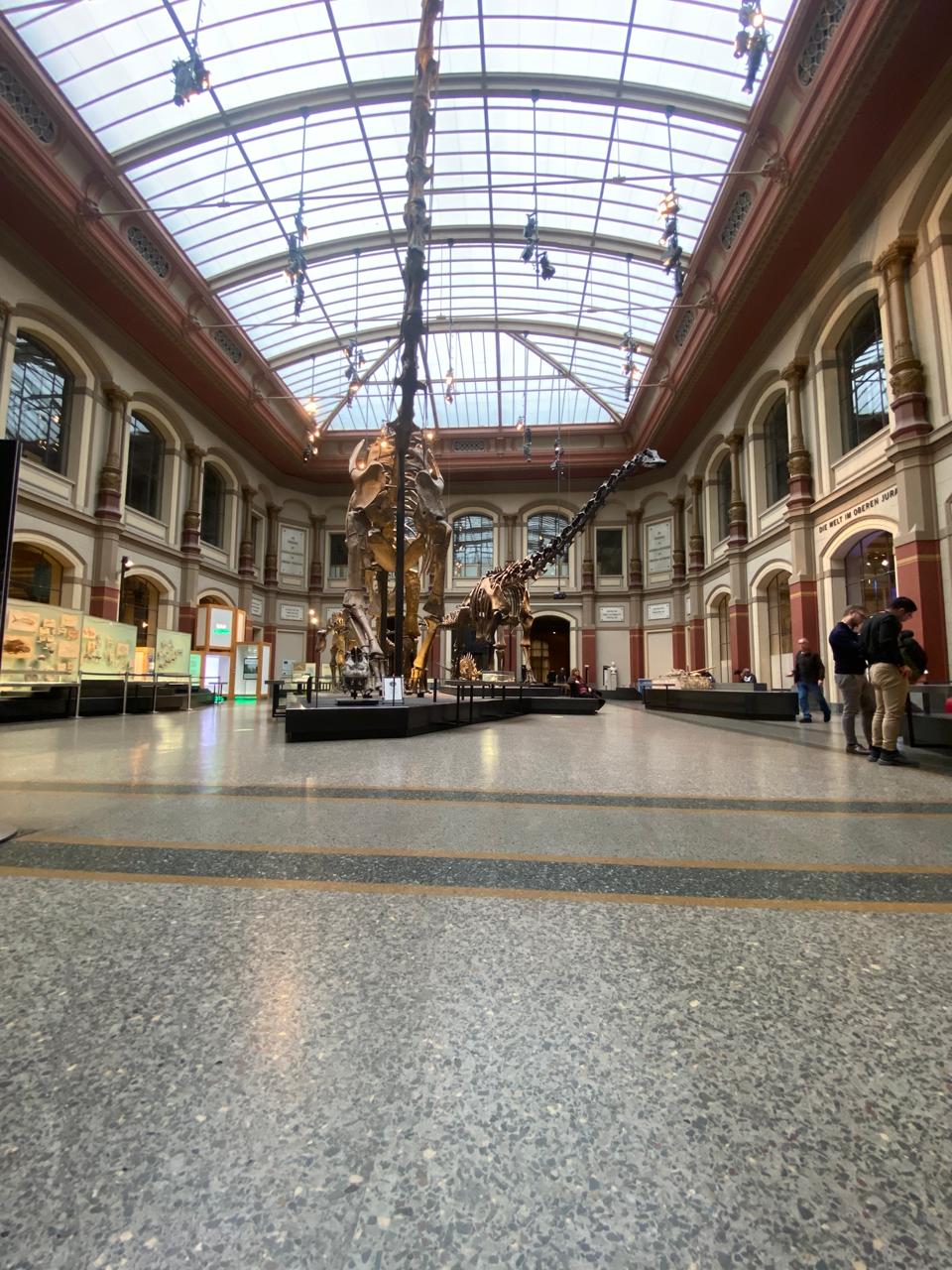
Courtesy Museum für Naturkunde, Berlin
Under this legislation, Giraffatitan brancai /Brachiosaurus brancai, commonly known as the Tendaguru dinosaur, is treated not as a foreign fossil awaiting return, but as a protected scientific and cultural asset within Germany’s national collections.
German museums and authorities acknowledge that the fossil originated in present-day Tanzania. However, legal ownership is determined by long-term custody, institutional continuity, and scientific significance rather than by place of origin alone.
Tanzania
On the Tanzanian side, the challenge is different but equally significant. The Antiquities Act of 1964, enacted shortly after independence, was designed to protect archaeological sites, historical buildings, and human cultural objects such as tools, pottery, and art.
The law does not clearly address fossils, particularly those removed before independence in 1961. Nor does it explicitly cover colonial-era scientific materials currently held in foreign institutions.
This omission means there is no clear legal mechanism for Tanzania to demand the return of fossils excavated under colonial rule. Any request, therefore, relies on diplomacy and goodwill rather than enforceable legal claims.
Public debate often assumes that Tanzania has never formally sought the dinosaur’s return. Historical records suggest otherwise. In 1987, Tanzania requested the return of the Tendaguru dinosaur for permanent exhibition in Dar es Salaam. But the request did not succeed.
Alternatives
Repatriation does not have to mean immediate or total transfer. Experts point to alternatives such as shared custody agreements, long-term renewable loans, rotating exhibitions, and joint research centres based in Tanzania.
-.-
This article follows a previous one, Whose Dinosaur? The Colonial Legacy Keeping Tanzania’s Fossils in Berlin, which examined the history of the Tendaguru excavations and the colonial conditions under which Tanzania’s most famous dinosaur fossils were removed.