In December 2025, I saw an Artificial Intelligence (AI)-generated video about a character whom I have dedicated many years of my working life to researching: Lewke, the Kandyan chieftain whose name was bestowed upon the magnificent cannon which was recently restored by the Neterlands to its homeland of Sri Lanka.
This video was a masterpiece; it was fluent, vivid, expertly crafted – the kind of video that captures the attention of any audience and spreads rapidly across many phones. Yet it was incorrect. Those who created it, as well as the AI that helped them to do so, clearly knew nothing about the character of Lewke.
Information about the chieftain was mixed together with information about other characters, facts about him twisted into something that sounded accurate yet was far removed from reality. Most disturbing of all, however, was the discussion below the video; thousands of people were watching this fictitious Lewke and taking it as a historical truth.
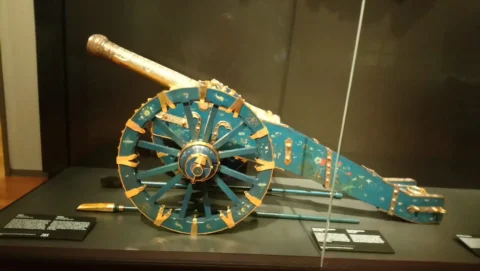
Lewke’s Cannon of Kandy
Sri Lanka has one of the longest continuous historiographical traditions in the world, and we are oddly shy about saying so.
We have the ‘Dīpavaṃsa’ and the ‘Mahāvaṃsa,’ written and rewritten at the Mahāvihāra, which trace an unbroken line of history going much further back than most other histories of comparable nations do. The ‘Cūḷavaṃsa’ took the thread forward from there through many more rulers.
Alongside the history compiled by the monastic vamsas, there was the tradition of the puskoḷa pot, where medicine, astrology, poetry, ritual, and law were taught through palm leaves in the gurukula system. This was learning handed on person to person, body to body, watched over by one who could be held accountable for it being done properly.
This is where the truth comes in…
The writings were partial, for they were written by Buddhist monks in Pali, mostly concerning the kings, and mostly to emphasise the place of the island and its lineages in the middle of the dispensation. There are silences in these writings: on everyday labour, on women, on communities that would not fit into their story. No responsible historian will ever read these sources other than critically.
And yet this very partiality bears a lesson that we may not fully grasp.