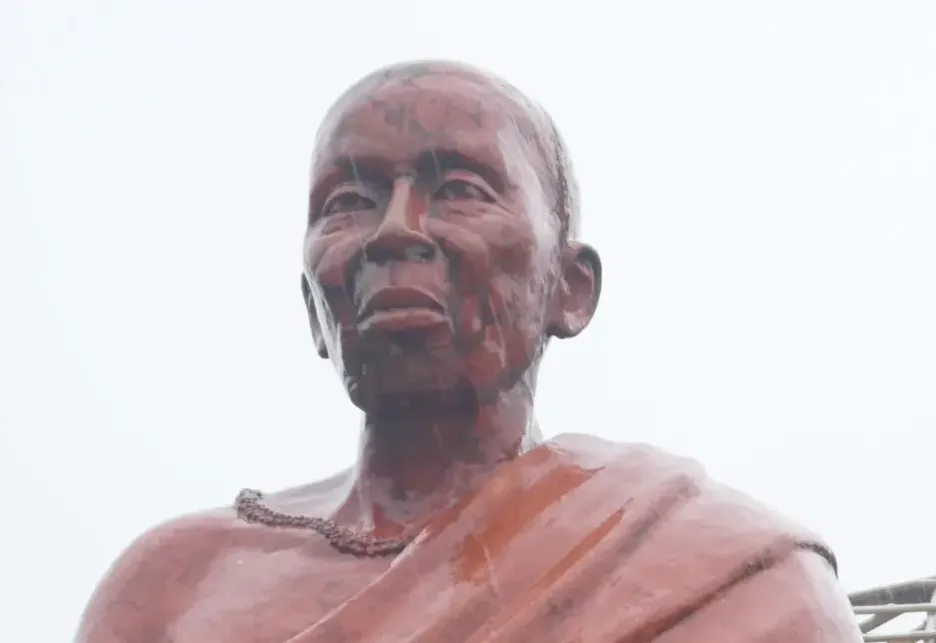
A frequent issue hindering repatriation of Ancestors and cultural belongings is the lack of information recorded about the peoples to whom the collections are connected. Within this specific problem is a prevalent gender bias amongst those who collected, stole, looted, acquired, or traded the millions of cultural objects now housed in Euro-American museums. In the present day, archives continue to reflect a dual absence: cultural accuracy, and women’s lives.
Written by men
Anyone who spends time in world or ethnographic museums should notice that the collections and records were predominantly donated by men. These collections are the result of colonisation and the desire to preserve evidence of ‘Other’ cultures. During the era of European colonisation, European men – whether they were military, settlers, missionaries, travellers, traders, mercenaries, or academics – set out across the world, with their various intentions, and recorded their ‘interactions’ with the nations and Indigenous peoples they met.
European men wrote about other men and men’s practices, often working from their own preconceived cultural assumptions that men were the default leaders, and women were of lesser interest. Often, these foreign men were not permitted to observe or interact with women and girls. The result is a documentary record in which Indigenous women are largely absent. Therefore research that relies on these sources inherits their blind spots.
One corrective is to read what women wrote. Records by Euro-American women can provide insights into women’s intimate lives and interactions, but such documentation is often riddled with anti-Indigenous discrimination and racism.
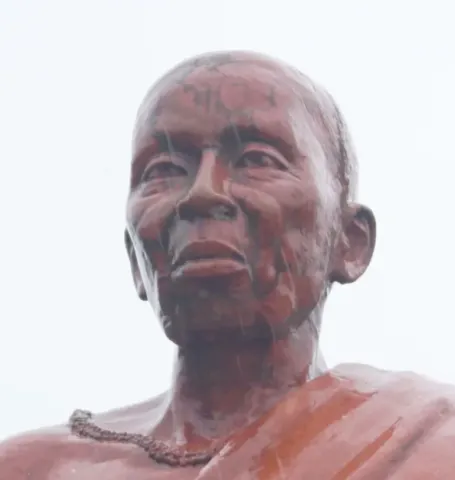
Queen Yaa Asantewaa <https://creativecommons.org/licenses/by-sa/4.0>
Resistance that doesn’t look like resistance
Gender also exposes a second, subtler bias: what we consider to be resistance.
Some women’s resistance was unmistakably military. In 1900, Yaa Asantewaa, Queen Mother of Ejisu in Asante – present-day Ghana – led armed opposition to British demands for the Golden Stool, the sacred embodiment of the Asante nation. Hers is one of the best-documented cases of African women’s leadership against colonial expropriation.
Birgit Hans discusses how nineteenth-century American missionaries aimed to “retrain” Native American women through women’s societies to fit into the Cult of Domesticity. Native American women used these societies as resistance, using sewing circles to retain control over resources and goods vital for community survival.
Other women’s resistance took quieter forms. Accounts from the sixteenth-to-seventeenth centuries suggest that women in the Inca Empire were appointed guardians of religious cultural heritage and deliberately hid them from Spanish missionaries who were destroying such cultural heritage en masse. In the South Sea Islands, the missionary John Williams recorded in 1838 how women on some islands resisted the destruction of their religious belongings. Both examples describe protection rather than confrontation, and both survive in the record only incidentally, as anecdotes.

Sacred women of the Inca world – Picture The Free Social Encyclopedia
Women as carriers of culture
Present-day repatriation claims are frequently led by women, who sometimes describe themselves as carriers of culture.
From 2017 to 2024, Maasai representatives from Kenya and Tanzania engaged with the Pitt Rivers Museum [PRM] in Oxford, for the Maasai Living Cultures Project. The project centred on five sensitive Maasai belongings, three of which are connected to women.
- The Emonyorit, an ear ornament worn by young women before marriage, belonged to a woman killed during a raid at night involving Maasai sections and colonial police.
- The Isikira, a girl’s head ornament, is complete and has never been dismantled; in that state it could only ever have been used by one specific girl, and it cannot be borrowed or sold.
- Isurutia, an ornament worn around the neck or coiled around the arm, is part of the dowry system and the seal of a relationship between the bride, the groom and their two families. The Isurutia was worn by a woman killed by cattle raiders whilst carrying a baby on her back, a baby who survived.
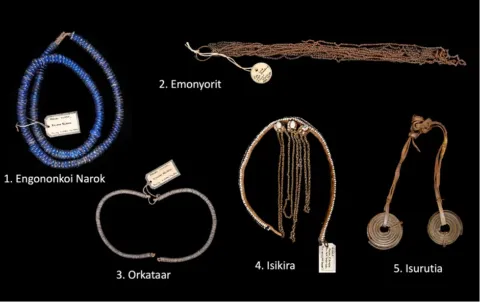
Maasai ornaments © Pitt Rivers Museum, University of Oxford
During the 2024 ceremony at the Pitt Rivers Museum, Ruth Sintamei Tuleto, representing the Pan African Living Cultures Alliance, explained how Maasai women are the bearers of life, the ones who teach children the Maa language, who make the belongings, beadwork and artworks, and who keep the Maasai culture alive. Women are the custodians and holistic caretakers of the community.
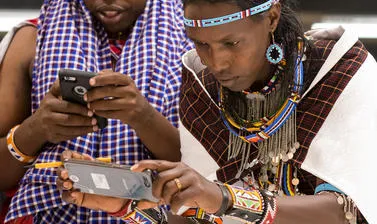
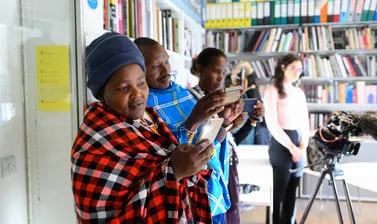
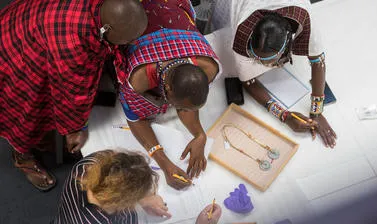
© Pitt Rivers Museum, University of Oxford
Led by women
- In 1998 the Wounded Knee Survivors Association’s campaign for the return of the Ghost Dance Shirt held at Kelvingrove Museum & Art Gallery (owned by Glasgow City Council) was led by the Association’s Secretary, Marcella LeBeau. LeBeau travelled to Glasgow, spoke on behalf of the Association and gifted the Council a new Ghost Dance Shirt she had made herself. Historically, Ghost Dance Shirts were mostly made by women and worn by men, women and children, and the Ghost Dance Movement was a resistance against the abuse of Native American peoples.
- In October 2024 it was announced that a Badeng Sunhat was being repatriated to the Kenyah Badeng Community in Sarawak Borneo, from the PRM. The Sunhat serves a dual function of providing physical and spiritual protection for a mother and her infant. In a press release, the Museum wrote “the domestic nature of the objects testifies to the absolute destruction of village life wreaked by such expeditions and highlights the overlooked roles of women and children during warfare.”
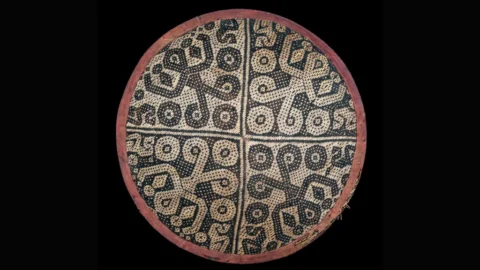
© Pitt Rivers Museum, University of Oxford
- Another example of a woman-made repatriated cultural belonging is the Buffalo Woman’s Headdress; and in 2023, the House of Ni’isjoohl Memorial Pole was rematriated from National Museums Scotland to the Nisga’a Nation, Canada. The term rematriation reflects the Nisga’a matrilineal society, and challenges colonial and patriarchal practices.
- In 2023, when Manchester Museum, AIATSIS and Warnindilyakwa representatives organised the return of 174 Anindilyakwa belongings, the three people who flew to Manchester to escort the belongings home were women: Noeleen Lalara, Amethea Mamarika and Maicie Lalara. Warnindilyakwa women then revitalised the making of Dadikwakwa-kwa (shell dolls), which had not been made since the 1950s. As a result of this return and revitalisation, hundreds of Dadikwakwa-kwa shell dolls and dolls made by Namibian women artists are now on exhibition at the 2026 Venice Biennale.
Whose evidence counts
Gender is a blind spot in the repatriation discourse twice over. First in the record: the archives were mostly written by men who either did not look at women or were not permitted interaction, and provenance research built on those sources cannot recover what was never recorded. Second in what we consider resistance: women who hid belongings, covertly protected their cultural heritage, or kept making them, did not leave the same trace as armed struggle, so their resistance is treated as background.
Museums present themselves as places of knowledge, but repatriation has shown how little museums, and their records, actually know. Who made a belonging, who wore it, how it was removed, what it meant: much of this sits outside the museum’s records. It is through repatriation efforts, by Indigenous peoples, governments and international institutions, that our knowledge of these collections has developed. Every return has taught a museum something about its own holdings that it did not know.
-.-
Tamara Newton is an art historian. She wrote a PhD on the repatriation of Indigenous belongings from UK museums. newtontamara@proton.me