Jos van Beurden writes:
Violence used by the Europeans could take many forms.
In, for instance, the Congo basin, it was characterised by numerous mini-wars, in which small Belgian units defeated regional Congolese rulers and captured treasures and skulls.
In British and Dutch colonial regions, large colonial armies were deployed and the military confiscated a corresponding volume of war booty.
In their raids, the Europeans often behaved like ‘beasts’. Next to the arms they took the symbols of the enemy’s dignity and identity, prompted by greed and revenge of the military for their own losses. This is how numerous battle flags and banners, religious objects, ceremonial weapons, jewellery and ancestral remains ended up in Europe.
Lists of war booty
Over the years, my book-shelf has become filled with publications about specific military operations and the war booty captured in them. These are just two examples:
- Digital Benin, https://digitalbenin.org/, offers an overview of what was taken from the Kingdom of Benin in 1897.
- The Prince and the Plunder, https://www.theprinceandtheplunder.com/, lists the booty seized by British soldiers in Abyssinia / Ethiopia in 1868.
Careful reading of these publications and lists helps to understand where the loot ended.
Official war booty
Often European military received strict orders not to pillage and to hand in what they found to the army command. Often scholars were employed for supervising the confiscation of valuables.
- This occurred e.g. during Napoleon’s invasion of Egypt (1798), the British raid on Abyssinian Emperor Tewodros II (1860), the Dutch war against Anak Agung Made of Lombok in Indonesia (1894), and the British attack on the Kingdom of Benin (1897).
The finds were official war booty. Many were shipped to the metropoles in Europe and donated to royal and imperial houses or distributed among museums. or auctioned in order to cover the expenses of the raids. This is an example of such a donation, followed by two instances in which loot was used to cover the costs of (new) wars:
- After their return from the war against the Boxers in China (1899/1900), German soldiers donated 190 battle flags and weapons as a birthday present to their Emperor Wilhelm II.
- Looted gold and silver coins from Central America or Lombok were melted down into loafs. In this way, Spanish King Philip was enabled to continue the war against the Republic of the Netherlands (1568-1648).
- The gold, silver, arms and jewellery from Lombok filled the Dutch treasury; some of it was used to compensate the widows of soldiers killed in Lombok.
Auctioned in the metropole
Often, part of the loot was used to cover the costs of the military operations, including compensation that had to be paid to the widows of European soldiers killed in action. This was done during auctions in the metropole. This had major consequences for where this loot could be found at a later stage. Two examples of such ‘journeys’:
- The auction of Benin objects (1897) in London was the start of their dispersal over tens of public and private collections in twenty countries in the global north.
- Auctions in Paris and London of imperial objects from the Summer Palace in Beijing (1860), kept by the looters themselves, brought the objects to all corners of the global north.
Auctioned locally
Often, army-commanders had part of the booty auctioned locally. One reason for auctions close to the battleground was that the loot was so large that transporting it to Europe was too complicated and costly.
- Reports of the time mention that fifteen elephants and two-hundred mules were needed to transport the official war booty from Abyssinia to the Red Sea-coast for further transport to the UK.
The often held local auctions enabled military subordinates to acquired looted objects. At several auctions, the military had to compete with agents who collected for European museum.
Confiscated by colonial soldiers
Many items from the spoils of war went missing as colonial soldiers and officials flouted official instructions not to take any and smuggled items home.
- British-Indian Army-members pocketed uncontrolled numerous manuscripts and religious objects from temples in Tibet (1903/4). Their current location is unknown.
- Hans Christoffel, responsible for tracking down anti-colonial rebels in Atjeh, Indonesia (ca. 1900), collected war flags, traditional weapons and other trophies. The Museum aan de Stroom (MAS) in Antwerp now manages his collection.
- In 1868, some British officers took war booty from Abyssinia to their bases in Nairobi. Later, they came in Kenya’s National Museum, which returned them in 1985.
- In 1937, an Italian officer who was present at the killing of army commander, Ras Desta Damtew captured the golden medal his father-in-law Emperor Haile Selassie had awarded him. In spite of claims of his descendants, auctioneer La Galerie Numismatique in Lausanne, Switzerland, sold it for over €60,000 in 2024.
Other Europeans profiting of spoils of war
Agents of European commercial firms, independent businessmen, travellers and other people profited from the presence of European army units in colonial regions.
- Agents of the Rotterdam African Trade Society (ATS) took Chokwe figurines and a Yombe power statue, which villagers in Angola had left these behind after a Dutch raid (ca. 1885). The current location of the figurines is unknown, while I saw the power statue with Amsterdam art dealer, Michiel Thieme, in 2016.
- A Belgian trader took a Nkisi Konde power-statue during a war against nine kings in and around Boma, DR Congo (1878). It is still in the Belgian AfricaMuseum.
Confiscated by local dealers
In the aftermath of raids, local dealers purchased items at local auctions or searched the palace grounds. They sold their finds to Europeans. To find evidence of the provenance of these items is very hard.
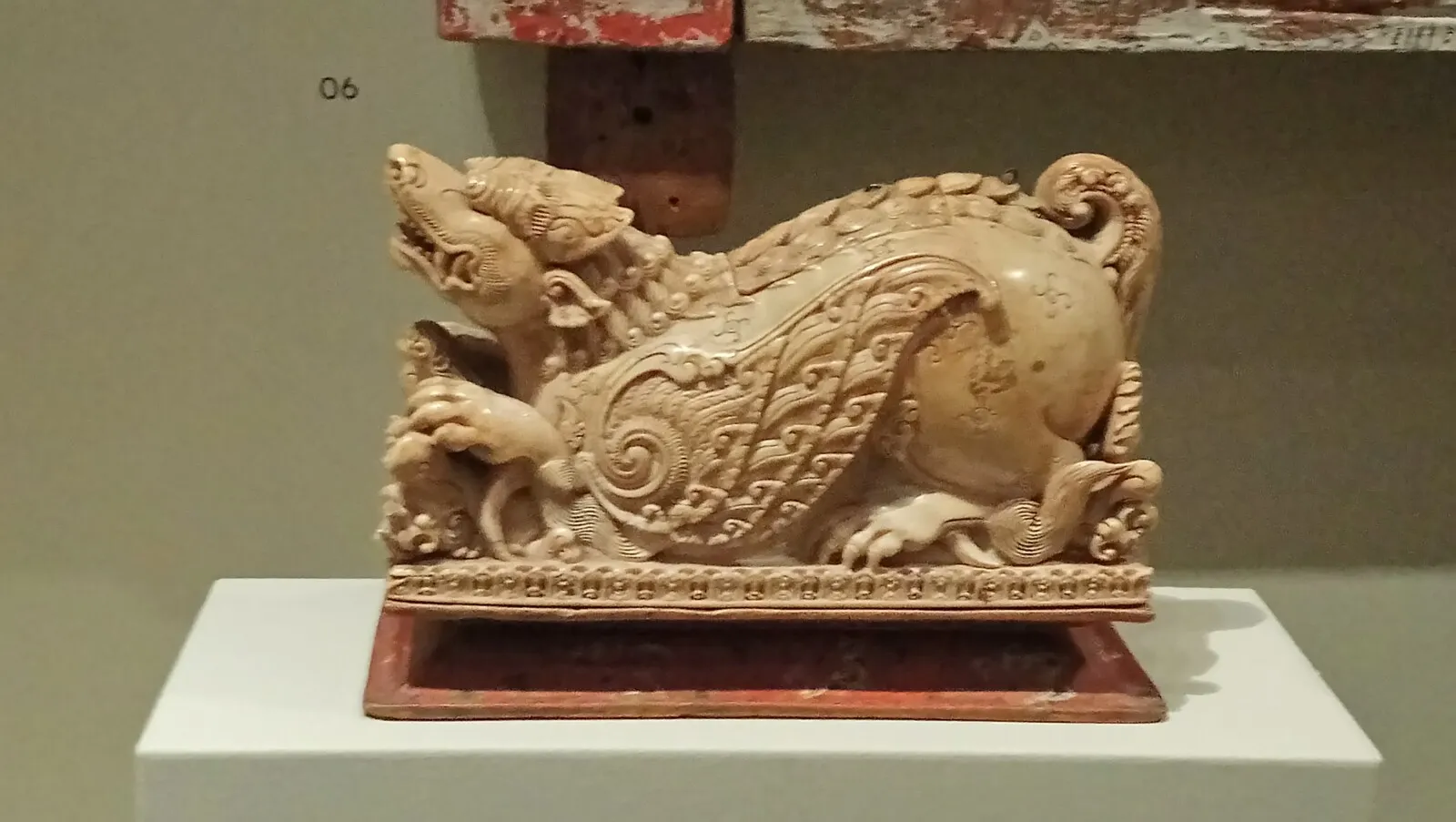
In or after 1908, a local dealer got hold of a rare offering box, which he may have found on the palace grounds of the defeated King of Klungkung.
Rodney Westerlaken describes how a Dutch collector purchased the piece in Bali in 1925. Currently, it is in the possession of the Royal Society of Friends of Asian Art in the Netherlands, and was showcased at the Grand Indonesia Exhibition in the Nieuwe Kerk in Amsterdam (2023/2024).
Descendants of the King of Klungkung have asked for the return of the offering box. But they have no hard evidence that it was part of the 1908 war booty. The only thing they can do is to submit a friendly request to the Dutch Society.
Other Europeans and spoils of war
Agents of European commercial firms, independent businessmen, travellers and other people profited from the presence of European army units in colonial regions.
- Agents of the Rotterdam African Trade Society (ATS) took Chokwe figurines and a Yombe power statue, which villagers in Angola had left these behind after a Dutch raid (ca. 1885). The current location of the figurines is unknown, while I saw the power statue with Amsterdam art dealer, Michiel Thieme, in 2016.
- A Belgian trader took a Nkisi Konde power-statue during a war against nine kings in and around Boma, DR Congo (1878). It is still in the Belgian AfricaMuseum.
Why has this unravelling been relevant? It is because ex-colonies need to know it in order to formulate their restitution policies and because ex-colonisers should not restrict their restitution policy to items in state collections but also explore ways to deal with the private sector.