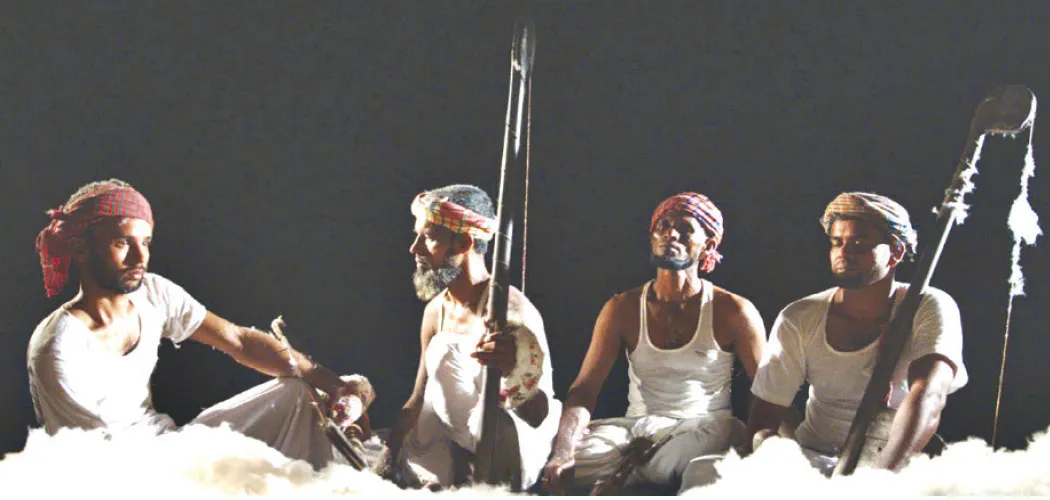
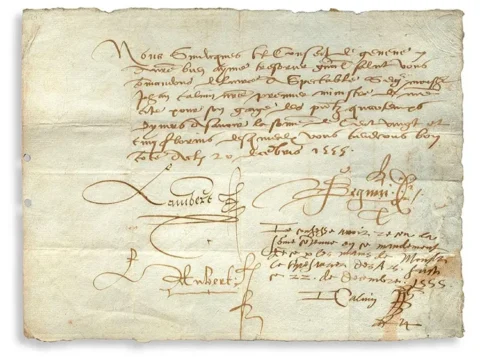
The exhibition draws connections across South Asia, highlighting the removal of sacred objects from Nepal’s temples, the dispersal of Indian bronzes, Gandharan sculptures from Pakistan, and the erosion of Bangladesh’s terracotta heritage.
According to organizers, the exhibition holds particular resonance in Nepal, where the theft and removal of religious sculptures has long raised questions about heritage protection and repatriation.
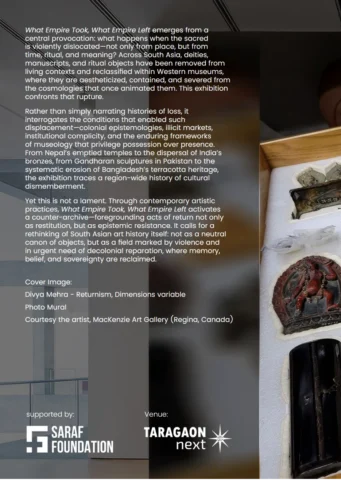
Dr. Lokhandwala emphasized that the exhibition seeks to move beyond simply asking what should be returned, but rather who holds the power to interpret and determine the fate of displaced heritage. “This exhibition brings South Asia into that urgent discourse,” she said.
The programme accompanying the exhibition will also feature discussions on the historical, political, and ethical questions informing the artists’ practices.
Yet this is not a lament. Through contemporary artistic practices, What Empire Took, What Empire Left activates a counter-archive—foregrounding acts of return not only as restitution, but as epistemic resistance.
It calls for a rethinking of South Asian art history itself: not as a neutral canon of objects, but as a field marked by violence and in urgent need of decolonial reparation, where memory, belief, and sovereignty are reclaimed.
The catalogue is an interesting read.
Nepal Times about this exhibition:
- The West needs to decolonise and not find legal loopholes to keep stolen sacred objects in their museums.
- Repatriation does not give an artefact value and dignity in a land that does not care about its heritage.
- Walking through the gallery, the viewer confronts not just stolen objects, but also the stolen context, identity, and heritage. The invisible thread that connects an artefact to its homeland and its people is what gives it meaning. When that thread is cut, the connection is also lost.
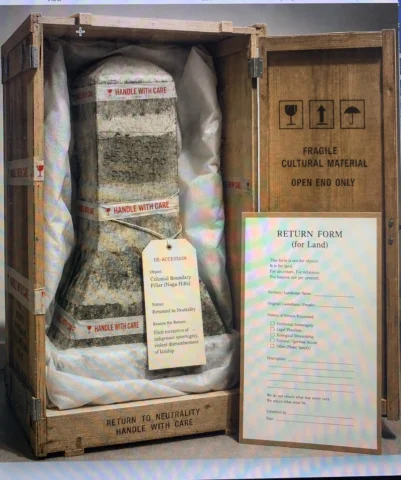
Courtesy Nepal Times