The Basel authorities:
Provenance research carried out at the Natural History Museum Basel clarified the history of the human remains’ origins.
Basel collectors Arnold Masarey (1881–1953) and Ludwig Paravicini (1868–1953) acquired them in Patagonia in the early 20th century. They donated them to what was then the Museum of Ethnology. Today, the bones are housed at the Natural History Museum.
In collaboration with indigenous partners, the research team was able to establish the circumstances of their colonial appropriation, a press release stated. They were also able to prove that the indigenous communities did not give their consent to the purchase at the time. In the eyes of the Kawésqar, these are not merely human remains, but individuals who, even today, maintain an ongoing spiritual connection with their descendants.
Marcelo Miranda:
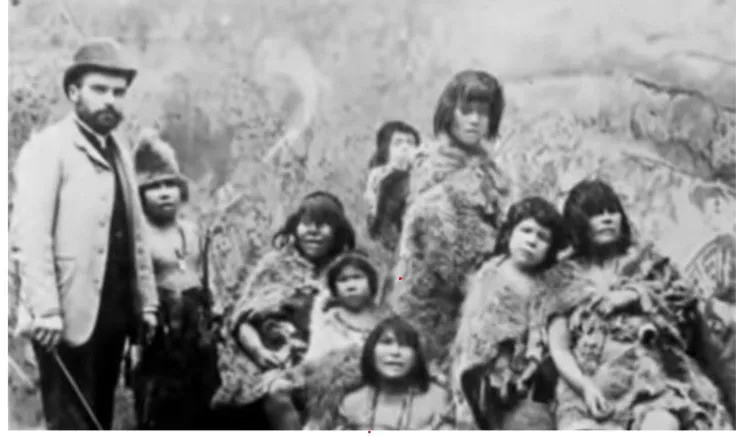
The Ancestors belong to the Kawésqar People, a nomadic sea people, and one of Chile’s eleven Indigenous Peoples, which numbers some 500 members.
Yet the Basel restitution was organised in collaboration with, and the Ancestors formally received by, a private foundation that uses the name “Pueblo Kawésqar” (Kawésqar People), but that does not represent the Kawésqar People politically and has no established mandate to do so.