The Rautenstrauch-Joest-Museum (RJM) in Cologne transforms into a place of encounter and exchange about questions such as: What does return mean when there is no way back? What kinds of relationships can emerge from exile, displacement, and loss? What happens when connections are destroyed—and how can new forms of belonging and togetherness take shape?
[in German] Thomas Fues argues that the handover of six Maka ancestors in Freiburg University has not brought the breakthrough for the German-Cameroonian reappraisal of the colonial heritage that many had hoped for.
Amir Al-Khafaji writes: Western museums stripped my homeland (IRAQ) of its ancient soul under the banner of "civility." Today, they hold my ancestors’ legacy behind paywalls.
“We deeply regret what was done at the University of Freiburg in the guise of science. Unfortunately, we cannot undo the injustice and suffering committed by researchers in the past. But we will do everything we can to help heal the wounds and return the ancestors to their homeland.”
After sitting for decades in a collection in Melbourne University , the remains of nine Yolŋu ancestors have been sung back onto their country in the remote Northern Territory. Elders had been pushing for the remains to be returned for years. For them the ceremony is a milestone.
For many years, the American museum community has been pursuing jars, created by enslaved potter David Drake (1800-1870). However, now the Museum of Fine Arts (MFA), Boston, has made a necessary and bold move: it has recognised the jars as stolen objects.
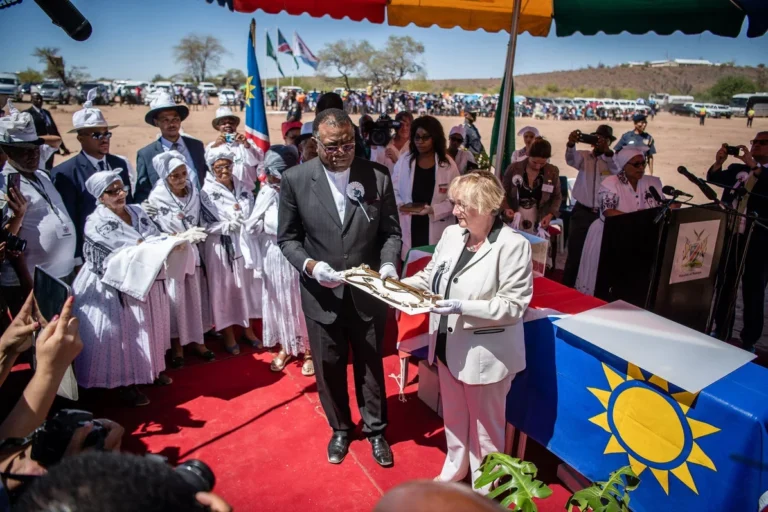
[in German] In a festive ceremony, the Governor of the Erongo Region, Nathalia /Goagoses, accepted the "Usakos Railway Workers' Collection" collection on behalf of the Republic of Namibia. A Swiss railway engineer and his wife collected them between 1903 and 1905 in a context of colonial violence.
Drawing on his broad research, Chipangura explores how ethnographic museums holding African collections are confronting the enduring consequences of colonialism. His presentation moves beyond familiar debates on restitution and repatriation, asking a more fundamental question: What are museums for, and whom do they serve?
How are colonial violence, looted cultural assets and partnership projects related? This exhibition sheds light on the eventful history between the Cameroonian city of Tibati and Bremen. The focus is on current questions: What is the status of the projects? What is the significance of the restitution of colonial objects and how can a common future be shaped?
Over 2,000 ancestral remains and sacred objects belonging to the Santa Ynez Band of Chumash Indians have gone home. Dating back thousands of years, they were long confined to wood trays and boxes at Yale and Harvard’s Peabody museums. Chumash representatives called this treatment of their ancestors “cruel and inhumane.”
During a ceremony and an ecumenical service in the University Church of Freiburg, Freiburg University prepared for the repatriation of ancestors of the Maka community from Cameroon. The human skulls are part of the Alexander-Ecker collection, anatomist from Freiburg in c. 1860.
The Australian Museum has returned remains of 17 Rapa Nui people to their rightful home of Easter Island. They were removed from sacred burial sites in 1882 by a German naval expedition, and sold to the Sydney-based museum, where they have remained for more than 140 years.
Decades Late, Museum Scrambles to Return 2,700 Native Remains - The American Museum of Natural History said it would repatriate hair clippings that must be returned to tribes under a 1990 federal law.
The hair clippings were originally collected by anthropologists for an installation at the 1893 World’s Columbian Exposition in Chicago.
The conversation around restitution just got a major jolt of momentum. Musée Guimet of Asian Arts in Paris, where Chinese artifacts make up roughly a third of the collection, has set a groundbreaking precedent: if any of its Chinese relics are definitively proven to be looted, they will be sent back to their country of origin within 24 hours.
Livia Solaro investigates how a museum—especially one with a problematic past, such as an ethnographic institution—can critically confront its colonial heritage while keeping the public informed and actively involved in the process.
ThomasFues writes about a recent report by the Culturebene portal in Cameroon that the government there is getting serious about the repatriation of human remains and cultural belongings from Germany. It is reported that Culture Minister Bidoung Mkpatt has granted the Maka community permission to recover the remains of their ancestors that were looted in 1905.
Salinan Tribal Councilmember Robert Piatti remembers when he realized that what was sitting beneath a university campus wasn’t just archival material—it could also be people. “I was a reporter at Cal State Long Beach,” he said. “In the humanities building, down in the basement, there were boxes and boxes of bodies. And it was awful, really awful.”
The 'Oceania and Indonesia' holdings in Altenburg (approx. 350 objects) and the entire ethnographic collection (approx. 250 objects) in Meerane will be examined. The initial check follows a research project on the Africa collection in Altenburg and the recommendation by ethnologist Ms Dolz from the State Ethnographic Collections of Saxony for Meerane.
The Chola Plates , historical objects originating from India held by University Libraries Leiden (UBL) have been handed over to India at the occasion of India's PM Modi's visit to the Netherlands. The restitution of this heritage follows the advice of the Dutch (national) Colonial Collections Committee.
Until its restitution in November 2025, Ama O Ghe Ehen, a 18th-century bronze plaque depicting a mudfish, was held in the colelction of the Museum de Fundatie in the Dutch city of Zwolle, since its acquisition in 1937. This symposium explores the process and implications of this return, and what restitution might mean in the context of this plaque.
Sierra Kinsey-Lawton takes the Musauem of Us in San Diego, California, as a case study: the Museum of Us hired a decolonization team because it was fashionable. Every museum was doing it. But the moment the team pushed for something larger—a major repatriation, a public apology, a shift in governance—the discomfort became too great. The team became a problem. And problems are easier to eliminate than to solve. Budget shortfalls became the perfect excuse. They are neutral and impersonal. They allow the museum to avoid saying what it really means: we no longer wish to fund this work.
Two looted West African musical instruments languishing at the Fowler Museum in Los Angeles are creating a restitution challenge, because they have human skulls attached to them.
Anthropologist Nancy Munn studied the Warlpiri people from 1956 to 1958. Now, with the repatriation of her collection to Australia, a younger generation is reunited with its ancestral heritage.
The lechwe skin cloaks are a rare remnant of Batwa people's traditional intellectual, cultural and social worlds. They were recently rediscovered in a museum collection in Stockholm, Sweden. These belongings were slated for digital repatriation, along with +/- 100 other belongings, through a collaborative project between the Women's History Museum of Zambia, and the National Museums of World Culture, Sweden.
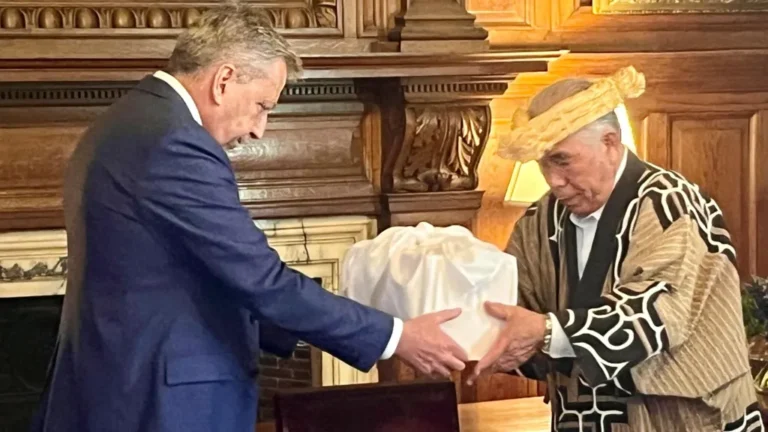
Late in 2025 , it was announced that five sets of Ainu ancestors' remains were to be repatriated to Japan from the Natural History Museum in London. This follows repatriations in 2017 (Germany), 2023 (Australia) and 2025 (Scotland). Inside Japan, the University of Tokyo has apologised to the Ainu community for collecting ancestral remains without their consent. The Japanese government, working with the Ainu Association of Hokkaido, supports the repatriations. How can this increase be explained?
South Africa has reburied the remains of 63 Khoisan people, among southern Africa's oldest indigenous communities. The remains were part of museum collections in the Hunterian at the University of Glasgow in Scotland and at the Iziko South African Museum in Cape Town. The remains were laid to rest at a historic monument near Steinkopf, in the Northern Cape province, during a ceremony attended by President Cyril Ramaphosa.
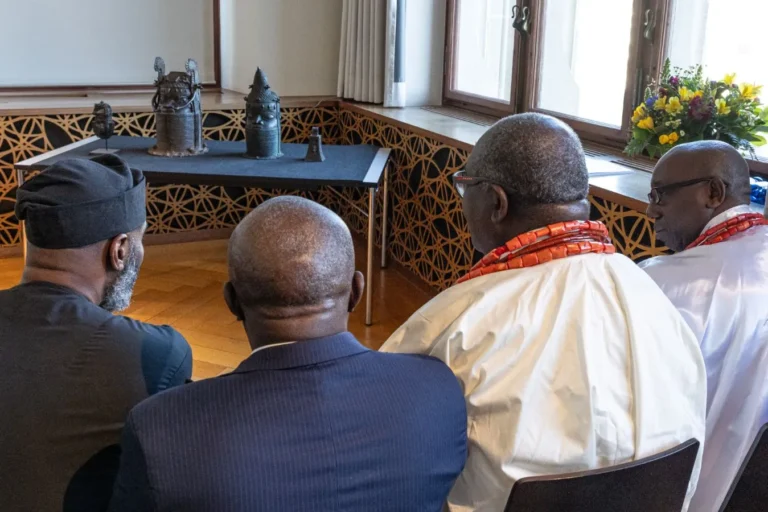
In March 2024, Nigeria’s National Commission for Museums and Monuments (NCMM) filed a formal restitution claim on behalf of the Nigerian government for 14 Benin artifacts held by the Ethnographic Museum at the University of Zurich (UZH). The University of Zurich has decided to honor this claim. "Signing the property agreement is not just a legal act, but the recognition of colonial injustices", Zürich's lord mayor, Corine Mauch, said.
Kedleston (north-west of Derby) houses an impressive collection of paintings, sculptures and furnishings, some collected by the then Viceroy of India, George Nathaniel Curzon during his travels. The exhibition sheds light on previously untold stories. Encounters, a new film by British-Tibetan artist, Nyima Murry, brings to life the artefacts.
The PAESE project (Provenance Research in Collections from Colonial Contexts in Lower Saxony) ran from 2018-2022. As part of the next phase, PAESE 3.0, we are updating and expanding this database. They do so recognising that the data concern the people, communities, and descendants from the regions where these *objects* come from.
The preservation and exhibition of human remains in museums is a painful open wound for many descendant communities. Any museum that stewards such human remains, like Museum Vrolik (the anatomical museum of Amsterdam University), must respond to its racist and colonial inheritance. The result can be seen in this exhibition. The exhibition is based on the results of years of research, including origin, ways of acquisition and suppliers.
The Ashmolean Musuem of the University of Oxfoird has returned a 16th-century bronze to the Government of India following research into the object’s provenance and liaison with Indian authorities.
This article by Elias Aguigah, Yann LeGall and Jeanne-Ange Wagne (TU Berlin) is part of The Restitution of Knowledge project. It documents the history of ‘plunder’ of former African colonies and addresses its legacy in ethnological collections, with a focus on loot from so-called 'punitive expeditions', this time in the Grassi Museum für Völkerkunde in Leipzig (+ an addition about Togo loot in Stuttgart).
[in Dutch] In museum De Fundatie in Zwolle, Nigerian artists shine their light on an antique plaque of a mud fish. The fish was stolen from Benin City at the end of the 19th century, and it will return to that city next summer. 'The mudfish is symbolic of the flexibility of the Edo people.'
Around 1900, the Isanzu chief and seven of his bodyguards were arrested and hanged and/or beheaded, and their bodies were not returned to Isanzul and given for burial. Currently, they are in the University of Göttingen. Since the emptying of graves, there have been significant periods of drought and famine in the area. The Isanzu people believe that these environmental calamities are as a result of their human ancestors being dishonoured.
Vishakha N. Desai writes: The return of looted artworks shows India is no longer treating restitution as a zero-sum recovery, but as a negotiating tool that asserts ownership while deploying art as soft power.
Restitution debates – the question of whether a cultural object should be returned from a museum or other collection to a person or community – often begin with a deceptively simple question: who owns an object?
Barnaby Phillips: The decision by the university’s Museum of Archaeology and Anthropology to return looted Nigerian treasures leaves larger institutions increasingly isolated. Which museum will be the next one? Uwa Igbafe: This case reflects a gradual transition from legal acknowledgement to the actual transfer of artefacts.
In the column, Alexander Hermann takes a look at the principle of INALIENABILITY that applies in many countries, barring the removal of cultural objects from #museum collections, including for purposes such as #restitution.
Lucky Igohosa Ugbudian writes: Switzerland has witnessed curators playing an increasingly significant role in the restitution debate surrounding Benin artworks. The looting of these cultural objects in 1897 led to the illicit global circulation of these objects. The forceful trafficking of these items, alongside international laws and conventions, prompted Nigerian and Pan-African groups to demand restitution.
[in English and German] One of the mortal remains of three people of Indigenous Australian descent in the University of Cologne’s Anatomy Center, which were planned to be returned on 4 December 2025. was discovered during the preparations for the return to have been replaced.
Between 1896-1916 today's Burundi was a German colony as part of what was known as ‘German East Africa’. Not only in colonial historiography, but also in provenance research, Burundi has been largely underrepresented and, similar to Rwanda, stands ‘in the shadow’ of the reappraisal of the material cultural heritage of present-day Tanzania.
A new gallery at the Manchester Museum displays thousands of African artefacts, aiming to spark discussion on colonial-era looting and restitution. The initiative seeks public input on the origins and returns of these items, amid growing calls for repatriation of looted cultural heritage.
The conference theme will reflect the project’s focus on equitable collaboration, community-engagement and revisiting the ways in which collections are acquired, interpreted and shared. This year we’re rethinking what a conference can be. Dates: 23-24 April 2026.
This paper investigates the political and cultural grounds in disseminating manuscripts’ digital copies and ask what kinds of shifting assumptions about the nature of textuality and manuscripts are indicated by digital returns. This is especially relevant given that some manuscripts in traditional Java, those designated as pusaka, are not merely media transmitting textual information. Rather, their materiality contains a power of its own.
Through the case of the Palembang Sultanate in Sumatra, Alan Darmawan investigates the extant manuscripts originating from the palace library. Some moved into the hands of private owners in Palembang, while others were dispersed into colonial collections in Europe and Southeast Asia.
Heba Abd el Gawad writes: There is a point at which professional detachment becomes impossible. As a member of a community of descent as well as a curator, when I enter the Horniman store, I am not simply surveying collections. I am standing in the presence of my own kin. I encounter my Egyptian ancestors in spreadsheets, acid-free boxes and collection management plans.
Bella d'Abrera writes: The decolonisation movement is making headway in Australia’s museums and libraries which are adopting dangerous politics which will ultimately call into question their very existence. In trying to erase the past, we erase ourselves. (It is an older article but worth offers an anti-restitution perspective)
[ in English and in German ] The Museum der Kulturen Basel is systematically examining its collection for coloniality and highlighting the central importance of collaborating with communities in the Global South.
This paper is an ethnographic essay on what should not count as collection and how the Mapuche modes of existence exceed the Chilean heritage regime of objectification. Thus, it requires rethinking repatriation as other-than-human politics.
In April 2026, officials from the Japanese government and the Ainu Association of Hokkaido will travel to Britain to receive four of the five sets of remains, the government said Friday. The locations where the four sets were excavated are known.
The Indonesian phrase pasang surut — “the tide in and out” — evokes the continuous movement of people, objects, and ideas across the seas that once linked Europe and the Indonesian archipelago. These currents shaped the emergence of colonial collections but also suggest the possibility of renewed circulation: of knowledge, accountability, and dialogue.
Barnaby Philips discovers one more return of a Benin object from the Netherlands and further analyses what went wrong in Benin City: Two days before the aborted viewing of the Museum of West African Art (MOWAA), Oba Ewuare II visited his ally Monday Okpebholo, the governor of Edo State. ‘Please stop the opening of the MOWAA.’
All too often, the literature on the restitution of colonial cultural objects tends to focus on the public international law (PubIIL) aspects of the debate. With a few notable exceptions, the PubIIL and private international law (PIL) dimensions of the debate are rarely considered together. This article makes the case for a coordinated approach.
The Georg Steindorff Collection, comprising 163 objects, is a central, yet complex, component of the Egyptian Museum-Georg Steindorff at Leipzig University. The “loss” for Georg Steindorff’s family was placed at the forefront of this restitution of Nazi-looted art, while the original, broader loss of heritage for the country of origin (Egypt) due to colonial practices was sidelined.
The documentary Elephants & Squirrels by Swiss filmmaker Gregor Brändli chronicles a Sri Lankan artist’s discovery of looted artefacts in Basel and her mission to return them to Sri Lanka, exposing Switzerland’s uneasy reckoning with its colonial entanglements.
[ in Dutch, in French ] The MAS in Antwerp investigated the provenance of three important cultural objects from its Congolese collection. How did they end up in Antwerp, and what do they mean to Congolese communities today? The results are published in the new publication "On Origin and Future" and incorporated into the permanent exhibition.
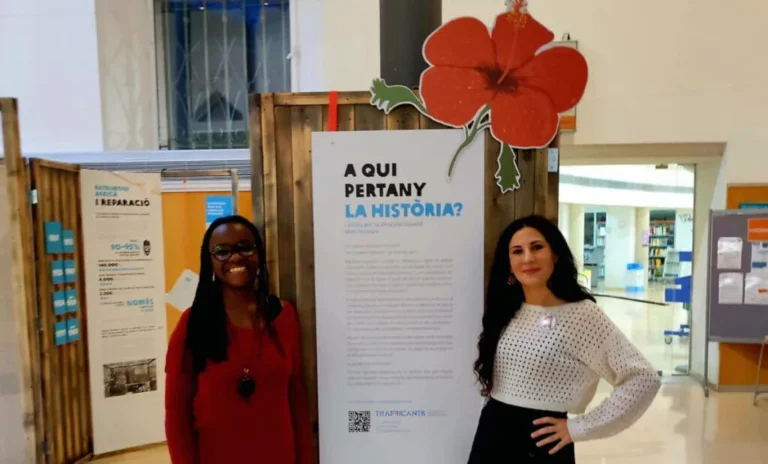
The Catalan project "(Tr)African(t)s. Museums and collections of Catalonia in the face of coloniality" has recently created a travelling exhibition titled “To whom does history belong? Struggles for the decolonization of museums". This exhibition “invites us to reflect on the role of museums in colonial history and to rethink heritage from a critical perspective."
The agreement represents the first major case of art restitution involving works created by an enslaved person in the U.S. — a process traditionally associated with families seeking the return of art looted by the Nazis in World War II.
The aim of the project is to reveal and connect all collections of material made in Africa that are held in 32 Scottish museums, including lesser-known as well as better-known ones, and to connect these collections with relevant and interested diaspora and descendant communities.
The UK Government is to implement a change in law that will make it easier for museums in England and Wales to restitute objects from their collections on moral grounds. But national museums will be excluded from new rules.
University collections are more than any others, linked to the definition and transmission of knowledge. The Musée L, UCLouvain's university museum, is launching a new open-access online scientific journal dedicated to university collections and museums: UniMusea – Research and Practices on University Collections.
[ in Dutch] Due to the death of Otto van der Mieden on February 1, 2024, the founder and director of the Puppetry Museum, the museum is closed and the collection is being deaccessioned.
It is well known that Australia's police perpetrated violence against First Nations throughout the colonial period, but their role in supplying Indigenous ancestral bodily remains and cultural heritage objects to domestic and overseas museums is little understood, nor too is whether they exceeded or abused their powers in doing so.
“The university regards these historical facts with the utmost gravity, reflects on them with sincere remorse, and hereby expresses our heartfelt apologies.” A process of repatriation has started.
Yesterday, RM* published an item about the repatriation by museums in Great Britain of shrunken heads to Ecuador. Lewis McNaught explains that this is easier said than done. Given the particular cultural contexts of tsantsas (both making and taking), the need for further research and analysis have been agreed. According to him, no repatriation requests have been made to date and given the number of different groups involved, any future process is likely to be extremely complicated.
[ in English and in German ] The main focus is on cultural belongings from four Cameroonian communities, the Bakoko, Bamum, Duala, and Maka, whose heritage was absorbed by these institutions during the German colonial era (1884-1919). This should also become a basis for future restitutions.
This kick-off seminar, led by Pietro Sullo, discusses the legal status of colonial artefacts from Africa held in European museums, clarifying whether there is a duty to repatriate them. The research hypothesis is that European states have a legal duty to return colonial artefacts acquired without the consent of the communities of origin.
The German state Baden-Württemberg acknowledges its historical responsibility and is committed to provenance research in order to identify and return colonial cultural goods that were acquired unlawfully. The start was in 2019, when Hendrik Witbooi's Bible and whip were returned to Namibia.
Cultural leaders of an indigenous Ecuadorian community have called for the repatriation of a collection of shrunken heads in the Pitt Rivers Museum in Oxford [GB].
[ in Spanish ] The exhibition recovers key moments from the decades of 1880 and 1990, when the first restitutions of human remains and the demands for patrimonial return to our context were produced.
The Hunterian at the University of Glasgow, through the implementing agencies, Iziko Museums of South Africa and the South African Heritage Resources Agency (SAHRA), and in partnership with the Northern Cape Reburial Task Team, have jointly announced the repatriation of ancestral human remains to South Africa.
This special exhibition is dedicated to a long-overlooked collecting practice: The collection of objects by Catholic and Protestant missionary societies – primarily during the 19th and early 20th centuries.
[ in Portuguese ] The exhibition "The Photographic Impulse. (Dis)arrangement of the Colonial Archive" proposes a decolonial reading of the images and scientific objects from geodesy and anthropology expeditions carried out in territories colonized by Portugal.
‘The most valuable Buginese manuscript of La Galigo, is held at Leiden University Library’ in the Netherlands, the university proudly communicates. It has come from Makassar on the Indonesian island of Sulawesi. For the Bugis who live there, it is an essential part of their history. But they have no access to it. A local group with academics, heritage professionals and activists in Makassar has begun to discuss its future. For them the repatriation of meaning is crucial. And this is only possible if the Dutch recognise their responsibility.
The Ethnographic Museum Zagreb presents the exhibition “Travellers” – Collection of Non-European Cultures, tracing the journeys of people and objects from colonial times to the present day.
Join us on Sept 16 | 16:00–21:30 | Kulturhaus Brotfabrik - World Premieres of Eternos Retornos and other films, with installations by Repatriates, and a dinner ritual inspired by the counter vibration physics of the headdress. This is more than art. It is a call to return what was taken.
In 2021, the University of Aberdeen returned a looted Benin object to the Oba of Benin, becoming the first UK institution to agree to an unconditional return. Neil Curtis [University of Aberdeen] outlines the process of giving back a pillaged object without a repatriation request being made.
The Allard Pierson is conducting research into the provenance history of the archaeological collections over the period 2023-2027. There is little or no information on the provenance of many of these approximately 19,000 artefacts.
Restitutions of colonial loot by Japan to former colonial possessions? Yes, that has happened and is still happening: manuscripts and objects to South Korea and China, ancestral remains to groups within Japan’s own borders. News about it is quite rare. What is actually known about the colonial collections and restitution practice of this former colonial power in the Far East?
Two pou - ornate carvings - that have been in the South Australian Museum's collection for more than 130 years are now destined for New Zealand after a ceremony in Adelaide on Tuesday.
The objects, comprising spears, spear throwers and a club, were collected in the late 19th and early 20th centuries and have been held in the museum’s collection for decades.
The past decade has seen a worldwide tendency to re-examine human remains found in old museum collections. To obtain a full picture of the life history of the individuals under consideration, an anthropological study might be mandated, although this approach is not yet systematic.
The Japanese civic group, Movement for the Repatriation of Chinese Cultural Properties, urges the Japanese government to return looted Chinese cultural relics, the Chinese Global Times reports. Japan conducted archaeological surveys in China during wartime and later transported their "findings" to Japan under the guise of "academic research."
For several years, Bristol Museum and Art Gallery and the Australian Institute of Aboriginal and Torres Strait Islander Studies (AIATSIS) have been discussing returns of cultural heritage to Australia. This event will reflect on those discussions with community members and AIATSIS staff.
[ English ] The exhibition "Benin Dues" --> Guided Tour in English with curator Alice Hertzog on 24 August 2025
[ German ] Vom Umgang mit historisch belastetem Kulturerbe – in Ethnologie und Recht on 30 September 2025
This article about 500 palm-leaf manuscripts, looted during the conquest of Lombok by the Netherlands East Indies in 1894, is especially urgent as the demand for provenance research grows. It helps to better understand the complex historical trajectories of these cultural heritage objects.
The June 2025 report by a working group of Edinburgh University DECOLONISED TRANSFORMATIONS CONFRONTING THE UNIVERSITY OF EDINBURGH’S HISTORY AND LEGACIES OF ENSLAVEMENT AND COLONIALISM focusses mainly on slavery an its current impact. At the en dit has an interesting recommendation for the university's Anatomical Museum and its 200 skulls.
[ in Portuguese ] A delegation from Nagaland in north-east India travels to the Pitt Rivers Museum in Oxford to negotiate the return of remains and artefacts taken during the colonial period.
La Galigo, an Bugis text, is poetry, written on palm leaves in Bugis language and is considered to be the most voluminous literary work in the world. But the majority of the manuscripts are stored in Leiden University, The Netherlands.
In a step toward preserving and rediscovering Sri Lanka’s colonial intellectual heritage, the government has greenlit a groundbreaking research project focusing on Dutch-era palm leaf manuscripts of Sri Lankan origin.
An institution is asking its visitors for their view: The Manchester Museum is running a public consultation about the future of Asru, a woman who lived in Thebes, southern Egypt
The human remains of a man from the indigenous Selk’nam community in Chile were handed over to a delegation from Tierra del Fuego at Lübeck Town Hall. The Selk’nam have now requested that their ancestor be buried in a Lübeck cemetery.
On March 14, the remains of eight Mirning ancestors were returned to their country and buried. The ancestors lived between the late 1800s and 1979, and their remains had most recently been stored at the West Australian Museum.
The Museum of Fine Arts, Boston (MFA), today returned two works of art from the Benin Kingdom to His Royal Majesty Omo N’Oba Ewuare II, Oba of Benin, in a ceremony at the Nigeria House in New York City.
The Tsilhqot’in National Government has launched its first major repatriation exhibit at the Museum of Vancouver, following the return of over 60 ancestral belongings—including baskets, tools, and cultural items—that had been held in museums and private collections for more than a century.
Gov. Greg Gianforte last week finalized Montana’s two-year budget, which contains several new investments for Indian Country, including a historic increase in funding for tribal colleges and money devoted to repatriation efforts.
Indigenous artefacts will be returned to their ancestral home on Mornington Island in Queensland's Gulf of Carpentaria. More than 3,000 kilometres away in Victoria, Baw Baw Shire staff uncovered the 37 articles in storage.
Benin Digital mentions two objects in Portugal, one of which is in the Sociedade de Geografia de Lisboa. Sofia Lovegrove Pereira sends a podcast [ in Portuguese ], Reparacoes historicas - Preterito imperfeito (28 08 2023), which argues that the Sociedade has indeed one on display but another 76 in store.
The Albanese Labor Government has welcomed the return of 10 First Nations ancestors from three Japanese collecting institutions. A joint ceremony was held in Tokyo. This is the first ever return of ancestors from Japan.
A delegation of Naga elders and leaders, along with representatives from the Forum for Naga Reconciliation (FNR) and Recover, Restore, and Decolonise (RRaD), gathered at the Pitt Rivers Museum (PRM), University of Oxford, to initiate the repatriation of Naga ancestral human remains.
[ in Portuguese ] A 15-point action plan is the most tangible proposal put forward by the working group in a report on “sensitive heritage” at the University of Coimbra. Among the actions consists are “identifying and systematizing all the ‘sensitive heritage’ of UC”, the adoption of principles on dealing with them, legislation for restitution and the repatriation of a skull collection to Timor Leste.
[ in Italian ] From the dawn of Italian exploration in Africa and throughout the colonial period, objects and samples from overseas came to the Peninsula, finding their way into temporary exhibitions and more than one hundred permanent displays, where they were studied, described and presented to the public.
Remains taken by Japanese researchers from a tomb in Okinawa Prefecture in the early 20th century have been returned, sources said Thursday. + comment Nathan Sydenham
Half of the 11 returned objects to the Larrakia community in Northern Australia first arrived at the Fowler Museum in 1965 through a large donation from the Wellcome Trust.
In a historic handover event at the Fowler Museum in California, USA, a collection of 11 objects of deep cultural significance were unconditionally returned to the Larrakia Community of the Northern Territory in Australia.
The House of Ni’isjoohl Memorial Pole, stolen in the 1920s, was rematriated from National Museums Scotland (NMS) in 2023. Noxs Ts’aawit (Dr. Amy Parent) of The Nisga’a Nation and Dr. John Giblin from NMS outline the process of international cooperation.
At the global Museum & Heritage Awards 2025 the Pitt Rivers Museum won Partnership of the Year for the Maasai Living Cultures Project. The annual award celebrates the best in the world of museums, galleries plus cultural heritage visitor attractions.
(Re)collecting Natural History in Europe is a research project that examines how natural history and ethnographic collections are curated and displayed, with a particular focus on European museums.
According to the Japanese government, the remains of three Ainu Indigenous people that were kept at the University of Edinburgh in Scotland will be returned.
Te Papa collection manager and kaitiaki taonga Moana Parata brings home a precious taonga, a raranga vest collected by Carl Freeze, an American Mormon missionary in the early 1900s.
The Leiden University Medical Centre (LUMC) has established a committee to investigate what part of the current collection has a connection to the former colonies or slavery past. Based on this investigation, the committee will issue a recommendation at a later date.
How are museum objects valued and who decides? Trevor Engel explores the relationship of perceived scientific value to the idea of hoarding applied to colonial institutions' holdings.
After more than 170 years at the Scottish University of Aberdeen, the remains of a young Aboriginal man who was killed on his Country have returned home.
Julien Volper argues that the Netherlands practises double standards when it comes to restitution. On the one hand, the country returns 119 Benin objects to Nigeria. On the other, it was reluctant to return to Belgium parts of a 16th-century altarpiece by Pasquier Borman, stolen from a church of in Boussu (Belgium) in 1914, and it cut back its international assistance to the global south.
The display of human remains in museums has long been a contentious issue. Earlier in March, the All-Party Parliamentary Group for Afrikan Reparations (APPG-AR) published the report Laying the Ancestors to Rest. Returning African human remains is time- and money-consuming. With the ongoing budget cuts, it becomes harder to return them.
The Tasmanian Aboriginal Centre and The Hunterian at the University of Glasgow have announced the repatriation of a rare shell necklace from The Hunterian collection in Glasgow to its home in Tasmania.
The African Collections Futures project seeks to develop a better sense of where Africa-related objects and materials are present in diaspora and communities of origin have with these objects, and what more can be done. The scope covers the nine institutions – eight museums and the Botanic Garden – that make up the University of Cambridge Museums (UCM), the University Library, and less well-known collections such as those in various University departments and affiliated institutions.
[ open access ] This Special Issue of UMAC Journal has a Guidance for restitution and return of items from university collections and interesting contributions about ancestral remains in these collections.
RM* saw reports from AP, Hyperallergic, DutchNews, Jerusalem Post, ArtDependence, Punch, Arise, Voice of Alexandria, Devdiscours, Pinnacle Gazette and AllAfrica.
ETH Zurich's natural history collections house thousands of artefacts from former overseas colonies, including rocks and minerals, insects, animal and plant specimens.
[ open access ] 'Displacing and Displaying the Objects of Others - The Materiality of Identity and Depots of Global History' brings a diverse range of contributions inspired by research from the "Hamburg’s (post-)colonial legacy" research center.
During a solemn ceremony at the GRASSI Museum für Völkerkunde zu Leipzig, ancestral remains, which had been in the possession of the Staatliche Ethnographische Sammlungen Sachsen (SES), were returned to representatives of their Māori (New Zealand) und Moriori (Chatham Islands) communities of origin.
Former President Buhari’s decision that Benin objects go back to the Oba of Benin (and thus not to the National Commission for Museums and Monuments [NCMM] or to the government of Edo Sate in which the Benin Kingdom is located) continues to cause unrest.
Museums in Leipzig, Göttingen, Stuttgart and three other German cities have transferred the remains of Māori and Moriori people to a New Zealand delegation, headed Te Herekiekie Herewini of the Museum of New Zealand Te Papa Tongarewa.
According to a recent ProPublica investigation of the failure to bring about the expeditious return of human remains by federally funded universities and museums, over 110,000 ancestral remains are held by institutions in the U.S., from Harvard to Berkeley.
South Africa's Department of Sports, Arts and Culture is preparing to repatriate human remains which were allegedly stolen from graves in Port Alfred, in the Eastern Cape and other places. They currently are in the US and Europe.
[ in French ] The article 'Between Belgian archives and Congolese oral sources in provenance research. The case of the statue of Chief Nkolomonyi at MAS (Belgium)' examines the value of sources in the country of the former coloniser and that of the ex-colonised. It broadens the scope of provenance research.
The 1990 Native American Graves and Protection Act (NAGPRA) is generally presented as a breakthrough in favour of First Nations. NAGPRA set up a process by which Native American tribes can request the return of human remains and cultural objects from museums and government agencies, including federally funded universities. How successful has it been in California?
After receiving a letter from the Thai government, it was not difficult for the Asian Art Museum in San Francisco to determine it was showing looted objects. Before their return the museum holds an exhibition. Is this becoming a trend?
[ in Englis, in French ] The piece brought back by British Captain James Cook in 1771 is said to be the first Oceanian sculpture collected by a European.
With joy and ululation two families from the Loita clan of the Maasai in Narok South received 98 cows from Oxford University for ‘stolen’ cultural artefacts.
Prince Ermias Sahle-Selassie, the grandson of Ethiopia’s last emperor, will ask the universities of Oxford and Cambridge to return artefacts stolen by British soldiers in 1868.
A civil rights group in New York, USA, Restitution Study Group, has petitioned the United Kingdom’s Charity Commission to reject the repatriation of looted Benin objects to Nigeria because the West African nation also “profited from slavery.”
[ in English and in Dutch ] In April 2024, a Netherlands delegation visited Suriname and mapped out which objects are present in Dutch public collections through the colonial history of the Netherlands and Suriname.
‘In 1894, two colonising powers faced each other across the narrow strait between the islands of Bali and Lombok. One was the Netherlands East Indies, the other the kingdom of Lombok, ruled by a settler regime from Bali that dominated the island’s indigenous Sasak population.'
Crania from a Nordic 'golden age' sit in a Harvard museum basement, and now researchers on both sides of the Atlantic want to reunite them with their bodies.
The Rochester Museum in New York and Harvard University return ancestral remains of Native Americans and funerary artifacts to the Oneida Indian Nation.
Dresden’s museum of world cultures returned four everyday objects to the Kaurna Aboriginal community of Australia at a ceremony in Sydney: the spear, digging stick, cudgel and net were brought to Germany by two protestant missionaries between 1838 and 1839.
Manchester Museum, UK, has handed over 174 items to the Australian Aboriginal Anindilyakwa Community, marking one of the largest restitution projects ever undertaken in the UK.
The National Museum of Scotland nearly had to call off the high-profile repatriation of a totem pole to the Nisga’a in Canada after the Scottish Government reneged on a promise to cover costs.
[ in Dutch ] This thesis on the Watson collection shows that even smaller non-ethnographic museums such as the Noordbrabants Museum of art, culture and history have collections from colonial areas.
Three decades after legislation pushed for the return of Native American remains to Indigenous communities, many of the nation’s top museums and universities still have the remains of thousands of people in their collections.
[ in Dutch ] The University Museum Groningen has a collection of human remains from Petrus Camper (1722-1789). Where do they come from and how can their presence there be understood? This issue of Magazine De Boekenwereld is about Camper, his ideas and his collection.
'Measina' or cultural artefacts kept in the Uebersee Museum in Bremen will be back in Samoa in June 2024. A team from the National University of Samoa, led by Ta’iao Matiu Dr Matavai Tautunu, will be making this trip.
Guyana is seeking the return of various artefacts including a letter written by Quamina, the leader of a 19th century slave rebellion, held by the School of Oriental and African Studies, University of London (SOAS).
Europeans collected a huge number of Aboriginal artefacts during the colonisation of Australia. Gemmia Burden's research is on the Queensland Museum’s collecting networks.
Earlier in 2024, David Nolan Gallery in New York mounted the exhibition Fort Marion and Beyond: Native American Ledger Drawings, 1865–1900, gathering over 100 works on paper by Native artists from the Arapaho, Cheyenne, Hidatsa, Kiowa, and Lakota tribes.
With tens of thousands of African artworks in French museums, curators face a huge task in trying to identify which of these were plundered during colonial rule in the 19th and 20th centuries and should be returned.
This report was developed as a response to the Truth and Reconciliation Commission’s Call to Action #67 under the guidance of the CMA Reconciliation Council.
Trinity College and the Museum of Archaeology and Anthropology (MAA) agreed in March 2023 to return the spears to descendants of the Gweagal people who crafted the spears more than 250 years ago. One year later, they were handed over.
Police played an important role in the collecting of Aboriginal objects for colonial and imperial museums. Although most scholars have noted the unequal power relationship that occurred when police ‘collected’ Aboriginal objects on the frontier, scholarship has not previously explored the ‘authority’ of the police to collect objects.
There are obvious similarities between the episode in 1874 and 1896 (Asante Kingdom) and 1897 (Benin Kingdom). Both kingdoms have been asking for restitutions for decades. Barnaby Philips explores why is it taking Nigeria so long to put its returned treasures on display?
Many artefacts in UK collections were taken along with a war indemnity of 50,000 ounces of gold following the Third Anglo-Asante War, then auctioned off to collectors of major museums by the Crown jeweller in order to raise funds for injured soldiers.
How did Geneva live through the colonial period? In what ways was the Ethnography Museum a major cultural actor in the colonial context? What is the future of the collections held there? Can we understand today the real identity of an object, sometimes centuries after it entered the Genevan museum collections?
[ in Portuguese ] Portugal has been doing little to develop knowledge on the provenance of its collections that came from former colonies. This can be partly explained by the lack of human and financial resources in archives, museums and universities.
The Federal Government has vowed to pursue all necessary measures, including legal action in international courts, to recover cultural artefacts stolen from Nigeria.
How did Geneva live through the colonial period? In what ways was the Ethnography Museum a major cultural actor in the colonial context? What is the future of the collections held there? Can we understand today the real identity of an object, sometimes centuries after it entered the Genevan museum collections?
The Department of Antiquities of the State of Libya and the Cleveland Museum of Art have announced an agreement in principle for the transfer of a Ptolemaic statue of a man to the State of Libya. It was lost in 1941, during the Second World War.
A German museum is facing right-wing backlash after creating a designated time for non-white visitors to view an exhibition about colonialism, the Washington Post reported last week. Police remain stationed at the museum. Director Kirsten Baumann: We want to offer victims of racism a safe place.
The Museum of Cultures and the Natural History Museum in Basel, Switzerland, returned a collection of approximately 90 aboriginal artefacts, including human bones and tools, of Sri Lanka’s indigenous population.
Kwame Opoku wonders whether loans will be the future status of African objects in western museums. If so, western museums remain in control of what is not theirs.
The American Museum of Natural History (AMNH) institution holds the bodies of 12,000 individuals from communities within and outside the United States. The majority of which lack identification.
Six years ago, AIATSIS set up the Return of Cultural Heritage (RoCH) programme, and began looking at collections worldwide that might have holdings to return. Among the 200 institutions it first contacted, 74 responded positively, among these the Fowler museum in Los Angeles
The Fine Arts Museums of San Francisco (FAMSF), which stewards the De Young Museum and the Legion of Honor, has begun consulting with Native tribes on how to return remains that were gifted, in some cases, over a century ago.
An estimated 350,000 African artefacts and manuscripts, as well as human remains, photographs and natural history specimens, have been found in the stores and archives of the eight museums and the Botanic Garden which together make up the University of Cambridge Museums, as well as the University Library and less-well known collections in university departments and institutions.
An ancient, carved tree will be returned to Australia around a century after it was cut down and shipped to Europe. It was one of several “dhulu” stolen from a Gamilaraay ceremonial site beside a creek in northeast NSW in 1917.
Jamaica will intensify efforts for the repatriation of its cultural and natural heritage artefacts taken from Jamaica by the British and housed in museums and universities in the United Kingdom. The negotiation for the return of a whole repository of artefacts from the Tainosis is ongoing. The country also works on reparations related to the slave trade. Recently, Minister of Culture Olivia Grange received a delegation from churches in the United Kingdom during which the United Reform Church apologised for its role in this trade.
[ in Dutch ] The Dutch city of Rotterdam returns 66 looted objects from the municipal collection to Indonesia. They were looted by the Dutch army. The municipal government chooses to follow the State's return rules.
As one of the oldest educational institutes in Scotland, the University of Edinburgh holds more than a million items in its historic collections. Around 13,000 are anatomical artefacts and of these, more than 1,800 are skulls. A large number of the skulls in the collection were amassed during the colonial period.
Rachel Mariembe discusses the collection of the Musée des Rois Bamoun (MRB, Museum of the Bamoun Kings), located in Foumban in Cameroon’s West Region, as a framework for studying issues related to the concepts of museum, cultural heritage, conservation, and the restitution of cultural property looted during the colonial period.
In November 2022, the Horniman Museum in London brought back six Benin objects to the Oba of Benin. Horniman’s Nick Merriman was rather enthusiastic. Independent researcher Mike Wells takes a hard look at Merriman’s historical and factual claims regarding the Horniman’s ‘research and consultation process’ and the museum’s arguments supporting return of the bronzes.
Asantehene, Otumfuo Osei Tutu II, is set to receive 28 gold ornaments and regalia from South Africa, marking another restitution of Asante cultural heritage looted during the 19th century, including linguist staff, swords, palace security locks, rings, necklaces, and proverbial gold weights depicting crocodiles and gold scandals. These items reflect the governance structures and chieftaincy traditions of the Asante Court.
Claim of the Restitution Study Group: The Supreme Court has denied certiorari in the case Deadria Farmer-Paellmann v. Smithsonian Institution, allowing the return of 29 Benin Bronzes to Nigeria to proceed without further legal challenge.
In June 2024, 39 artifacts were formally handed back to the government of Uganda by Britain's University of Cambridge. While the return is technically a three-year loan between museums, it is extendable, and could see them remain in their country of origin.
A Mexican delegation is coming to retrieve 84 Mesoamerican axes currently in transit at University de Montreal, underscoring the need to raise public awareness of the looting of archaeological artifacts.
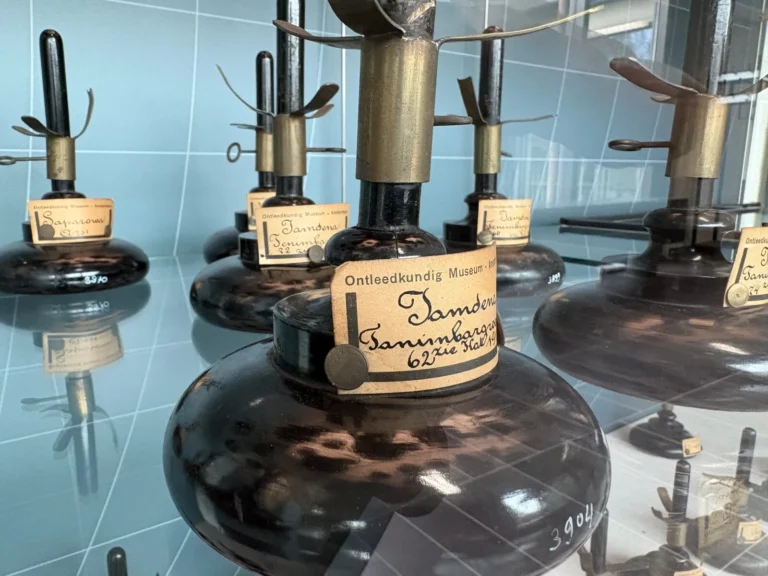
[ in Dutch ] Fifteen skulls originating from the Moluccas have been returned to the island group Tanimbar. These skulls had been part of the collection of Museum Vrolik, the anatomical museum of Amsterdam University Medical Centre, since the very early 20th century.
The Pennsylvania Museum’s Cultural Center in Philadelphia is launching a study that examines 450 museum collections, collecting policies and practices in the US and formulates a collection framework.
A bamboo sunhat that was looted from the Kenyah Badeng people of Sarawak, Borneo, during British-led war expeditions in 1895 and 1896, is returning home. It is the Pitt Rivers Museum's first object to be returned (as opposed to ancestral remains).