On 16–17 September in Geneva, the Swiss Commission for UNESCO and the Federal Office of Culture (FOC) will gather States, cultural institutions, experts and Indigenous representatives. They will discuss how provenance research, Indigenous perspectives and concrete partnerships are contributing to this evolving field.
Edna Arisbet Roque García's PhD project analyses restitution governance and the role of imperial museums in the foreign policy of states, with Germany as the main case study. The project demonstrates to what extent the restitution governance involves dialogue of interests, negotiation between states, and even the management of political repercussions. This is compared with the situation in Austria and in Switzerland.
On 1 July 2026, Bolivia Archaeology National Museum (Munarq) reopened its doors with the permanent exhibition ‘Eternal Roots, Living Legacies,’ an exhibition that highlights the connection between pre-Hispanic customs and current traditions of the Andean country. It also has a section about repatriation.
[in German] In a festive ceremony, the Governor of the Erongo Region, Nathalia /Goagoses, accepted the "Usakos Railway Workers' Collection" collection on behalf of the Republic of Namibia. A Swiss railway engineer and his wife collected them between 1903 and 1905 in a context of colonial violence.
[in French] Radio Télévision Suisse looked into the sale of human remains in the program 'Vraiment' de Cécile Tran-Tien. She finds skulls, skeletons and even fetuses on the open market and reveals the extent of the trade in human remains via Ricardo, Vinted, Instagram...
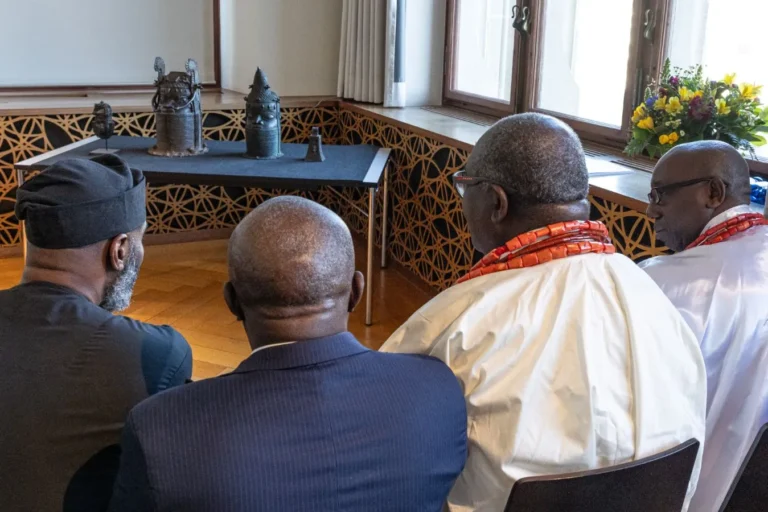
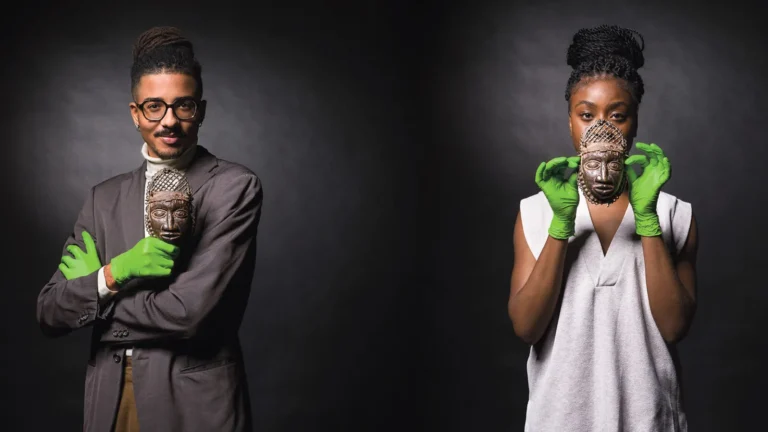
On 29 June 2026, at the National Museum in Lagos, three Swiss museums formally returned 18 Benin Bronzes to Nigeria, alongside a bronze bracelet and four archaeological monoliths seized during criminal investigations. Lawyer Kai Loon Loh analyses what makes the Swiss approach distinctive, and why it matters for cultural heritage law and practice.
Livia Solaro investigates how a museum—especially one with a problematic past, such as an ethnographic institution—can critically confront its colonial heritage while keeping the public informed and actively involved in the process.
Eberhard As Seen By Amit is a composite film documenting a life of work. It draws on footage from Eberhard Fischer’s many ethnographic films, alongside images shot by Dutta in India and more recent sequences filmed by Fischer himself at his residence in Switzerland. “Through his eyes, I began to see my own heritage with a clarity and depth I never knew.”
Samuel Bachmann (Bern Historical Museum) argues: If museums are to confront their – and Switzerland’s – coloniality, they require a new mandate: one that questions their interpretive authority and addresses fundamental questions about why, and for whom, cultural heritage is preserved, researched and communicated.
The landscape of cultural property restitution has undergone a fundamental transformation over the past three decades. What was once a world governed by gentlemanly agreements between dealers, collectors, and museum curators has become a forensic battleground where digitized trafficking archives, scientific testing, and aggressive legal enforcement determine the fate of objects. This document provides a comprehensive analysis of the current state.
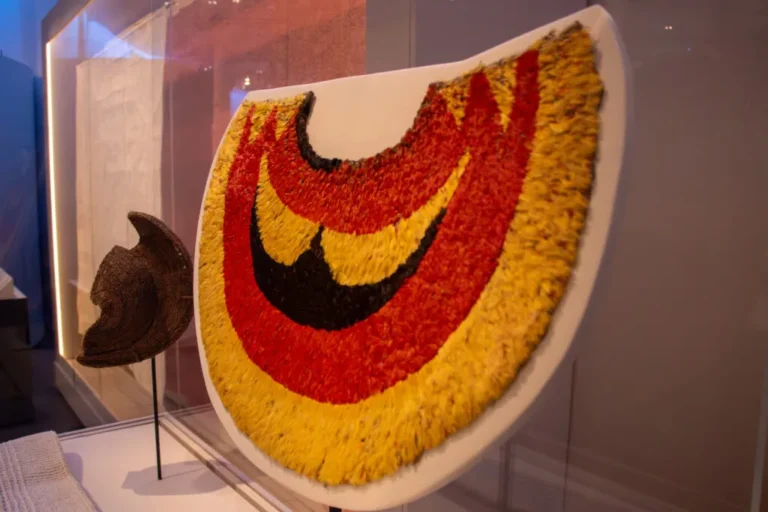
Makana Eyre thinks that the exhibit at The British Museum, “Hawaiʻi: a kingdom crossing oceans,” poses questions that have historically been uncomfortable for museums. Many items, though certainly not all, are sacred, intrinsically linked to ceremony, community, even Hawaiian sovereignty.
In March 2024, Nigeria’s National Commission for Museums and Monuments (NCMM) filed a formal restitution claim on behalf of the Nigerian government for 14 Benin artifacts held by the Ethnographic Museum at the University of Zurich (UZH). The University of Zurich has decided to honor this claim. "Signing the property agreement is not just a legal act, but the recognition of colonial injustices", Zürich's lord mayor, Corine Mauch, said.
[in French] This issue of Relations Internationales, edited by Anne Sophie Gijs, Matthieu Gillabert and Serge Jaumain offers a range of interesting articles about restiution issues, museums, diaspora groups and communitie sof origin, mostly in Switzerland and Belgium and in African countries as Cameroon and DR Congo.
Lucky Igohosa Ugbudian writes: Switzerland has witnessed curators playing an increasingly significant role in the restitution debate surrounding Benin artworks. The looting of these cultural objects in 1897 led to the illicit global circulation of these objects. The forceful trafficking of these items, alongside international laws and conventions, prompted Nigerian and Pan-African groups to demand restitution.
This restitution of 107 objects is being recognized as exemplary due to its transparent process and the collaborative approach between the institutions involved. The artifacts, once held in private and public collections in Switzerland, have now been formally transferred to the National Museum of Abidjan.
[ in English and in German ] The Museum der Kulturen Basel is systematically examining its collection for coloniality and highlighting the central importance of collaborating with communities in the Global South.
The documentary Elephants & Squirrels by Swiss filmmaker Gregor Brändli chronicles a Sri Lankan artist’s discovery of looted artefacts in Basel and her mission to return them to Sri Lanka, exposing Switzerland’s uneasy reckoning with its colonial entanglements.
The cultural goods – a carved wooden stick, a divination basket, and a bovine astragalus amulet - were originally owned by the Nkuna royal family of Limpopo and used in ritual and spiritual ceremonies dating back to the 19th century. They were taken in 1899 by Swiss missionary Dr. Henri Junod. The royal family had begun negotiations in 2016.
The past decade has seen a worldwide tendency to re-examine human remains found in old museum collections. To obtain a full picture of the life history of the individuals under consideration, an anthropological study might be mandated, although this approach is not yet systematic.
[ English ] The exhibition "Benin Dues" --> Guided Tour in English with curator Alice Hertzog on 24 August 2025
[ German ] Vom Umgang mit historisch belastetem Kulturerbe – in Ethnologie und Recht on 30 September 2025
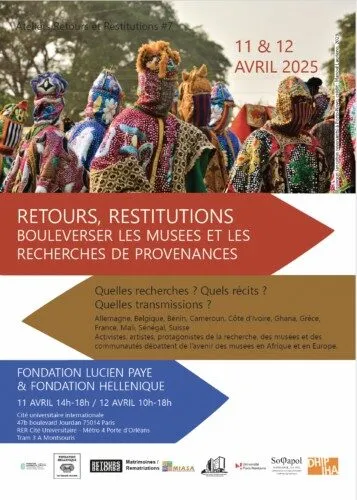
[ conference in French ] Germany, Benin, Cameroon, Ghana, Greece, France, Ivory Coast, Mali, Sénégal, Switzerland - Academics, activists, artists, experts from communities and museum actors debate the future of museums in Africa and in Europe.
This dissertation investigates the histories and itineraries of Abelam collections from the East Sepik Province of Papua New Guinea held in museums in Europe (the Netherlands, Germany, Switzerland and the UK), Australia and Papua New Guinea.
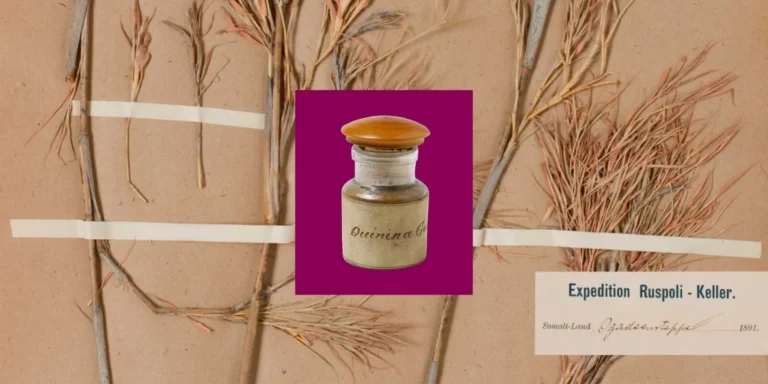
ETH Zurich's natural history collections house thousands of artefacts from former overseas colonies, including rocks and minerals, insects, animal and plant specimens.
The volume offers new findings on the historical and current significance of artifacts and highlights the current dialogue with partners from Nigeria and the diaspora, reflecting on the methods of cooperative research and the future of the objects currently kept in Swiss collections.
In Switzerland, the decolonization of ethnological and historical museums and collections is in progress. This is true in practice, especially by federally funded provenance research projects and by single restitutions of human remains and colonial objects.
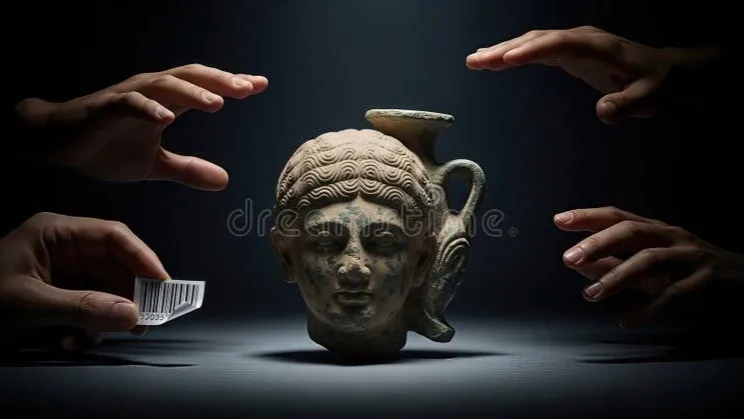
Why is research into colonial collections in the private sector - I mean art dealers, auction houses and private collectors - so tough? The main reasons is that most of them have built a wall around themselves, and there is rarely a hole in this wall through which an outside observer can look inside their closed bulwark.
[ in French ] Relations between ethnographic museums and African and Oceanic art markets in France, Switzerland and Belgium : building value(s) and appropriating otherness
Switzerland’s Federal Council will set up a new independent committee to advise on disputes over art that was looted during the Nazi era. The committee will also be consulted over repatriation claims made about cultural objects that came to Switzerland due to colonialism.
Switzerland has returned four mummies to Chile, including two of them among the world’s oldest, after their private owner agreed to their restitution. Other remains, in an “advanced state of degradation”, buried in Geneva.
This publication compiles information on 39 institutions in museums and universities in German-speaking countries that have accessioned, altogether, almost 19,000 pieces of tangible cultural heritage produced in Namibian communities over a period of time of more than 160 years (pre-1860s to date).
How did Geneva live through the colonial period? In what ways was the Ethnography Museum a major cultural actor in the colonial context? What is the future of the collections held there? Can we understand today the real identity of an object, sometimes centuries after it entered the Genevan museum collections?
How did Geneva live through the colonial period? In what ways was the Ethnography Museum a major cultural actor in the colonial context? What is the future of the collections held there? Can we understand today the real identity of an object, sometimes centuries after it entered the Genevan museum collections?
The Museum of Cultures and the Natural History Museum in Basel, Switzerland, returned a collection of approximately 90 aboriginal artefacts, including human bones and tools, of Sri Lanka’s indigenous population.
An ancient, carved tree will be returned to Australia around a century after it was cut down and shipped to Europe. It was one of several “dhulu” stolen from a Gamilaraay ceremonial site beside a creek in northeast NSW in 1917.
Your auction is soaked in blood—give back Ras Desta Damtew’s medal: An open letter to La Galerie Numismatique in Lausanne. The medal was stolen by a Fascist army invader, its proper recipient unlawfully executed, and now your event practically celebrates the theft and murder.
Katharina Küng from canton Zurich had a headdress that she had received from her mother hanging on her wall for a long time. “We thought it was the padding of an old suit of armour,” Küng says. It wasn’t until a trip to Namibia that she realised – in the Swakopmund Genocide Museum – that it was a traditional Herero headdress.
(Book in French; review in English) Claire Brizon describes in her 2023 book the military, traders and missionaries who collected in colonial regions; their collection culture and the use and meaning of the collections they had in Europe.
Thanks to Deneth Piumakshi Veda Arachchige, the Museum of Cultures and the Natural History Museum in Basel, Switzerland returned a collection of approximately 90 aboriginal artefacts, including human bones and tools, of Sri Lanka’s indigenous population this week.