Ivan Macquisten writes:
The story of their discovery and what happened afterwards is well documented: a reliquary urn found inside a stupa contained ash, some bone fragments, gold and gems.
But it was the inscription on the urn was interpreted to mean that the bone relics were the remains of the Buddha given to his own Shakya clan after his cremation.
Under the Indian Treasure Trove Act 1878, The British Crown claimed the find before dispersing it as follows: the bone relics were presented as a gift to King Rama V of Siam, while all the major pieces of gold and gems were donated to the museum in Kolkata. The remaining minor portion of duplicate gems was returned to the Peppé family.
Chris Peppé and his two cousins conducted a great deal of research into their history and decided to put them on public display.
The problem came when they decided to sell them.
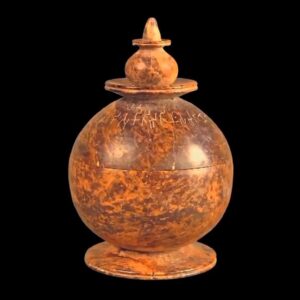
Courtesy The Piprahwa Project, www.piprahwa.com.
Suddenly the Indian government stepped in to say that the sale was unlawful, against international conventions, unethical, and that the gems should be repatriated. The Indian Ministry confused the issue by adding the colonial exploitation argument to the claim.
Is the Indian government right? Several other questions need answering first.
Of vital importance is when the Piprahwa gems left India. If it was before current relevant legislation passed into law, then it may be reasonable to assume that they left legally. If not, they would have been exported illegally if a licence was not issued.
Without stipulating exactly which laws and conventions it argues would apply to the case, the ‘moral’ and ‘ethical’ elements, which the Indian government is bringing in, appear to be little more than an attempt at emotional blackmail.

