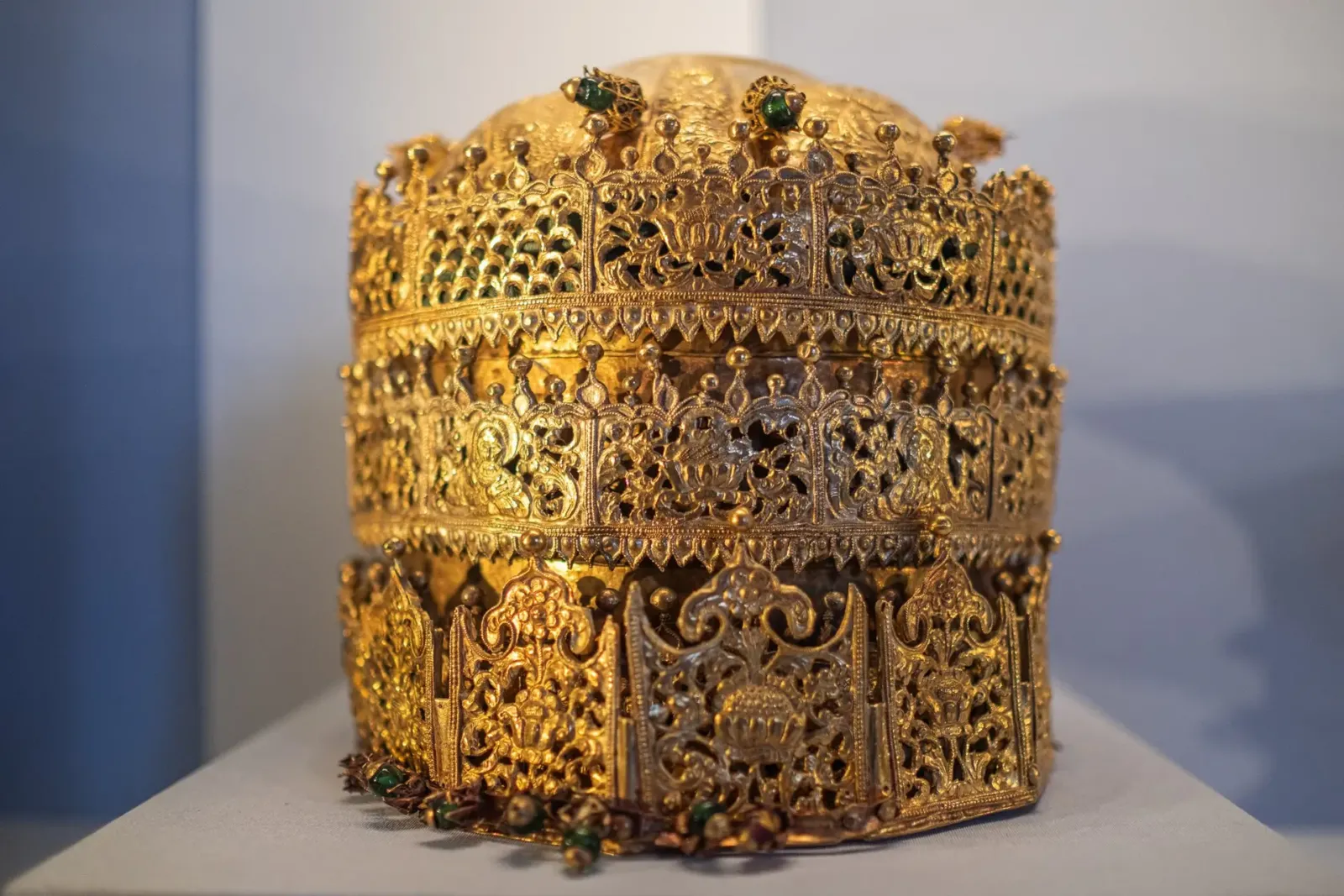
McCarthy’s staggered handover of stolen objects has been hailed as a model for restitution, but it is not without controversy. Critics question its piecemeal nature compared with the wholesale returns Ethiopia is asking for.
The complicated legal status of so-called “orphaned” objects, artefacts without proper documentation, means there was little else McCarthy could do to legally pass on his collection. But, as a private collector, the choice to return it still remains in his hands. For British museums, which house hundreds of looted Ethiopian objects, repatriation is a lot more complicated.
Academics and Ethiopian officials have worked with philanthropists to convince the descendants of British soldiers to return looted items. They also scour auction websites to spot artefacts being put up for sale and work with private collectors, like McCarthy. Other returns have been more random: in 2001 a holy tablet was returned after a reverend discovered it in the cupboard of his Edinburgh church.
“We’ve had some success repatriating a few items by seizing opportunities when they arise, but it’s not sufficient,” said Abebaw Ayalew Gella, director general of the Ethiopian Heritage Authority.
Chief among the items Ethiopia is still lobbying to reclaim are 11 holy tablets, held by the British Museum. According to Ethiopian Orthodox tradition, only priests are permitted to view these sacred objects, which represent the Ark of the Covenant and feature prominently in religious celebrations. The ones in London sit in storage, shielded from public view.
“These are not archaeological artefacts; they are sacred and venerated in Ethiopia,” said Ayalew Gella. “There is no professional or moral ground to keep them.”